The 2026 Gift Guide to Rare Charoite Earrings & Styling
Discover the ultimate 2026 gift guide for rare charoite earrings. Learn how to match swirling purple silicate styles to specific occasions and recipients.

The Allure of Charoite: Why This Siberian Gem Makes a Statement Gift
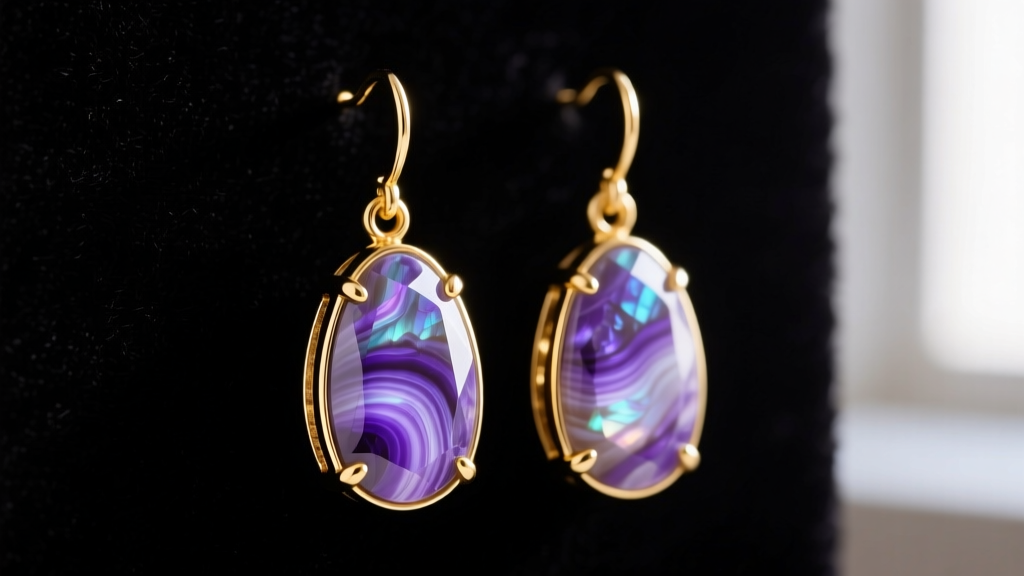
When it comes to gifting fine jewelry, finding a piece that feels both deeply personal and entirely unique is a challenge. Enter charoite earrings. Discovered in the 1940s but only introduced to the global gem market in 1978, charoite is a rare silicate mineral found in only one place on Earth: the Murun Massif in the Sakha Republic (Yakutia), Russia. Its striking, swirling patterns of lavender, violet, and deep purple, often accented by black and gold inclusions, make it an unforgettable gift for the discerning jewelry lover.
Unlike mass-produced diamond studs or generic sapphire drops, gifting charoite signals a deep appreciation for rare geological marvels and artisanal craftsmanship. According to the Mindat mineral database, the complex formation of charoite requires highly specific alkaline igneous rock intrusions, meaning every single cabochon cut for a pair of earrings possesses a completely unrepeatable fingerprint of color and chatoyancy.
Occasion Matching: Who Should Receive Charoite Earrings?
Charoite is not a subtle gemstone. Its bold, psychedelic swirls demand attention, making it a highly strategic gift depending on the recipient's lifestyle, aesthetic, and the occasion at hand.
The 21st Wedding Anniversary & Milestone Birthdays
While traditional anniversary lists rarely feature charoite, modern gemologists and bespoke jewelers have increasingly adopted it as an alternative 21st-anniversary stone due to its rarity and deep violet hues. Gifting a pair of 14k gold charoite drop earrings for a 21st anniversary or a milestone 50th birthday communicates exclusivity. It tells the recipient that their milestone is as rare and complex as the gemstone itself.
The Spiritual, Bohemian, and Art-Loving Recipient
In metaphysical circles, charoite is revered as a stone of transformation, courage, and emotional healing. For the recipient who values crystal healing, artisanal bohemian fashion, or collects wearable art, charoite earrings are a profound choice. The stone's natural fibrous structure creates a shimmering, almost three-dimensional optical illusion (chatoyancy) that appeals heavily to artists and designers.
Matching Earring Silhouettes to Face Shapes
To ensure your gift is as flattering as it is meaningful, consider the recipient's face shape when selecting the earring silhouette:
- Round Faces: Opt for elongated charoite drop or dangle earrings. The vertical lines help elongate the face and draw the eye downward, balancing softer jawlines.
- Square Faces: Choose charoite hoops or curved dangles with rounded cabochons. The circular geometry softens strong, angular jawlines.
- Oval Faces: Highly versatile; geometric charoite studs or wide, textured huggie hoops will beautifully frame the face without overwhelming its natural proportions.
Technical Buying Guide: Grading, Settings, and Hardware
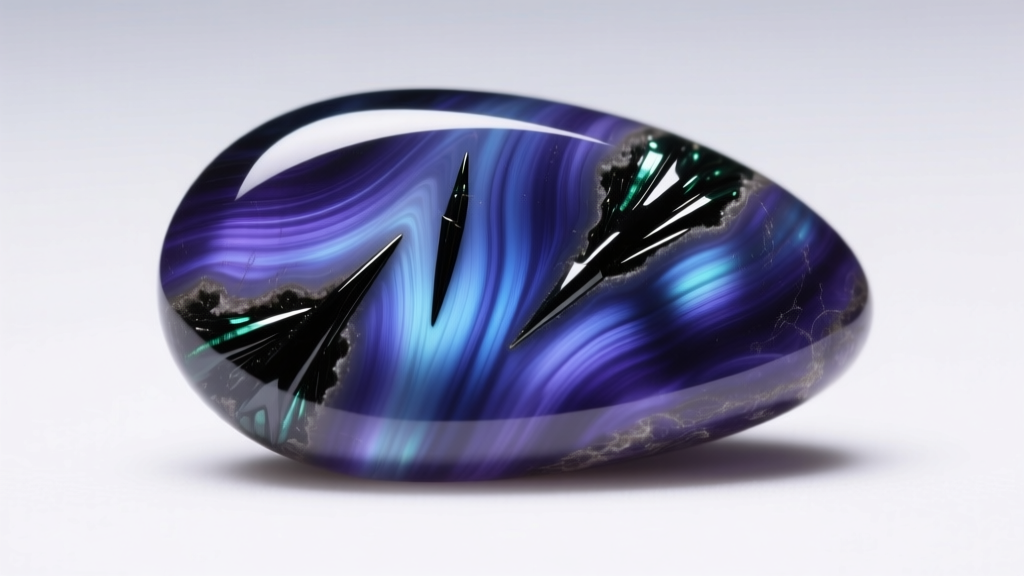
Buying charoite requires specific gemological knowledge. The International Gem Society (IGS) notes that charoite is rarely completely pure; it is almost always found alongside black aegirine, orange tinaksite, and clear quartz. Knowing how to evaluate these inclusions and protect the stone is critical for a lasting gift.
Evaluating the Swirl: Color and Chatoyancy
The highest grade of charoite features intense, saturated violet and lavender colors with a pronounced 'fibrous' or 'swirling' texture that catches the light. Stones that are too pale, chalky, or dominated by excessive black aegirine inclusions are considered lower grade and should be priced accordingly. The most prized specimens exhibit a subtle pearlescent shimmer across the purple bands.
Protective Settings for a Mohs 5-6 Gemstone
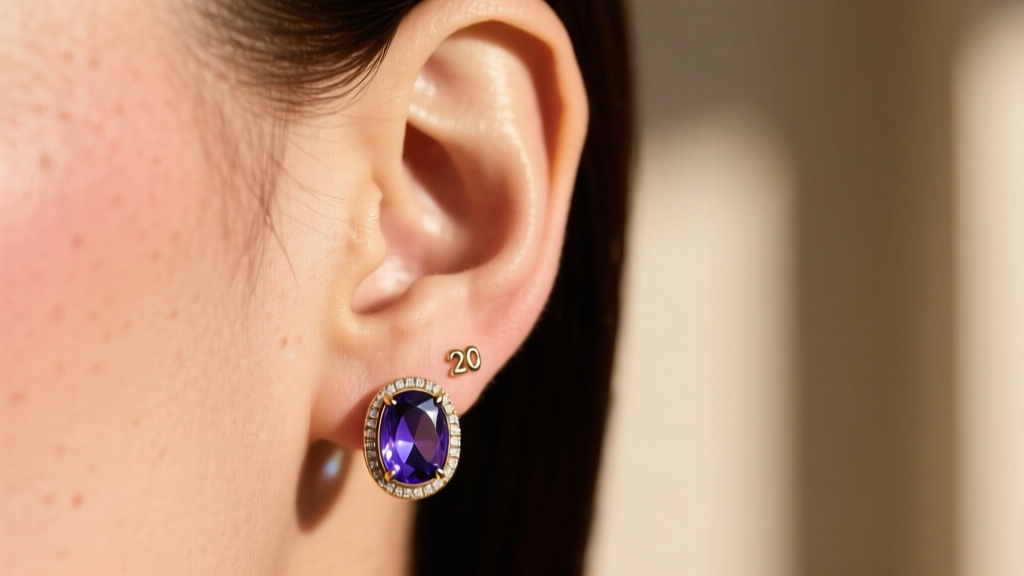
Charoite ranks between 5 and 6 on the Mohs hardness scale. This makes it relatively soft compared to quartz (7) or topaz (8). Never gift charoite earrings with traditional prong settings. Prongs leave the edges of the cabochon exposed, and a simple bump against a doorframe can chip or scratch the stone. Always seek out bezel settings (where a rim of metal completely encircles the stone) or halo settings (where smaller, harder diamonds or sapphires form a protective bumper around the charoite).
Post Gauges and Backings
The hardware of the earring dictates its comfort and security, especially since charoite cabochons can be dense and heavy. Refer to this hardware guide to ensure you are purchasing high-quality findings:
| Post Gauge | Millimeter | Best Earring Style | Recommended Backing |
|---|---|---|---|
| 20-Gauge | 0.81mm | Lightweight Studs, Small Huggies | Standard Friction Post / Silicone Clutch |
| 18-Gauge | 1.02mm | Heavy Drops, Statement Dangles | Screw Back or Secure Jumbo Clutch |
| 16-Gauge | 1.29mm | Cartilage / Lobe Stretchers | Threadless Labret Stud / Flat Back |
2026 Pricing Tiers & Authenticity Verification
As the single source in Siberia becomes increasingly difficult to mine due to geopolitical and environmental factors, the price of high-grade charoite has steadily climbed. When shopping for charoite earrings in 2026, expect the following pricing tiers based on materials and stone quality:
- Entry-Level ($45 - $90): Sterling silver settings featuring smaller (8mm - 12mm) charoite cabochons. The purple may be slightly muted, and black inclusions will be prominent. Excellent for casual, everyday bohemian styles.
- Mid-Range ($150 - $350): 14k gold vermeil or solid 10k/14k gold settings. These pieces feature larger, meticulously selected stones with vibrant lavender swirling and high chatoyancy. Bezel settings are standard in this tier.
- Collector/Designer ($500 - $1,200+): Custom artisan pieces featuring rare, almost translucent lavender charoite, accented with diamond halos or set in heavy 18k gold. These are investment-grade wearable art pieces.
Authenticity Warning: Because of its high value, charoite is sometimes imitated using dyed agate or swirled glass. Real charoite has a distinct, fibrous, almost 'splintery' internal texture that glass cannot replicate. If the purple swirls look perfectly smooth, painted, or lack depth under a jeweler's loupe, it is likely a fake. Always request a certificate of authenticity or buy from reputable gemologists who source directly from verified lapidaries.
Care Instructions to Include with Your Gift
A thoughtful gift includes the knowledge of how to preserve it. Charoite is sensitive to sudden temperature changes and harsh chemicals. Including a printed care card with your gift will elevate the unboxing experience and protect the jewelry.
Expert Care Tip: Never clean charoite earrings in an ultrasonic or steam cleaner. The high-frequency vibrations can cause the fibrous stone to fracture along its natural cleavage planes, and the heat can alter the stone's color. Instead, gently wipe the earrings with a soft, lint-free microfiber cloth after wear. If they require a deeper clean, use lukewarm water, a drop of mild dish soap, and a baby-soft toothbrush, ensuring you dry them immediately to prevent water spots on the metal settings.
By understanding the geological rarity, the necessary protective settings, and the ideal stylistic pairings, you can confidently gift a pair of charoite earrings that will be cherished as a profound, wearable piece of Earth's history.


