2026 Gift Guide: Matching Jewelry to Types of Earring Piercings
Discover the perfect 2026 jewelry gifts by matching metals and styles to specific types of earring piercings, from standard lobes to complex curations.

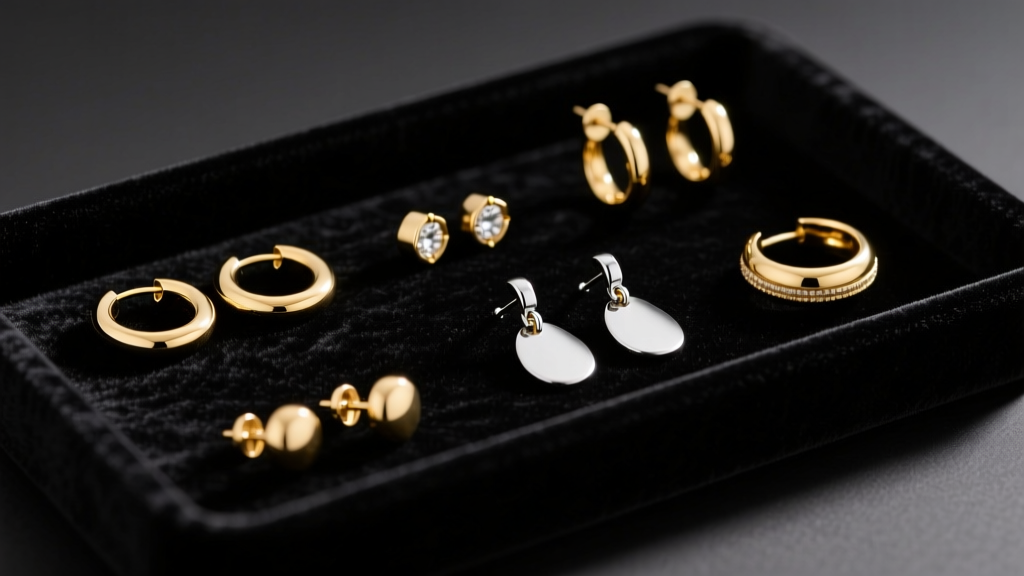
The Art of the Piercing-Specific Gift
Gifting fine jewelry is a timeless gesture, but in 2026, the modern ear curation demands a highly tailored approach. The days of buying a generic pair of studs and hoping they fit are over. When shopping for the perfect present, understanding the different types of earring piercings is crucial to ensure your gift is both anatomically compatible and aesthetically aligned with the recipient's personal style. A standard lobe piercing requires entirely different hardware, gauge sizing, and threading mechanics than a freshly healed daith or a curated helix.
This comprehensive gift guide breaks down the anatomical nuances, material grades, and structural requirements for every major ear piercing. Whether you are shopping for a partner's milestone birthday or treating yourself to an elevated ear curation, these actionable insights will prevent costly returns and ensure your jewelry gift is worn with pride.
Standard Lobe Piercings: The Versatile Canvas
The standard earlobe piercing remains the most common and versatile of all the types of earring piercings. Typically pierced at 20-gauge (0.8mm) or 18-gauge (1.0mm), the lobe can accommodate a massive variety of styles, from delicate diamond solitaires to heavy, statement-making drop earrings. However, gifting for the lobe still requires attention to material science, especially if the recipient has metal sensitivities.
Occasion Matching & Material Grades
For everyday wear and professional environments, 14k or 18k solid gold (specifically nickel-free yellow or white gold) is the gold standard. Avoid "surgical steel" or 316L stainless steel for gifts, as it contains up to 10% nickel, which can cause contact dermatitis over prolonged wear. For milestone anniversaries or luxury gifting, opt for platinum or high-karat gold bezel-set diamonds.
- Anniversary/Luxury: 18k solid gold diamond huggies or threadless push-pin studs with VS-clarity diamonds ($150 - $400+).
- Everyday/Minimalist: 14k gold continuous seamless hoops or simple geometric studs ($45 - $120).
- Fashion/Statement: Vermeil or gold-filled drop earrings for occasional wear (avoid for 24/7 use to prevent plating degradation).
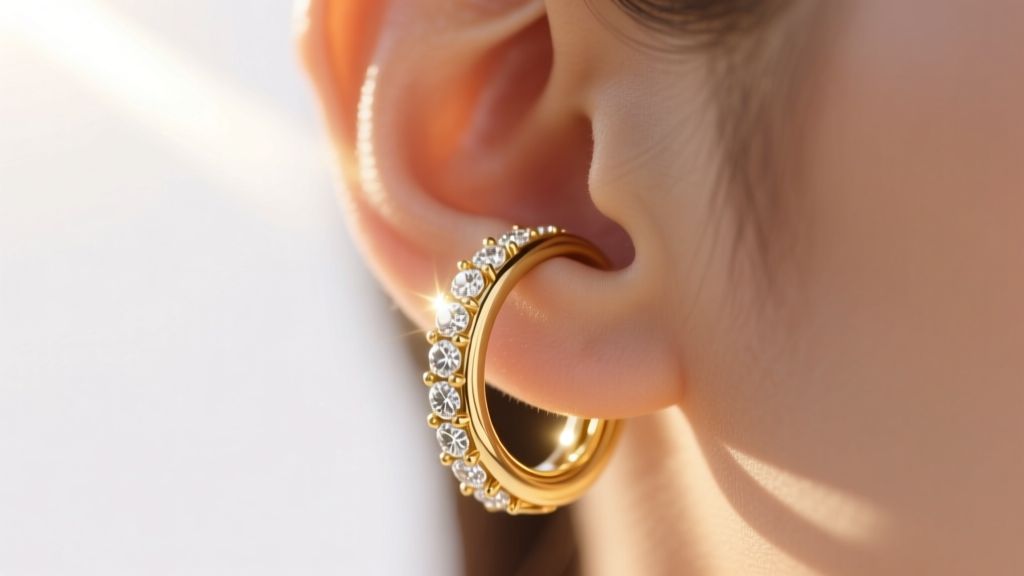
Upper Lobe & Helix Piercings: Elevating the Ear Curation
Moving up the ear cartilage, we encounter the upper lobe and the helix. These piercings are the backbone of the modern "curated ear." The helix is pierced through the upper outer cartilage rim, almost universally at 16-gauge (1.2mm), though some older piercings may be 18-gauge or 14-gauge. Gifting for the helix requires a strict adherence to high-quality body jewelry standards.
Gauge Sizing & Threading Mechanics
The most critical failure mode when gifting cartilage jewelry is purchasing externally threaded pieces. External threads act like a cheese grater on the delicate fistula (the healed tissue tube) every time the jewelry is inserted. For 2026, only gift internally threaded or threadless (push-pin) jewelry. Threadless jewelry, popularized by brands like Neometal, uses a bent pin that creates tension inside the hollow post, ensuring the decorative end never falls out and the insertion is completely smooth.
"For initial and healed piercings, jewelry should be internally threaded or threadless to prevent tissue trauma. Externally threaded jewelry should never be used." — Association of Professional Piercers (APP)
| Occasion | Recommended Style | Material & Threading | Estimated Price Range |
|---|---|---|---|
| Milestone Birthday | Cluster gem threadless end | 14k/18k Gold, Threadless | $85 - $250 |
| Holiday / Stocking Stuffer | Basic cabochon or opal stud | ASTM F-136 Titanium, Internal | $30 - $60 |
| Edgy / Alternative | Chain-link helix cuff or spike | Implant-grade Titanium | $45 - $110 |
Tragus & Conch Piercings: The Statement Cartilage
The tragus (the small flap of cartilage covering the ear canal) and the conch (the large cup-like inner cartilage) are prominent features in advanced ear curations. Both are typically pierced at 16-gauge. The tragus is highly sensitive and often takes 6 to 9 months to fully heal, meaning jewelry changes can be difficult. The conch offers a large, flat canvas perfect for showcasing larger decorative ends.
Navigating Backings and Insertion Angles
When gifting for the tragus, avoid standard butterfly backings at all costs. They are nearly impossible to secure blindly from behind the tragus and harbor bacteria. Instead, gift flat-back labret studs with threadless ends. The flat disc sits flush against the inside of the ear, preventing it from catching on hair or headphones. For the conch, you can gift larger threadless ends (4mm to 6mm in diameter) featuring intricate designs like floral motifs, geometric mandalas, or marquise-cut gemstones. Brands like BVLA and Anatometal offer exquisite, precision-machined ends that make for unforgettable luxury gifts.
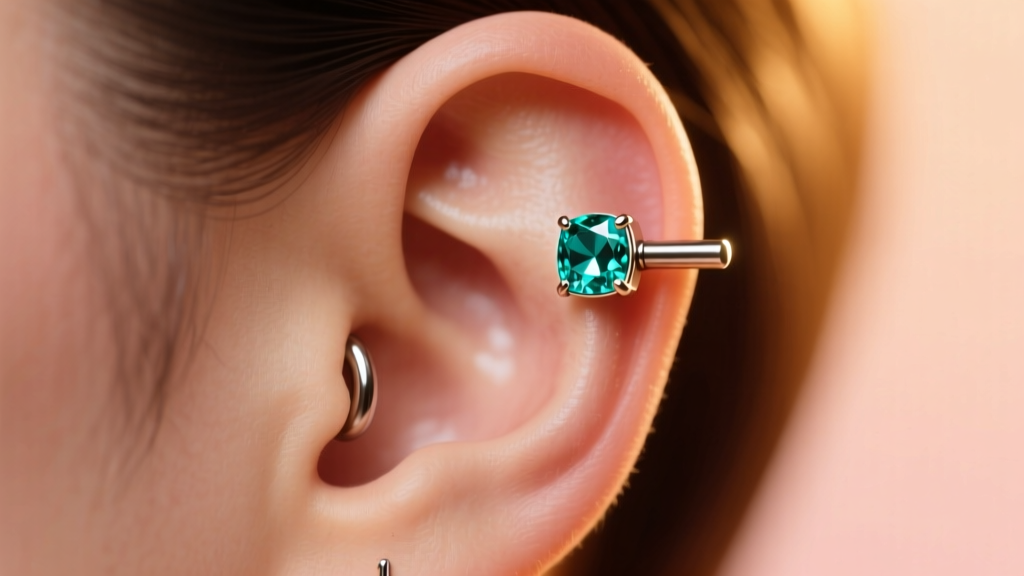
The Daith & Rook: Advanced Gifting for Curated Ears
The daith (pierced through the innermost cartilage fold of the crus of the helix) and the rook (pierced through the anti-helix fold) are complex piercings that require highly specific jewelry shapes. You cannot use standard straight posts here. The daith requires a captive bead ring (CBR), a continuous hoop, or a specialized curved barbell, usually at 16-gauge. The rook requires a straight or slightly curved barbell with threaded ends on both sides, also at 16-gauge.
Gifting Warning: Never gift clicker rings for a daith piercing unless you are 100% certain the piercing is fully healed (which can take up to 12 months) and you know the exact inner diameter required (typically 8mm, 9mm, or 10mm). A hoop that is too small will cause pressure migration, while one that is too large will snag constantly. If you are unsure of the exact millimeter diameter, gift a high-end threadless straight barbell for the rook, or a gift card to a luxury piercing studio like Maria Tash, allowing the recipient to be sized professionally.
Quick-Reference Gifting Matrix
Use this matrix to ensure your jewelry gift aligns with the anatomical realities of the recipient's specific types of earring piercings.
| Piercing Type | Standard Gauge | Required Jewelry Shape | Best Threading Type | Top Brand Recommendations |
|---|---|---|---|---|
| Standard Lobe | 20g or 18g | Standard post, huggie, hoop | Butterfly, Threadless, Internal | Mejuri, Gorjana, Maria Tash |
| Helix / Upper Lobe | 16g (sometimes 18g) | Flat-back labret post | Threadless or Internal | BVLA, Neometal, Junipurr |
| Tragus / Conch | 16g | Flat-back labret post | Threadless or Internal | Anatometal, BVLA, Industrial Strength |
| Daith | 16g | Curved barbell or Hoop | Internal (CBR) or Hinged Clicker | Maria Tash, Body Vision Los Angeles |
| Rook | 16g | Straight or curved barbell | Internal (both ends threaded) | NeoMetal, BVLA |
Conclusion: Finalizing Your 2026 Ear Curations
Understanding the distinct types of earring piercings transforms jewelry gifting from a guessing game into an act of deep personalization. By prioritizing implant-grade materials like ASTM F-136 titanium and nickel-free solid gold, and by strictly adhering to threadless or internally threaded mechanics, you guarantee a gift that promotes tissue health and long-term wearability. Whether you are selecting a delicate 14k gold huggie for a standard lobe or a precision-machined BVLA threadless end for a curated helix, your attention to anatomical detail will make your 2026 jewelry gift a cherished staple in their daily rotation.


