How to Wear Heavy Drops Like The Girl With Pearl Earrings
Learn how to safely wear heavy drop earrings like the girl with pearl earrings. Expert guide on lobe prep, pearl weights, and secure styling.

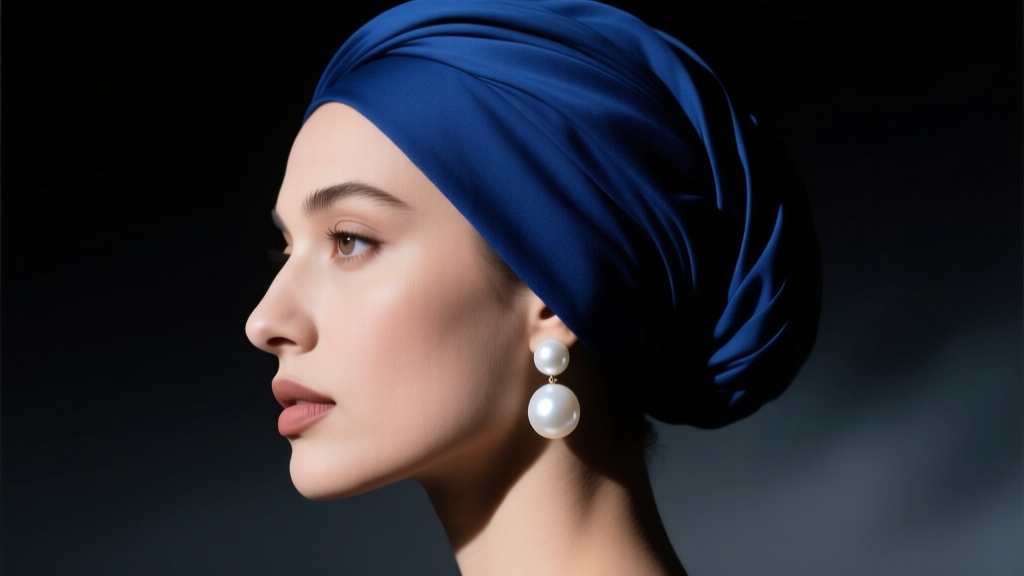
The Physics and History of the Masterpiece
When analyzing iconic jewelry moments, the girl with pearl earrings remains the ultimate benchmark for statement drops. Johannes Vermeer’s 1665 masterpiece captures a fleeting, luminous gaze, but from a jeweler’s perspective, it captures a fascinating study in weight, scale, and lobe endurance. The pearl depicted in the painting is massive—estimated by art historians and gemologists to be between 14mm and 18mm in diameter. In the 17th century, a natural saltwater pearl of this magnitude would have been astronomically rare and heavy. However, historical evidence suggests that many oversized 'pearls' of the Dutch Golden Age were actually hollow glass orbs filled with wax or resin, designed to mimic the luster of nacre without the crippling weight or cost.
Today, replicating this iconic look requires more than just buying a large pearl; it requires an understanding of earlobe biomechanics. A solid 18mm nacre pearl weighs roughly 8 to 10 grams. While 10 grams might not sound like much, the physics of a drop earring concentrates that entire weight onto the microscopic surface area of the earring post resting inside your fistula. This creates a 'cheese cutter' effect, where the thin metal slowly migrates downward through the tissue, causing pain, inflammation, and eventually, a torn lobe. To wear heavy drops safely and comfortably, you must follow a precise protocol of lobe preparation, material selection, and structural support.
Step-by-Step: Prepping Your Lobes for Heavy Drops
Standard fashion earrings are typically crafted with 20-gauge (0.81mm) or even 22-gauge (0.64mm) wire. These thin posts are entirely unsuitable for heavy drops. Before you attempt to wear a statement pearl, you must assess and prepare your piercing.
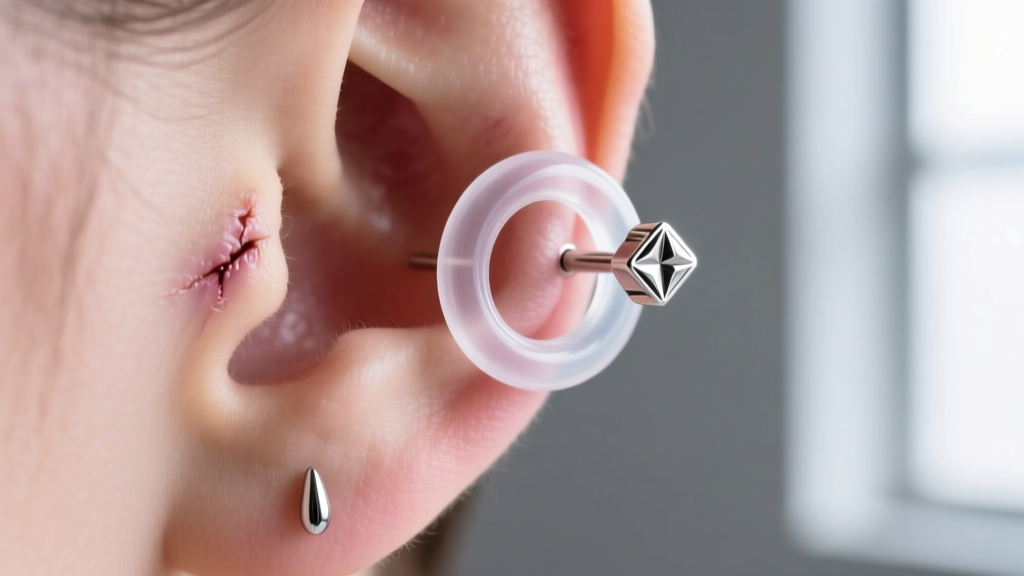
Step 1: Upgrade Your Post Gauge
Pressure equals force divided by area. By increasing the thickness of the earring post, you distribute the weight of the pearl over a wider area of tissue inside the piercing channel. For any drop earring exceeding 6 grams, you need an 18-gauge (1.0mm) post. For pearls exceeding 12 grams, a 16-gauge (1.2mm) post is mandatory. If your current lobes are pierced at a delicate 20G, visit a professional piercer to safely taper and stretch the fistula to 18G over a few weeks. According to guidelines from the Association of Professional Piercers, gradual tapering with implant-grade titanium prevents micro-tearing and blowouts.
Step 2: Condition the Tissue
Heavy earrings cause localized ischemia (restricted blood flow) to the bottom of the lobe. To build tissue resilience, massage your lobes daily with pure jojoba or vitamin E oil for three minutes. This increases circulation and maintains the elasticity of the collagen matrix, making the tissue more resistant to the downward drag of a heavy drop.
Material Matrix: Choosing Your Modern Pearl
Not all pearls are created equal, especially when scaling up to the 14mm+ sizes required to recreate the Vermeer aesthetic. The material you choose will drastically alter the weight profile and the price point. Below is a comparative matrix to help you select the right stone for your lobe capacity and budget.
| Material Type | Avg. Weight (14mm) | Luster & Quality | Est. Price Range |
|---|---|---|---|
| Saltwater (South Sea) | 8.5 - 11.0 grams | Exceptional, deep mirror luster | $2,500 - $8,000+ |
| Freshwater (Edison/Nucleated) | 7.0 - 9.5 grams | High luster, slight blemishes possible | $150 - $600 |
| Swarovski Crystal Pearl | 5.5 - 7.0 grams | Flawless, uniform, slightly artificial | $40 - $120 |
| Hollow Glass / Resin Filled | 2.0 - 3.5 grams | Good surface shine, lacks deep orient | $20 - $80 |
For the most authentic 'Vermeer' look without the chronic lobe pain, high-grade nucleated freshwater pearls or premium crystal pearls offer the best compromise. They provide the necessary visual mass and optical weight while keeping the physical gram count low enough for extended wear. For a deeper dive into identifying pearl types and their physical properties, the Gemological Institute of America (GIA) provides extensive gemological breakdowns.
How to Secure Heavy Pearls Without Tearing Your Lobe
Even with an 18-gauge post, a 14mm pearl will eventually drag the lobe downward if left unassisted. The secret to wearing heavy drops for an entire evening lies in external load distribution. Follow this rigging sequence to secure your earrings.
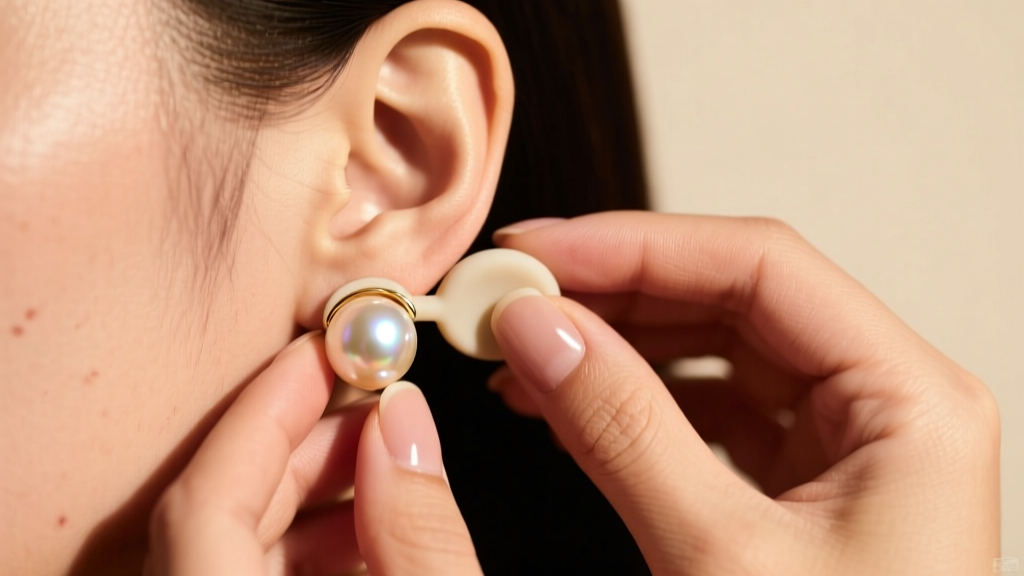
The Three-Point Support System
- The Frontal Patch: Apply a clear, adhesive ear support patch (such as Lobe Wonder) to the front of your earlobe, directly over the piercing hole. Pierce through the patch with your earring post. This reinforces the anterior tissue and prevents the heavy pearl from pulling the front of the hole downward.
- The Silicone O-Ring: Once the post is through the lobe, slide a thick, medical-grade silicone O-ring onto the back of the post before adding the clutch. The O-ring acts as a shock absorber, spreading the backward pressure of the clutch over the entire back surface of the lobe rather than a single focal point.
- The Wide-Base Clutch: Discard the standard butterfly backs that come with most earrings. They offer zero support for heavy drops. Instead, use a wide-base silicone friction back or a flat, disc-shaped metal clutch. The larger surface area grips the post securely while bracing against the silicone O-ring, locking the earring in a horizontal position and preventing the pearl from drooping.
Styling the 17th-Century Gaze
Recreating the aesthetic of the girl with pearl earrings goes beyond the jewelry; it requires an understanding of light, shadow, and facial geometry. Vermeer utilized the chiaroscuro technique, employing deep, dark backgrounds to make the luminous pearl and the subject's face pop. To mimic this in a modern setting or for photography, position your primary light source at a 45-degree angle to your face, leaving the opposite side in soft shadow. This directional lighting catches the 'orient' (the surface iridescence) of the pearl, creating that iconic, singular highlight.
Stylistically, pull your hair back completely. The visual impact of a massive drop earring is entirely lost if it tangles with loose waves or curls. A sleek, low chignon or a tightly wrapped turban-style headscarf clears the canvas of the jawline and neck, forcing the viewer's eye directly to the pearl. For face shapes, this heavy drop style is particularly flattering on round and square faces, as the elongated vertical line of the drop creates an optical illusion that lengthens the jaw and narrows the lower third of the face.
Maintenance and Storage for Statement Drops
Heavy drop earrings require specialized care to maintain their structural integrity. The primary failure point of any heavy earring is the solder joint where the post meets the pearl cap. Over time, the leverage exerted by the heavy pearl can fatigue the solder, causing the post to snap off entirely.
Always store heavy drops hanging vertically in a padded jewelry box or on a dedicated earring stand. Never toss them loosely into a drawer where the heavy pearl can swing and bend the post. Once a month, inspect the post-to-cap connection with a jeweler's loupe. If you see any dark lines or micro-fractures near the solder joint, take the piece to a bench jeweler for a laser weld reinforcement before wearing it again. Furthermore, wipe the pearl down with a damp microfiber cloth after every wear to remove skin oils and cosmetics, which can degrade the nacre or dull the crystal coating over time. By treating your statement drops with the same reverence as a museum artifact, you ensure they remain a timeless staple in your collection for decades to come.


