Authenticating a Givenchy Bracelet and Earring Set (2026 Guide)
Master the authentication of a vintage Givenchy bracelet and earring set. We analyze hallmarks, gripoix glass, clip-on mechanics, and 2026 market values.

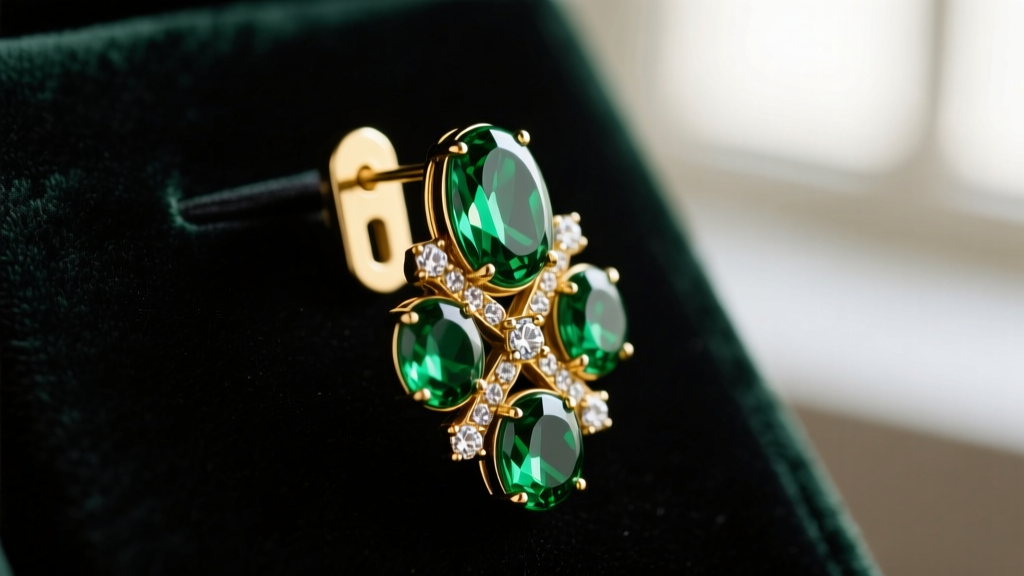
The Engineering of Haute Couture Earrings
When collectors and archivists seek out a vintage givenchy bracelet and earring set, they are rarely looking for simple adornment; they are acquiring masterclasses in mid-century and late-century structural engineering. While the bracelets in these sets often utilize rigid brass cores with hinged segments or heavy link chains secured by trombone clasps, the earring components present a unique metallurgical and mechanical challenge. A typical 1980s Givenchy clip-on earring can weigh between 18 and 25 grams. Supporting this mass on the earlobe without causing tissue fatigue or mechanical failure requires precise tension calibration and high-grade base alloys.
In this 2026 deep dive, we dissect the technical specifications, material science, and mechanical failure modes of these iconic sets, providing a definitive authentication and preservation framework for serious collectors and jewelry historians.
Decoding the Hallmarks: A Chronological Matrix
Authenticating a Givenchy set begins with the backplate of the earrings and the interior links of the bracelet. The evolution of the house's hallmarks directly correlates with changes in earring mechanisms and base metal compositions. Below is a technical matrix of the primary hallmark eras relevant to bracelet and earring sets.
| Era | Hallmark Stamp | Earring Mechanism | Base Metal & Plating |
|---|---|---|---|
| 1950s-1960s | Givenchy © Paris | Screw-back / Simple Clip | Brass base, thin gold wash |
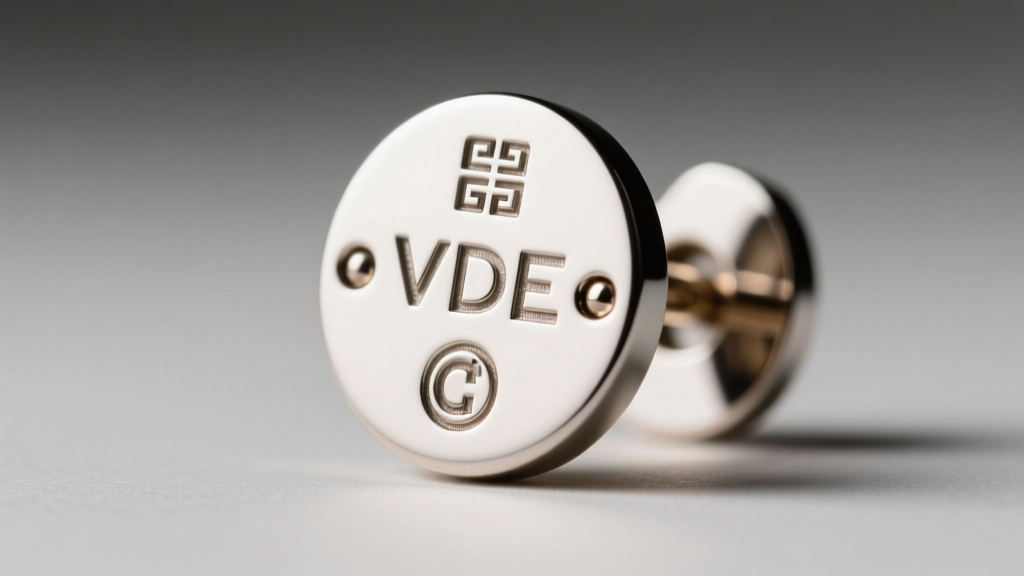
| 1970s-1980s | Givenchy © VDE | Omega-back / Padded Clip | Brass base, 22k micron plating |
| 1990s-2000s | Givenchy © Made in France | Hinged Clip / Pierced Post | White metal / Gold-tone alloy |
The VDE Era and Structural Integrity
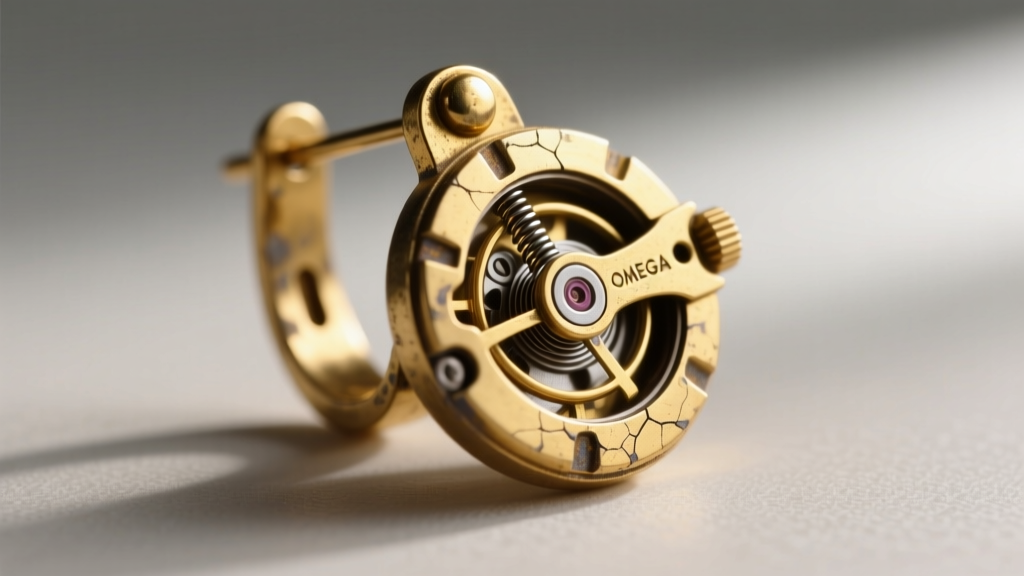
The presence of the "VDE" stamp indicates production under Victor d'Esté, a premier French manufacturer that produced haute couture costume jewelry for Givenchy during the brand's most opulent period. Earrings from this era frequently feature the omega-back mechanism for pierced ears or heavily padded clip-ons. The omega wire is typically forged from a beryllium-copper alloy, chosen for its exceptional springback properties and resistance to permanent deformation compared to standard brass wires.
Material Science: Pâte de Verre and Micron Plating
The visual weight of a Givenchy bracelet and earring set is often anchored by its gemstones. However, these are rarely traditional faceted crystals. Instead, Givenchy heavily utilized pâte de verre (poured glass) crafted by the legendary Maison Gripoix. Unlike machine-pressed glass or lead crystal, poured glass is heated until viscous and manually ladled into metal bezels. This results in a distinct, slightly uneven surface tension and internal striations that mimic high-end emeralds, rubies, and sapphires.
According to gemological research on historical glass imitations by the Gemological Institute of America (GIA), identifying poured glass requires observing the lack of sharp facet junctions and the presence of microscopic, rounded internal bubbles. In a genuine Gripoix-Givenchy piece, the glass will seamlessly merge with the gold-tone bezel, often with tiny prongs folded over the glass edge post-pouring.
Electroplating Thickness and Wear Patterns
The gold-tone finish on 1980s sets is not a mere wash; it is a heavy electroplated layer, often exceeding 3 to 5 microns of 22-karat gold over a polished brass substrate. This thickness is substantially higher than modern fashion jewelry, which typically utilizes 0.1 to 0.5 microns of flash plating. However, the high copper content in the brass base can lead to verdigris (copper carbonate) formation if the set is stored in high-humidity environments without desiccants, particularly in the tight crevices of the bracelet hinges and earring clutch cavities.
Mechanical Failure Modes in Vintage Clip-Ons
When evaluating a givenchy bracelet and earring set for acquisition, the structural integrity of the earring findings is paramount. The heavy weight of the decorative face places immense sheer stress on the hinge mechanism.
- Hinge Pin Fatigue: The microscopic steel or brass pin holding the clip arm to the earring base is prone to shearing if the clip is forced open beyond its 90-degree intended arc.
- Spring Tension Loss: Omega-backs rely on a curved tension spring. Over decades, the metal undergoes creep, resulting in a loss of clamping force. A genuine 1980s omega-back should exert approximately 1.5 to 2.0 Newtons of force; anything less indicates metal fatigue requiring professional re-tensioning.
- Comfort Pad Degradation: Original silicone or leather comfort pads on clip-ons oxidize, harden, and detach. Replacement requires specialized archival adhesives like Paraloid B-72 to avoid damaging the gold micron plating.
Rhinestone Foil Degradation and Optical Clarity
While Gripoix glass is highly stable, sets that incorporate traditional faceted rhinestones face a different set of preservation challenges. The brilliance of a mid-century aurora borealis (AB) rhinestone relies on a microscopic metallic foil backing applied to the pavilion of the stone. In a givenchy bracelet and earring set, the bracelet is constantly exposed to friction, skin oils, and cosmetics. If the foil backing degrades or oxidizes—a condition known in the trade as "dead stones"—the optical refraction drops by up to 80%. Authenticating a high-tier set requires inspecting the stones under 10x magnification; any black or gray mottling behind the table of the stone indicates moisture ingress and immediate devaluation.
Trombone Clasp and Link Tension Analysis
The bracelet component of these sets frequently utilizes a trombone clasp, characterized by a push-pull spring-loaded barrel. Over time, the internal steel coil spring can suffer from compression set, failing to lock the barrel securely into the catch loop. Furthermore, the interlocking links of the bracelet are often stamped from brass sheet metal and soldered. A critical inspection point is the solder joints at the link terminals; hairline fractures here are common failure points that lead to catastrophic chain separation. When evaluating a set, apply gentle torsional stress to the bracelet links to listen for the distinct "click" of micro-fractures in the solder.
"The true hallmark of haute couture costume jewelry is not just the aesthetic design, but the over-engineering of the findings. A 20-gram Givenchy clip-on from 1985 features a hinge tolerance measured in fractions of a millimeter, rivaling Swiss horology." — Archival Jewelry Conservation Journal, 2024
2026 Market Valuation and Authentication Framework
The secondary market for haute couture costume jewelry has matured significantly. As noted by auction specialists at Christie's, complete sets with matching bracelets and earrings command a substantial premium over orphaned pieces. In 2026, the valuation of a Givenchy bracelet and earring set is strictly tiered based on condition, material complexity, and era.
Investment Grading Tiers
- Archival/Mint (VDE Era, Gripoix Glass): $1,200 - $3,500+. Sets featuring complex poured glass, intact micron plating with no brass bleed, and fully functional omega-backs or padded clips.
- Excellent (1990s Era, Rhinestone): $600 - $1,100. Sets utilizing aurora borealis or pavé rhinestones with minor wear to the bracelet clasp but pristine earring findings.
- Wearable/Restoration Needed: $250 - $500. Sets exhibiting verdigris in the bracelet links, missing comfort pads, or weakened clip-on tension. The value here is primarily in the salvageable Gripoix elements.
Expert Sourcing and Preservation Directives
To preserve the metallurgical and mechanical integrity of your Givenchy set, storage conditions must be strictly controlled. Store the bracelet flat to prevent gravity-induced stress on the hinge pins, and keep the earrings in individual acid-free polyethylene bags with silica gel packets to halt copper oxidation. Never use ultrasonic cleaners on poured glass or rhinestone sets; the high-frequency cavitation will fracture the glass and dissolve the foil backing on the crystals. Instead, use a soft-bristled brush and a mild, non-ammoniated surfactant to gently lift sebum and environmental particulates from the gold-tone bezels.
By understanding the precise engineering, material composition, and failure modes inherent in these pieces, collectors can confidently authenticate, restore, and preserve the legacy of Givenchy's most spectacular ear and wrist adornments.


