Glass Fused Earrings: 2026 Trend Analysis & Style Guide
Discover the 2026 trends in glass fused earrings. Explore dichroic styles, titanium settings, COE ratings, and expert cartilage styling tips.

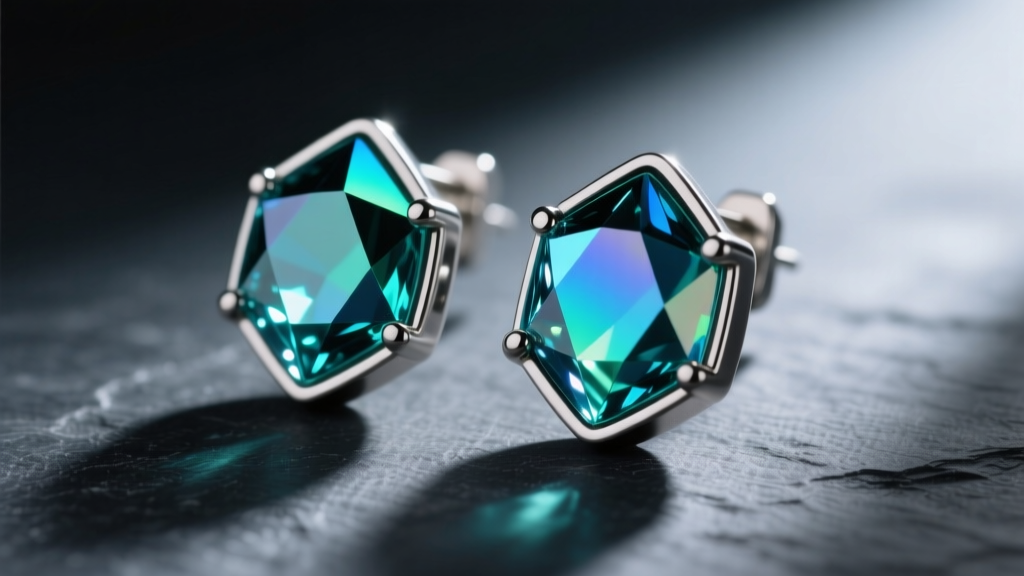
The 2026 Resurgence of Kiln-Formed Glass in Fine Jewelry
As we navigate the jewelry landscape of 2026, the dominance of mass-produced resin and acrylic accessories has sharply declined, making way for a renaissance in artisanal, kiln-formed glass. Glass fused earrings—once relegated to craft fair tables—have been elevated to the realm of fine, contemporary body jewelry. This shift is driven by a consumer demand for hyper-unique, optically complex materials that cannot be replicated by injection molding. Today’s top-tier glass artists are combining advanced kiln-firing techniques with implant-grade metallurgy, creating statement pieces that are as biocompatible as they are visually striking.
The modern glass fused earring is a masterclass in thermal dynamics and structural engineering. Unlike traditional blown or cast glass, fused glass jewelry relies on the precise layering and melting of compatible glass sheets in a digitally controlled kiln. For collectors and piercing enthusiasts, understanding the material science behind these pieces is essential for making informed purchasing decisions, ensuring longevity, and avoiding the catastrophic failure modes that plague poorly constructed artisan jewelry.
Material Anatomy: The Science of Compatibility and Color
The most critical factor in the creation of durable glass fused earrings is the Coefficient of Expansion (COE). Glass expands and contracts at specific rates when heated and cooled. If an artisan fuses two pieces of glass with different COEs, internal stress will build up, leading to spontaneous shattering—sometimes weeks after the piece has left the kiln. The industry standard for high-end fused jewelry relies on COE 90 (championed by manufacturers like Bullseye Glass Co.) or COE 96. Reputable jewelers strictly isolate these families to guarantee structural integrity.
Beyond the base glass, the 2026 market is heavily defined by dichroic accents. Dichroic glass is not a pigment; it is a product of thin-film physics. By vaporizing quartz and metal oxides (such as titanium, chromium, and aluminum) in a vacuum chamber, manufacturers create micro-layers that reflect certain light wavelengths while transmitting others. According to the technical documentation from CBS Dichroic, this results in a gemstone-like optical shift that changes depending on the angle of illumination and the wearer's skin undertone. When encased in a clear COE 90 cap, the dichroic layer is protected from scratching while maintaining its mesmerizing depth.
Style Matrix: Matching Fused Glass to Piercing Placements
Glass is inherently denser and heavier than acrylic or hollow metals. Therefore, styling glass fused earrings requires a strategic approach to gauge sizing and piercing placement to prevent tissue migration or lobe stretching. Below is our 2026 clinical style matrix for integrating kiln-formed glass into your curation.
| Piercing Placement | Ideal Glass Dimensions | Recommended Post Gauge | Optimal Setting Style |
|---|---|---|---|
| Standard Lobe | 10mm - 18mm | 18g or 16g (1.0mm - 1.2mm) | Flat-back bezel or prong |
| Helix / Cartilage | 4mm - 8mm | 16g or 14g (1.2mm - 1.6mm) | Threadless push-pin bezel |
| Conch | 12mm - 20mm | 14g or 12g (1.6mm - 2.0mm) | Internally threaded labret |
| Tragus | 3mm - 6mm | 16g (1.2mm) | Micro-bezel threadless |
For cartilage placements like the helix or tragus, weight distribution is paramount. Utilizing ASTM F136 implant-grade titanium posts, as recommended by the Association of Professional Piercers (APP), ensures that the post will not bend under the weight of the glass cabochon, while minimizing the risk of nickel-induced contact dermatitis.
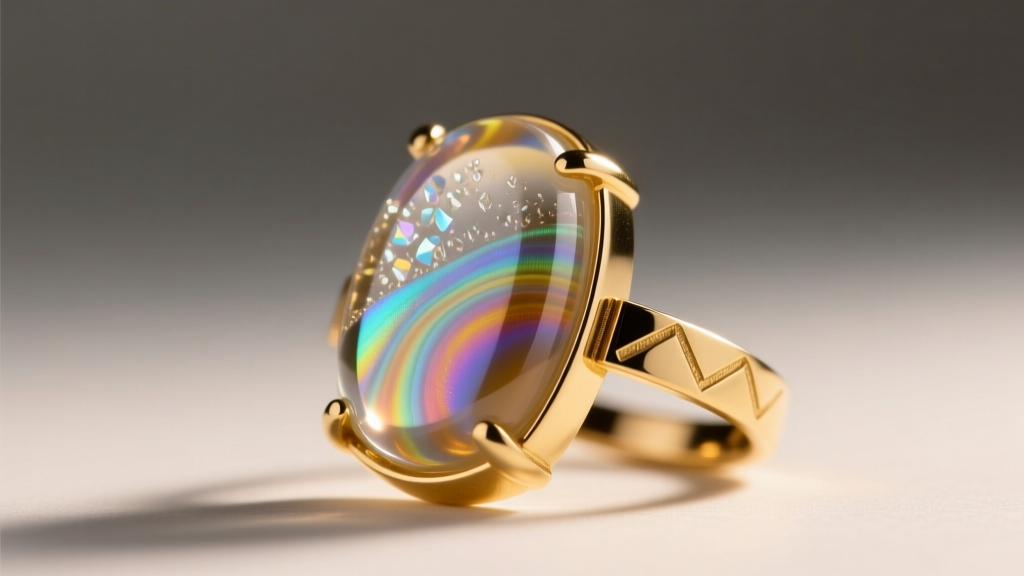
Construction & Failure Modes: Mechanical Bezels vs. Epoxy
The most common point of failure in artisanal glass jewelry is the bond between the glass cabochon and the metal post. Historically, jewelers relied on industrial epoxies like E6000 to glue the glass to a flat metal pad. However, epoxy degrades over time when exposed to UV light, skin oils, and temperature fluctuations. In 2026, the hallmark of a premium glass fused earring is the mechanical bezel.
A mechanical bezel involves a thin wall of metal (often recycled 14k gold or titanium) that is physically folded over the edges of the glass cabochon using a bezel roller and pusher tool. This creates a permanent, physical lock that does not rely on chemical adhesives. When shopping, inspect the perimeter of the glass. If you see a thin, uniform lip of metal wrapping over the edge, you are looking at a mechanically set piece. If the glass appears to be sitting on top of a flat pad with a visible seam of glue, avoid it for daily wear, as the glass will inevitably detach and shatter upon impact with a hard surface.
2026 Colorway Forecast: What’s Dominating the Market
This year’s trend reports indicate a departure from the hyper-saturated, rainbow-dichroic patterns of the early 2020s. The current aesthetic leans heavily into moody, elemental, and textural finishes.
- Oil Slick & Bismuth Shifts: Deep, iridescent colorways that mimic the oxidized surface of bismuth or spilled motor oil. These feature heavy magenta, teal, and gold transitions that read as dark and mysterious indoors, but explode with color in direct sunlight.
- Matte Frost & Acid Etching: Post-firing, artisans are submerging fully fused pieces in hydrofluoric acid baths to strip the glossy finish, leaving a velvety, frosted texture that diffuses light and highlights the internal layers of the glass.
- Tack-Fused Topography: Instead of a smooth, fully melted surface (full fuse at 1465°F), artists are utilizing a "tack fuse" schedule (around 1350°F) to melt glass layers together while retaining sharp, 3D geometric ridges and organic, crater-like textures on the surface.
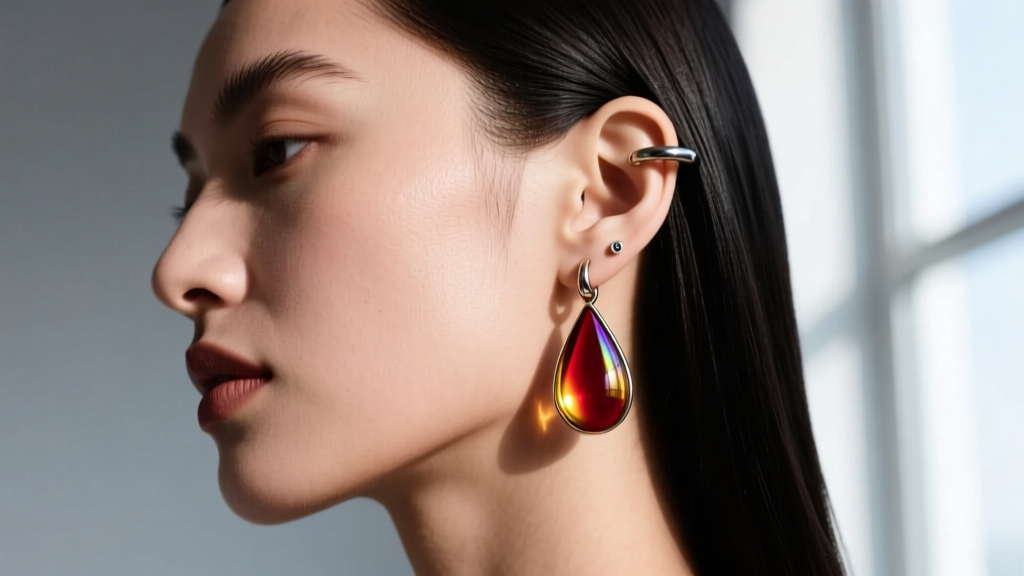
Price Tiers & Artisan Sourcing Guide
Because genuine kiln-formed glass requires specialized equipment, precise temperature control, and hours of cold-working (grinding and polishing the edges), pricing reflects the labor-intensive nature of the craft. Here is what you should expect to pay in the current market:
- Entry-Level Artisan ($45 - $85): Typically features COE 90 glass with basic dichroic accents, set in surgical steel or glued to sterling silver pads. Best for occasional wear or standard lobe piercings.
- Mid-Tier Studio ($90 - $160): Features complex layering, tactile tack-fused textures, and mechanical bezel settings in high-quality brass or nickel-free silver, paired with titanium posts.
- Fine Jewelry Tier ($180 - $350+): Master-crafted dichroic cabochons set in solid 14k or 18k gold mechanical bezels, often paired with custom-machined, internally threaded or threadless ASTM F136 titanium ends designed for high-end cartilage curations.
"The intersection of glass fusing and body jewelry is no longer a niche hobby; it is a discipline requiring a mastery of thermal shock limits, metallurgy, and anatomical weight distribution. When executed correctly, a fused glass earring is an indestructible, wearable prism."
Final Care and Maintenance Directives
While glass is highly resistant to chemical degradation and will not tarnish like silver, it remains vulnerable to thermal shock and hard impacts. Never wear glass fused earrings in saunas or hot tubs, as rapid temperature differentials can cause micro-fractures within the COE matrix. Clean your pieces using only warm water, a mild unscented soap, and a microfiber cloth. Avoid ultrasonic cleaners, as the high-frequency vibrations can compromise the structural integrity of the dichroic micro-layers over time. By respecting the material science of kiln-formed glass, you ensure your investment remains a vibrant, optical centerpiece in your jewelry rotation for decades to come.


