Glitter Hoop Earrings: 2026 Buyer's Guide & Quality Tips
Discover how to choose high-quality glitter hoop earrings in 2026. Learn about encapsulated glitter, hypoallergenic metals, and safe closures.
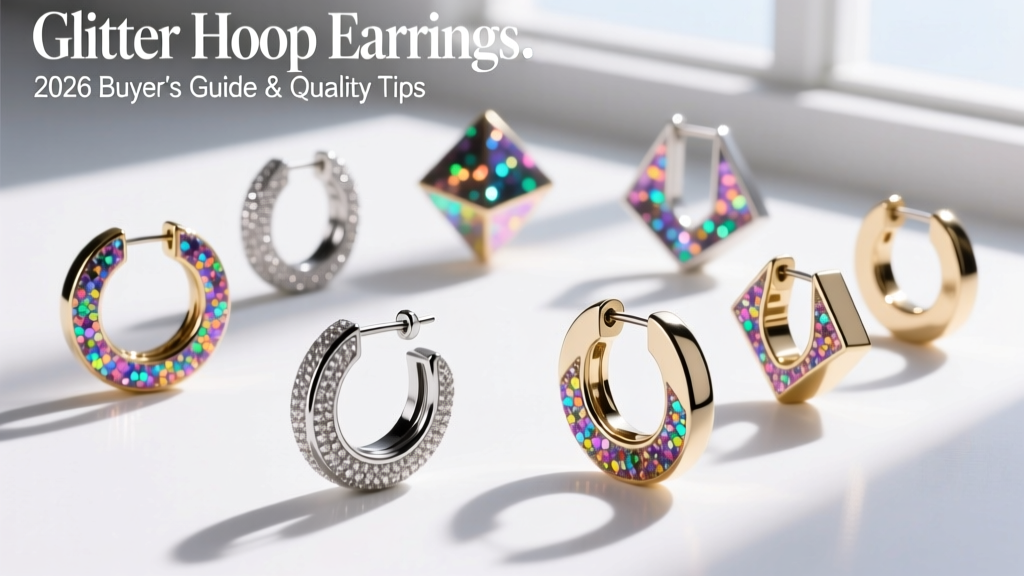
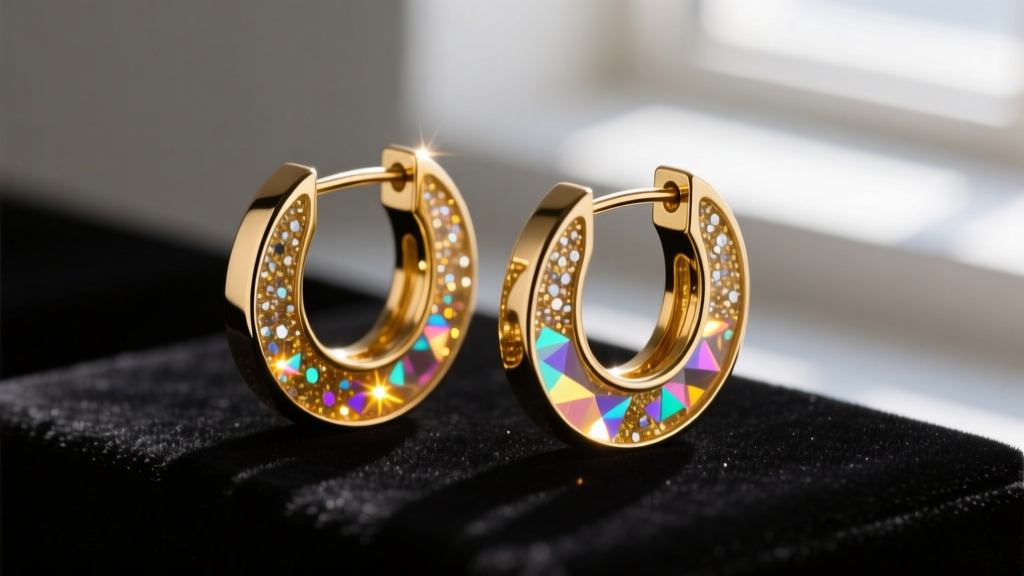
The evolution of glitter hoop earrings has been nothing short of revolutionary. Once relegated to cheap, flaky festival accessories that irritated sensitive piercings, the 2026 jewelry market has elevated the glitter hoop into a sophisticated, high-end statement piece. However, the influx of new manufacturing techniques means buyers must navigate a minefield of surface-glued imitations, substandard metal alloys, and poorly engineered closures.
Whether you are looking for a delicate huggie for your lobe or a bold, oversized hoop for a healed cartilage piercing, understanding the anatomy of these earrings is critical. This comprehensive buying guide breaks down exactly what to look for regarding material encapsulation, metal grading, gauge sizing, and long-term maintenance to ensure your jewelry remains as brilliant and safe as the day you bought it.
The Anatomy of High-Quality Glitter Hoops
The most critical point of failure in any glitter jewelry is how the sparkle is applied to the metal. In the current market, there are three primary methods used to create the 'glitter' effect, and only two are worth your investment.
1. UV-Resin Encapsulated Glitter (The 2026 Standard)
High-end manufacturers now use a technique where cosmetic-grade, precision-cut glitter is suspended in a medical-grade UV-cured epoxy or resin. This mixture is either cast into a channel on the hoop or completely encases a wire core. The result is a perfectly smooth, glass-like surface that traps the sparkle inside. This method prevents the glitter from flaking off into your ear canal or scratching your cornea if you rub your eye, while also protecting the glitter from oxidizing or dulling over time.
2. Micro-Pave Crystal 'Glitter' (The Luxury Alternative)
For those who prefer genuine stones over synthetic glitter, micro-pave settings offer a 'glitter' effect through the dense clustering of sub-1mm cubic zirconia or lab-grown diamonds. While significantly more expensive, this method provides unparalleled light refraction. However, buyers must ensure the stones are prong-set or bead-set rather than glued, as adhesive degrades with exposure to skin oils and lotions.
3. Surface-Applied Glitter (Avoid at All Costs)
Cheap, mass-produced hoops often rely on industrial adhesives to stick craft glitter directly onto the metal surface. According to dermatological insights on contact dermatitis and foreign body reactions, loose glitter particles and degrading glues are prime culprits for localized allergic reactions, fistula irritation, and micro-abrasions. If the product description does not explicitly state 'encapsulated' or 'resin-sealed,' assume it is surface-glued and avoid it.
Material & Metal Grading: Avoiding the 'Green Ear' Effect
A beautiful glitter finish is useless if the underlying metal causes your piercing to reject or become infected. When evaluating glitter hoop earrings, you must assess both the post (the part that goes through the skin) and the hoop body.
For any piercing that is still healing, or for individuals with known nickel allergies, the Association of Professional Piercers (APP) strictly recommends implant-grade titanium (ASTM F136) or solid 14k/18k gold. Niobium is also a highly biocompatible alternative.
For the decorative hoop body, 2026's best mid-tier options utilize Sterling Silver (925) coated in Gold Vermeil. The Federal Trade Commission (FTC) Jewelry Guides mandate that for a piece to be legally sold as 'vermeil,' it must have a sterling silver base and a gold plating of at least 2.5 microns thick. Anything less is considered standard 'gold plated' (usually 0.5 microns), which will wear away within weeks of daily wear, exposing the base metal to your skin and resulting in the dreaded green discoloration and contact dermatitis.
Sizing, Gauge, and Closure Mechanisms
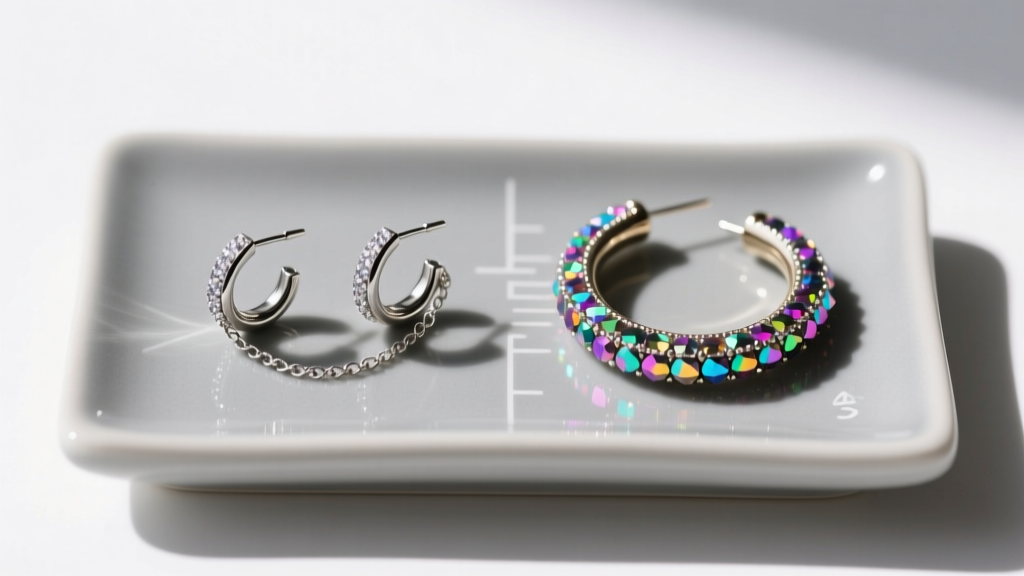
Choosing the correct dimensions and closure type is vital for both comfort and security. A hoop that is too tight will cause migration, while a poorly designed closure will snag on hair and tear the piercing.
| Hoop Style | Ideal Diameter | Standard Gauge | Best Closure Type | Primary Use Case |
|---|---|---|---|---|
| Glitter Huggies | 10mm - 12mm | 18G (1.0mm) or 20G (0.8mm) | Hinged Clicker | Standard lobe piercings, snug fit |
| Standard Hoops | 15mm - 25mm | 18G (1.0mm) | Latchback or Endless | Lobes, lower cartilage |
| Oversized Hoops | 30mm - 50mm+ | 16G (1.2mm) or 14G (1.6mm) | Endless (Snap) Ring | Statement lobe wear, stretched lobes |
| Cartilage Helix Hoops | 8mm - 10mm | 16G (1.2mm) | Segment Ring / Clicker | Healed helix, conch, or tragus |
Cartilage vs. Lobe: Does Glitter Work for Helix Piercings?
Yes, but with strict caveats. Cartilage piercings (like the helix or conch) are highly prone to irritation bumps if subjected to friction or uneven weight distribution. If you want a glitter hoop for a cartilage piercing, you must opt for a 16-gauge (1.2mm) thickness to provide structural rigidity. Furthermore, the glitter section should be concentrated on the lower half of the hoop to prevent the textured or resin-heavy area from resting directly inside the fistula (the piercing channel), which can trap bacteria and dead skin cells.
2026 Trend Report: Encapsulated Resin vs. Micro-Pave Crystals
As you shop this year, you will notice a distinct split in the market between colorful resin-cast hoops and brilliant micro-pave crystal hoops. Here is how they compare in real-world scenarios:
- Weight & Comfort: Resin-encapsulated glitter hoops are exceptionally lightweight, making them ideal for oversized 40mm+ statement pieces that won't stretch your lobe. Micro-pave hoops, due to the density of the metal and stones, are significantly heavier and better suited for smaller huggies or standard 20mm hoops.
- Color Versatility: Resin allows for vibrant, unnatural colors—think holographic shifts, deep neons, and matte-black glitter mixes. Micro-pave is generally limited to the natural refraction of clear, champagne, or black diamonds/CZ.
- Durability: High-grade UV resin is highly scratch-resistant but can yellow slightly over 3-5 years if exposed to constant, direct UV sunlight without a UV-inhibitor topcoat. Micro-pave will not yellow, but the tiny prongs can catch on knit sweaters and lose stones over time.
Care & Maintenance: Preventing Glitter Flake and Tarnish
Proper maintenance ensures your glitter hoops retain their brilliance without compromising the structural integrity of the resin or the metal.
The Ultrasonic Cleaner Warning
Never put glitter hoop earrings in an ultrasonic jewelry cleaner. The high-frequency sound waves and microscopic cavitation bubbles that make ultrasonic cleaners great for solid gold will literally shatter UV-cured resin and shake micro-pave stones right out of their settings.
The Safe Cleaning Protocol
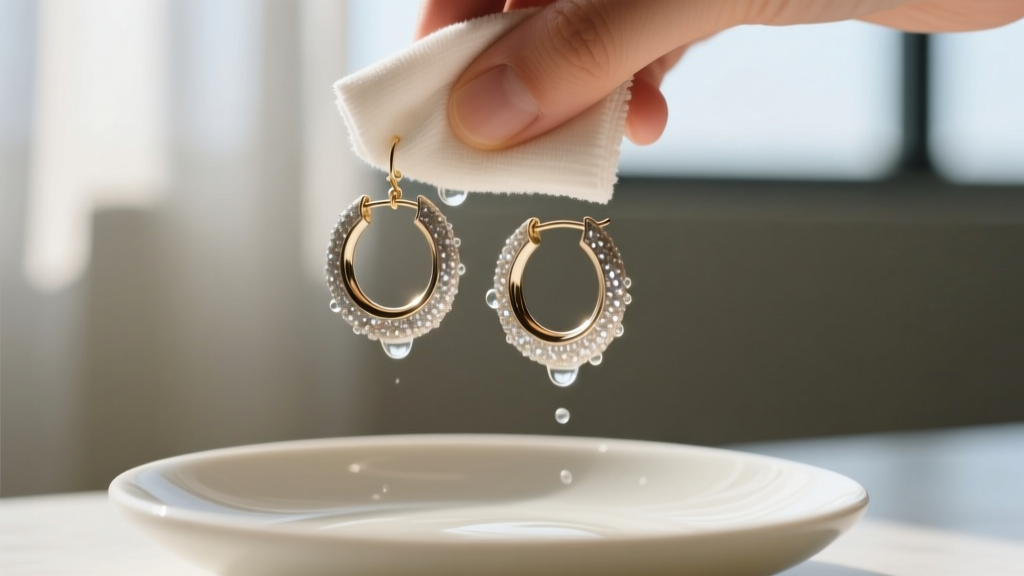
- Prep: Mix a few drops of mild, fragrance-free dish soap into a bowl of lukewarm water.
- Soak: Let the hoops sit in the solution for 3 to 5 minutes to loosen sebum, lotions, and dead skin.
- Agitate: Use an extra-soft baby toothbrush to gently sweep around the closure hinges and the back of the post. Do not scrub the resin surface aggressively.
- Dry: Pat completely dry with a lint-free microfiber cloth. Ensure the hinge mechanism is 100% dry before storing to prevent internal rust on the steel spring.
Final Verdict: What to Check Before Checkout
Before adding a pair of glitter hoop earrings to your cart, run through this quick 2026 quality checklist:
- Encapsulation Check: Is the glitter sealed inside resin or epoxy? (Reject surface-glued items).
- Post Material: Is the post made of ASTM F136 titanium or solid 14k+ gold? (Crucial for sensitive ears).
- Vermeil Thickness: If gold-toned, does the brand specify a minimum 2.5-micron vermeil coating over sterling silver?
- Closure Security: Does the hoop feature a hinged clicker or secure endless snap, rather than a flimsy latchback that will snag on your hair?
- Gauge Accuracy: Have you measured your piercing to ensure you are buying the correct wire thickness (18G for lobes, 16G for cartilage)?
By prioritizing encapsulated construction, biocompatible metals, and precision engineering, you can confidently invest in glitter hoop earrings that deliver maximum sparkle without sacrificing the health of your piercings.


