Goku Earring Buying Guide: Materials, Sizing & Enamel Quality
Discover what to look for when buying a Goku earring. Our guide covers Potara styles, hypoallergenic metals, gauge sizes, and enamel quality.

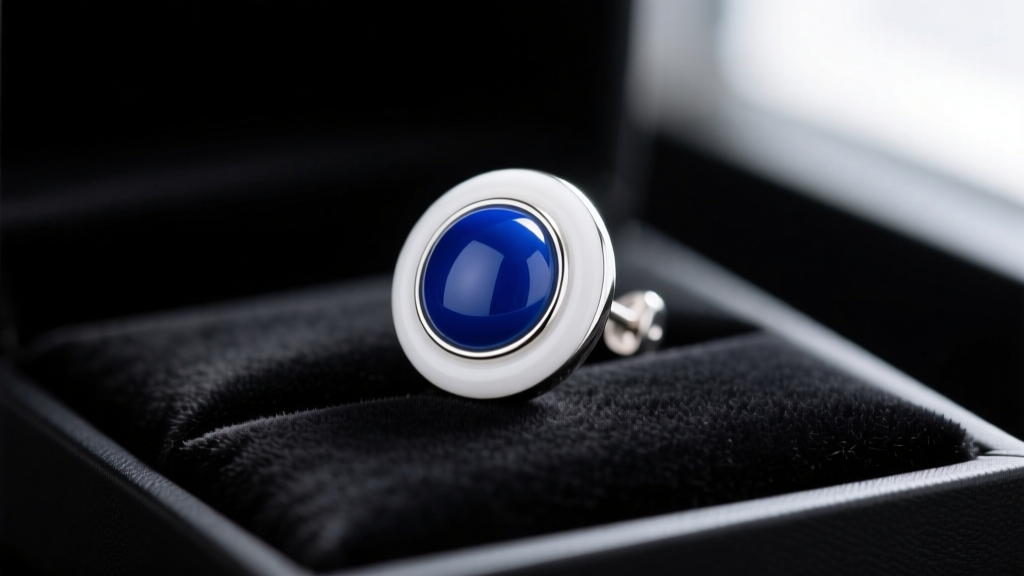
The search for the perfect goku earring has evolved dramatically. As we move through 2026, anime-inspired jewelry has transcended cheap convention-center souvenirs, entering the realm of curated, fine-crafted accessories. Whether you are hunting for the iconic Potara fusion earrings worn by the Supreme Kais (and later Goku and Vegeta to form Vegito) or subtle Dragon Ball orb studs, understanding the metallurgy and construction of these pieces is critical. This buying guide cuts through the marketing fluff to help you identify high-quality anime jewelry that will not irritate your piercings or fade after a month of wear.
Decoding the Search: Potara Orbs vs. Dragon Motifs
When fans search for a 'goku earring,' they are typically looking for one of two distinct styles. The first is the Potara earring, characterized by a spherical orb intersected by a perpendicular halo ring. According to the Dragon Ball Wiki, these are sacred artifacts that allow for permanent fusion. In jewelry design, translating this 3D geometry into a wearable, comfortable earring requires precise bezel setting and structural balancing so the halo does not flip upside down on the earlobe.
The second category encompasses broader Super Saiyan and Dragon Ball motifs, such as four-star orb studs, Shenron silhouette hoops, and aura-shaped dangles. While these offer more variety in sizing, they often rely heavily on colored enamels and intricate metal stamping, which brings us to the most crucial aspect of your purchase: the base metal.
The Metallurgy of Anime Jewelry: Avoiding the 'Green Ear' Effect
The vast majority of budget anime jewelry is cast from 'Tibetan Silver' or generic zinc alloys. These materials are notorious for containing high levels of nickel and cadmium. When zinc alloy reacts with the natural acids in your skin, it oxidizes rapidly, leaving a green or black residue on your earlobe. More concerningly, nickel exposure is a leading cause of allergic contact dermatitis, which can cause severe swelling, weeping, and long-term sensitization, as detailed by the Mayo Clinic.
To ensure your piercings remain healthy, you must look for specific, implant-grade materials. The Association of Professional Piercers (APP) strongly recommends G23 titanium and 316L surgical steel for body jewelry. Sterling silver (925) is also acceptable for fully healed lobes, provided it is rhodium-plated to prevent tarnish.
Material Tier List for Anime Earrings
| Material Grade | Pros | Cons | Ideal For |
|---|---|---|---|
| G23 Titanium | 100% hypoallergenic, lightweight, highly durable | Harder to cast into intricate details, higher cost | Cartilage piercings, sensitive lobes |
| 316L Surgical Steel | Affordable, takes a high polish, strong | Contains trace nickel (safe for most, not all) | Standard healed lobe piercings |
| 925 Sterling Silver | Excellent detail casting, premium feel | Tarnishes easily, too soft for threadless posts | Special occasion wear, healed lobes |
| Zinc Alloy / Brass | Extremely cheap, easy to mass-produce | Causes allergies, turns skin green, bends easily | Display only or cosplay props (avoid wearing) |
Sizing and Gauge: Getting the Fit Right
Anime earrings often prioritize visual impact over anatomical comfort, leading to sizing issues. A standard Potara earring orb typically measures between 8mm and 12mm in diameter, with the outer halo extending to 18mm. While this looks proportional on a standard earlobe, it can easily overwhelm a petite ear or drag down a thin piercing channel.
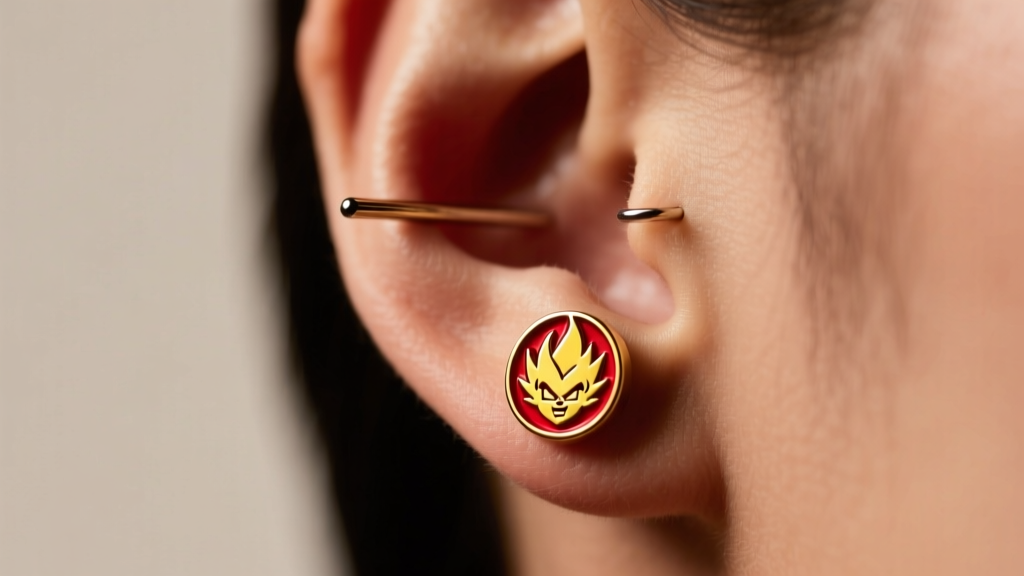
Furthermore, pay strict attention to the post gauge. Standard lobe piercings are usually 20G (0.81mm) or 18G (1.02mm). If you are adapting a Goku-themed stud for a cartilage piercing (like the helix or tragus), you need an 18G or 16G (1.29mm) post to prevent the 'cheese-cutter effect,' where a thin wire slowly migrates through the cartilage under the weight of the charm.
The Problem with Butterfly Backs
Most mass-produced anime dangles and heavy studs utilize standard butterfly friction backs. These are highly discouraged for long-term wear. The crevices in butterfly backs trap sebum, dead skin cells, and bacteria, leading to foul odors and localized infections. For heavy Goku aura dangles or large Potara hoops, upgrade to secure screw-backs or silicone o-rings. If you are wearing a DBZ stud in a cartilage piercing, always swap the post for a flat-back labret to avoid pressure necrosis against the back of your ear while sleeping.
Enamel Techniques: Why Your Potara Orbs Might Fade
The iconic blue and green colors of the Potara earrings, or the vibrant orange of a Goku gi motif, are achieved through enamel work. However, not all enamel is created equal, and understanding the difference will dictate the lifespan of your jewelry.
- Cold Enamel (Epoxy Resin): This is a two-part liquid resin poured into metal recesses and cured at room temperature. It is cheap and allows for vibrant, complex gradients (perfect for Super Saiyan aura effects). However, epoxy resin is highly susceptible to UV degradation. If you wear cold enamel earrings daily in the sun, the blue orbs will inevitably yellow and become brittle within 12 to 18 months.
- Vitreous Enamel (Kiln-Fired): This traditional technique involves fusing powdered glass to the metal base at temperatures exceeding 1400°F. The result is a hard, glass-like finish that is completely impervious to UV light, chemicals, and scratching. If you want a Potara earring that will retain its brilliant Supreme Kai blue for a lifetime, vitreous enamel is the only acceptable choice.
Care and Maintenance Checklist
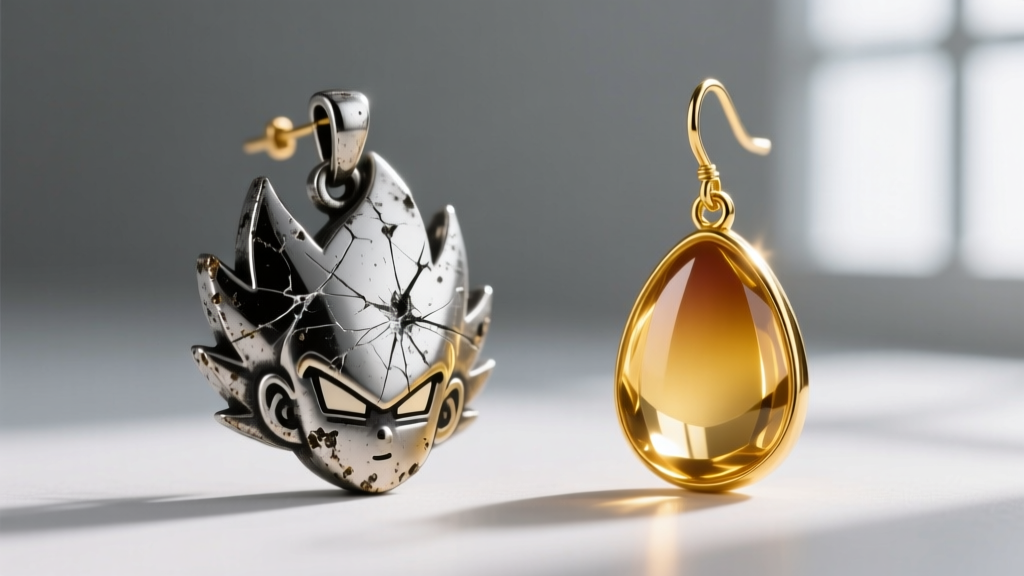
Proper maintenance ensures your anime jewelry remains in pristine condition. Avoid the common mistakes that ruin delicate enamel and specialty metals:
- Ditch the Ultrasonic Cleaner: While ultrasonic cleaners are great for plain diamond studs, the high-frequency vibrations will shatter vitreous enamel and cause cold epoxy resin to peel away from the metal bezel.
- Use Mild Surfactants: Clean your earrings using a few drops of mild, fragrance-free dish soap and warm water. Use a baby toothbrush to gently dislodge debris from the halo rings and prongs.
- Chemical Avoidance: Hairspray, perfumes, and chlorine will degrade the rhodium plating on sterling silver and cloud resin enamels. Always put your earrings on after applying cosmetics.
- Storage: Store enamel pieces individually in soft microfiber pouches. Storing them loose in a jewelry box will cause metal friction that scratches the enamel surface.
Pricing Tiers: What Should a Goku Earring Actually Cost?
When shopping in 2026, price is a strong indicator of the manufacturing ethics and material safety. Here is what you should expect to pay for quality anime earwear:
- The Danger Zone ($8 - $18): Mass-produced zinc alloy pieces with epoxy resin. These are fine for a weekend cosplay convention but should not be worn in fresh piercings or as daily jewelry.
- The Sweet Spot ($45 - $85): 925 Sterling silver or 316L steel bases featuring high-grade cold enamel or cubic zirconia accents. These offer excellent detail, safe metals for healed piercings, and a premium weight.
- The Collector Tier ($120 - $250+): Solid 14k gold or gold vermeil with kiln-fired vitreous enamel and internally threaded titanium posts. These are artisan-crafted, heirloom-quality pieces designed for lifelong daily wear without degradation.
Final Verdict: Building Your Saiyan Collection
Finding a high-quality goku earring requires looking past the initial character appeal and scrutinizing the craftsmanship. By prioritizing implant-grade metals like G23 titanium or 316L steel, demanding secure and hygienic backing mechanisms, and understanding the limitations of resin versus vitreous enamel, you can build an anime jewelry collection that is as enduring as the Saiyans themselves. Invest in the metallurgy first, and the aesthetic will naturally follow.


