Gold Bamboo Earrings: Metal Properties & Care Guide
Discover how karat purity, alloy blends, and tubing thickness impact the durability, weight, and longevity of your gold bamboo earrings.

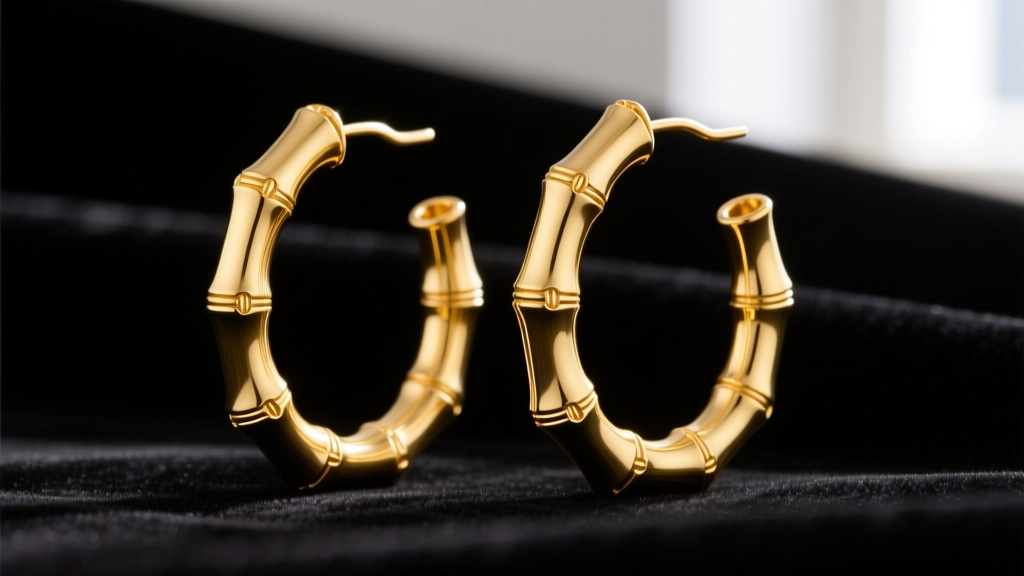
The Anatomy of Gold Bamboo Earrings
Bamboo earrings, a foundational staple of streetwear and hip-hop culture since the 1980s, are defined by their distinctive ribbed nodes that mimic the organic joints of a bamboo stalk. While the silhouette is universally iconic, the material composition dictates whether your hoops will become a lifelong heirloom or a tarnished, dented memory. When shopping for gold bamboo earrings, understanding the metallurgical properties of the gold alloy, the structural engineering of the tubing, and the mechanics of the hinge is non-negotiable.
The defining feature of bamboo hoops is the "node" or joint. In high-quality fine jewelry, these nodes are not merely cast indentations but individually soldered rings wrapped around the primary hoop tubing. This requires immense precision. As of 2026, advancements in laser-welding technology have allowed jewelers to attach these node rings to hollow tubing without compromising the thin walls of the primary tube, but the underlying gold alloy still dictates the long-term survival of the piece.
Solid Gold Karats: 10k vs 14k vs 18k for Bamboo Nodes
The purity of gold is measured in karats, but pure 24k gold is far too soft for everyday structural jewelry. To create durable gold bamboo earrings, metallurgists alloy pure gold with metals like copper, silver, and zinc. According to the Gemological Institute of America (GIA), these alloy ratios drastically alter the metal's Vickers Hardness (HV) score, which directly impacts how well the protruding bamboo nodes will resist denting and scratching.
18k Gold (75% Pure, ~125 HV)
18k gold offers a rich, buttery yellow hue that is highly prized in luxury markets. However, its relatively low hardness makes it susceptible to micro-dents, particularly on the high points of the bamboo nodes where the earrings frequently brush against hair, clothing, and phone screens. 18k is best reserved for smaller bamboo huggies or occasional-wear statement pieces.
14k Gold (58.5% Pure, ~140 HV)
14k gold is the metallurgical sweet spot for bamboo hoops. The higher concentration of copper and zinc provides a robust crystalline structure that resists deformation while maintaining a warm, authentic gold color. For large-diameter bamboo hoops (50mm and above) that swing and catch on objects, 14k gold ensures the soldered nodes remain intact and the tubing resists ovaling over time.
10k Gold (41.7% Pure, ~160 HV)
10k gold is the hardest and most durable option, highly resistant to scratching and bending. The trade-off is a slightly paler yellow color and a higher risk of skin irritation for those with copper or nickel sensitivities. It is an excellent choice for heavy, oversized bamboo hoops where structural integrity is the absolute priority.
Hollow Tubing vs. Solid Wire: Weight and Structural Integrity
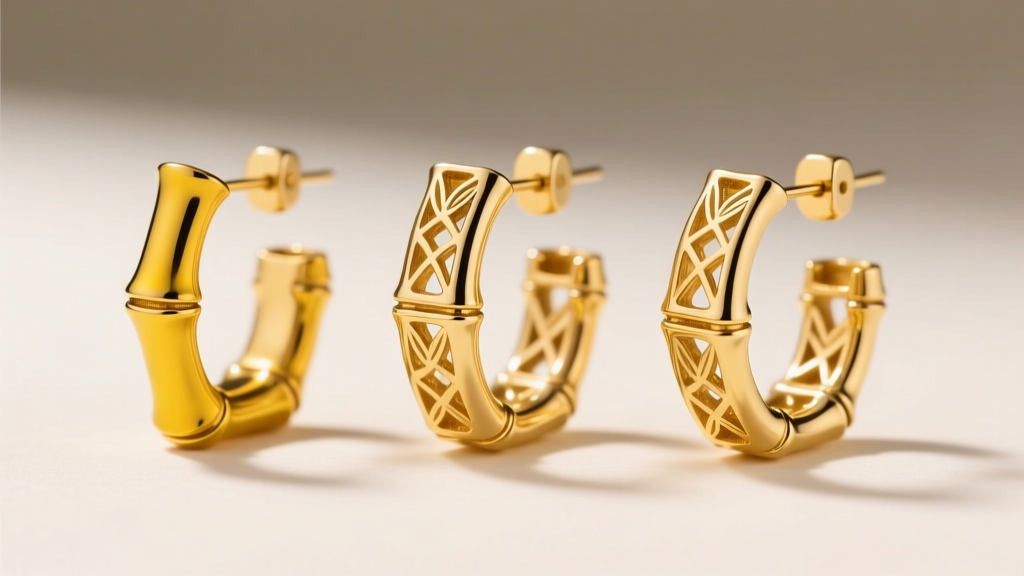
The vast majority of gold bamboo earrings over 30mm in diameter are constructed using hollow tubing. Solid wire bamboo hoops of this size would be prohibitively heavy, causing severe earlobe stretching and eventual tearing. Hollow tubing is characterized by its outer diameter (OD) and wall thickness.
A standard high-quality bamboo hoop features a 2.5mm to 3.5mm OD with a wall thickness of 0.4mm to 0.6mm. This specific ratio provides the visual bulk required for the bamboo aesthetic while keeping the weight under 8 grams per earring. However, hollow tubing introduces a specific failure mode: crushing. If a hollow 18k gold bamboo earring is dropped onto a hard tile floor or slept in, the thin walls can dent inward. Because the nodes are often soldered tightly against the tube, a dent near a node is nearly impossible for a jeweler to burnish out without risking the solder joint.
The Plating Spectrum: Vermeil, Gold-Filled, and Flash Plated
If solid gold is outside your budget, plated alternatives require careful scrutiny. The crevices and high points of bamboo nodes experience high friction. Flash-plated earrings (typically less than 0.1 microns of gold over brass) will wear through to the base metal on the nodes within weeks of daily wear. Gold-filled options (a thick mechanical bond of 12k or 14k gold) offer excellent longevity, but the bamboo nodes must be cast rather than soldered to avoid burning off the gold layer during assembly. Vermeil (a minimum of 2.5 microns of gold over sterling silver) is the safest plated alternative, providing a hypoallergenic base that won't turn your skin green when the high-friction nodes eventually wear through.
Material Comparison Chart
| Material Type | Vickers Hardness | Node Durability | Avg. Price (50mm Hoops) | Best Use Case |
|---|---|---|---|---|
| 18k Solid Gold | ~125 HV | Moderate (Prone to micro-dents) | $1,200 - $2,500+ | Luxury huggies, occasional wear |
| 14k Solid Gold | ~140 HV | High (Ideal balance) | $450 - $900 | Everyday streetwear, large hoops |
| 10k Solid Gold | ~160 HV | Very High (Scratch resistant) | $250 - $500 | Oversized heavy hoops, budget solid |
| 14k Gold-Filled | N/A (Brass core) | High (If cast, not soldered) | $80 - $150 | Daily wear, budget-conscious |
| Vermeil (Sterling) | ~60 HV (Silver) | Moderate (Plating wears on nodes) | $120 - $250 | Hypoallergenic plated option |
Post and Hinge Mechanics: The Hidden Weak Points
The structural integrity of gold bamboo earrings isn't just about the hoop; it's about how the hoop connects to the ear. The post (the wire that passes through the piercing) must bear the dynamic weight of the swinging bamboo nodes. According to care guidelines from Jewelers of America, ensuring the post gauge matches the weight of the earring is critical for preventing tearing.
- 14 Gauge (1.6mm): The gold standard for bamboo hoops over 40mm. A 14k gold 14g post provides the rigidity needed to prevent bending when the heavy nodes catch on a sweater.
- 16 Gauge (1.2mm): Common in lighter, mass-produced hoops. While it fits standard piercings, a 16g post on a heavy solid-gold bamboo hoop will eventually bend backward, altering the hang of the earring.
Furthermore, the hinge mechanism on bamboo hoops is a critical failure point. Because the tubing is hollow, the hinge barrel must be seamlessly integrated. Look for "snap-back" or "clicker" hinges that feature a flush closure, ensuring the bamboo pattern remains visually continuous when the earring is closed.
"When inspecting hollow bamboo hoops, always listen for the 'click' of the hinge. A loose hinge indicates poor tolerances in the barrel, which will eventually lead to the post snapping off under the leverage of the heavy nodes." — Master Jeweler Bench Note
Expert Care for Textured Gold Surfaces
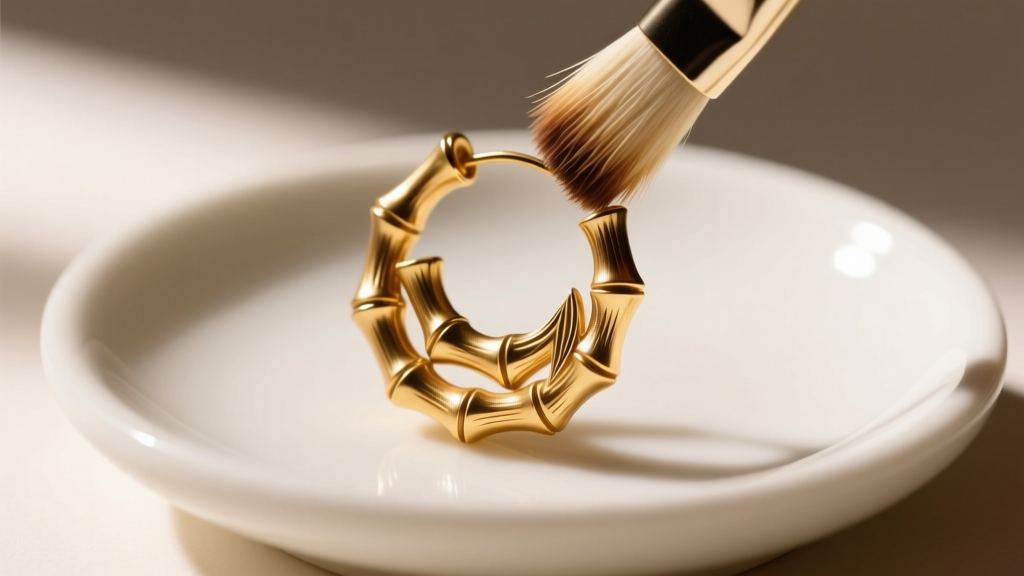
The ribbed texture of bamboo earrings makes them notorious traps for lotions, sebum, and environmental dust. Cleaning them requires a specific approach to protect both the gold alloy and the hollow interior.
Why You Must Avoid Ultrasonic Cleaners
While ultrasonic cleaners are excellent for diamond rings, they are highly dangerous for hollow gold bamboo earrings. The high-frequency vibrations can shake loose the delicate laser-welded node rings. More critically, if there is a microscopic pinhole in the solder joint of the hinge or nodes, the ultrasonic fluid will be forced inside the hollow tubing. Once trapped, this fluid will slowly leak out over time, causing persistent tarnishing and skin irritation.
The Proper Cleaning Protocol
- Mix a solution of warm water and a few drops of phosphate-free dish soap in a ceramic bowl.
- Submerge the earrings for 3 to 5 minutes to loosen debris trapped in the node crevices.
- Use a baby-soft toothbrush or a dedicated jewelry cleaning brush to gently sweep the grooves. Never use hard-bristled brushes on 18k or 14k gold, as the bristles can leave micro-scratches on the polished nodes.
- Rinse under lukewarm running water and pat dry with a lint-free microfiber cloth. Ensure the hinge area is completely dry before storing to prevent moisture-induced corrosion on the internal steel springs (if present).
Final Verdict: Choosing Your Alloy
Selecting the perfect pair of gold bamboo earrings requires balancing aesthetic desires with metallurgical realities. If you are investing in a luxury pair intended for daily, lifelong wear, 14k solid gold remains the undisputed champion, offering the necessary Vickers hardness to protect the iconic bamboo nodes from the rigors of daily life. For those prioritizing budget without sacrificing skin safety, heavy vermeil or cast gold-filled options provide the streetwear aesthetic with respectable longevity. By understanding the wall thickness, post gauge, and alloy composition, you can ensure your bamboo hoops remain as bold and unyielding as the culture that birthed them.


