2026 Earring Design Trends: Modular & Kinetic Ear Architecture
Explore 2026 earring design trends focusing on modular and kinetic styles. Discover gauge specs, material grades, and styling frameworks for dynamic ears.

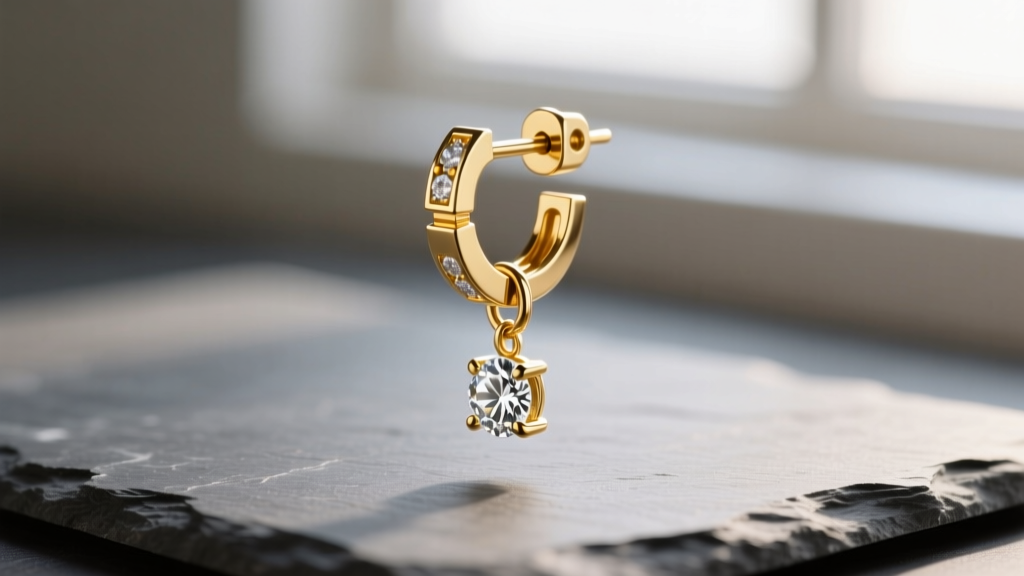
The Engineering Behind 2026's Kinetic Earring Design
As we navigate the 2026 jewelry market, the most significant shift in earring design is the departure from static silhouettes toward dynamic, kinetic architecture. Modern collectors are no longer satisfied with simple studs or rigid hoops; they demand movement, adaptability, and mechanical intrigue. This evolution is heavily driven by advancements in micro-CAD (Computer-Aided Design) and 3D printing tolerances, allowing jewelers to integrate microscopic hinges, ball-bearing swivels, and tension-set pendulums directly into the ear wire.
Kinetic earring design relies on the 'pendulum effect,' where a lower suspended element moves independently of the primary anchor point. However, this introduces complex biomechanical challenges. The constant kinetic friction and micro-oscillations can cause metal fatigue in poorly engineered joints. To combat this, top-tier manufacturers are now utilizing Grade 23 titanium (Ti-6Al-4V ELI) for internal hinge pins, even when the outer casing is cast in 18k gold. Titanium’s superior tensile strength and low modulus of elasticity ensure the moving parts withstand years of oscillation without warping or snapping.
According to manufacturing insights published by JCK Online, the integration of horological techniques—such as jewel bearings and micro-screws—into fine jewelry has surged by 40% over the last two years, bridging the gap between watchmaking and ear curation.
Modular Ear Architecture: Day-to-Night Adaptability
Parallel to kinetic movement is the rise of modular earring design. The modern consumer values versatility, leading to the development of 'transformable' earrings that can shift from a minimalist daytime stud to an elaborate evening chandelier in seconds. This is achieved through precision-machined threading systems and magnetic locking mechanisms.
- Internal Micro-Threading: Unlike traditional external screws that can strip or harbor bacteria, 2026's premium modular pieces use M2 or M3 internal threading. The male component is smoothly tapered, ensuring a seamless insertion through the fistula before screwing into the decorative female component.
- Tension-Fit Sleeves: For cartilage and huggies, designers are employing friction-fit silicone O-rings encased in gold sleeves, allowing drops to slide on and lock securely without the need for tiny, easily lost screws.
- Magnetic Clasp Systems: Utilizing N52-grade neodymium magnets shielded in hypoallergenic platinum, some ear cuffs and drops snap onto the primary stud with a satisfying, secure click, completely eliminating the need for secondary piercings.
Material Grades and Gauge Constraints
A critical failure point in kinetic and modular earring design is ignoring the relationship between metal hardness, gauge thickness, and kinetic weight. A standard 20-gauge (0.8mm) wire is entirely insufficient for supporting a modular drop, as the added leverage will stretch the earlobe fistula over time. Below is the structural matrix for dynamic earring design in 2026.
| Component | Recommended Material | Vickers Hardness (HV) | Minimum Gauge | Max Kinetic Load |
|---|---|---|---|---|
| Primary Anchor (Stud/Hoop) | Platinum 950/Ru | 135 - 165 | 16g (1.2mm) | 8.5 grams |
| Hinge Pins & Swivels | Grade 23 Titanium | 300 - 340 | 18g (1.0mm) | N/A (Internal) |
| Modular Drop Connectors | 18k White Gold (Nickel-Free) | 170 - 210 | 14g (1.6mm) | 12.0 grams |
| Ear Cuff Tension Bands | Spring-Hardened 14k Rose | 180 - 220 | 12g (2.0mm) | 4.0 grams |
For deeper insights into how alloy compositions affect jewelry durability and setting security, the Gemological Institute of America (GIA) provides extensive metallurgical research that informs these structural decisions.
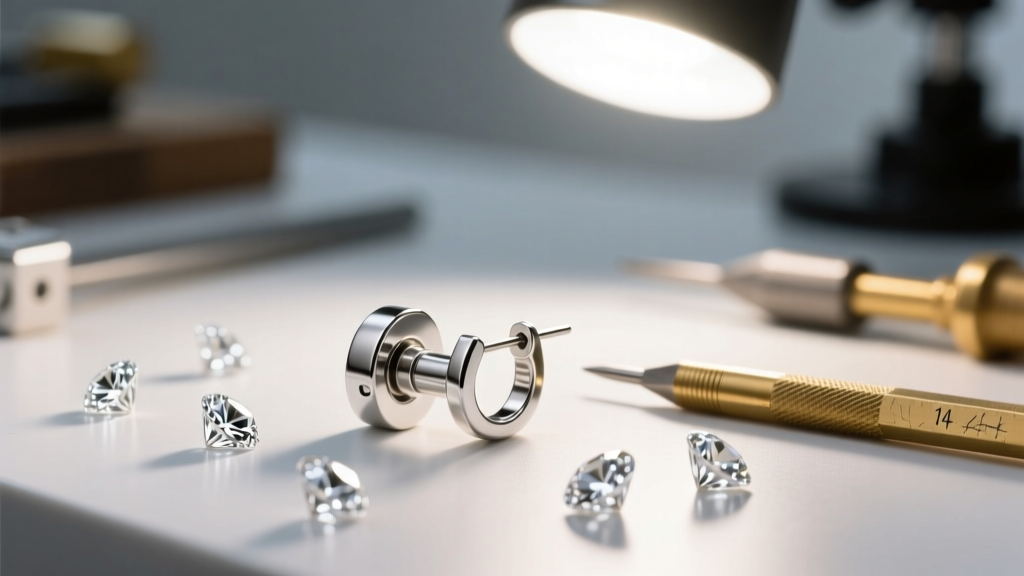
Failure Modes and Troubleshooting Kinetic Jewelry
While dynamic earring design is visually captivating, it introduces specific failure modes that collectors and jewelers must anticipate. Understanding these vulnerabilities is key to maintaining the integrity of the piece.
'The most common repair we see with kinetic earrings isn't a broken hinge; it's the loss of micro-pavé stones caused by vibrational friction. When a drop swings continuously, the micro-vibrations can slowly work melee diamonds out of poorly burnished settings. We now mandate laser-welded micro-beads over traditional prongs for any moving component.' — Master Bench Jeweler, 2026
Galvanic Corrosion in Modular Parts
When modular earrings mix different metals—for example, a sterling silver anchor with a 14k gold drop—moisture trapped in the threading can cause galvanic corrosion. This electrochemical reaction degrades the less noble metal (silver), causing the threads to seize. To prevent this, always ensure modular components are cast from the exact same alloy family, or utilize a ceramic coating on the internal threads.
Lobe Tearing from Asymmetrical Weight
Kinetic drops generate momentum. A 5-gram drop swinging freely exerts significantly more downward force on the earlobe than a static 5-gram stud. To counteract this, designers are engineering 'counter-weighted' studs, where the back or the front face of the primary anchor is deliberately cast heavier to distribute the kinetic load across a wider surface area of the earlobe.
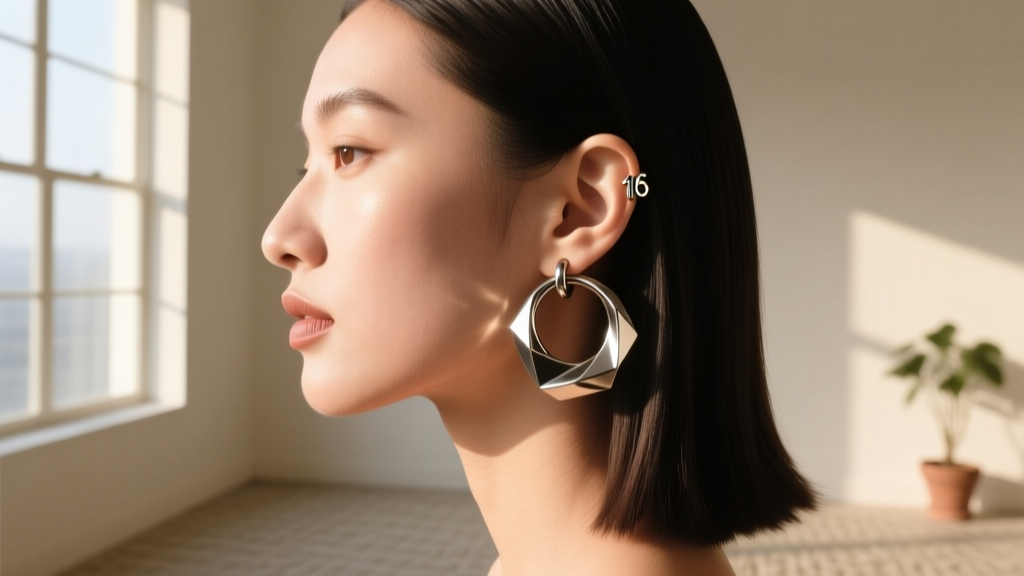
Styling Framework: Balancing Asymmetry and Motion
Styling kinetic and modular earrings requires a strategic approach to facial geometry and ear curation. Because these pieces command attention through movement, they should act as the focal point of your styling framework.
Face Shape Considerations
- Round Faces: Opt for vertical kinetic drops with linear, elongated charms. The downward pendulum motion creates an optical illusion that lengthens the jawline and neck. Avoid wide, swinging geometric hoops that add horizontal volume.
- Square Faces: Soften angular jawlines with kinetic designs featuring curved, organic shapes—such as moving teardrops or spherical pearls suspended on invisible nylon threads. The fluid motion contrasts beautifully with sharp bone structure.
- Heart-Shaped Faces: Balance a wider forehead with chandelier-style modular earrings that feature kinetic movement concentrated at the bottom third of the design, drawing the eye downward to balance the chin.
The Curated Ear Ecosystem
When integrating a kinetic piece into a multi-piercing setup, placement is critical. Reserve the primary lobe piercing (01) or the outer conch for your kinetic anchor. These locations provide the necessary spatial clearance for the drop to swing without tangling in adjacent hair or catching on high-collared clothing. Pair the kinetic anchor with static, low-profile huggies or flush-set cartilage studs in the helix and tragus to create a balanced ecosystem that highlights the movement without overwhelming the ear's real estate.
Ultimately, the 2026 earring design landscape proves that jewelry is no longer just an adornment; it is an interactive, mechanical extension of the wearer. By prioritizing structural engineering, precise gauge selection, and thoughtful styling, you can fully embrace the dynamic future of ear architecture.


