The Engineering of Gold Climber Earrings: Fit & Tension
Discover the metallurgy, wire gauge, and tension mechanics behind gold climber earrings. Learn how to select the perfect ear crawler for your lobe anatomy.

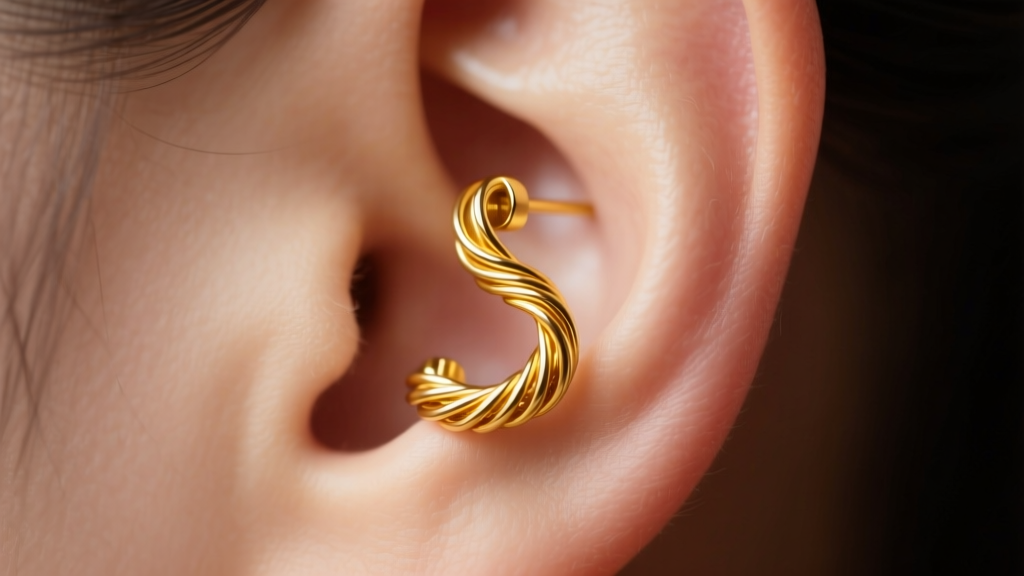
The Biomechanics of Ear Crawlers: How Tension Works
Unlike traditional drop earrings or studs that rely on gravity and a secure friction backing, gold climber earrings (frequently referred to as ear crawlers) operate on complex principles of spring tension, friction, and anatomical contouring. The fundamental engineering of a climber involves a primary post that passes through the ear piercing fistula, connected to a structural spine that curves upward along the helix or lobe margin. The terminal end of this spine features a tension clasp or curved wire that pinches the posterior tissue of the ear.
For a climber to function without drooping or slipping, the metal must exhibit specific elastic properties. When the wearer attaches the earring, they slightly widen the posterior clasp, creating elastic deformation. Once released, the metal attempts to return to its original shape, generating a continuous, gentle compressive force against the earlobe. If the design relies solely on a rigid grip without accounting for the compressibility of human tissue, it will either slip off during movement or cause ischemic pain by restricting blood flow to the lobe.
Metallurgical Breakdown: Which Gold Karat Holds Tension?
The most critical factor in the longevity and functionality of gold climber earrings is the metallurgical composition of the alloy. Pure gold is highly malleable and lacks the yield strength required to maintain spring tension over repeated use. According to the Gemological Institute of America (GIA), alloying gold with metals like copper, silver, and zinc drastically alters its Vickers Hardness (HV) and tensile strength.
| Gold Karat | Approx. Vickers Hardness (HV) | Yield Strength | Climber Suitability |
|---|---|---|---|
| 24k (Pure) | 25 - 40 HV | Extremely Low | Poor (Will permanently bend and lose grip) |
| 22k | 60 - 80 HV | Low | Fair (Requires excessively thick wire gauges) |
| 18k Yellow | 120 - 150 HV | Moderate/High | Good (Standard for fine jewelry, requires precise annealing) |
| 14k Yellow | 150 - 180 HV | High | Excellent (Optimal spring tension and structural memory) |
| 14k/18k White | 160 - 200 HV | Very High | Excellent (Nickel or palladium alloys provide superior rigidity) |
When manufacturing 18k gold climbers, jewelers must utilize work hardening techniques—such as drawing the wire through a draw plate or hammering—to increase the dislocation density within the crystal lattice, thereby stiffening the tension wire. If an 18k climber is fully annealed (softened) during the soldering of decorative elements, it will fail to grip the ear.
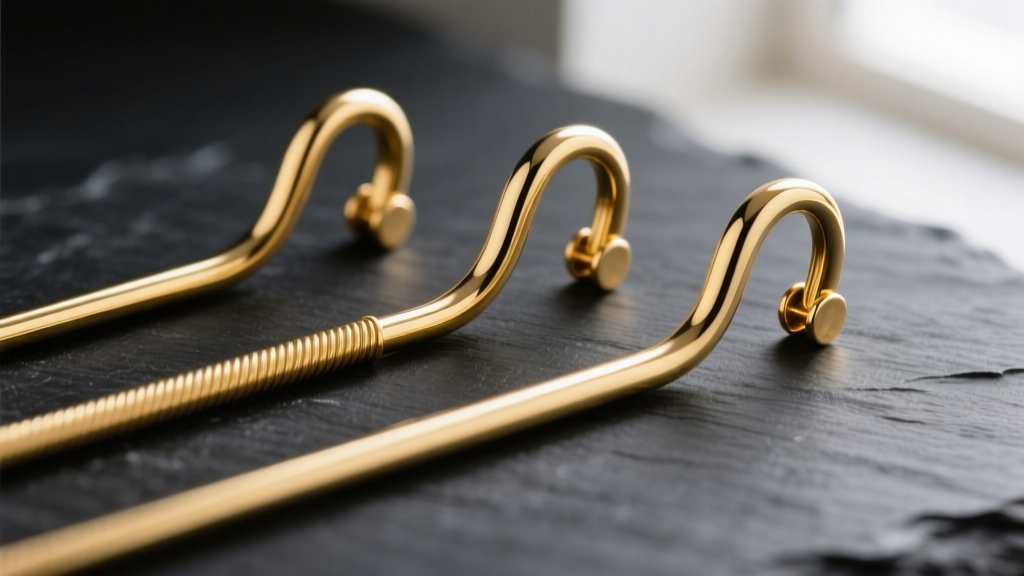
Wire Gauge and Piercing Compatibility
A common engineering oversight in mass-produced ear crawlers is the failure to differentiate between the post gauge and the structural spine gauge. The Association of Professional Piercers (APP) notes that standard lobe piercings are typically 20G (0.81mm) or 18G (1.02mm), with some stretched or cartilage piercings at 16G (1.29mm).
The Dual-Gauge Requirement
The post that enters the fistula must match the piercing gauge to prevent the "cheese-cutter effect," where a wire that is too thin migrates through the tissue under the weight of the earring. However, the decorative spine and tension wire of the climber must be significantly thicker. A high-quality gold climber earring will feature an 18G or 20G post that transitions into a 14G (1.63mm) or 12G (2.05mm) structural spine. This thicker spine resists lateral torsion, ensuring that when the ear is bumped, the entire earring does not twist out of alignment.
Common Failure Modes and Structural Troubleshooting
Even well-crafted gold climber earrings can fail if the biomechanical tolerances are miscalibrated. Below are the primary failure modes and their mechanical solutions:
- Ischemic Pinch (Tension Too High): If the posterior clasp exerts more than 15-20 grams of continuous pressure, it restricts capillary blood flow, leading to tissue necrosis or severe discomfort after 4 hours of wear. Fix: Gently widen the S-curve using nylon-jaw pliers to reduce the clamping force.
- The Slip (Tension Too Low): Caused by metal fatigue or purchasing a climber designed for thick lobes while having thin lobes. The earring droops forward. Fix: Squeeze the tension gap closed by 1-2mm, or apply a microscopic dot of clear silicone earring backing glue to the interior of the clasp for added friction.
- Fistula Migration (Post Angle Error): If the post is soldered at a strict 90-degree angle to the spine, but the wearer's piercing was done at a slight upward tilt, the climber will gap away from the ear. Fix: Custom jewelers can slightly bend the post base using a mandrel to match the specific fistula angle.
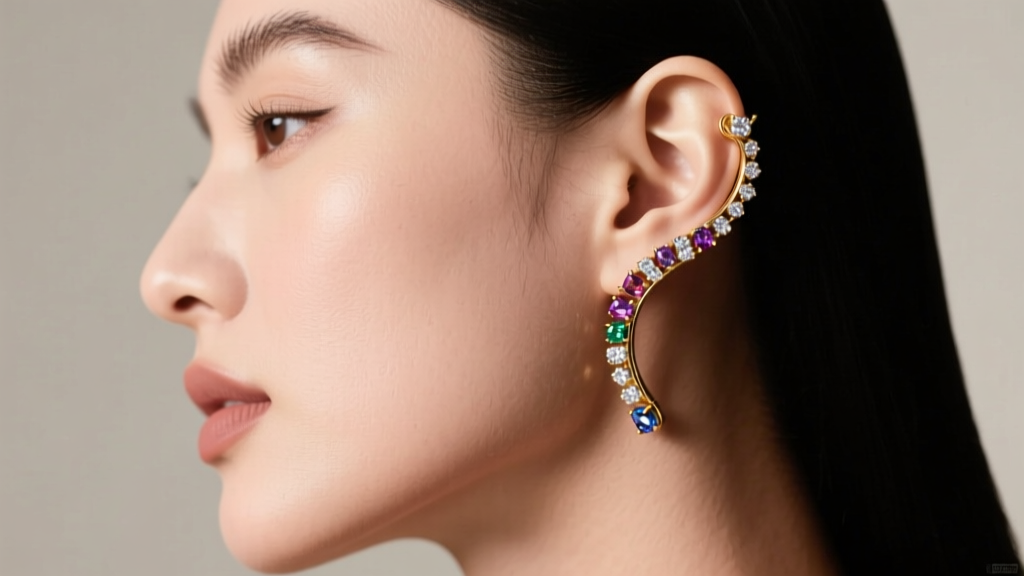
Anatomical Calibration: Measuring Your Lobe Thickness
Human earlobes vary drastically in thickness, typically ranging from 4mm to 12mm at the point of a standard piercing. Because gold climbers rely on a fixed tension gap, buying off-the-shelf without considering your lobe thickness is a primary cause of fit failure.
Expert Measurement Tip: Use a digital caliper to measure the thickness of your earlobe directly behind the piercing hole. If your lobe is under 6mm, seek out climbers with a tight, aggressive S-curve tension gap of 3-4mm. If your lobe is over 9mm, you require a elongated U-curve clasp with a 7-8mm resting gap to accommodate the tissue without causing pressure necrosis.
Expert Buying Framework: What to Inspect Before Purchasing
When evaluating gold climber earrings for your collection or retail inventory, bypass the aesthetic details initially and conduct a structural audit. First, check the hallmark to verify the karat; remember that 14k will inherently hold tension better than 22k. Second, inspect the transition point where the post meets the climber spine. This junction experiences the highest shear stress; it should feature a reinforced solder joint or be forged from a single continuous piece of wire. Finally, test the spring-back of the posterior clasp. Pull it open gently and release it. It should snap back immediately with a firm, resilient resistance. If it feels mushy or returns slowly, the alloy is either too pure or improperly work-hardened, and the earring will inevitably slip during wear.


