Gold Daisy Earrings: The 2026 Value & Budget Guide
Discover the true value of gold daisy earrings in 2026. Compare solid gold, vermeil, and plated pricing tiers to find the best budget-friendly floral studs.

The Anatomy of Floral Value: What Makes Gold Daisy Earrings Tick?
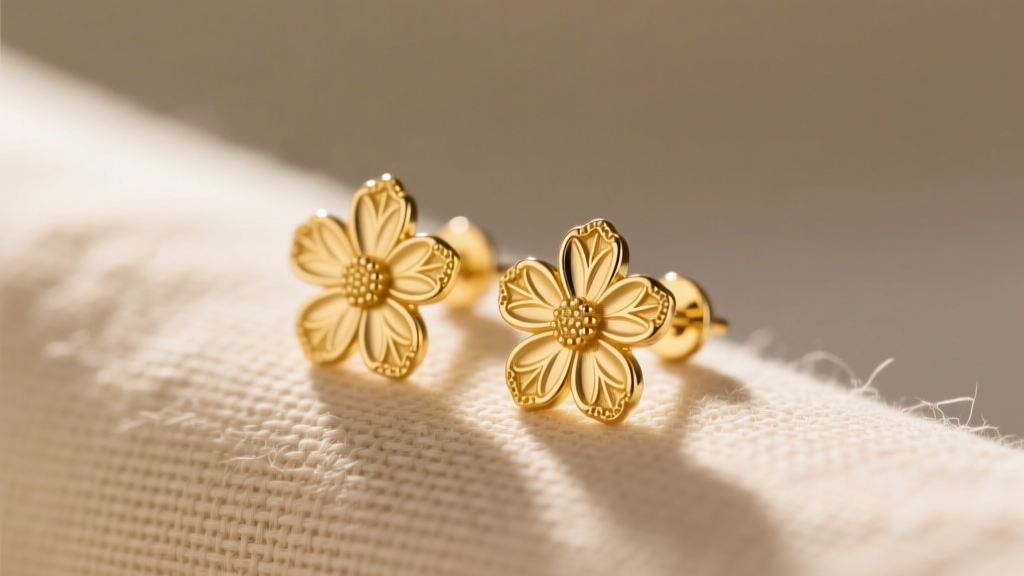
Botanical jewelry has firmly cemented its place in the modern accessory wardrobe, and gold daisy earrings remain at the absolute forefront of this floral renaissance. Whether you are leaning into the cottagecore aesthetic or seeking a subtle, nature-inspired minimalist stud, the daisy motif is a timeless staple. However, a quick market search in 2026 yields a bewildering spread of results: from $12 fast-fashion brass studs to $800 heirloom-quality solid gold pieces. How do you separate genuine craftsmanship from overpriced costume jewelry?
Assessing the true budget and value of floral earrings requires looking past the initial price tag. You must evaluate the metallurgy, structural integrity, and manufacturing techniques behind the piece. A budget-friendly pair of earrings is not necessarily the cheapest one; it is the one that offers the highest cost-per-wear without causing contact dermatitis or losing its finish after a month. In this comprehensive guide, we break down exactly what you should be paying for gold daisy earrings based on material grades, structural mechanics, and design complexity.
Material Tiers: Solid, Vermeil, and Plated Pricing Breakdown
The single biggest factor dictating the price of your daisy earrings is the base metal and the thickness of the gold layer. According to the Federal Trade Commission Jewelry Guides, there are strict legal definitions for gold terminology, yet many fast-fashion brands blur these lines in their marketing. Here is how the primary material tiers stack up in the current market.
| Material Grade | Base Metal | Gold Thickness / Composition | Expected Lifespan | 2026 Price Range (Stud Pair) |
|---|---|---|---|---|
| Solid 14k Gold | 58.5% Pure Gold Alloy | Solid throughout | Generational | $150 - $450 |
| Gold Vermeil | Sterling Silver (925) | Minimum 2.0 microns of 10k+ gold | 2 - 5 Years | $60 - $120 |
| Gold Filled | Brass or Copper | Gold layer is 5% of total weight | 5 - 10 Years | $40 - $90 |
| Gold Plated | Brass, Zinc, or Nickel | Less than 0.5 microns (flash plated) | 3 - 6 Months | $15 - $35 |
The Value Verdict: For everyday wear, gold vermeil offers the best intersection of budget and longevity. Because the base is sterling silver, you avoid the green skin discoloration associated with brass or copper bases. However, if you have highly sensitive skin or metal allergies, investing in solid 14k gold is non-negotiable, as the nickel or zinc alloys often found in plated brass can trigger severe contact dermatitis. For a deeper understanding of gold alloys and their skin-safe properties, the Gemological Institute of America (GIA) provides excellent educational resources on karat purity and alloy mixing.
Gauge, Weight, and Clasp Mechanics: The Hidden Costs
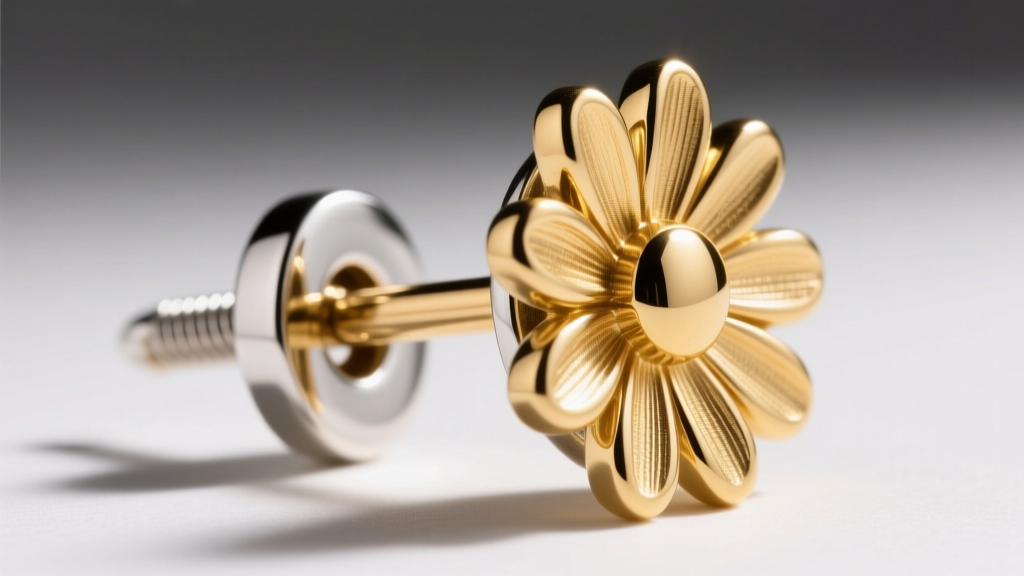
When evaluating budget jewelry, consumers rarely check the earring post gauge, yet this is a primary indicator of manufacturing quality. Daisy flower heads are inherently wide and front-heavy. A standard daisy stud ranges from 8mm to 12mm in diameter. If a manufacturer uses a flimsy 22-gauge (0.64mm) post to save on gold weight, the post will easily bend when pushed through a tight piercing or caught on a winter sweater.
The 20-Gauge Sweet Spot
High-quality gold daisy earrings should feature a 20-gauge (0.81mm) post. This thickness provides the necessary structural rigidity to support a solid gold or heavy vermeil flower head without bending. Furthermore, pay close attention to the clasp mechanism. Standard friction backs (butterfly clasps) are cheap to produce and easily slip out of the earlobe, especially when the wide daisy head catches on hair or clothing. Premium brands will outfit their studs with screw-back clasps or secure silicone O-rings, which add slightly to the manufacturing cost but drastically reduce the risk of losing your investment.
Enamel and Gemstone Accents: Assessing the Details
Many gold daisy earrings incorporate white petals to contrast with the yellow gold center. How this white color is achieved heavily impacts the value and durability of the piece.
- Vitreous Enamel: This is powdered glass fused to the gold at extremely high temperatures (around 1400°F). It is incredibly durable, chip-resistant, and will never yellow. Expect to pay a premium ($200+) for solid gold earrings with true vitreous enamel.
- Cold Enamel (Epoxy Resin): Commonly found in budget and mid-tier vermeil pieces, cold enamel is essentially a hardened resin. While it looks vibrant initially, it is prone to chipping if dropped and will gradually yellow with prolonged UV exposure and contact with skincare acids.
- Mother of Pearl Inlay: A high-value alternative to enamel. Hand-carved shell inlays offer a natural, iridescent white petal that ages beautifully, though it requires careful handling to prevent cracking.
2026 Market Pricing: Where to Spend and Where to Save
To help you navigate the current landscape, we have categorized popular market offerings into distinct budget tiers. This framework allows you to align your purchasing decisions with your financial boundaries without compromising on basic safety standards.
1. The Artisan Budget Tier ($35 - $65)
At this price point, avoid gold-plated brass entirely. Instead, seek out independent artisans on platforms like Etsy who specialize in 14k gold-filled wire and sheet metal. Gold-filled daisy studs offer exceptional value, providing a thick, mechanically bonded layer of gold that can withstand daily wear for years. Look for sellers who explicitly state their gold-filled sourcing and use hypoallergenic surgical steel or gold-filled posts.
2. The Mid-Range Vermeil Tier ($75 - $130)
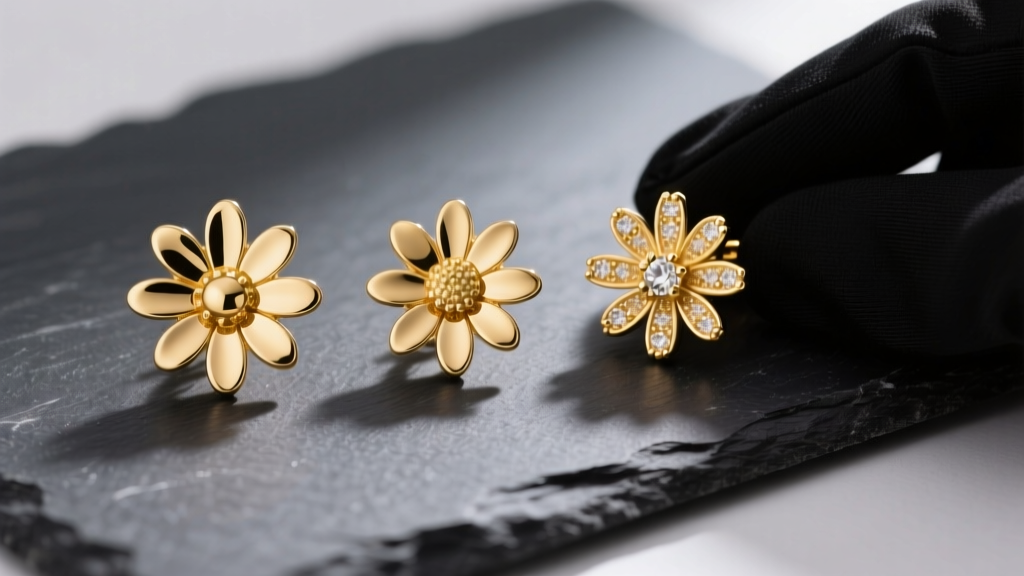
This is the domain of established contemporary jewelry brands (e.g., Mejuri, Gorjana). Here, you are paying for consistent quality control, sterling silver bases, and reliable 2.0-micron vermeil plating. The designs are often slightly more stylized, featuring textured petals or tiny cubic zirconia centers. This tier represents the best "cost-per-wear" for fashion-conscious buyers who want to rotate their jewelry collection.
3. The Heirloom Solid Tier ($250 - $600+)
Brands like Catbird or independent fine jewelers dominate this space. You are paying for solid 14k or 18k gold, ethical sourcing, and intricate hand-engraved details. These pieces are designed to be worn in the shower, slept in, and eventually passed down. The value here is in the permanence and the intrinsic melt value of the gold itself.
The "Cost Per Wear" Framework for Floral Jewelry
Budgeting for jewelry should never be about the absolute lowest price; it should be about the Cost Per Wear (CPW). The formula is simple: Total Price / (Wears per Week × 52 Weeks × Years Owned).
Consider a $25 pair of gold-plated daisy earrings. If the plating rubs off after 3 months of weekly wear, your CPW is roughly $0.16 per wear, but you are left with a tarnished, unwearable item that ends up in a landfill. Now consider a $90 pair of gold vermeil daisies worn 3 times a week for 3 years. Your CPW drops to $0.14 per wear, and your skin remains irritation-free. By shifting your mindset from "initial cost" to "long-term value," the mid-tier and solid gold options almost always emerge as the superior financial choice.
Care and Longevity: Protecting Your Investment
Even the most expensive gold daisy earrings will degrade if improperly maintained. To maximize the lifespan of your floral studs, adhere to these strict care protocols:
Expert Maintenance Tip: Never use ultrasonic jewelry cleaners on gold vermeil or enamel daisy earrings. The high-frequency vibrations can micro-fracture cold enamel and strip thin gold plating. Instead, use a few drops of mild, phosphate-free dish soap in lukewarm water, gently agitate with a baby-soft toothbrush, and pat completely dry with a microfiber cloth before storing in an anti-tarnish pouch.
Furthermore, always apply your perfumes, hairsprays, and chemical sunscreens before putting on your earrings. The alcohols and active chemicals in these products are the primary culprits behind the premature fading of gold vermeil and the clouding of gemstone centers. By treating your botanical jewelry with the same respect as fine diamonds, you ensure your gold daisies will continue to bloom in your collection for years to come.


