Spoon Earrings: Metallurgy, Weight Limits, and Craft Guide
Discover the technical details of spoon earrings. We analyze silverplate vs. sterling metallurgy, lobe weight limits, and soldering methods for drop styles.

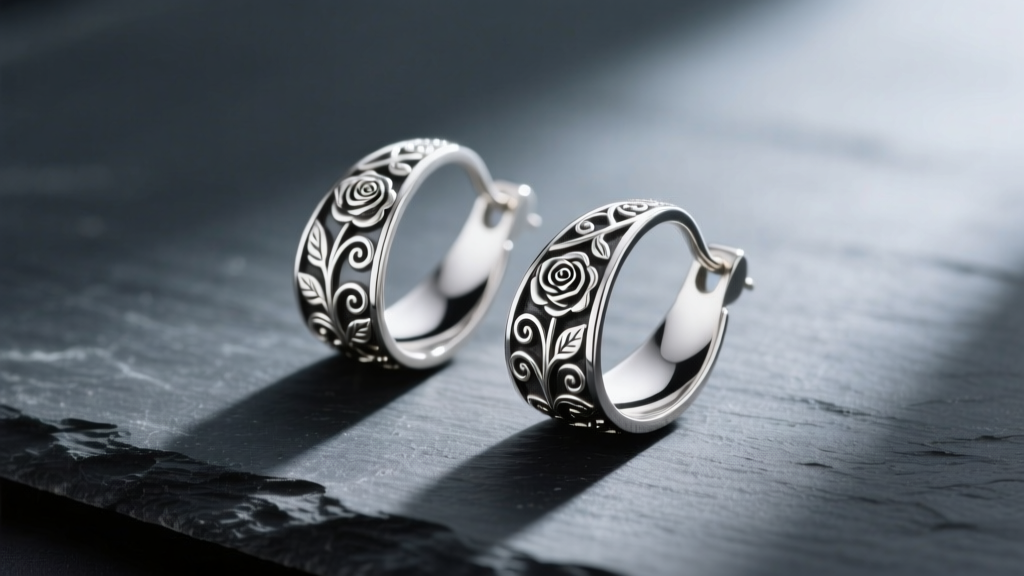
Spoon earrings occupy a fascinating intersection of whimsical surrealist fashion, vintage upcycling, and complex metallurgical challenges. Whether you are examining upcycled antique silverware or modern lost-wax cast replicas, designing and wearing spoon earrings requires a deep understanding of material science, weight distribution, and earlobe biomechanics. As of 2026, the cottagecore and dark academia aesthetics have driven a massive resurgence in vintage silverware jewelry, pushing independent jewelers to solve the inherent structural flaws of repurposing flatware. This expert deep dive explores the technical specifications, failure modes, and craftsmanship required to engineer high-quality spoon earrings.
The Metallurgy of Upcycled Spoon Earrings
The most critical technical hurdle in creating upcycled spoon earrings is identifying the base metallurgy of the vintage flatware. The vast majority of antique and mid-century spoons found in thrift stores are not solid silver; they are EPNS (Electroplated Nickel Silver). Understanding the difference between EPNS and hallmarked 925 sterling silver is mandatory for any jeweler to prevent severe customer allergic reactions and structural failures.
EPNS vs. 925 Sterling Silver
Sterling silver is an alloy consisting of 92.5% silver and 7.5% copper, providing a hypoallergenic, easily soldered, and highly malleable material. EPNS, however, features a core of nickel silver (an alloy containing no actual silver, typically composed of 60% copper, 20% nickel, and 20% zinc) coated with a microscopic layer of pure silver via electrolysis. When a jeweler cuts the bowl of an EPNS spoon to create a drop earring, the cutting action exposes the nickel-rich core along the edges. Because nickel is one of the most common contact allergens, wearing raw-cut EPNS spoon earrings against the skin or allowing the exposed edges to rest against the neck can trigger severe contact dermatitis.
To mitigate this, professional jewelers either seal the cut edges of EPNS spoons with a UV-cured jeweler's resin, apply a rhodium flash plating to encapsulate the entire piece, or strictly limit their sourcing to hallmarked 925 sterling silver spoons, which can be safely filed and polished without toxicity risks.
Structural Engineering: Cutting, Bending, and Annealing
Transforming a rigid, three-dimensional spoon bowl into a comfortable earring component requires precise structural engineering. The bowl of a standard teaspoon is stamped and work-hardened during its original manufacturing process to resist bending under the weight of food. This work-hardening makes the metal brittle and difficult to manipulate for jewelry settings.
The Annealing Process
If the design requires bending the spoon handle into a custom French wire or ear hook, the metal must be annealed to relieve internal stresses and restore malleability. For 925 sterling silver, this involves heating the metal with a torch to approximately 1100°F (593°C) until it glows a dull cherry red, then immediately quenching it in water. According to the Rio Grande Solder Guide, proper annealing realigns the crystalline structure of the silver-copper alloy, preventing micro-fractures when the wire is drawn through a drawplate or bent into a hook.
However, EPNS spoons cannot be traditionally annealed. Exposing silverplate to 1100°F will cause the microscopic silver plating to blister, scale, and flake off the nickel core due to the differing thermal expansion rates of the two metals. Therefore, EPNS handles must be bent cold, using slow, incremental pressure in a padded vise to avoid snapping the work-hardened core.
Weight Distribution and Earlobe Biomechanics
The most frequent point of failure in spoon earrings is not the metal itself, but the human earlobe. The earlobe is composed of adipose (fat) tissue and a collagen matrix, lacking the cartilage found in the upper ear. This soft tissue has strict weight-bearing limits before micro-tearing and permanent stretching occur.
| Spoon Type | Average Bowl Weight | Earlobe Impact | Required Hardware Solution |
|---|---|---|---|
| Demitasse Spoon | 3 - 5 grams | Safe for long-term daily wear | Standard 20g (0.81mm) post or wire |
| Teaspoon | 8 - 14 grams | Risk of gradual stretching over 4+ hours | 18g (1.02mm) wire + silicone O-ring backs |
| Tablespoon | 20 - 35 grams | Immediate pain, high risk of lobe tearing | Must use earlobe support patches or convert to clip-on |
When designing teaspoon or tablespoon spoon earrings, the pendulum effect must also be calculated. As the wearer walks, the heavy spoon bowl swings, creating kinetic momentum that multiplies the static weight on the piercing fistula. To counteract this, expert jewelers design the bail (the loop connecting the spoon to the ear wire) to sit as close to the earlobe as possible, reducing the lever arm and minimizing the pendulum swing.
The Soldering Challenge: Attaching the Post
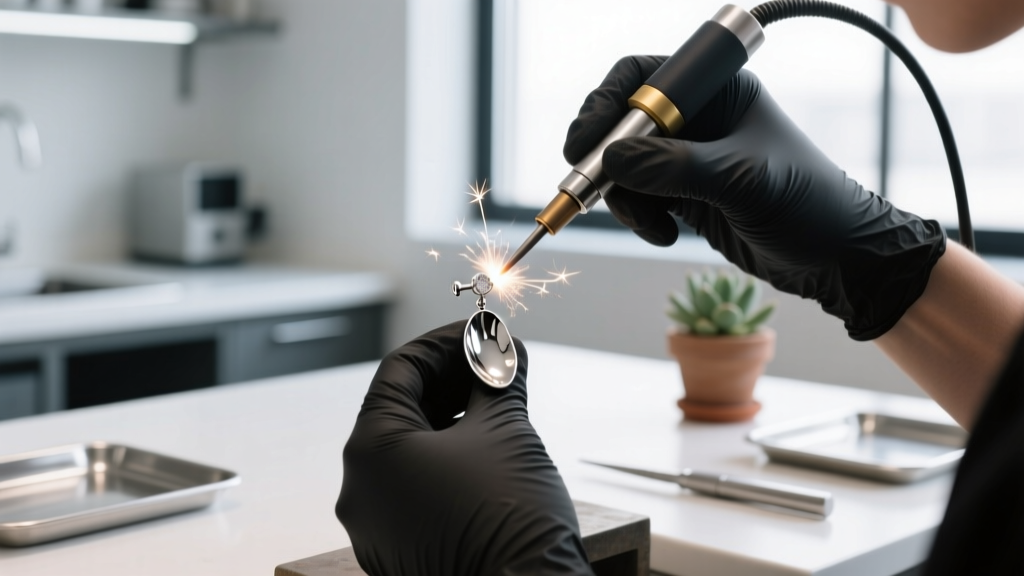
Attaching a sterling silver earring post or bail to the back of a spoon bowl presents a notorious metallurgical challenge, particularly with silverplate. Traditional torch soldering requires flux and high heat. As noted by the Ganoksin Project, applying a torch to EPNS will instantly destroy the silver plating around the solder joint, leaving an ugly, oxidized copper-colored scar that cannot be easily re-plated without stripping the entire piece.
Laser Welding vs. Torch Soldering
To bypass the thermal damage associated with torches, modern jewelers utilize Nd:YAG laser welders to attach posts to spoon earrings. Laser welding delivers a highly focused, micro-second pulse of light that melts a pinpoint area of metal without transferring ambient heat to the surrounding silverplate. By using a sterling silver filler wire, a jeweler can securely fuse an 18-gauge (1.02mm) post to the convex back of an EPNS spoon bowl in milliseconds, leaving the surrounding vintage patina and plating completely intact. For solid 925 sterling spoons, traditional hard silver solder (which flows at 1450°F) remains the most cost-effective and structurally sound method.
Cast vs. Upcycled: A Manufacturing Comparison
Not all spoon earrings are upcycled. Many contemporary jewelry brands produce spoon earrings via lost-wax casting to ensure uniform weight, hypoallergenic materials, and precise detailing. Below is a technical comparison of the two manufacturing methods:
- Material Integrity: Upcycled spoons are limited to EPNS or vintage 925. Cast spoons can be produced in 14k gold, platinum, or medical-grade titanium, completely eliminating nickel allergy risks.
- Weight Optimization: A cast spoon earring can be designed with a hollowed-out back or a thinner cross-section in the CAD (Computer-Aided Design) phase, reducing the weight of a tablespoon-sized earring from 30 grams down to a comfortable 6 grams.
- Edge Finishing: Upcycled spoons require manual filing, sanding, and sealing of the cut edges. Cast spoons emerge from the investment mold with fully finished, seamless edges that only require standard tumbling and polishing.
- Patina and Aesthetic: Upcycled pieces retain the historical wear, maker's marks, and unique engraving of antique flatware, which is highly prized by collectors. Cast pieces offer a pristine, uniform, and modern finish.
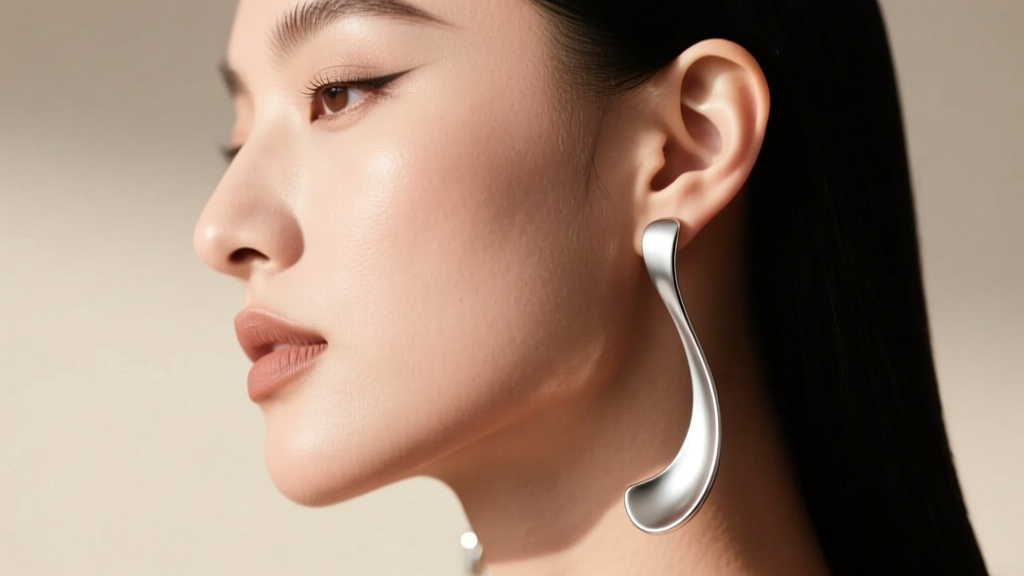
Maintenance, Tarnish, and Patina Preservation
Spoon earrings, due to their high surface area and frequent contact with the skin's natural oils and environmental sulfur, are highly susceptible to tarnishing. The copper content in both sterling silver and the EPNS core reacts with hydrogen sulfide in the air to form silver sulfide, the black compound we recognize as tarnish.
For upcycled spoon earrings where the antique patina in the engraved floral motifs is desirable, jewelers must avoid ultrasonic cleaners and harsh chemical dips, which will strip the dark oxidation from the crevices and leave the piece looking flat and sterile. Instead, maintenance should involve gentle wiping with a treated anti-tarnish cloth and storing the earrings in an airtight polyethylene bag with a 3M anti-tarnish strip. If the spoon is EPNS and the plating begins to wear through to the yellowish nickel core on the high points of the bowl, the piece must be sent to a professional plater for a silver re-strike, as DIY polishing compounds will only accelerate the removal of the remaining microns of silver.


