2026 Trend Forecast: Gold Drop Hoop Earrings Styles
Discover 2026 trends for gold drop hoop earrings. Expert styling tips, metal grade comparisons, and structural insights for this must-have silhouette.

The Anatomy of the Drop Hoop: Why 2026 is the Year of Movement
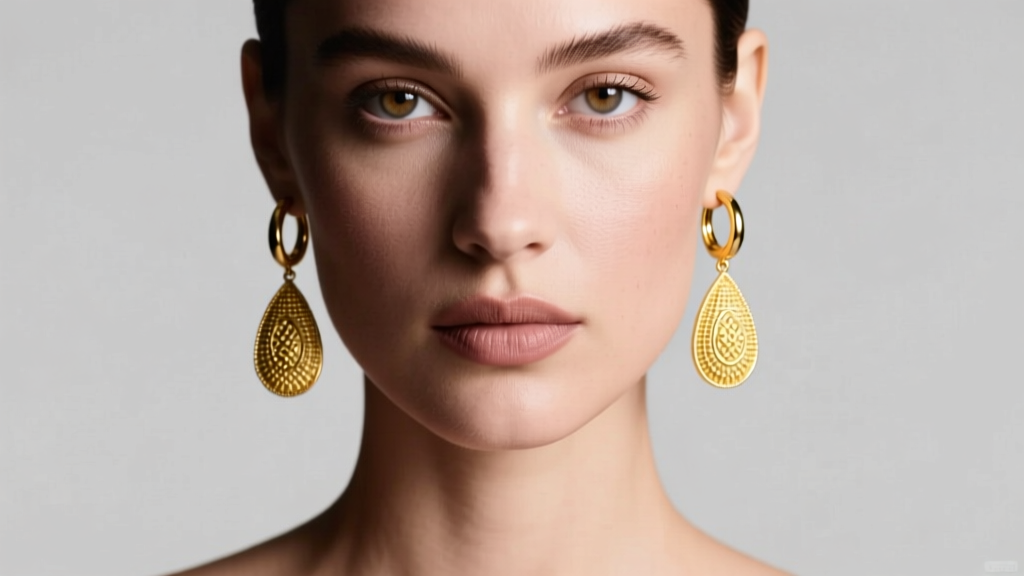
The evolution of ear styling has officially shifted from static, heavy ornaments to kinetic, movement-based silhouettes. According to industry analysts at JCK Online, the 2026 jewelry market is heavily favoring designs that interact with the wearer's natural motion. At the intersection of this trend sits the gold drop hoop earring—a hybrid design that marries the structural continuity of a classic hoop with the elongated, face-framing elegance of a drop pendant. Unlike traditional dangles that hang from a simple stud or wire, the drop hoop anchors its pendant element to the bottom arc (the 6 o'clock position) of a circular or semi-circular hoop base. This creates a dual-axis swing, offering a mesmerizing kinetic effect that catches ambient light with every turn of the head.
But the appeal of gold drop hoop earrings in 2026 extends beyond mere aesthetics. Designers are playing with architectural tension, contrasting the rigid geometry of the hoop with fluid, liquid-metal drop elements. Whether featuring hammered teardrop pendants, geometric articulated links, or delicate diamond-cut chains, this silhouette demands a deep understanding of metallurgy and structural engineering to ensure longevity.
Material Grades & Pricing: Solid Gold vs. Vermeil
When investing in gold drop hoop earrings, the base metal and plating thickness dictate both the price point and the lifespan of the piece. The Gemological Institute of America (GIA) outlines strict standards for gold purity, which directly impacts the alloy's hardness—a critical factor for hoops that must maintain their circular shape under the stress of a hanging drop.
| Material Grade | Composition & Purity | Durability & Best Use | Average Price Range (2026) |
|---|---|---|---|
| 14k Solid Gold | 58.5% pure gold, alloyed with copper/silver | High durability; resists bending. Ideal for heavy drops and daily wear. | $180 - $450 |
| 18k Solid Gold | 75% pure gold, richer yellow hue | Softer metal; prone to micro-scratches. Best for lightweight, intricate drops. | $350 - $850 |
| Gold Vermeil | Sterling silver base, minimum 2.5 microns of 10k+ gold | Moderate durability. Plating will eventually wear at high-friction clasp points. | $75 - $140 |
| Gold-Filled | Brass core, 5% gold by weight mechanically bonded | Highly durable plating, but base metal cannot be easily soldered if broken. | $45 - $95 |
For drop hoops, 14k solid gold remains the undisputed champion. The higher alloy content (typically copper and zinc) provides the necessary tensile strength to prevent the hoop from warping into an oval shape under the persistent downward pull of the drop element.
Structural Integrity: Failure Points and Gauge Sizing
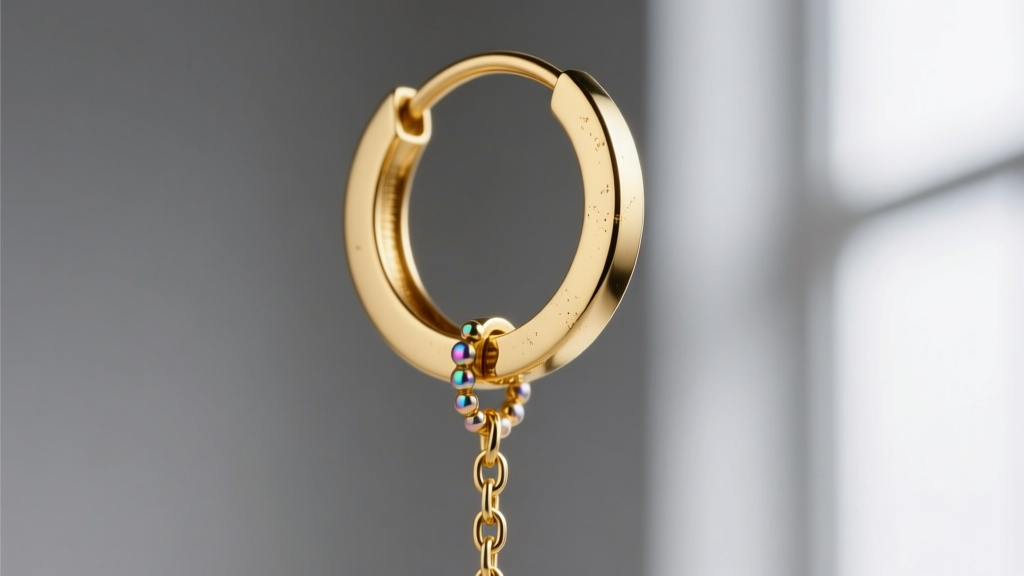
The most common failure mode in poorly constructed drop hoop earrings is the 'cheese-cutter' effect. This occurs when a heavy drop element is attached to a hoop with a wire thickness that is too thin, causing the wire to slowly slice through the earlobe tissue over time. To prevent piercing migration, you must pay strict attention to the wire gauge.
The Gauge Matrix for Drop Hoops
- 20-Gauge (0.81mm): Strictly for ultra-lightweight, hollow, or petite drop hoops (under 1 inch in total length). Not recommended for heavy solid gold pendants.
- 18-Gauge (1.02mm): The industry standard for most premium drop hoops. Provides an excellent balance between comfort for standard lobe piercings and the structural support needed for medium-weight drops.
- 16-Gauge (1.29mm): Mandatory for oversized, heavy architectural drop hoops or cartilage placements. Requires a slightly stretched or naturally larger piercing but guarantees zero lobe tearing.
Solder Joint Vulnerabilities
The critical stress point on any gold drop hoop earring is the jump ring or solder joint connecting the drop to the hoop base. In mass-produced jewelry, this connection is often merely glued or weakly torch-soldered. In 2026, high-end jewelers are utilizing laser welding for these micro-joints. Laser welding concentrates heat into a microscopic area, fusing the gold without annealing (softening) the surrounding hoop wire, thereby preserving the structural tension of the circle.
Face Shape Matrix: Matching the Drop to Your Profile
The elongated nature of drop hoops makes them a powerful tool for visual contouring. Because the eye naturally follows the line of the drop, the terminal point of the earring will draw attention to that specific area of the face or neck.
- Round Faces: Opt for angular, geometric drop elements (like square or rectangular bar drops) attached to medium-sized hoops. Avoid perfectly round teardrops, which can exaggerate facial circularity. The goal is to introduce sharp, structural lines.
- Square Faces: Soften a strong jawline with fluid, liquid-metal teardrops or curved, organic-shaped drops. Hoops with a brushed or hammered gold finish diffuse light beautifully, softening the overall aesthetic.
- Oval Faces: The most versatile canvas. However, avoid drop hoops where the pendant terminates exactly at the jawline, as this creates a harsh horizontal visual break. Aim for drops that fall just below the earlobe or graze the collarbone.
- Heart-Shaped Faces: Look for inverted triangle drops or chandelier-style elements that widen at the bottom. This adds visual weight to the narrower lower half of the face, creating perfect symmetry.
2026 Runway to Real Way: Styling the Drop Hoop
'The 2026 ear curation is no longer about symmetrical matching; it is about balanced asymmetry. A heavy, sculptural gold drop hoop in the primary lobe piercing, contrasted with tight, diamond-set huggies in the secondary and helix piercings, creates a sophisticated tension that feels entirely modern.' — Senior Jewelry Editor, Jewel Style Radar
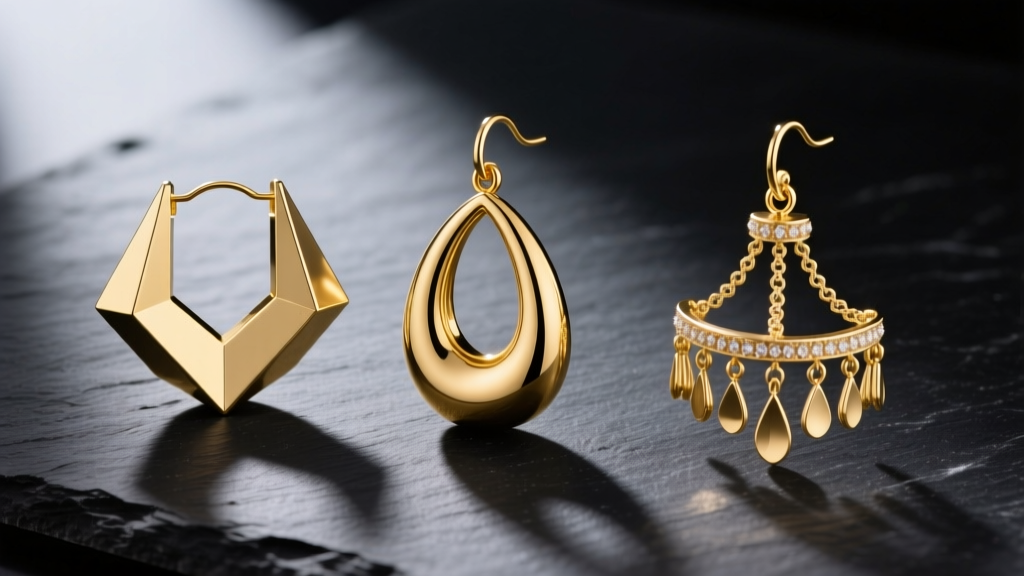
When styling gold drop hoop earrings for the current season, embrace the 'high-low' kinetic mix. Pair a textured, 18k yellow gold drop hoop with a sleek, polished white gold huggie in your upper lobe. The contrast in both metal color and movement (the swinging drop vs. the static huggie) creates a dynamic, curated ear stack that feels intentional rather than cluttered. For evening wear, choose drop hoops featuring articulated links; as you move, the segmented gold links create a subtle, metallic acoustic effect and a brilliant light show.
Care and Maintenance for Elongated Silhouettes
Maintaining the structural integrity of drop hoops requires specific care routines. Never sleep in drop hoop earrings; the lateral pressure of a pillow can easily bend the hoop out of its circular alignment or snap the delicate solder joint holding the drop. When cleaning, avoid ultrasonic cleaners if your drop element features hollow gold construction or tension-set stones, as the high-frequency vibrations can cause microscopic fractures. Instead, use a soft-bristled baby toothbrush with a mild, phosphate-free dish soap and warm water, gently brushing the crevices where the drop connects to the hoop base to remove sebum and cosmetic buildup. Store them hanging from a dedicated jewelry rack rather than tossing them in a box, which prevents the drop chains from tangling with the hoop closures.


