Gold Earring Designs: 14K vs 18K vs 24K Material Guide
Compare 14K, 18K, and 24K gold earring designs. Discover alloy properties, Vickers hardness, and the best karat for sensitive cartilage piercings.

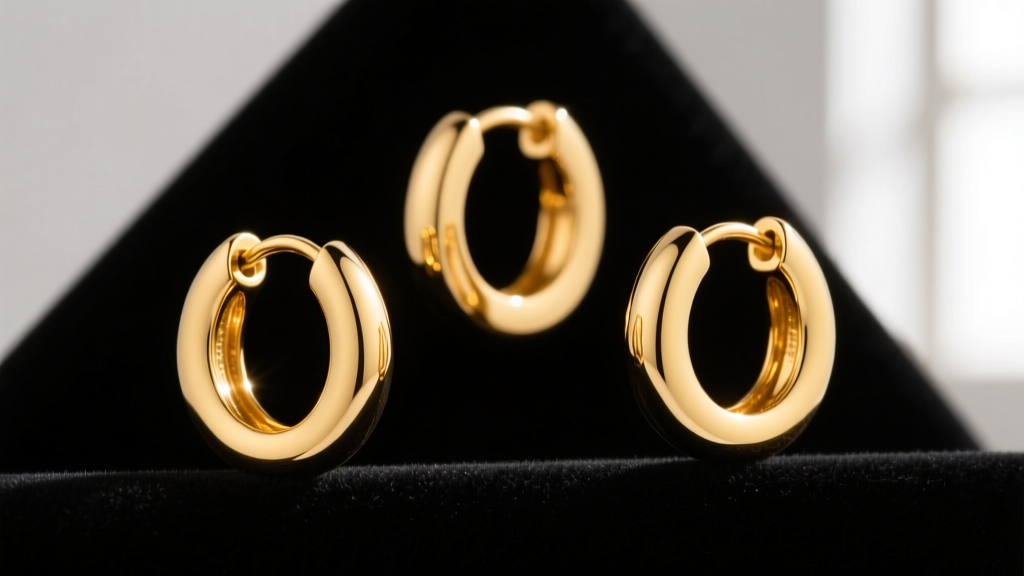
The Metallurgy of Gold Earring Designs
When investing in fine jewelry, understanding the metallurgical properties of your pieces is just as important as their aesthetic appeal. Gold, in its purest form, is a dense, malleable, and ductile transition metal. While this malleability makes it a dream for artisans to cast and shape, it presents significant structural challenges for everyday wear. To create durable gold earring designs, metallurgists alloy pure gold with metals like copper, silver, zinc, and palladium. These alloying elements disrupt the uniform crystal lattice of the gold atoms, drastically increasing the material's yield strength and Vickers Hardness (HV).
The karat system measures this purity on a scale of 24. A 24K piece is 99.9% pure gold, while 18K is 75% gold, and 14K is 58.3% gold. According to the Gemological Institute of America (GIA), the remaining percentage in these alloys dictates not only the color—yellow, white, or rose—but also the tensile strength, scratch resistance, and mechanical viability of the earring components. In this comprehensive guide, we break down the physical properties of 24K, 18K, and 14K gold to help you choose the right material for your specific piercing placement and lifestyle.
24K Gold: The Purity Paradox
24K gold is the purest form of the metal available in commercial jewelry, boasting a rich, unmistakable orange-yellow hue. However, its Vickers Hardness sits at a mere 25 to 30 HV, making it exceptionally soft. To put this into perspective, pure gold can be scratched by a copper coin and will permanently deform under minimal pressure.
Mechanical Limitations in Earrings
Because of its softness, 24K gold is entirely unsuitable for any earring mechanism that relies on tension or friction. For example, a standard friction-fit earring post and butterfly back will fail in 24K gold; the post will easily bend when pressed against a pillow, and the metal cannot maintain the necessary spring tension to hold the backing securely. Similarly, hinge clasps on huggies or seamless ring closures will warp and lose their alignment over time.
Therefore, 24K gold earring designs are generally restricted to solid cast pieces, heavy dangles, or thick bezel settings where structural integrity relies on mass and volume rather than delicate mechanical parts. It is highly hypoallergenic, making it safe for sensitive skin, but its lack of durability relegates it mostly to occasional-wear statement pieces rather than everyday staples.
18K Gold: The Luxury Standard
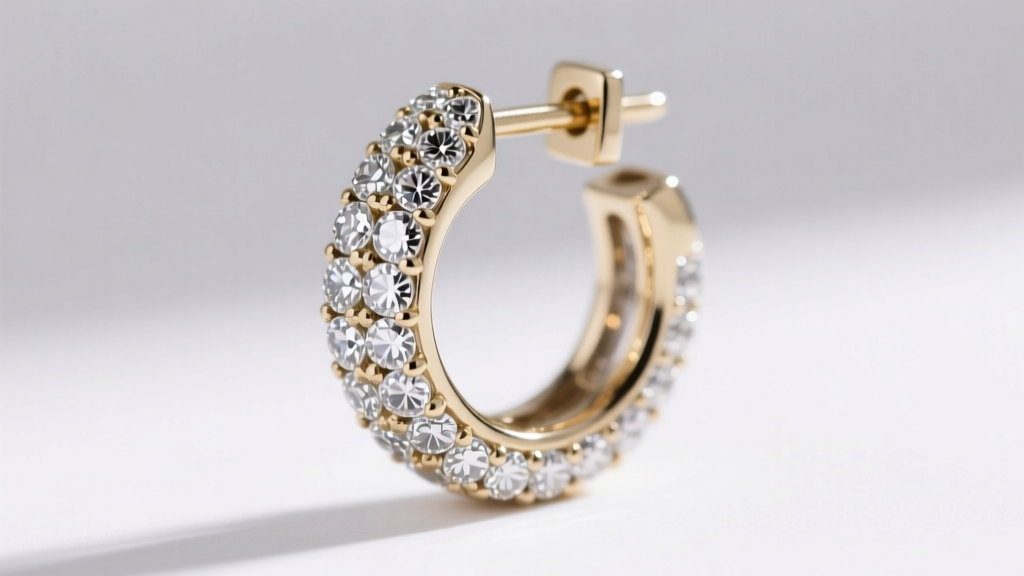
Comprising 75% pure gold, 18K gold strikes a balance between high purity, rich color, and workable durability. With a Vickers Hardness ranging from 120 to 130 HV, it is substantially harder than 24K gold, allowing jewelers to craft intricate gold earring designs featuring delicate filigree, micro-pavé diamond settings, and secure hinge mechanisms.
Yellow, Rose, and White Gold Alloys
- 18K Yellow Gold: Typically alloyed with 12.5% copper and 12.5% silver. This maintains the warm, luxurious color of pure gold while providing enough rigidity for secure prong settings and ear wires.
- 18K Rose Gold: Achieves its pinkish hue through a higher copper content (often around 20-22%). While beautiful, individuals with specific copper sensitivities should be aware of this alloy composition, though such allergies are far rarer than nickel sensitivities.
- 18K White Gold: Alloyed with palladium or nickel to bleach the yellow color. Because the resulting alloy still retains a faint yellowish-gray tint, it is almost universally plated with rhodium. Over time, friction from hair and clothing will wear this plating away, requiring re-plating every 1 to 2 years to maintain a bright white finish.
18K gold is the preferred choice for high-end lobe earrings, luxury hoops, and intricate drop earrings where maximum gold content is desired without sacrificing the security of gemstone settings.
14K Gold: The Biomechanical Workhorse
At 58.3% pure gold, 14K gold is the undisputed champion of functional body jewelry and everyday earrings. Its Vickers Hardness ranges from 140 to 160 HV, providing exceptional tensile strength and resistance to deformation. This makes it the ideal material for gold earring designs that require structural memory, such as threadless ends, internally threaded posts, and clicker rings.
The Mechanics of Threadless Jewelry
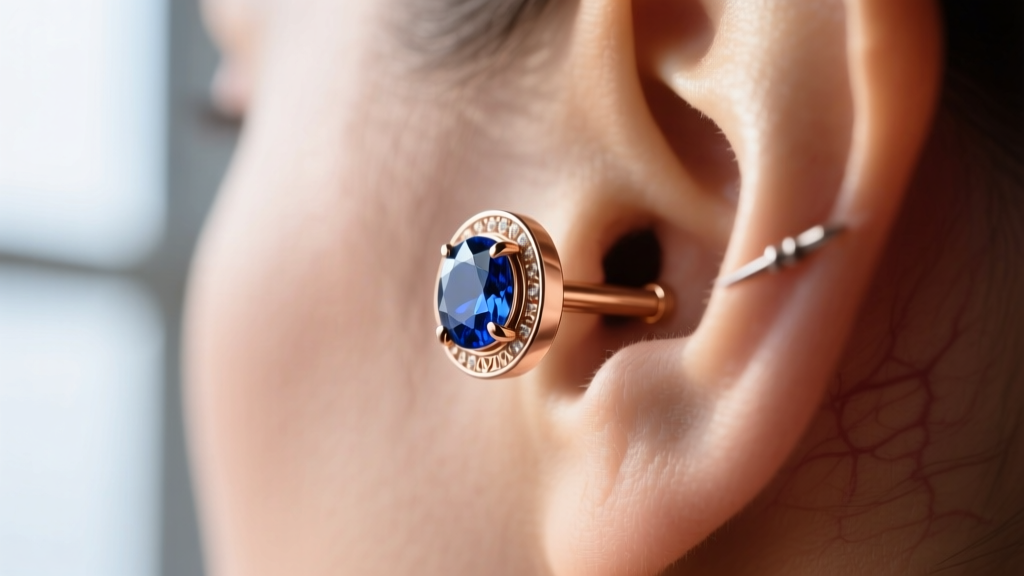
Modern cartilage jewelry often utilizes a threadless (or press-fit) system, where a thin pin on the decorative end is inserted into a hollow post. The pin is given a slight bend before insertion, creating continuous outward tension against the inside of the post to lock it in place. According to the Association of Professional Piercers (APP), 14K gold is optimal for this mechanism. A 14K gold pin will hold its bend indefinitely without experiencing metal fatigue or snapping. In contrast, an 18K pin may slowly relax over several years, loosening the fit, while a 24K pin would simply bend flat and fail to create any tension at all.
Furthermore, 14K white gold is often alloyed with nickel to achieve a whiter base color before rhodium plating. While this is standard in the United States, the European Union's Nickel Directive strictly limits nickel release in jewelry. If you have a known nickel allergy, opt for 14K yellow or rose gold, or seek out palladium-based white gold alloys.
Material Comparison Matrix
To help you visualize the differences in structural integrity and market value, refer to the comparison table below. Data regarding relative cost is based on raw material premiums as tracked by the World Gold Council, excluding labor and gemstone costs.
| Karat | Gold Content | Vickers Hardness (HV) | Best Mechanical Application | Relative Material Cost |
|---|---|---|---|---|
| 24K | 99.9% | 25 - 30 HV | Solid cast dangles, thick bezels, wire-wrapping | 1.0x (Base Premium) |
| 18K | 75.0% | 120 - 130 HV | Huggies, pavé settings, friction posts, ear wires | 0.85x |
| 14K | 58.3% | 140 - 160 HV | Threadless ends, clickers, seamless rings, barbells | 0.65x |
Choosing the Right Karat for Your Piercing Placement
The anatomy of your piercing heavily dictates which gold alloy will perform best. Cartilage tissue, swelling, and sleeping habits all introduce mechanical stress to your jewelry.
Standard Earlobe Piercings
The earlobe is soft tissue with minimal movement and low risk of traumatic impact during sleep. This makes it the perfect canvas for 18K gold earring designs. Friction posts, delicate drop earrings, and heavy solid gold hoops will perform beautifully here. If you prefer the deep color of 24K gold, standard lobe piercings are the safest place to wear it, provided the earring relies on a secure backing rather than a tension-fit wire.
Cartilage Piercings (Helix, Conch, Daith, Tragus)
Cartilage piercings are prone to swelling, irritation bumps, and accidental snagging. Jewelry here must be highly secure and resistant to bending. 14K gold is strongly recommended for initial healing jewelry and long-term wear in these placements. The rigidity of 14K ensures that a flat-back labret post will not warp if you sleep on it, which is crucial for maintaining the angle of the piercing channel and preventing migration.
Industrial Piercings
An industrial piercing connects two cartilage points with a single long barbell. This creates a high-tension environment where the jewelry must act as a structural bridge. 14K gold is virtually mandatory for industrials; an 18K barbell may bow slightly under the pressure of the two healing fistulas, leading to chronic irritation and rejection.
Expert Insight: Always verify the alloy composition of white gold before purchasing for a fresh cartilage piercing. Many commercial 14K and 18K white gold alloys contain nickel, which can cause severe contact dermatitis in a healing wound. Request a palladium-alloyed white gold or stick to yellow/rose gold to ensure biocompatibility.
Verdict: Investing in Gold Earring Designs
Ultimately, the 'best' gold karat depends entirely on the mechanical requirements of the earring and the placement on your ear. 24K gold offers unmatched purity and hypoallergenic properties but lacks the structural integrity for modern jewelry mechanics. 18K gold provides the perfect canvas for luxury lobe earrings and intricate gemstone settings, offering a rich color and adequate durability. Meanwhile, 14K gold remains the gold standard for functional body jewelry, offering the tensile strength required for threadless pins, clicker hinges, and cartilage barbells.
By matching the metallurgical properties of the alloy to the specific demands of your gold earring designs, you ensure that your jewelry remains secure, comfortable, and beautiful for a lifetime of wear.


