Gold Earring Location RDR2: 1899 Western Jewelry & Cosplay Guide
Searching for the gold earring location RDR2? Discover the 1899 historical accuracy, metallurgy, and expert sourcing for authentic outlaw cosplay.

The Digital Hunt vs. 1899 Historical Reality
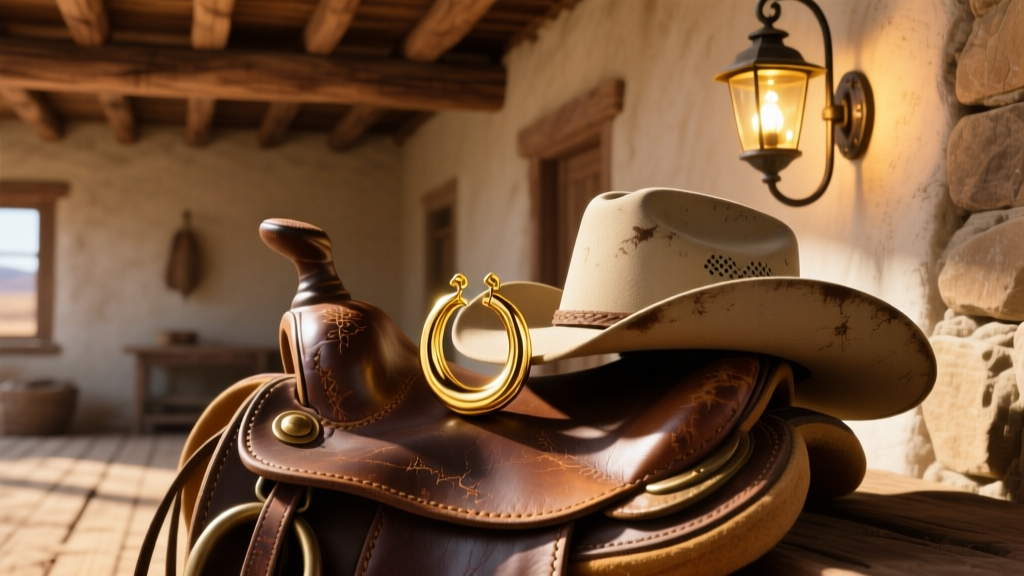
When players search for the gold earring location RDR2, they are typically hunting through the loot tables of Saint Denis, Limpany, or the humid streets of Guarma. In Rockstar's masterpiece, gold earrings are classified as miscellaneous loot—quick digital accessories to be fenced for a few dollars or equipped to add a touch of rugged flair to Arthur Morgan and John Marston. However, as a jewelry historian and style expert, I look at this digital artifact and see a fascinating intersection of late Victorian metallurgy, frontier survival, and class signaling.
In the 2026 cosplay and historical reenactment communities, replicating the exact aesthetic of an 1899 outlaw requires moving beyond the game's low-poly asset. Men wearing earrings in the late 19th-century American West were not the mainstream cowboy archetype popularized by 1950s Hollywood. Instead, ear piercings among men in 1899 were heavily tied to specific subcultures: sailors, immigrants from Southern and Eastern Europe, miners, and frontier outlaws who adopted nautical or Romani traditions. To truly capture the RDR2 aesthetic in real life, we must deconstruct the metallurgy, gauge, and aging techniques of authentic Western heritage jewelry.
Frontier Metallurgy: Karat, Alloys, and the Copper Connection
Pure 24-karat gold is far too soft for a frontier lifestyle. An outlaw sleeping rough, riding horses, and engaging in brawls would quickly bend or tear a pure gold hoop. According to Britannica's guide to gold processing and alloys, the standard for durable, working-class jewelry in the late 19th century was 14-karat gold, which contains 58.3% pure gold alloyed with metals like copper, silver, and zinc.
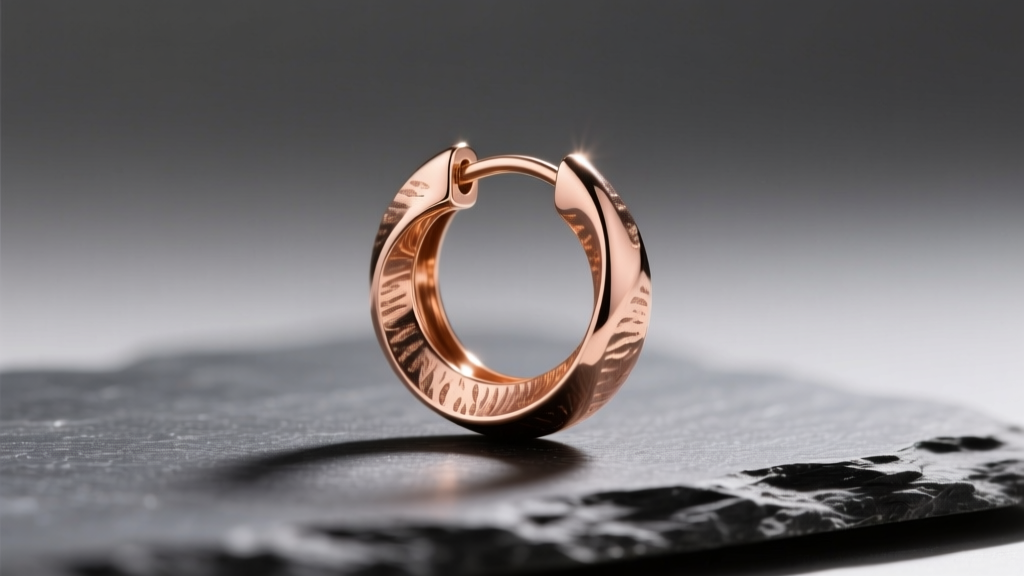
For the RDR2 aesthetic, the specific alloy mix is critical. Rose gold—an alloy with a significantly higher copper content—was highly prevalent among the working class and frontier dwellers because copper was cheap, abundant, and mined extensively across the American West. A 14k rose gold hoop offers a warmer, dirtier, and more historically accurate hue than the bright, polished yellow gold seen in modern luxury boutiques. The copper content not only increases the Vickers hardness of the metal, making it resistant to the rigors of camp life, but it also allows for natural oxidation, giving the piece a gritty, lived-in patina that modern high-polish finishes simply cannot replicate.
Gauge, Wire, and Clasp Mechanics of the 1890s
One of the most common mistakes modern cosplayers make when sourcing an outlaw earring is selecting the wrong wire gauge. Today's standard commercial earrings are typically 20-gauge (0.81mm) or 18-gauge (1.02mm). These thin wires look delicate and modern. In contrast, historical men's hoops and sailor earrings were substantially thicker, designed to withstand manual labor and the elements without snapping.
To achieve the authentic Arthur Morgan silhouette, you need a 14-gauge (1.6mm) or 12-gauge (2.0mm) continuous wire hoop. The thickness provides visual weight and historical accuracy. Furthermore, modern friction backs (butterfly clasps) did not exist in 1899. The Victoria and Albert Museum's archive on Victorian jewelry notes that 19th-century earrings relied on continuous loops, sleeper hinges, or simple fishhook wires. For a rugged Western look, a continuous wire hoop—where the thicker wire threads through the ear and tucks securely into a hollow receiving tube on the opposite end—is the most historically accurate and secure option for active cosplay.
| Specification | Modern Standard (2026) | Historical Outlaw (1899) |
|---|---|---|
| Wire Gauge | 20g (0.81mm) - 18g (1.02mm) | 14g (1.6mm) - 12g (2.0mm) |
| Karat & Alloy | 14k or 18k Yellow/White Gold | 14k Rose Gold (High Copper) |
| Clasp Mechanism | Friction Back / Hinged Snap | Continuous Wire / Sleeper Loop |
| Surface Finish | High Polish / Rhodium Plated | Hand-Forged / Matte / Oxidized |
Chemical Aging: Making Modern Gold Look Frontier-Worn
Finding a modern jeweler who sells pre-distressed 12-gauge rose gold hoops is difficult, as the contemporary market favors pristine finishes. However, you can artificially age a modern 14k rose gold earring to look like it survived a gunfight in Valentine. The secret lies in the copper alloy.
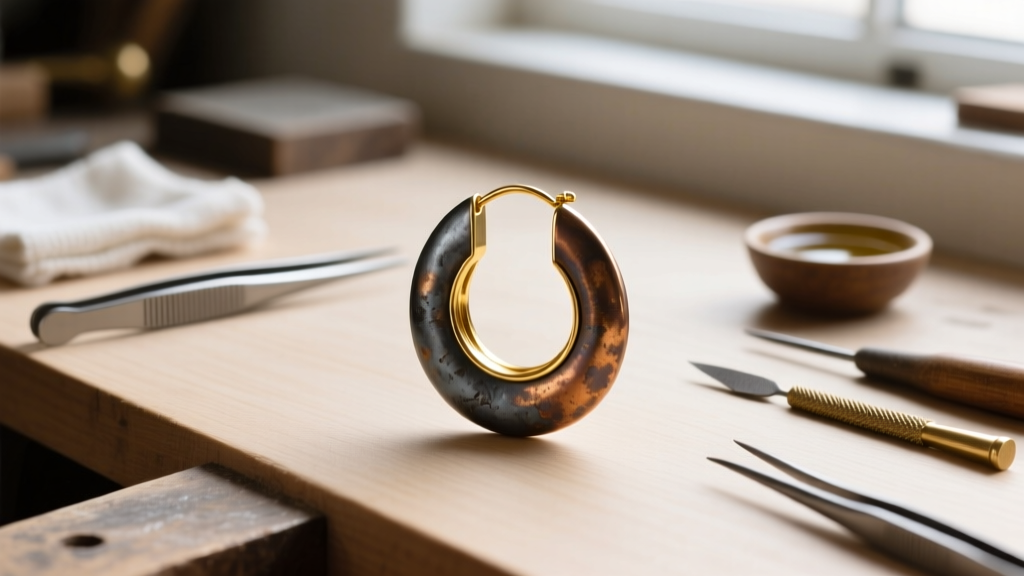
Because 14k rose gold contains a high percentage of copper, it reacts beautifully to Liver of Sulfur (potassium sulfide). By diluting a small amount of liver of sulfur in warm water and submerging the earring for 30 to 60 seconds, the copper in the alloy oxidizes, turning the metal a deep, bruised purple-brown. Once the desired darkness is achieved, you neutralize the chemical reaction in a baking soda and water bath. Finally, use 0000-grade super-fine steel wool to gently buff the high-contact edges of the hoop. This leaves the dark, grungy oxidation in the textured crevices while revealing a dull, scratched gold on the edges—perfectly mimicking decades of frontier wear.
Sourcing Authentic Western Heritage Pieces Today
If you prefer to commission a piece rather than age it yourself, the 2026 market for historical Western replication has grown significantly. Avoid mass-produced 'cowboy' jewelry from mall kiosks, which is usually gold-plated brass that will flake and cause contact dermatitis. Instead, seek out artisan blacksmiths and heritage jewelers on platforms like Etsy or Instagram who specialize in '19th-century reproduction jewelry' or 'Victorian sleeper hoops.'
Expect to pay between $150 and $350 for a single, solid 14k rose gold, 14-gauge continuous hoop crafted by a reputable artisan. When commissioning, specifically request a 'hand-hammered' or 'forge-textured' finish to eliminate the modern, machine-drawn perfection of the wire. Whether you are completing an Arthur Morgan cosplay, attending a historical reenactment, or simply adopting a rugged, neo-Western personal style, understanding the technical reality behind the digital loot table transforms a simple video game accessory into a masterpiece of historical metallurgy.


