Gold Earrings Ladies: 14k vs 18k vs 24k Material Guide
Discover the ultimate material guide for gold earrings ladies. Compare 14k, 18k, and 24k gold properties, durability, pricing, and best piercing types.

The Karat Conundrum: Decoding Gold Purity for Everyday Wear
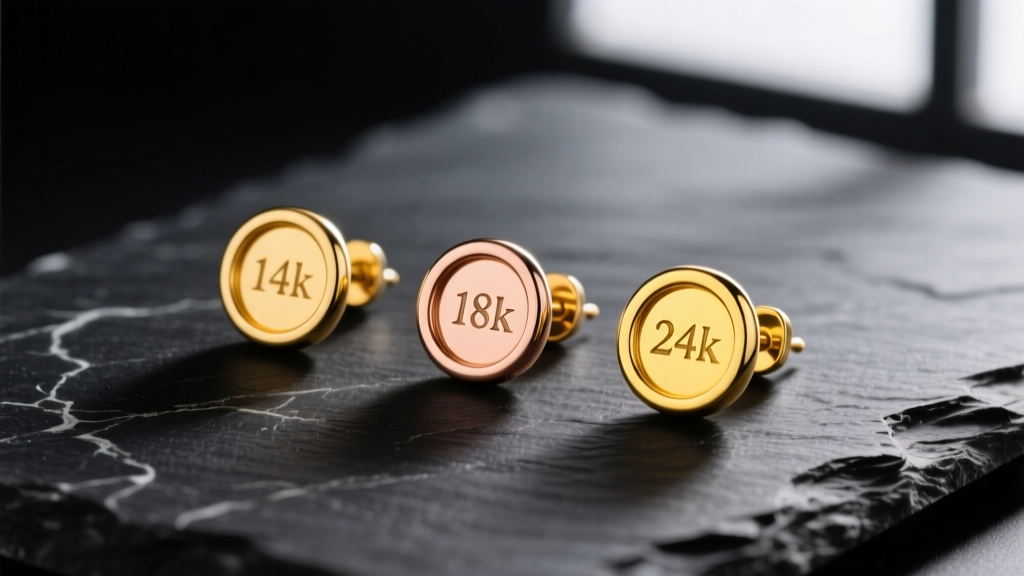
When shopping for gold earrings ladies often encounter a bewildering array of karat options, marketing jargon, and conflicting advice regarding durability. As of 2026, with gold prices reaching historic highs, understanding the metallurgical realities of your jewelry is no longer just a matter of luxury—it is a financial and dermatological necessity. The term "karat" (denoted as k) measures the purity of gold on a scale of 24, but it also dictates the structural integrity, hypoallergenic properties, and ultimate lifespan of your earrings.
Unlike solid steel or titanium, gold is inherently a soft, malleable transition metal. To transform it into functional jewelry that can withstand the mechanical stress of daily wear, jewelers alloy it with other metals. This guide bypasses the superficial marketing fluff and dives deep into the exact material properties, Vickers Hardness (HV) ratings, and gauge mechanics of 14k, 18k, and 24k gold to help you make an informed, expert-level decision for your piercings.
14k Gold: The Metallurgical Workhorse of Daily Wear
14k gold consists of 58.3% pure gold and 41.7% alloy metals. This specific ratio is the undisputed champion of structural durability in the jewelry industry. By incorporating a higher percentage of copper, silver, zinc, and occasionally nickel, the resulting alloy achieves a Vickers Hardness (HV) rating of approximately 130 to 140. To put this in perspective, this hardness level provides exceptional tensile strength, making it highly resistant to the bending, warping, and snapping that plague softer metals.
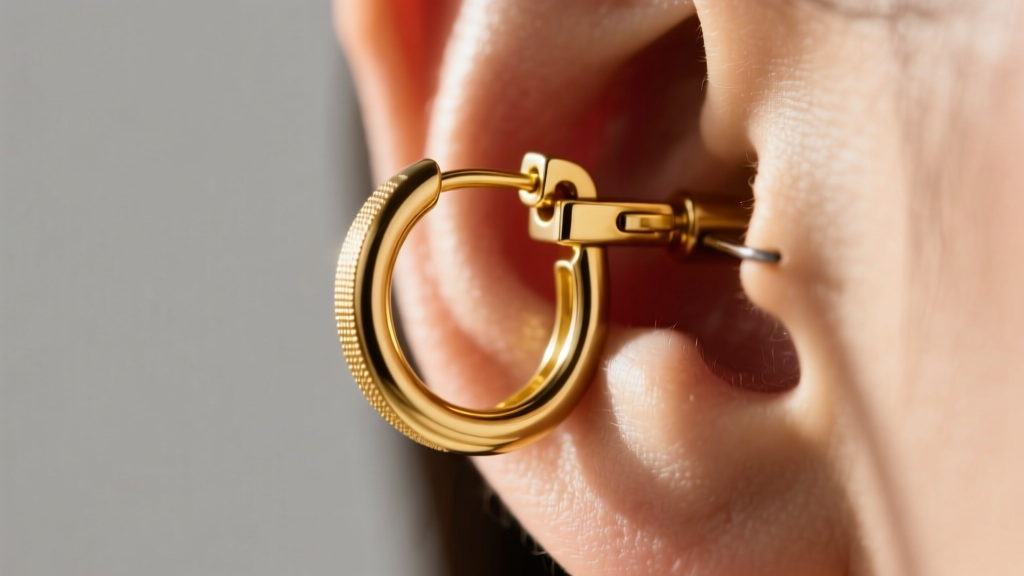
For standard earlobe piercings, which typically accommodate 20-gauge (0.81mm) or 18-gauge (1.02mm) posts, 14k gold offers the perfect balance of rigidity and comfort. The alloy's stiffness ensures that butterfly back clasps maintain their friction grip securely, and posts will not easily bend if you accidentally sleep on them. Furthermore, 14k gold is significantly more affordable, with high-quality stud earrings typically ranging from $150 to $350, making it the most pragmatic choice for everyday staple pieces.
The Color Variations: Yellow, Rose, and White
The 41.7% alloy mixture is also responsible for the color of the gold. 14k yellow gold uses a balanced mix of silver and copper. 14k rose gold achieves its pinkish hue by heavily increasing the copper content (often up to 20% of the total alloy), which slightly increases hardness but can cause reactions in those with copper sensitivities. 14k white gold is alloyed with nickel or palladium and requires a rhodium plating to achieve a bright white finish, which will eventually wear off and require re-plating.
18k Gold: The Luxury Standard for Sensitive Lobes
Stepping up the purity scale, 18k gold contains 75% pure gold and 25% alloy metals. This higher gold content yields a noticeably richer, deeper, and more saturated yellow hue that is highly prized in fine jewelry. However, this increase in purity comes with a decrease in structural hardness. 18k gold typically registers between 110 and 120 on the Vickers Hardness scale. While softer than 14k, it is still structurally sound enough for most earring applications, provided the gauge thickness is appropriate.
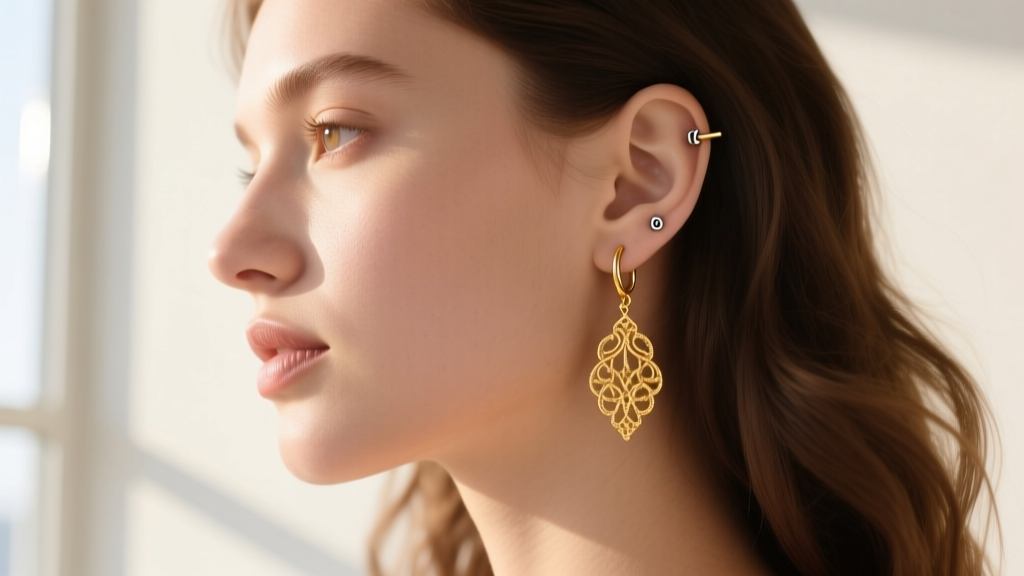
The primary advantage of 18k gold lies in its dermatological profile. Because there is less room for alloy metals, there is a statistically lower risk of allergic reactions. Reputable jewelers crafting 18k gold earrings will often use palladium or high-grade silver for the remaining 25%, entirely eliminating nickel from the equation. According to the American Academy of Dermatology (AAD), nickel is the leading cause of allergic contact dermatitis from jewelry. By opting for 18k, you drastically reduce the surface area of potential irritants resting against your healing or sensitive fistulas.
24k Gold: Why Pure Gold Fails in Structural Jewelry
24k gold is 99.9% pure gold. It possesses a distinct, almost orange-yellow luster that is culturally significant in many parts of the world. However, from a mechanical engineering standpoint, 24k gold is entirely unsuitable for structural earring components. It registers a mere 25 to 30 on the Vickers Hardness scale and a 2.5 on the Mohs scale of mineral hardness—meaning it can be scratched by a copper coin and bent with the same force required to indent a human fingernail.
If a jeweler attempts to craft a 20-gauge earring post out of 24k gold, the post will bend under the minimal pressure of inserting it through a tight piercing channel. Clicker mechanisms on huggie hoops will fail to maintain tension, causing the earring to snap open and fall out. While 24k gold is excellent for bezel-set stones or decorative inlays where it is protected by a harder metal casing, you should never purchase 24k gold for the structural wire, post, or clasp of an earring.
Material Comparison Matrix: 14k vs 18k vs 24k
Below is a technical breakdown of the three primary gold purities used in jewelry, highlighting their mechanical properties and ideal use cases.
| Karat | Gold Content | Vickers Hardness (HV) | Allergy Risk | Best Earring Type |
|---|---|---|---|---|
| 14k | 58.3% | 130 - 140 | Moderate (if nickel is used) | Threadless ends, clicker huggies, standard posts |
| 18k | 75.0% | 110 - 120 | Low (if alloyed with palladium/silver) | Healing jewelry, luxury studs, seamless hoops |
| 24k | 99.9% | 25 - 30 | None | Decorative inlays, soft bezels (Not for posts) |
Piercing Placement and Gauge Mechanics
The choice between 14k and 18k gold should also be dictated by the specific anatomy of your piercing and the gauge of the jewelry. The Gemological Institute of America (GIA) notes that the durability of gold alloys must be matched to the mechanical stress the jewelry will endure.
- Standard Earlobes (20g - 18g): Both 14k and 18k are perfectly suitable. 18k is recommended for newly pierced lobes or those with known metal sensitivities due to the lower alloy content.
- Cartilage / Helix / Tragus (16g - 14g): Cartilage piercings require thicker jewelry (16g / 1.29mm) to prevent the "cheese-cutter effect," where thin wire migrates through the tissue. For 16g huggie hoops with clicker closures, 14k gold is vastly superior. The clicker mechanism relies on the metal's "spring-back" memory and tensile strength to stay locked. An 18k or 24k clicker may warp over time, leading to a loose hinge and lost jewelry.
- Threadless / Press-Fit Ends: High-end body jewelry brands often use 14k or 18k gold for the decorative ends, but the actual post that bends to create tension is frequently made of implant-grade titanium (ASTM F-136) to ensure the tension lock never fails, regardless of the gold's karat.
Verdict: Investing in the Right Alloy
Ultimately, the best gold earrings ladies can buy depend entirely on their lifestyle, budget, and skin chemistry. If you are seeking robust, everyday hoops or huggies that can survive the gym, sleep, and frequent handling, 14k gold offers unmatched structural resilience. If you suffer from allergic contact dermatitis or are investing in high-end, heirloom-quality studs for sensitive lobes, the premium paid for 18k palladium-alloyed gold is a worthwhile dermatological safeguard. Avoid 24k gold for any structural components, and always verify the exact alloy composition with your jeweler before making a purchase.


