Gold Geometric Earrings: Budget & Value Assessment Guide
Discover how to evaluate gold geometric earrings for true value. We break down solid gold, vermeil, gold-filled pricing, craftsmanship, and cost-per-wear.

The True Cost of Gold Geometric Earrings
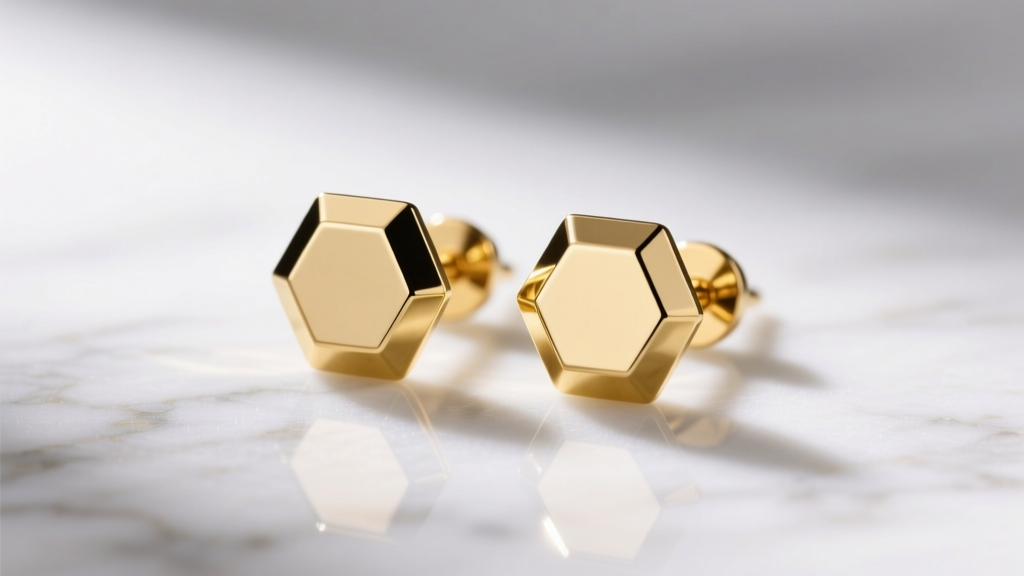
When navigating the contemporary jewelry market, gold geometric earrings stand out as a perennial staple. From minimalist hexagon studs to bold, oversized triangular drops, angular designs offer a striking architectural aesthetic that circular hoops simply cannot replicate. However, as a consumer in 2026, you are likely encountering a massive price disparity for visually identical pieces. A pair of 14k gold hexagon studs might cost $45 at a fast-fashion retailer, while an independent jeweler charges $285 for a seemingly identical design.
Understanding this price gap requires looking past the aesthetic and diving into metallurgy, manufacturing techniques, and structural integrity. Geometric shapes—unlike forgiving circles and ovals—expose poor craftsmanship instantly. Sharp corners, flat planes, and precise angles demand higher manufacturing tolerances. This budget and value assessment will decode the material grades, craftsmanship red flags, and pricing matrices you need to know before investing in your next pair of geometric statement pieces.
Material Breakdown: Solid, Vermeil, and Gold-Filled
The most critical factor in determining the value of gold geometric earrings is the base metal and the thickness of the gold layer. The Federal Trade Commission Jewelry Guides strictly regulate how these terms are used, yet marketing jargon often obscures the truth. Here is the exact breakdown of what you are actually paying for.
Gold Plated (The Budget Trap)
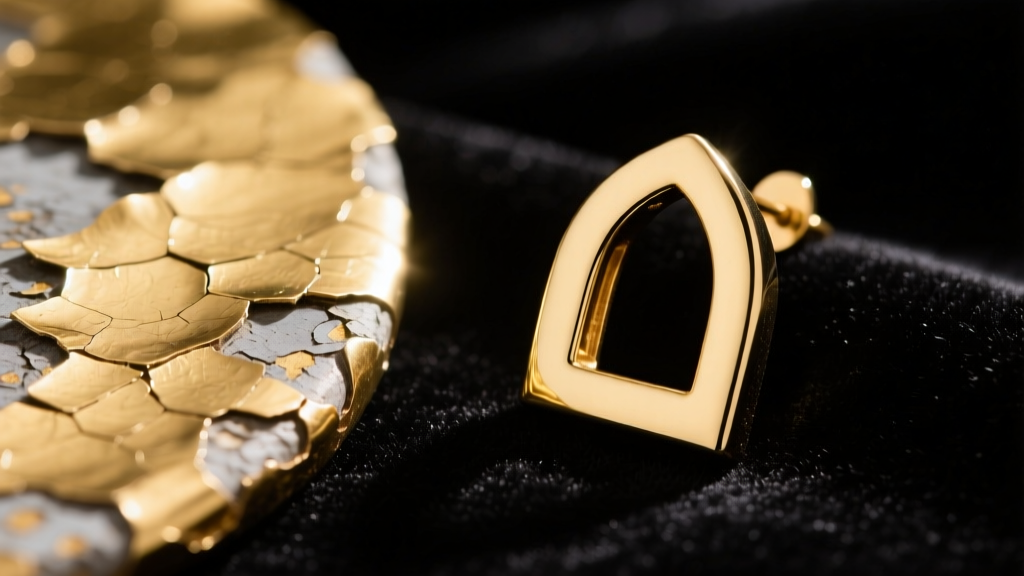
Often marketed as "gold dipped," standard gold plating involves a microscopic electroplated layer of gold (usually less than 0.5 microns) over a base metal like brass or copper. For geometric earrings with sharp edges, plating is a poor investment. The friction from hair, clothing, and even the natural oils on your skin will wear through the plating at the corners of a triangle or hexagon within weeks, exposing the brass beneath and turning your skin green.
Gold Vermeil (The Mid-Tier Compromise)
Vermeil (pronounced ver-may) is a step up. By definition, it must have a sterling silver base and be electroplated with gold that is at least 2.5 microns thick. While sterling silver is a hypoallergenic and valuable base, the 2.5-micron gold layer is still vulnerable to friction. If you buy vermeil geometric drops, expect to polish them gently and avoid wearing them in high-humidity environments to prevent the silver base from tarnishing and pushing through the gold layer.
Gold-Filled (The Value Champion)
Gold-filled jewelry is created by mechanically bonding a thick layer of gold to a brass core using extreme heat and pressure. By law, the gold must constitute at least 1/20th (5%) of the total weight of the item. This results in a gold layer that is up to 100 times thicker than standard plating. For geometric designs that experience edge-friction, 14k gold-filled is often the smartest budget-conscious choice, offering a lifespan of 10 to 30 years with daily wear.
Solid Gold (The Generational Investment)
According to the Gemological Institute of America (GIA), 14k solid gold contains 58.3% pure gold, alloyed with metals like copper and silver for durability. Solid gold geometric earrings will never tarnish, flake, or cause contact dermatitis. While the upfront cost is high, the intrinsic melt value and infinite lifespan make it the ultimate store of value.
| Material Type | Base Metal | Gold Thickness | Expected Lifespan (Daily Wear) | Value Rating |
|---|---|---|---|---|
| Gold Plated | Brass / Copper | < 0.5 microns | 3 - 6 Months | Poor |
| Gold Vermeil | Sterling Silver | ≥ 2.5 microns | 1 - 3 Years | Fair |
| Gold-Filled (1/20 14k) | Jeweler's Brass | Mechanically Bonded (5%) | 10 - 30 Years | Excellent |
| Solid 14k Gold | N/A (Alloyed) | Solid Throughout | Lifetime / Generational | Premium |
Craftsmanship Red Flags in Angular Designs
Beyond the metal composition, the physical construction of geometric earrings dictates their true value. Mass-produced jewelry often cuts corners that are glaringly obvious on angular pieces.
The "Geometry Tax": Edge Finishing and Tumbling
When a factory stamps out a circular hoop, the edges are naturally smooth. When they stamp a hexagon or a triangle, the stamping die leaves microscopic, razor-sharp burrs along the flat edges and corners. High-value manufacturers use a process called "barrel tumbling," where the raw earrings are tumbled in a vat of steel shot and polishing compound for hours. This smooths the edges to a buttery finish without rounding off the crisp geometric angles. If you run your fingernail along the edge of a cheap geometric earring and feel a "grab" or sharpness, you are holding a piece that skipped the tumbling process. It will catch your hair and scratch your skin.
Soldering Joints on Hoops and Drops
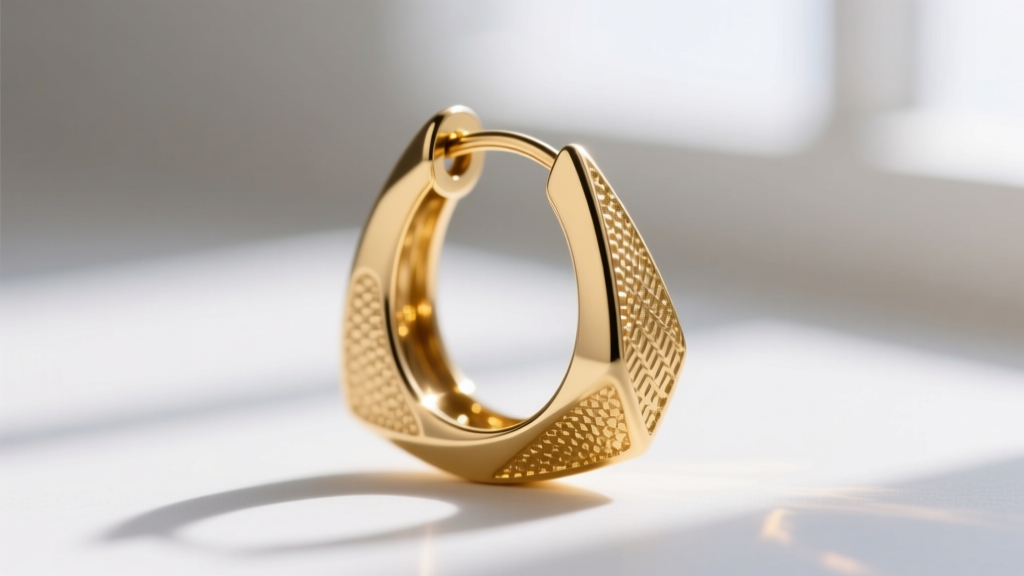
Geometric hoops (like squares or triangles) require precise soldering at the corners, or they are bent from a single wire. If bent from a single wire, the closure joint must be seamlessly laser-welded. Cheap manufacturing uses lead-based or low-karat solder that leaves a visible, dull seam at the corner. Over time, this weak joint will snap under the leverage of a heavy drop. Always inspect the corners of geometric hoops under good lighting; the seam should be virtually invisible.
Post Gauge and Weight Distribution
A common failure mode in budget geometric earrings is a bent post. Large geometric drops (e.g., a 35mm brass arch) act as a lever against your earlobe. If the manufacturer uses a standard 22-gauge (0.64mm) wire for the post, the weight of the earring will bend the wire within a week. High-value geometric drops utilize an 18-gauge (1.02mm) or 20-gauge (0.81mm) post, and often feature a reinforced "saddle" or flat pad where the post meets the earring body to distribute the torque evenly across the earlobe.
Price-to-Value Matrix: 2026 Market Brackets
To help you assess whether a specific pair of gold geometric earrings is priced fairly, use this market matrix based on current 2026 pricing for a standard pair of 20mm hexagon drop earrings.
- The Fast-Fashion Tier ($15 - $40): Gold-plated brass. High risk of nickel exposure and rapid tarnishing at the geometric edges. Verdict: Buy only for a single event or temporary trend-testing.
- The Accessible Artisan Tier ($55 - $120): Heavy gold vermeil or 14k gold-filled. Usually features hand-finished edges and 20-gauge posts. Verdict: The sweet spot for everyday wear and maximum cost-per-wear value.
- The Fine Jewelry Tier ($250 - $600): Solid 14k or 18k gold. Cast or hand-fabricated, featuring friction-locked or screw-back clasps for security. Verdict: Essential for heirloom pieces, sensitive ears, and high-value geometric staples you will never take off.
Calculating Cost-Per-Wear for Geometric Staples
When evaluating your budget, shift your mindset from "sticker price" to "cost-per-wear" (CPW). A $30 pair of plated triangular studs that tarnishes after 10 wears costs you $3.00 per wear. A $280 pair of solid 14k gold triangular studs worn 3 times a week for 5 years (780 wears) costs you exactly $0.35 per wear. Furthermore, solid gold retains intrinsic scrap value; if you ever decide to melt down or sell your solid geometric earrings, you will recoup a percentage of the raw gold market value—a financial safety net that gold-plated brass completely lacks.
Ultimately, the best value in gold geometric earrings lies in the intersection of mechanical durability and metallurgical purity. By prioritizing gold-filled or solid gold materials, demanding tumble-finished edges, and checking the post gauge, you ensure that your architectural ear decor remains as sharp and striking on day 1,000 as it was on day one.


