Hummingbird Earrings Gold: Expert Guide to Karats, Casting & Care
Discover the metallurgy, casting techniques, and weight distribution behind fine gold hummingbird earrings. An expert guide for collectors and jewelers.

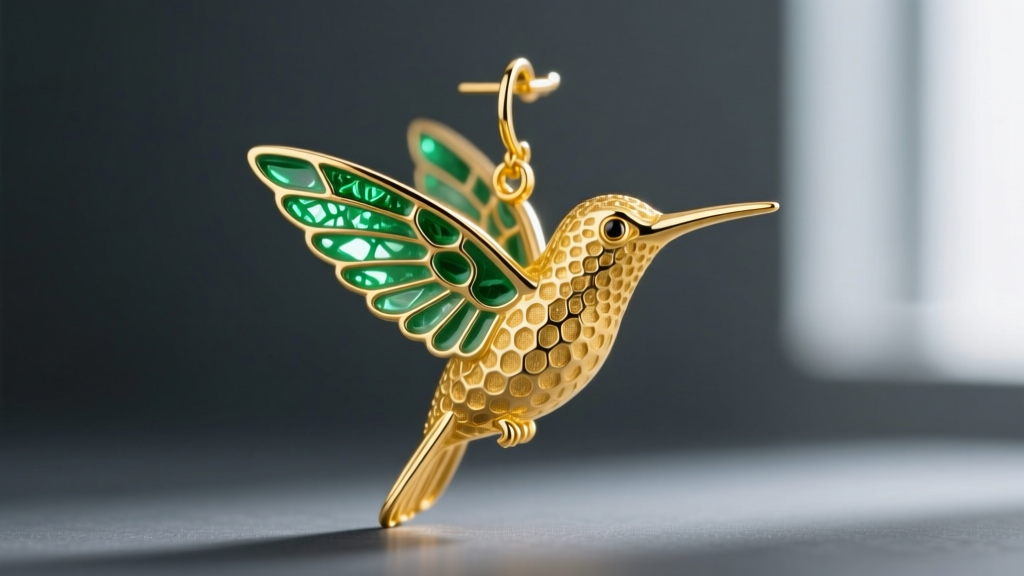
Nature-inspired jewelry requires a precise marriage of artistic vision and metallurgical engineering. When analyzing search intent for 'hummingbird earrings gold' is consistently the most requested material due to its unmatched luster and prestige. However, transforming this noble metal into a biomechanically accurate, wearable avian sculpture requires a deep understanding of alloy physics, precision casting, and structural balance. In 2026, advancements in castable photopolymer resins and micro-enameling techniques have elevated these motifs from simple silhouettes to museum-quality masterpieces. This expert guide explores the technical specifications required to produce, evaluate, and maintain fine gold hummingbird earrings.
The Metallurgy of Avian Jewelry: Alloy Selection
Gold in its pure 24k state (99.9% Au) possesses a Vickers hardness (HV) of merely 25. While this malleability is excellent for simple bands, it is entirely unsuitable for the delicate extremities of a hummingbird motif, such as the elongated beak or the primary flight feathers. According to the Gemological Institute of America (GIA), strategic alloying is mandatory to achieve the necessary tensile strength without sacrificing the metal's inherent warmth.
18k Yellow Gold (75% Au)
The standard for high-end artisan jewelry, 18k gold is composed of 75% pure gold, typically alloyed with 12.5% copper and 12.5% silver. This yields a Vickers hardness of approximately 125 HV. It provides a rich, saturated yellow hue that mimics the golden undertones of certain hummingbird species, making it ideal for the main body and intricate wing frameworks where a balance of color and moderate durability is required.
14k Yellow Gold (58.3% Au)
Composed of 58.3% gold, 20% copper, 14% silver, and 7.3% zinc, 14k gold achieves a hardness of roughly 160 HV. The Federal Trade Commission (FTC) strictly regulates these purity markings, ensuring the 14k stamp guarantees structural resilience. This alloy is the optimal choice for the earring post, leverback mechanisms, and the hummingbird’s beak, which is highly prone to bending if caught on clothing or hair.
| Karat | Au % | Vickers Hardness (HV) | Melting Point (°C) | Best Structural Application |
|---|---|---|---|---|
| 22k | 91.6% | 55 HV | 1040°C | Solid body castings (no thin extremities) |
| 18k | 75.0% | 125 HV | 900°C | Wing frameworks, main body, bezel settings |
| 14k | 58.3% | 160 HV | 850°C | Beaks, tail feathers, earring posts, clasps |
Precision Casting: Lost-Wax vs. 3D Resin
Historically, hummingbird earrings were carved by hand from jeweler's wax. However, capturing the microscopic barbs of a hummingbird feather requires modern photopolymer resins. Today, castable waxes like Formlabs Castable Wax 40 allow for 25-micron layer resolution, capturing details that the human eye can barely perceive but which interact beautifully with light.
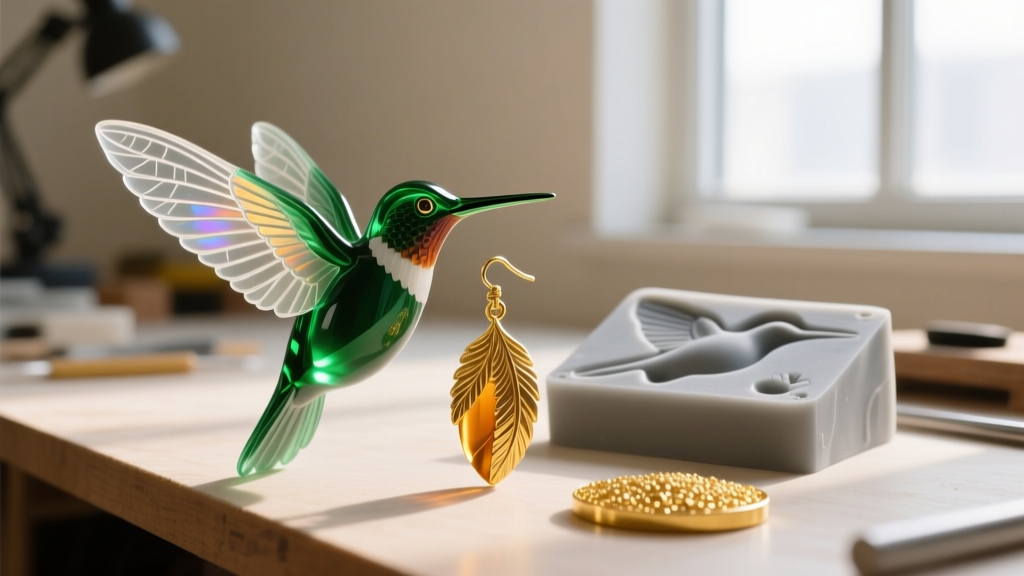
Spruing Strategy for Thin Extremities
The greatest point of failure in casting avian jewelry is incomplete fill, resulting in porosity or rounded, blunt tips on the beak and tail. Master casters employ a highly strategic spruing network to ensure molten gold reaches every crevice:
- Main Sprue: A 1.5mm thickness attached to the bird's torso to act as the primary reservoir.
- Secondary Sprues: 0.8mm capillary sprues attached directly to the beak and tail tips. This ensures the molten gold is pulled into the furthest extremities of the investment mold before the metal begins to solidify.
- Burnout Protocol: The investment flask must be held at 730°C for a minimum of two hours to ensure zero carbon residue remains, which can otherwise cause severe pitting on the gold surface.
Biomechanics and Weight Distribution
A hummingbird is inherently aerodynamic, but as a dangle earring, it must obey the strict laws of gravity. If the center of mass is poorly calculated, the earring will tilt backward, hiding the beautiful motif against the wearer's neck and causing lobe fatigue.
"The secret to a flawless avian dangle lies in the bail placement. The jump ring must intersect the exact Z-axis center of gravity, typically located just behind the wing joint, to ensure the bird 'flies' parallel to the ground rather than pointing upward."
Furthermore, the choice of earring finding dictates how the weight is distributed across the earlobe. A standard 20-gauge fishhook is insufficient for a solid gold hummingbird weighing over 5 grams, as it will cause the lobe to stretch and the earring to droop.
| Finding Type | Wire Gauge | Max Weight Tolerance | Biomechanical Advantage |
|---|---|---|---|
| Standard Fishhook | 20g (0.81mm) | 4.5 grams | Lightweight, but prone to drooping on heavy drops. |
| Locking Leverback | 16g (1.29mm) | 9.0 grams | Distributes weight across the upper lobe; prevents tilting. |
| French Wire w/ Coil | 18g (1.02mm) | 6.0 grams | The coil adds counterweight at the front, balancing the tail. |
Surface Finishing and Enameling Techniques
To replicate the iridescent plumage of a real hummingbird, master jewelers turn to plique-à-jour enameling. This incredibly difficult technique involves firing translucent glass powder into the open cells of the gold wing framework without a metal backing, creating a stained-glass effect that allows light to pass through the wings.
The Firing and Annealing Process
The gold framework must be alloyed to withstand the 750°C kiln temperatures required to fuse the silica-based, lead-free enamel fluxes. Lower karat golds risk melting or warping during the multiple firing cycles needed to build up the vibrant greens, blues, and purples of the hummingbird's throat (gorget). After each firing, the piece must be slowly annealed to relieve thermal stress in the gold, preventing the enamel from crazing or cracking over time.
Gemstone Integration
For the eyes, micro-pavé or tension-set tsavorite garnets (refractive index 1.74) are heavily preferred over emeralds. Tsavorite offers superior toughness and lacks the fracture-filling treatments common in emeralds, which can be instantly destroyed by heat or ultrasonic vibrations.
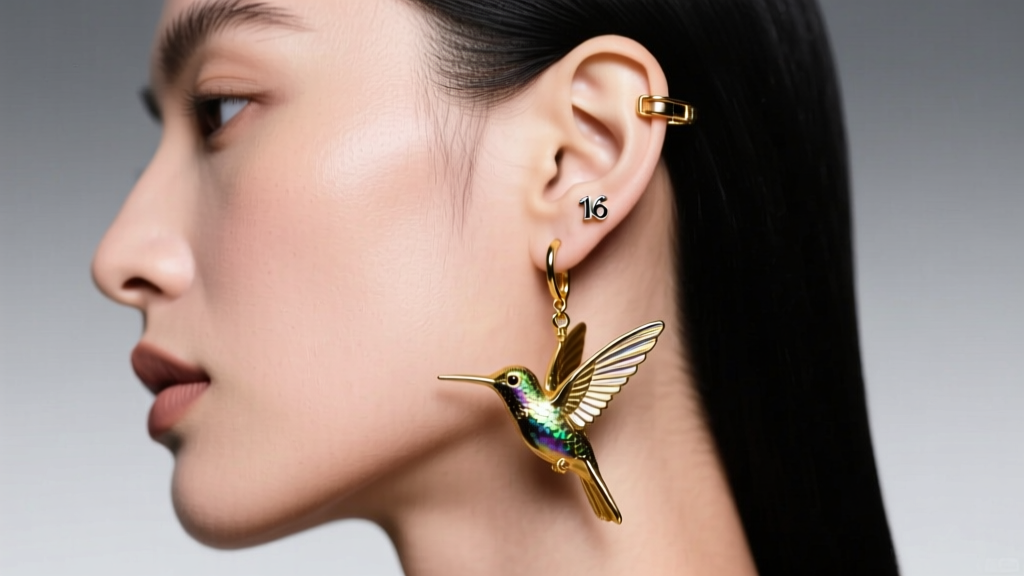
Maintenance and Structural Care
Caring for intricate gold hummingbird earrings requires abandoning standard jewelry cleaning habits. The complex geometry of the feathers and the fragility of the enamel demand a specialized approach to maintenance.
- Avoid Ultrasonic Cleaners: The high-frequency cavitation bubbles can shatter tension-set gemstone eyes and cause micro-fractures in plique-à-jour enamel.
- Steam Cleaning Risks: Thermal shock from pressurized steam can instantly crack glass enamel and loosen microscopic prongs.
- Proper Polishing: Use a soft goat-hair brush and a mild, non-abrasive saponin solution. Never use a motorized polishing wheel on the textured feather details, as it will round the sharp edges and destroy the optical light-trapping geometry of the cast.
- Storage Protocols: Always store hummingbird earrings in individual microfiber pouches with anti-tarnish strips. The elongated beak is notorious for snagging on other chains and bending under the weight of heavier jewelry in a shared box.
Conclusion
The creation of fine gold hummingbird earrings is a testament to the intersection of natural beauty and advanced metallurgy. By understanding the precise Vickers hardness requirements, utilizing 3D resin casting for microscopic detailing, and respecting the biomechanics of the earlobe, jewelers can produce avian masterpieces that are as structurally sound as they are visually breathtaking. For the discerning collector, these technical details are what separate a simple piece of jewelry from a wearable work of art.


