Gold Leverback Earrings: A Budget and Value Assessment Guide
Discover if gold leverback earrings are worth the investment. We break down material grades, pricing tiers, and cost-per-wear for smart buyers.

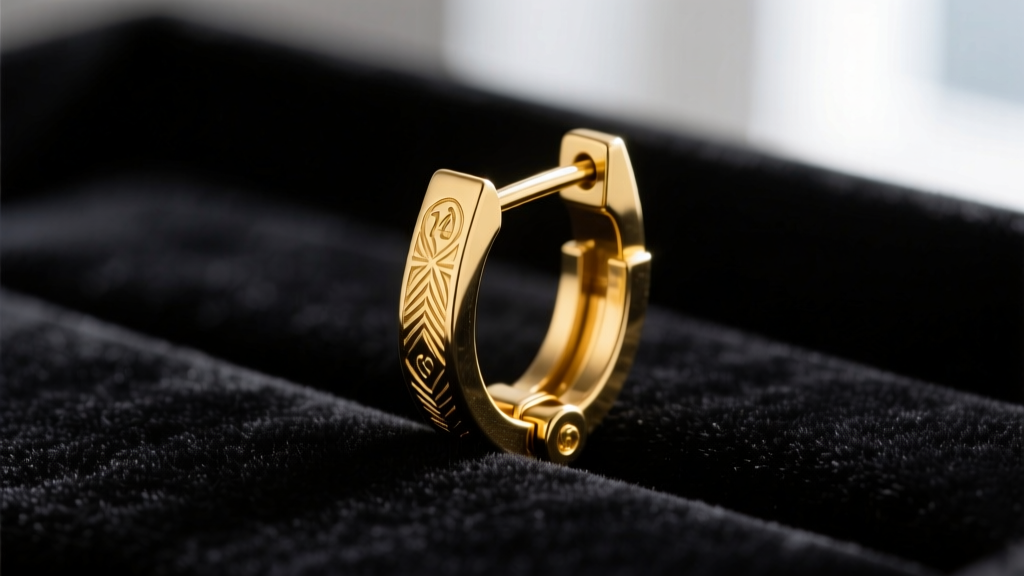
The True Cost of Security: Why Leverbacks Command a Premium
When evaluating fine jewelry on a budget, the closure mechanism is often an afterthought. However, for drop and dangle earrings, the leverback is the gold standard for security and comfort. Unlike a simple French hook (fishhook) which relies on gravity and friction, a leverback features a hinged wire that snaps securely into a catch. This design virtually eliminates the risk of losing an earring to a snagged sweater or a toss of the hair.
But this security comes at a manufacturing cost. Crafting a reliable leverback requires precise soldering of the hinge and careful tensioning of the clasp. According to industry manufacturing standards, producing a leverback wire increases labor and tooling costs by 15% to 25% compared to a standard straight wire. When you are shopping for gold leverback earrings on a budget, this baseline manufacturing cost forces brands to make critical decisions about the materials they use. Understanding these trade-offs is the key to separating genuine value from overpriced costume jewelry.
Material Breakdown: Where Your Money Actually Goes
The term 'gold' in jewelry marketing is heavily regulated, yet frequently misunderstood. To accurately assess the value of gold leverback earrings, you must look past the color and examine the metallurgy. The Gemological Institute of America (GIA) outlines strict definitions for gold purity and application, which directly dictate the price point and lifespan of your earrings.
| Material Type | Base Metal | Gold Layer / Purity | Avg. Price (Pair) | Expected Lifespan |
|---|---|---|---|---|
| 14k Solid Gold | None (Alloyed) | 58.5% Pure Gold | $150 - $350+ | Lifetime / Heirloom |
| 18k Gold Vermeil | Sterling Silver | Min. 2.5 microns | $45 - $110 | 2 - 5 Years |
| 14k Gold-Filled | Jeweler's Brass | 5% Gold by Weight | $35 - $75 | 3 - 7 Years |
| Gold-Plated | Brass / Copper | < 0.5 microns | $15 - $30 | 3 - 6 Months |
The Hinge Fatigue Factor: Vermeil vs. Gold-Filled
For budget-conscious buyers, the choice usually narrows down to gold vermeil and gold-filled. Both offer a rich gold appearance, but they behave very differently at the leverback hinge. Gold-filled wire is created by mechanically bonding a thick sheet of gold to a brass core. While highly durable on the surface, the brass core is relatively stiff. Repeatedly opening and closing a gold-filled leverback can eventually cause the gold layer to micro-fracture at the hinge bend, exposing the brass underneath.
Gold vermeil, conversely, uses a sterling silver base. Silver is softer and more malleable than brass, allowing the leverback hinge to flex repeatedly without cracking the outer gold layer. Furthermore, if the 2.5-micron gold layer eventually wears away at the catch point after years of daily use, the exposed sterling silver remains hypoallergenic and visually acceptable. For leverback mechanisms specifically, high-quality vermeil often provides superior long-term structural value compared to gold-filled alternatives.
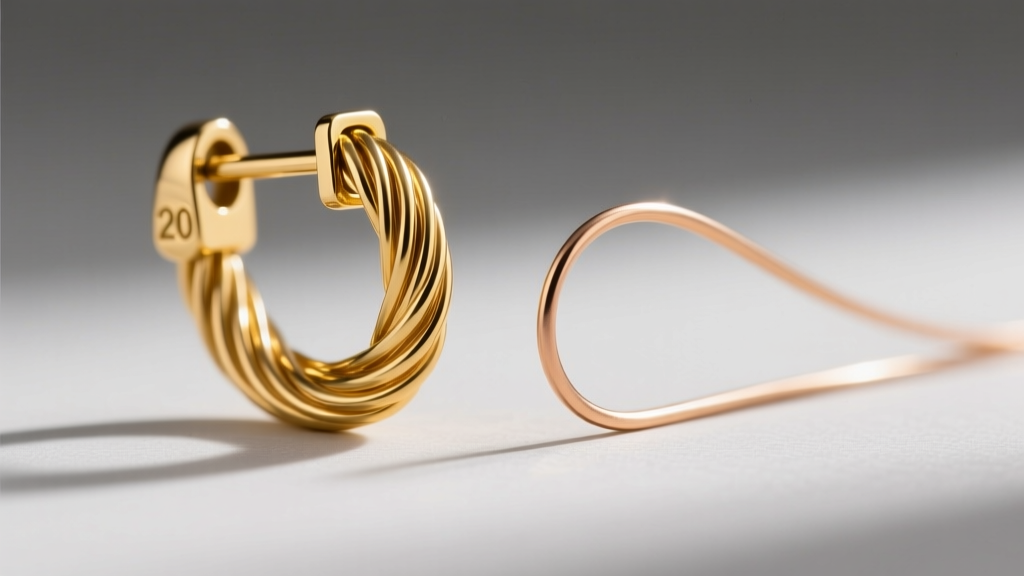
Wire Gauge: The Hidden Metric of Value
Beyond the gold content, the thickness of the wire—measured in gauges—is a massive indicator of quality. The gauge of the wire dictates how the earring feels in your piercing and how well the leverback maintains its tension over time.
- 18-Gauge (1.02mm): Rare for leverbacks, usually reserved for heavy, statement drops. Can be uncomfortable for standard lobe piercings.
- 20-Gauge (0.81mm): The industry sweet spot. Provides enough structural integrity to maintain the 'snap' tension of the clasp without bending, while remaining comfortable for most healed piercings.
- 22-Gauge (0.64mm): Common in budget and fast-fashion jewelry. While comfortable, 22-gauge wires are highly prone to bending. If a 22-gauge leverback wire bends even slightly, the clasp will no longer align with the catch, rendering the security feature useless.
When assessing a pair of budget gold leverback earrings, always check the product specifications for the wire gauge. If the brand does not disclose it, assume it is a flimsy 22-gauge or thinner, and adjust your willingness to pay accordingly.
Price Tiers: What to Expect in the Current Market
To navigate the market effectively, it helps to categorize gold leverback earrings into distinct pricing tiers. This framework allows you to align your budget with realistic expectations regarding material longevity.
Tier 1: The Fast-Fashion Trap ($15 - $35)
At this price point, you are purchasing gold-plated brass or copper. The gold layer is measured in fractions of a micron (often just 'flash plated'). The leverback hinges are usually mass-cast rather than soldered, leading to a mushy, unreliable closure. Furthermore, the base metals frequently contain nickel or cadmium, posing a high risk of contact dermatitis once the microscopic gold layer wears off at the friction points.
Tier 2: The Accessible Sweet Spot ($45 - $120)
This is where genuine value lives for the everyday wearer. In this tier, you will find heavy gold vermeil (often 3 to 4 microns thick over recycled sterling silver) and high-quality 14k gold-filled pieces. Brands operating in this space typically use durable 20-gauge wires and invest in proper hinge tensioning. You are paying for the metal weight and the mechanical reliability of the closure.
Tier 3: The Investment Grade ($150 - $400+)
Solid 14k or 18k gold leverbacks. The price here is driven by the raw commodity cost of gold and the skilled labor required to cast, polish, and assemble solid gold components. These are 'buy it for life' pieces. The value proposition shifts from 'cost-per-wear' to asset retention and absolute biocompatibility for highly sensitive ears.

Red Flags: Spotting Overpriced Costume Jewelry
Even armed with material knowledge, buyers can be misled by clever marketing. The Federal Trade Commission (FTC) strictly regulates jewelry labeling, yet loopholes and vague terminology still plague the market. Watch out for these specific red flags when evaluating gold leverback earrings:
- 'Gold Tone' or 'Gold Dipped': These are unregulated marketing terms that usually mean the item is base metal with a microscopic, non-durable spray of gold-colored paint or electroplating. They hold zero intrinsic value.
- Missing Hallmarks: Legitimate vermeil must be stamped '925' (indicating the sterling silver base). Solid gold must be stamped '14k', '18k', or '585'. If the leverback wire or the earring body lacks a stamp, do not pay Tier 2 or Tier 3 prices.
- The 'Pull Test' Failure: If you are shopping in person, gently pull the leverback wire open. It should offer smooth, consistent resistance and close with an audible, crisp 'click'. If it feels loose, wobbly, or fails to snap shut flush against the catch, the manufacturing tolerances are poor, regardless of the gold content.
Final Verdict: Calculating Your Cost-Per-Wear
Ultimately, the value of gold leverback earrings is best measured by the cost-per-wear metric. A $25 pair of gold-plated leverbacks that tarnishes, triggers a nickel allergy, and breaks at the hinge after two months costs you roughly $0.41 per day. Conversely, a $75 pair of 20-gauge, heavy gold vermeil leverbacks worn daily for three years costs just $0.06 per day, while providing superior security and hypoallergenic peace of mind.
For the budget-conscious buyer seeking the best intersection of security, comfort, and financial prudence, 18k gold vermeil leverback earrings with a 20-gauge wire represent the undisputed champion of value. They offer the mechanical reliability and aesthetic warmth of fine jewelry without the prohibitive commodity costs of solid gold, ensuring your favorite drops stay safely in your ears and out of the lost-and-found.


