Gold Pave Earrings: 2026 Value & Budget Buying Guide
Discover how to evaluate gold pave earrings in 2026. Compare 14k vs 18k, diamond vs. CZ, and learn pricing tiers to maximize your jewelry budget.

The Anatomy of Pavé: Why Labor Dictates the Price
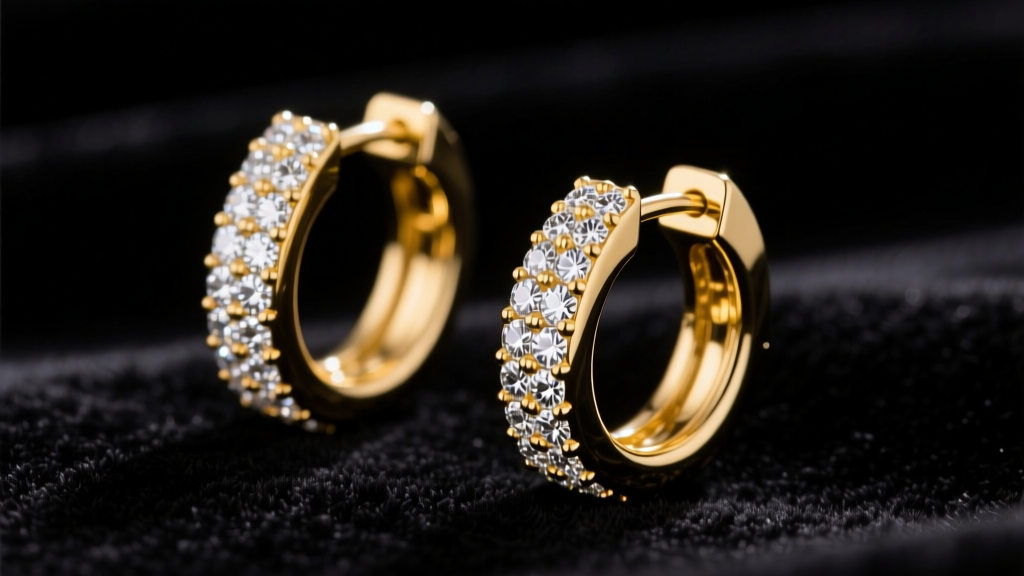
The term "pavé" (pronounced pah-vay) is French for "paved," referring to a jewelry setting where small gemstones are set closely together, creating a surface that looks like it is paved with brilliance. When shopping for gold pave earrings in 2026, the most common mistake buyers make is evaluating the price based solely on gold weight and total carat weight. This is a fundamental misunderstanding of how pave jewelry is valued.
In reality, the true cost of high-quality pave lies in the bench jeweler's labor. Setting dozens of microscopic stones—known as melee—requires precision carving, bead raising, and prong securing under high magnification. A pair of 15mm pave huggie earrings might contain less than 0.25 total carats of diamonds, but the hours of skilled labor required to hand-set those stones securely will outprice the raw materials. Understanding this labor-to-material ratio is the first step in accurately assessing the budget and value of any pave earring.
The Gold Karat Paradox: 14k vs. 18k for Pave Settings
Conventional jewelry wisdom dictates that 18k gold (75% pure gold) is inherently superior to 14k gold (58.5% pure gold). However, when it comes to the structural integrity of pave settings, this rule is often inverted. Pure gold is a remarkably soft metal. In an 18k gold pave earring, the tiny micro-prongs or beads holding the melee diamonds are more susceptible to bending, warping, and ultimately releasing stones during daily wear.
Conversely, 14k gold contains a higher percentage of alloy metals like copper, silver, and zinc. This increased alloy content significantly boosts the tensile strength and hardness of the metal. For active wearers, or for styles like pave huggies and hoops that experience friction and pressure, 14k gold provides a much more secure grip on the stones. Unless you are purchasing a high-end luxury piece where the premium for 18k gold is justified by brand prestige and deep color, 14k gold offers superior practical value and longevity for pave earrings.
Melee Diamonds vs. Simulants: Allocating Your Budget
The stones used in pave settings are called "melee" (pronounced mel-ay), typically ranging from 0.01 to 0.02 carats each (roughly 1.0mm to 1.7mm in diameter). According to GIA's guidelines on melee diamonds, because these stones are so small, inclusions and slight color variations are virtually invisible to the naked eye. Reputable jewelers typically use SI1-I1 clarity and G-H color melee diamonds, which provide maximum sparkle without the premium cost of flawless, colorless stones.
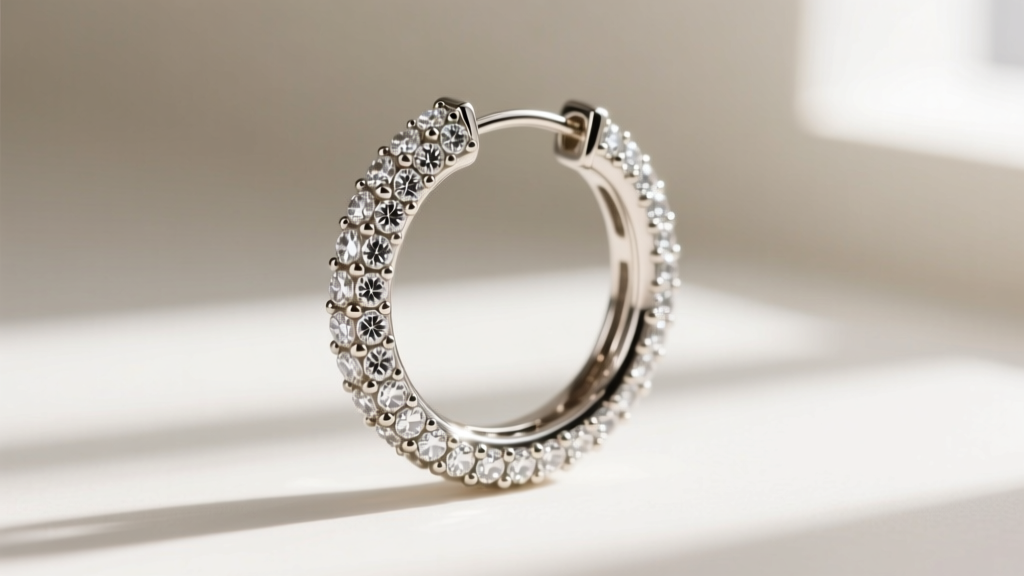
If your budget is strict, you must decide between natural melee diamonds, lab-grown diamonds, moissanite, and cubic zirconia (CZ). Lab-grown diamonds offer the exact same optical and physical properties as natural diamonds but at a 30-50% discount. Moissanite offers incredible fire and brilliance, often outperforming diamonds in light return, making it an excellent mid-tier budget option. CZ is the most affordable but will eventually cloud and scratch over time, diminishing the value of the gold setting it resides in.
2026 Pricing Matrix: What You Should Actually Pay
To help you navigate the market, we have compiled a value assessment matrix based on current 2026 pricing for a standard pair of 15mm pave huggie earrings or 6mm pave stud jackets. Use this table to determine if a retailer's pricing aligns with the actual materials and labor involved.
| Material Combination | Setting Style | Estimated Price Range (Pair) | Value Verdict |
|---|---|---|---|
| 14k Gold + CZ | Cast-in-Place / Glued | $60 - $150 | Poor long-term value; stones will fall out. |
| 14k Gold + Moissanite | Hand-Set Bead Pave | $250 - $450 | Excellent budget alternative; high brilliance. |
| 14k Gold + Lab Diamonds | Hand-Set Micro-Pave | $400 - $750 | Best overall value for diamond purists. |
| 14k Gold + Natural Melee | Hand-Set French Pave | $800 - $1,400 | Strong investment; retains resale value. |
| 18k Gold + Natural Melee | Hand-Set U-Cut Pave | $1,600 - $3,000+ | Luxury tier; pay for prestige, not durability. |
Manufacturing Red Flags: Spotting Low-Value Pave
When evaluating budget-friendly gold pave earrings, you must be vigilant against manufacturing shortcuts that compromise the piece's integrity. The most egregious red flag is glue-set pave. Some mass-market manufacturers use industrial epoxy to secure stones instead of raising metal beads. This is a catastrophic failure point; the glue will degrade with exposure to lotions, perfumes, and natural skin oils, leading to rapid stone loss.
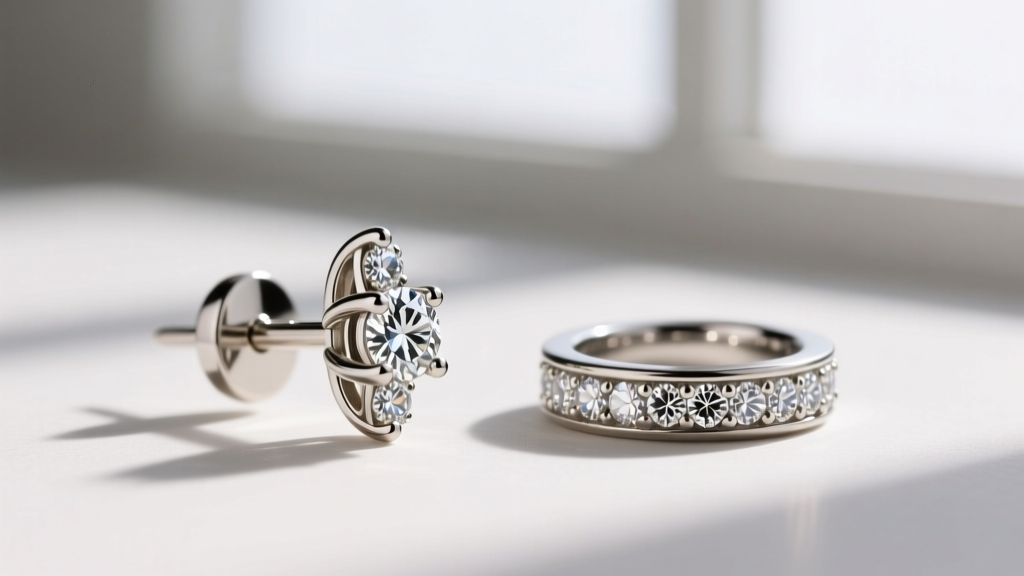
Another shortcut is cast-in-place stones. In this process, the CZ or low-grade stones are placed into the rubber mold before the gold is cast, meaning the metal shrinks around the stone rather than being carved to fit it. You can identify cast-in-place pave by looking closely at the edges of the stones; if the metal looks melted, uneven, or lacks distinct, crisp prongs, avoid the purchase. Always demand hand-set or CAD-precise bead settings where the metal is physically pushed over the girdle of the stone.
Pro-Tip: Perform the "snag test" before buying. Gently run the surface of the pave earrings over a piece of silk or a nylon stocking. If the fabric catches on any rough metal beads or protruding prongs, the setting is poorly finished and will snag on your hair and clothing during daily wear.
Care and Failure Modes: Protecting Your Investment
Pave earrings require specific maintenance to ensure the micro-prongs remain secure. The most common failure mode for pave jewelry is the use of ultrasonic cleaners. The high-frequency vibrations can easily shake loose stones that are held by tiny, delicate beads of metal. Furthermore, the FTC Jewelry Guides strictly regulate how gold plating and vermeil are disclosed. Never buy pave settings on gold-plated bases; when the plating inevitably wears off, the piece cannot be polished or replated without destroying the pave setting.
For safe cleaning, follow GIA diamond care recommendations by using a soft-bristled baby toothbrush, warm water, and a drop of mild dish soap. Gently brush the underside of the earrings where lotion and dead skin cells accumulate, which can block light from entering the melee diamonds and make them appear dull. By prioritizing structural integrity over inflated karat weights and avoiding glued settings, you can secure a pair of gold pave earrings that offer lifelong brilliance and undeniable value.


