Gold Pave Hoop Earrings: The Ultimate Buying Guide
Discover what to look for when buying gold pave hoop earrings. Learn about karat weights, diamond clarity, clasp types, and pricing in our expert guide.

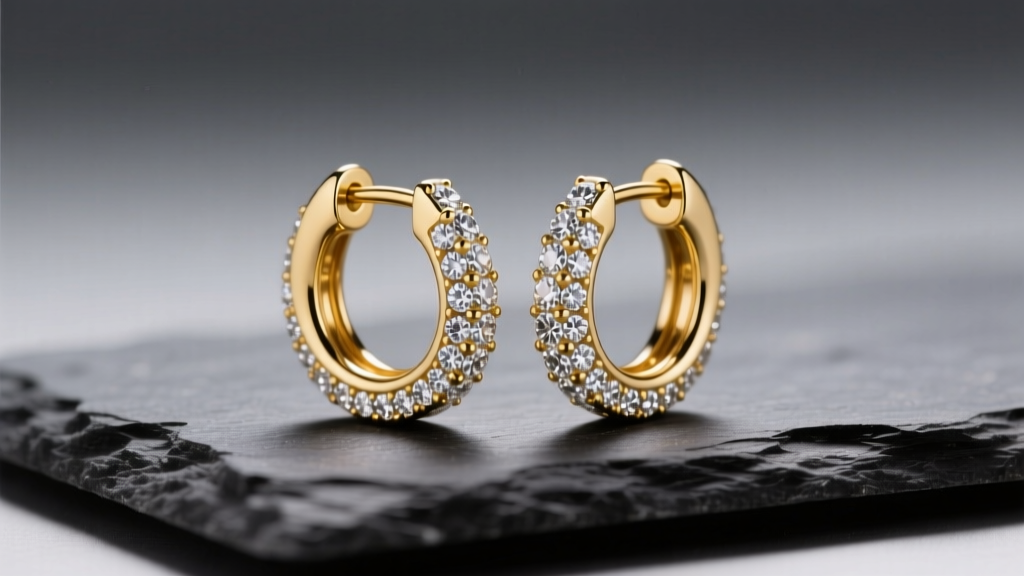
The Anatomy of Gold Pave Hoop Earrings
When it comes to elevating your everyday jewelry rotation, gold pave hoop earrings strike the perfect balance between understated elegance and brilliant sparkle. The term 'pavé' originates from the French word for 'paved,' referring to a setting where small gemstones are placed closely together, creating a surface that looks like it is paved with diamonds. However, not all pave hoops are created equal. The difference between a pair that lasts a lifetime and one that loses stones within a month lies in the microscopic details of the setting, the metallurgy of the base, and the engineering of the clasp.
In this comprehensive buying guide, we will break down the exact specifications you need to look for when shopping for gold pave hoops in 2026. From understanding the shift toward premium lab-grown melee diamonds to decoding gauge thickness and clasp mechanics, this guide will ensure you invest in a pair that offers both structural integrity and maximum light return.
Decoding the Pave Setting: Micro-Pave vs. Standard Pave
The setting technique is the most critical factor in the longevity of your hoops. Because hoops are constantly in motion—brushing against hair, collars, and pillows—the setting must securely grip the stones without exposing sharp edges that can snag.
Micro-Pave Setting
Micro-pave utilizes extremely small diamonds (typically under 0.01 carats each) held in place by microscopic beads of gold raised from the base metal. This technique requires high magnification and master-level craftsmanship. For hoops, micro-pave is highly recommended because it creates a remarkably smooth, continuous surface. The lack of traditional prongs means there are no tiny metal claws to catch on your clothing or hair.
Standard Pave and Shared Prong
Standard pave uses slightly larger stones and may employ tiny prongs or a bead-and-prong hybrid. While this allows more light to enter the sides of the diamonds (increasing brilliance), the exposed prongs on a hoop earring are a liability. If a prong bends, the stone will inevitably fall out. If you prefer the extra fire of a shared prong setting, reserve those pieces for occasional wear rather than daily use.
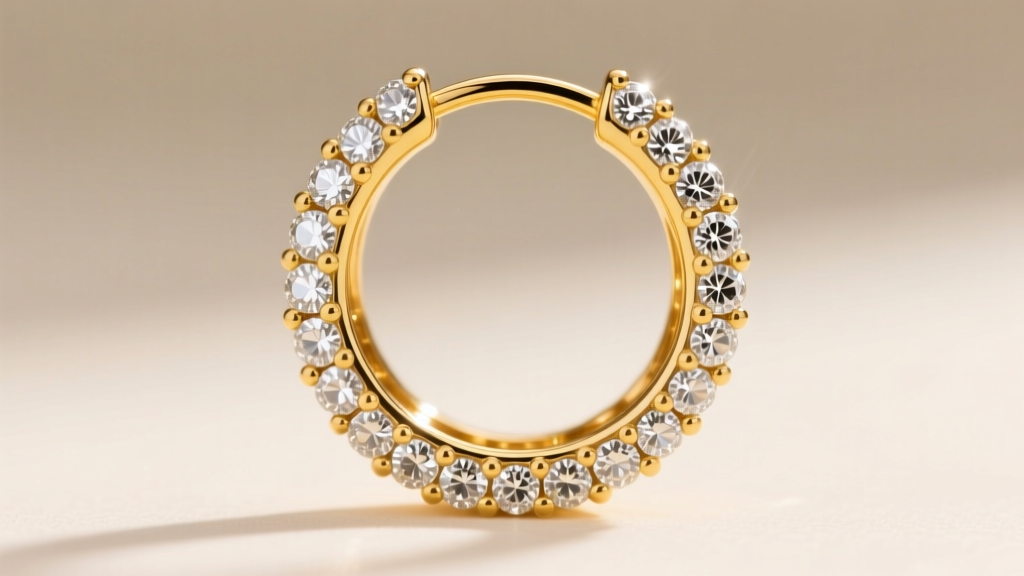
Metal Base: Why 14k Gold Outperforms 18k for Pave
While 18k gold (75% pure gold) is often marketed as the premium standard in fine jewelry, it is actually a disadvantage when it comes to pave settings on hoop earrings. Pure gold is a soft metal. When alloyed to 18k, it remains relatively malleable. If an 18k gold hoop is accidentally squeezed, dropped, or bent while taking it off, the metal will warp. Because the pave stones are set into a rigid matrix, any warping of the underlying gold will stretch the microscopic bead settings, causing the diamonds to pop out.
Conversely, 14k gold (58.5% pure gold) is alloyed with a higher percentage of strengthening metals like copper, silver, and zinc. This makes 14k gold significantly harder and more resistant to deformation. For a high-wear item like a pave hoop earring, 14k gold provides a much more secure 'grip' on the melee diamonds, ensuring they stay firmly in place for years. If you have sensitive skin and require the higher purity of 18k gold, ensure the hoop has a thicker gauge (see below) to compensate for the metal's softness.
A Note on Gold Vermeil and Plating
If you are shopping on a budget, you will encounter gold vermeil and gold-plated pave hoops. By FTC guidelines, gold vermeil must consist of a sterling silver base plated with at least 2.5 microns of 10k, 14k, or 18k gold. While vermeil is a great entry point, the friction of putting on and taking off hoops will eventually wear down the plating at the post and clasp. Solid 14k or 18k gold is always the recommended choice for heirloom-quality pave pieces.
Evaluating Melee Diamond Quality in 2026
The diamonds used in pave settings are known as 'melee' (pronounced meh-lay). According to the Gemological Institute of America (GIA), melee diamonds generally weigh less than 0.22 carats each, with pave stones often weighing less than 0.01 carats. Because they are so small, they are rarely individually graded by gemological labs.
However, the visual impact of your hoops depends heavily on the collective quality of these tiny stones. Here is what to look for:
- Color: Look for G-H color grades. Anything lower (I-J-K) will look noticeably yellow or brown, especially when contrasted against white gold or platinum settings. In yellow or rose gold, you can drop down to I-J without a noticeable difference.
- Clarity: SI1 to SI2 (Slightly Included) is the industry standard for melee. Because the stones are so small, inclusions are invisible to the naked eye. Paying for VVS clarity in pave stones is a waste of money unless you are purchasing a verified high-jewelry designer piece.
- The Lab-Grown Shift: As of 2026, the pave market has been entirely revolutionized by lab-grown melee diamonds. Reputable jewelers now use lab-grown stones that offer E/F color and VS clarity at the same price point as lower-grade natural melee. When shopping, ask the jeweler if their pave features premium lab-grown stones to maximize brilliance.
For a deeper dive into how these tiny stones are cut and graded, the Blue Nile Education Center offers excellent visual guides on how melee diamond proportions affect light performance in clustered settings.
Sizing, Gauge Thickness, and Clasp Engineering
The structural integrity of gold pave hoop earrings relies heavily on the wire gauge and the clasp mechanism. The 'gauge' refers to the thickness of the metal wire that passes through your ear.
Understanding Wire Gauge
Most standard hoop earrings are crafted in 18-gauge (1.0mm) or 16-gauge (1.2mm). If you are buying a small huggie hoop (10mm to 14mm in diameter), an 18-gauge wire is standard and perfectly secure. However, if you are purchasing a medium or large hoop (20mm to 40mm+), you must look for a 16-gauge or even 14-gauge wire. A thin 18-gauge wire on a large hoop will easily bend under the weight of the pave diamonds, compromising the setting.
Clasp Mechanics: The Make-or-Break Feature
A secure clasp prevents the earring from slipping out and getting lost. Here is a breakdown of the most common clasp types used in pave hoops:
| Clasp Type | Security Level | Best For | Common Gauge |
|---|---|---|---|
| Hinged Snap | High | Huggies & Small Hoops (10-15mm) | 16G - 18G |
| Post & Omega Back | Medium | Medium to Large Hoops (20mm+) | 18G - 20G |
| Clicker Hinge | Very High | Cartilage, Huggies & Seamless looks | 16G |
| Saddleback / Hinged Saddle | High | Thicker, statement pave hoops | 14G - 12G |
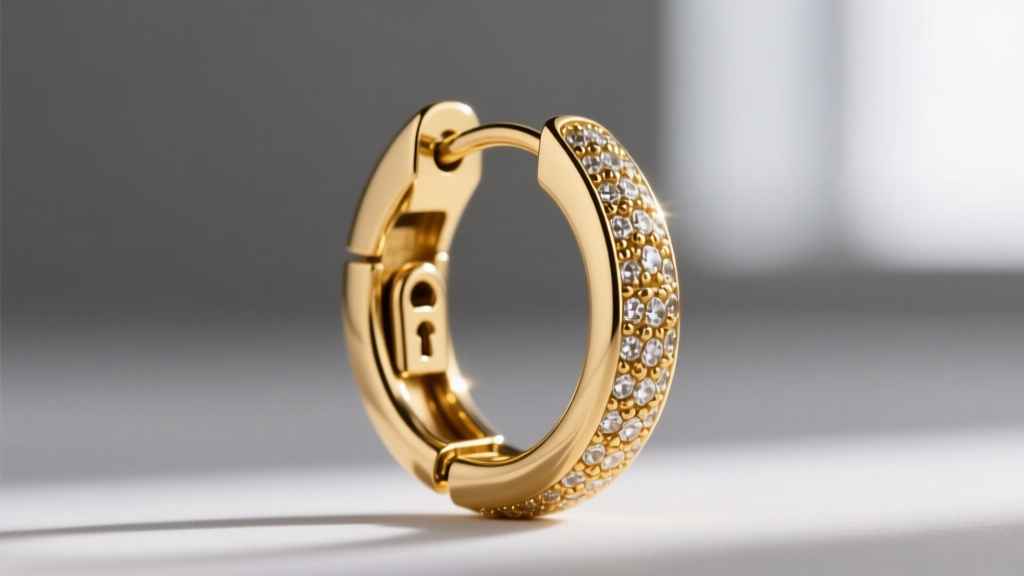
For the best combination of security and comfort, the clicker hinge is the gold standard in modern hoop design. It features a satisfying 'click' when closed, ensuring the post is fully seated in the catch. Hinged snap closures are also excellent, but you must regularly check that the tiny V-notch on the post hasn't worn down over time, which can cause the clasp to pop open unexpectedly.
2026 Pricing Matrix: What Should You Expect to Pay?
Pricing for gold pave hoop earrings varies wildly based on the metal weight, the total carat weight (CTW) of the diamonds, and the origin of the stones. Here is a realistic pricing framework for solid 14k gold pave hoops in the current market:
- Entry-Level (Vermeil / Plated with Natural Melee): $80 - $250. Expect stones to be lower in color (J-K) and settings to be glued or poorly pronged.
- Mid-Tier (Solid 14k Gold with Lab-Grown Pave): $350 - $800. This is the sweet spot for 2026. You get solid gold durability with high-color (E-F) lab-grown melee diamonds, usually ranging from 0.25 CTW to 0.75 CTW.
- Premium (Solid 18k Gold with Natural Melee): $1,200 - $3,500+. Reserved for designer brands or high-jewelry houses. You are paying for the brand prestige, the 18k gold premium, and the rarity of natural earth-mined diamonds.
Care and Maintenance: Protecting Your Pave
The number one cause of stone loss in pave jewelry is improper cleaning. Never put your gold pave hoop earrings in an ultrasonic cleaner. The high-frequency vibrations are specifically designed to shake dirt loose, but they will also shake your microscopic pave diamonds right out of their bead settings.
Instead, clean your hoops using a soft-bristled baby toothbrush, warm water, and a few drops of mild, ammonia-free dish soap. Gently brush the back of the settings (the 'gallery') where lotion and skin oils accumulate, which can block light and make the diamonds look dull. Rinse thoroughly and dry with a lint-free microfiber cloth. Store them in a dedicated soft pouch to prevent the diamonds from scratching your other gold jewelry.
Final Verdict
Buying the perfect pair of gold pave hoop earrings requires looking past the initial sparkle and examining the structural engineering. Prioritize 14k solid gold for maximum setting security, opt for micro-pave settings to prevent snagging, and ensure the wire gauge is thick enough to support the diameter of the hoop. By focusing on these technical details and taking advantage of the brilliant, high-quality lab-grown melee diamonds dominating the 2026 market, you will secure a pair of hoops that offer breathtaking brilliance and lifelong durability.


