Gold Plumeria Earrings: Choosing the Right Metal Alloy
Compare solid, filled, and plated gold plumeria earrings. Learn about karat grades, tarnish resistance, and how to choose the best metal for sensitive ears.

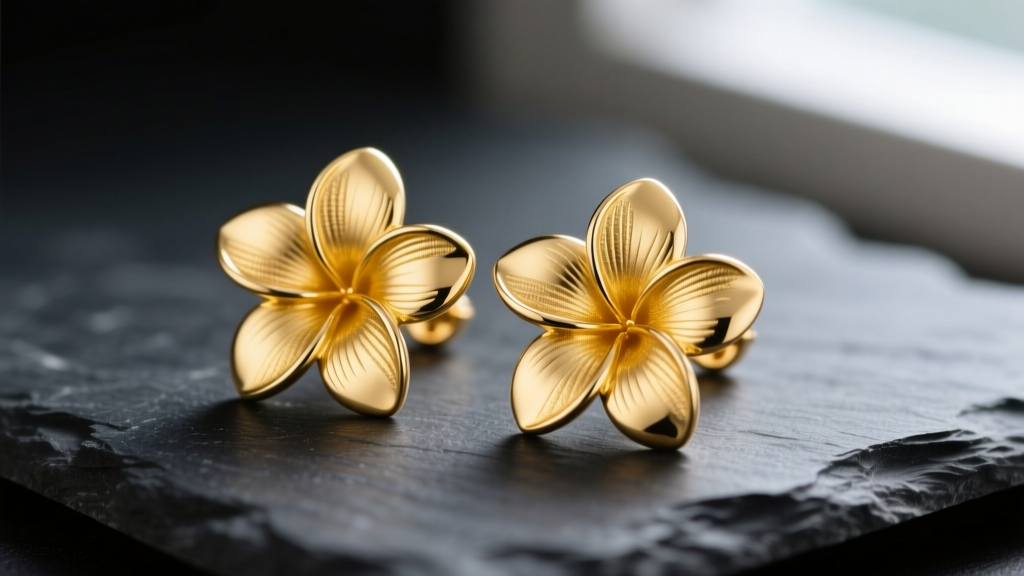
The allure of gold plumeria earrings lies in their intricate, asymmetrical five-petal design, reminiscent of tropical elegance and island heritage. However, the very geometry that makes the Hawaiian frangipani so visually striking also presents unique metallurgical challenges. Deep crevices, overlapping petal edges, and delicate central stamens demand specific metal properties to ensure structural longevity and aesthetic brilliance. As we navigate the jewelry market in 2026, understanding the material science behind these floral motifs is more critical than ever. This comprehensive guide dissects the metallurgy of gold plumeria earrings, helping you navigate karats, plating thicknesses, and base metals to make an informed, skin-safe purchase.
The Anatomy of Plumeria Jewelry Design
Before evaluating the gold itself, we must understand how the plumeria shape dictates manufacturing. Most high-quality 3D plumeria studs are created via lost-wax casting. This process requires metals with excellent flow characteristics to fill the microscopic veining of the flower petals. 14k gold alloys flow beautifully into these fine molds, capturing every ridge. Conversely, flat plumeria silhouettes are often die-struck or stamped, a process that demands high ductility to prevent the metal from cracking along the sharp, overlapping petal edges. The design inherently features deep, overlapping channels—these are the hidden variables that will determine whether your earrings last a lifetime or tarnish within a month.
Solid Gold vs. Plated: A Metallurgical Breakdown
Solid 14K and 18K Gold
Solid gold is the benchmark for fine jewelry, but "solid" does not mean pure. According to the Gemological Institute of America (GIA), pure 24k gold is too soft for intricate jewelry. Therefore, it is alloyed with metals like copper, silver, and zinc.
- 14K Gold (58.5% Gold): Alloyed primarily with copper and silver, 14k gold boasts a Vickers hardness of approximately 120-140. This makes it exceptionally durable and ideal for holding the delicate prongs or central stamen details of a cast plumeria design without bending.
- 18K Gold (75% Gold): With a higher gold content, 18k offers a richer, warmer yellow hue that beautifully mimics the natural center of a plumeria flower. However, it is softer (Vickers ~110) and more prone to micro-scratches on the high-polish petal ridges over time.
Gold Filled and Gold Vermeil
For those seeking the look of solid gold without the premium price tag, gold filled and vermeil offer superior alternatives to standard plating. Gold filled jewelry is created by mechanically bonding a thick layer of 14k gold to a brass core, comprising at least 1/20th of the total weight. This thick outer layer can easily withstand the polishing required to smooth out the crevices of a plumeria casting.
Gold vermeil, on the other hand, uses a sterling silver base metal coated with a minimum of 2.5 microns of gold. Because silver is a precious metal, vermeil is inherently more valuable and less likely to cause severe allergic reactions if the gold layer eventually wears thin in the deep petal folds.
Standard Gold Plating and Flash Plating
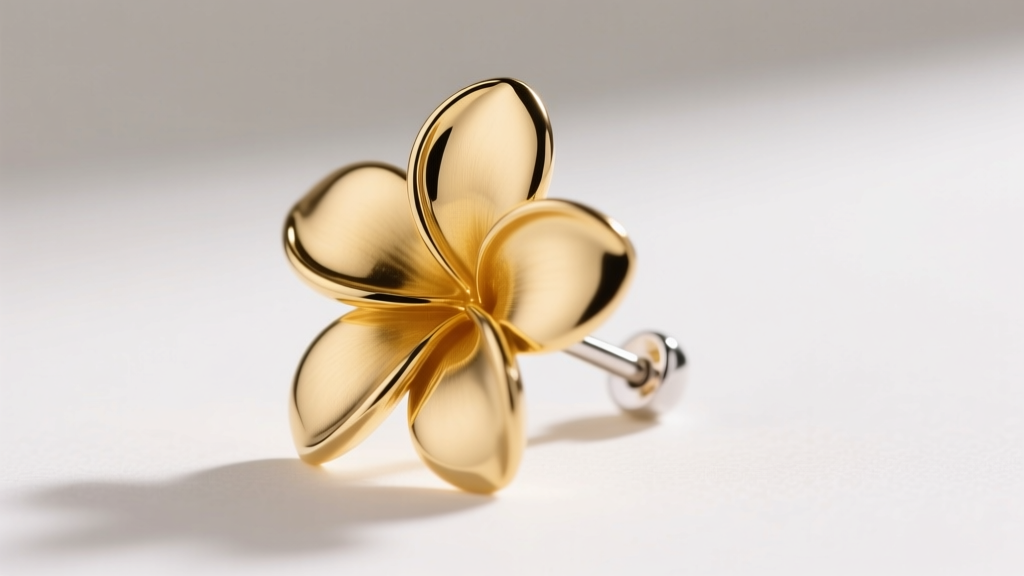
Standard gold plating involves electroplating a microscopic layer of gold (often less than 0.5 microns) over a base metal like brass or copper. The Federal Trade Commission (FTC) strictly regulates these terms, noting that items must have at least 0.175 microns to be called "gold electroplate." Flash-plated plumeria earrings are incredibly cheap but highly vulnerable. The thin gold layer offers virtually no protection against the friction and oils encountered in daily wear, leading to rapid degradation of the floral details.
Material Comparison Chart
Use this structured breakdown to compare the physical properties of different gold types used in plumeria earrings.
| Metal Type | Base Core | Gold Thickness | Hardness (Vickers) | Tarnish Risk | Best Plumeria Style |
|---|---|---|---|---|---|
| Solid 14K | N/A (Alloy) | Solid | 120 - 140 | Very Low | 3D Cast Studs, Heirloom Pieces |
| Solid 18K | N/A (Alloy) | Solid | 100 - 115 | Very Low | High-End Drop Earrings |
| Gold Filled | Jeweler's Brass | ~50+ Microns | 110 - 130 | Low | Stamped Flat Silhouettes |
| Gold Vermeil | Sterling Silver | 2.5+ Microns | 90 - 110 | Low-Medium | Intricate Dangle Earrings |
| Gold Plated | Brass/Copper | <0.5 Microns | Depends on Base | High | Fashion/Trendy Seasonal Wear |
The Hidden Trap: Moisture in Plumeria Crevices
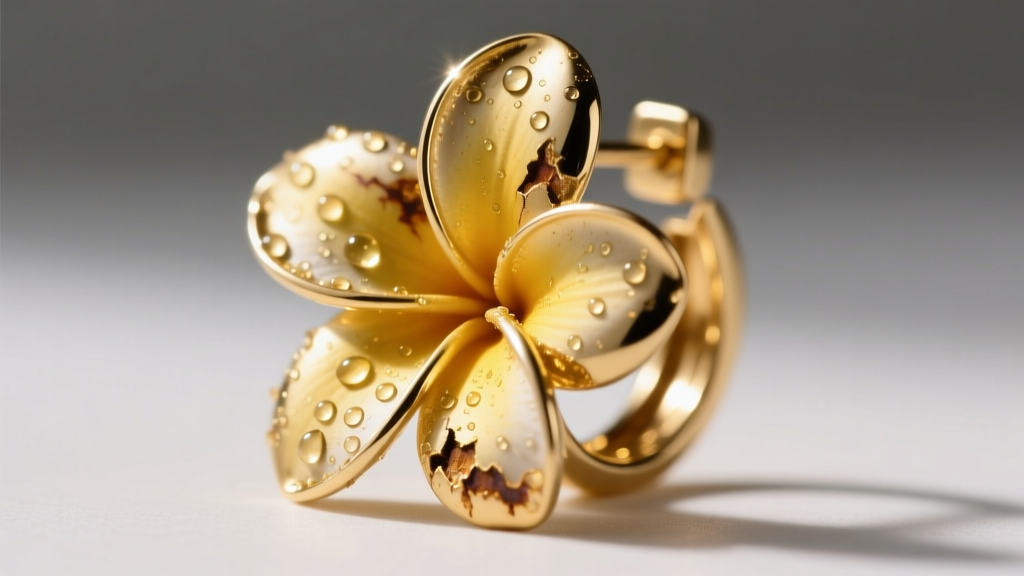
Here is where material science meets real-world wearability. The overlapping petals of a plumeria flower create microscopic channels and deep central crevices. When standard gold-plated brass earrings are worn, sweat, humidity, and skin oils become trapped in these channels. This creates a perfect environment for galvanic corrosion.
The zinc and copper in the brass base metal react with the trapped moisture and the microscopic electrical currents from your skin. This reaction causes the base metal to corrode from the inside out. As the brass expands and oxidizes, it pushes against the thin gold plating, causing it to blister, flake, and reveal the dark, tarnished metal beneath. This failure mode is almost exclusive to intricate, crevice-heavy designs like the plumeria. Solid gold and gold vermeil completely bypass this issue because their core metals (or lack thereof) do not undergo the same rapid, destructive oxidation when exposed to trapped moisture.
Post and Backing Materials for Sensitive Ears
When purchasing gold plumeria earrings, the flower itself is only half the equation; the post and backing dictate your skin's reaction. Many manufacturers will cast the plumeria flower head in gold-plated brass but solder on a solid 14k gold post to claim the earring is "hypoallergenic." While a solid gold post prevents immediate contact dermatitis at the piercing site, the heavy, plated flower head resting against the lobe can still cause localized irritation due to nickel or copper leaching from the base metal.
For sensitive ears, demand transparency. Look for earrings where the entire piece—from the tip of the plumeria petal to the butterfly backing—is cast in solid 14k/18k gold, or at minimum, crafted from high-grade gold vermeil over nickel-free sterling silver. Titanium posts are also an excellent, biocompatible alternative frequently used in modern 2026 jewelry designs, offering immense strength for the heavy flower heads without the risk of allergic reaction.
Maintenance and Care by Metal Type
To preserve the intricate details of your plumeria earrings, tailor your cleaning routine to the specific metal alloy:
- Solid Gold: Soak in a mild solution of warm water and phosphate-free dish soap. Use an extra-soft baby toothbrush to gently dislodge oils trapped in the petal crevices. Rinse and pat dry with a microfiber cloth.
- Gold Vermeil & Filled: Avoid soaking. Instead, dampen a cotton swab with soapy water and carefully trace the overlapping petals. Never use ultrasonic cleaners, as the high-frequency vibrations can delaminate the gold layer from the base metal.
- Gold Plated: Wipe gently with a dry, lint-free cloth after every wear to remove acidic skin oils before they can penetrate the microscopic pores of the plating and reach the brass core.
Final Verdict: Matching Metal to Lifestyle
Choosing the right gold plumeria earrings ultimately depends on your wearing habits and budget. If you intend to wear these tropical motifs daily, exposing them to humidity, sweat, and frequent handling, solid 14k gold is the only metallurgically sound choice that guarantees the structural integrity of the delicate petals. For occasional wear or statement drop earrings that won't endure constant friction, high-quality gold vermeil offers a luxurious, skin-safe compromise. Avoid flash-plated options for any crevice-heavy floral designs, as the inevitable galvanic corrosion will quickly ruin the intricate artistry of the plumeria bloom. By prioritizing material properties over superficial shine, you ensure your floral jewelry remains as vibrant and enduring as the islands that inspired it.


