Gold Ribbon Earrings: 2026 Style Trends & Fit Guide
Discover the 2026 gold ribbon earrings trend. Expert analysis on metal grades, architectural folds, and how to style this fluid motif for every face shape.

The Evolution: From Literal Bows to Sculptural Ribbons
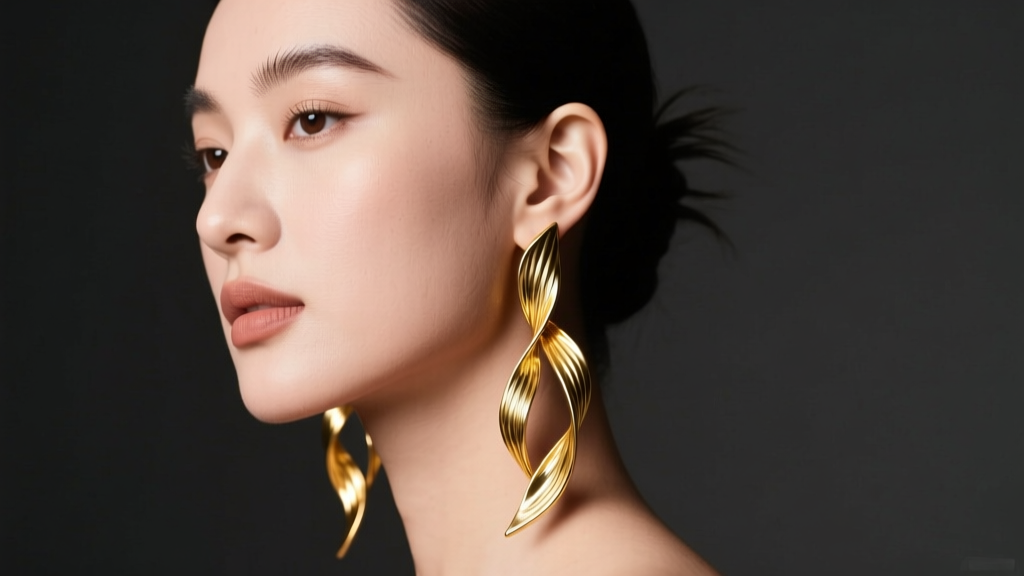
The trajectory of the coquette aesthetic has fundamentally shifted as we move through 2026. Where the 2023-2024 seasons were dominated by hyper-literal, gem-encrusted bows and enamel finishes, the current jewelry landscape demands abstraction and fluidity. Today, gold ribbon earrings represent the maturation of this trend. Rather than mimicking a tied silk bow, contemporary designers are capturing the gesture of a ribbon mid-flight—focusing on molten textures, asymmetrical drapes, and architectural origami folds. According to Vogue's global jewelry trend forecasting, the modern consumer is gravitating toward 'quiet luxury' pieces that offer movement and sculptural presence without relying on overt, nostalgic motifs.
This evolution means that gold ribbon earrings are no longer relegated to evening wear or hyper-feminine styling. The 2026 iterations feature brushed finishes, mixed-metal accents, and sharp, geometric creases that allow them to anchor a tailored blazer just as effectively as they complement a slip dress. The focus is entirely on metal manipulation and the interplay of light across curved, polished surfaces.
Metallurgy in Motion: 14k vs. 18k Gold Alloys
To truly understand the structural integrity and visual weight of gold ribbon earrings, one must look at the metallurgy. The choice between 14k and 18k gold is not merely a matter of color or price; it dictates the physical behavior of the 'ribbon' itself. As detailed in the Gemological Institute of America's (GIA) comprehensive guide on gold alloys, the alloy composition directly impacts the Vickers Hardness (HV) of the metal, which in turn determines how a jeweler can manipulate the ribbon's form.
The Vickers Hardness Scale & Ribbon Drape
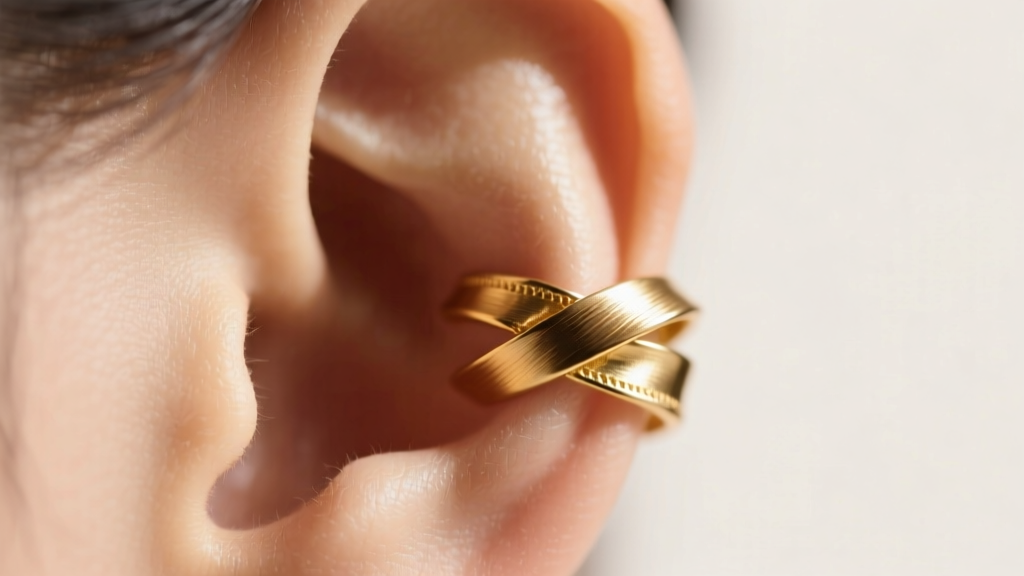
- 14k Gold (58.5% Pure Gold): With a Vickers hardness of approximately 135-150 HV, 14k gold is relatively stiff. Jewelers utilize 14k gold for architectural ribbon earrings that feature sharp, crisp creases, origami-like folds, and structural ear cuffs that require tension to grip the helix cartilage without warping over time.
- 18k Gold (75% Pure Gold): Softer and more malleable (around 110-125 HV), 18k gold is the preferred medium for fluid, draped ribbon designs. The higher gold content allows artisans to create wind-blown, gravity-defying cascades that mimic the soft, undulating folds of actual silk. However, 18k gold ribbons are more prone to micro-scratches and require careful storage to maintain their high-polish finish.
2026 Silhouette Matrix: Face Shape & Ribbon Proportions
The visual weight of a gold ribbon earring can dramatically alter facial proportions. Unlike a simple stud or a uniform hoop, a ribbon earring possesses varied width, depth, and directional flow. Selecting the correct dimensions based on your facial geometry is critical for achieving a balanced, intentional look.
| Face Shape | Ideal Ribbon Silhouette | Dimensions & Placement | Styling Rationale |
|---|---|---|---|
| Round | Cascading Linear Drops | 2.5" to 3.5" length; narrow 3mm width | Elongates the jawline and draws the eye vertically, countering facial width. |
| Square | Soft, Curved Drapes | 1.5" to 2" length; medium 6mm width with rounded edges | The fluid, curved folds soften an angular jawline and prominent cheekbones. |
| Heart | Asymmetrical Chandeliers | 2" length; wider at the base (8mm-10mm) | Adds visual weight to the lower half of the face, balancing a narrower chin. |
| Oval | Structured Ear Cuffs & Studs | Any proportion; bold 12mm horizontal creases | Oval faces can carry extreme architectural volume and horizontal width without imbalance. |
Cartilage vs. Lobe Placement: Mechanics of the Wear
The placement of gold ribbon earrings introduces unique mechanical challenges, particularly concerning gauge sizing and weight distribution. For standard lobe piercings, heavy 18k gold ribbon drops (often weighing between 6 to 12 grams per earring) require specialized findings. Standard butterfly backs will fail under this weight, causing the earring to droop forward. In 2026, the industry standard for heavy ribbon drops is the la pousette (locking) back or a wide, flat silicone stopper that distributes the friction across a broader area of the earlobe.
For cartilage placements, the 'ribbon ear cuff' has emerged as a dominant trend. Unlike hinged cartilage hoops that require a specific piercing gauge (usually 16g or 18g), a sculptural gold ribbon cuff relies on tension and the natural anatomy of the helix. Because 14k gold retains its memory and tension better than 18k, it is the superior choice for non-pierced cartilage ribbon cuffs, ensuring the piece remains securely anchored without pinching the skin.
Styling Frameworks: Necklines & Hair Pairings
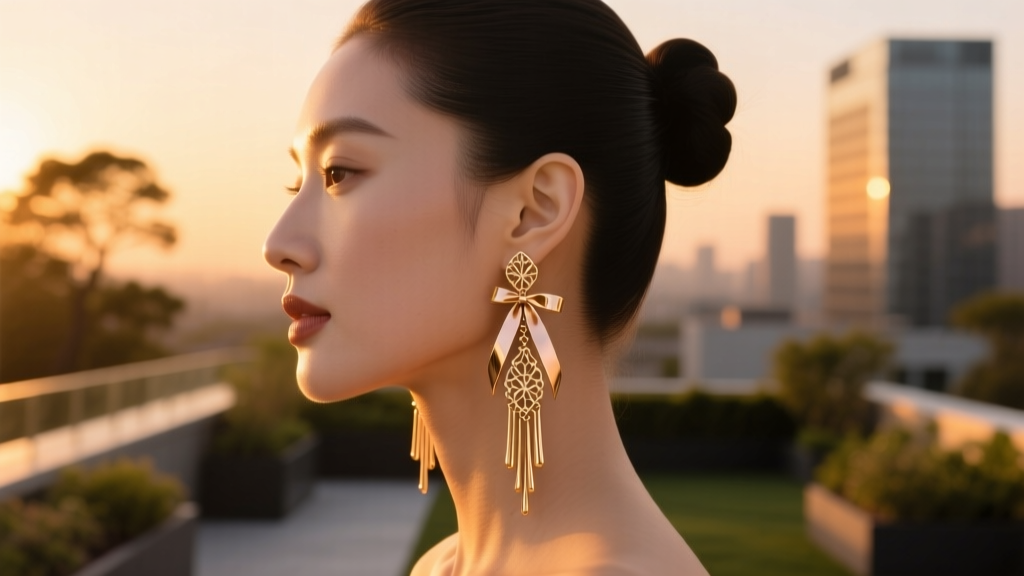
Because gold ribbon earrings possess inherent movement and complex light reflection, they must be styled with deliberate restraint regarding other accessories. The goal is to allow the metal's fluidity to act as the focal point.
The Neckline Matrix
- The Halter Neck: Pair with asymmetrical gold ribbon drops. The diagonal line of the halter strap is perfectly mirrored by an earring that features a sharp, angled crease, creating a cohesive, architectural frame for the face.
- The Square Neckline: Opt for soft, 18k gold draped ribbons. The rigid, horizontal line of a square bodice is beautifully juxtaposed by the organic, cascading folds of a soft gold ribbon drop.
- The High Collar / Turtleneck: Choose bold, 14k gold ribbon ear cuffs or wide horizontal studs. Long drops will tangle with the fabric; keeping the gold ribbon confined to the upper ear maintains a sharp, uncluttered silhouette.
Hair Dynamics
The interplay between hair texture and gold ribbons is paramount. Sleek, pulled-back styles (like a tight chignon or a wet-look bob) allow the high-polish facets of the gold to catch the light unimpeded. Conversely, if wearing loose, voluminous waves, opt for ribbon earrings with a brushed or matte finish. The matte texture prevents the gold from visually competing with the complex shadows of wavy hair, allowing the sculptural shape of the ribbon to stand out.
Investment & Price Index: What to Pay in 2026
As noted by the World Gold Council's market analysis, fluctuations in raw gold pricing directly impact the retail cost of fine jewelry, but the premium on gold ribbon earrings is largely driven by the labor-intensive nature of metal forming and annealing. Hand-hammering and shaping gold into a seamless, fluid ribbon requires master-level bench skills.
2026 Pricing Benchmarks:
Entry-Level (14k Gold, 2-4 grams): $280 - $450. Typically machine-stamped with hand-finished edges. Best for everyday structural studs.
Mid-Tier (14k/18k Gold, 5-9 grams): $600 - $1,400. Hand-fabricated drops with complex folding and secure locking findings.
Artisan / Bespoke (18k/22k Gold, 10+ grams): $1,800 - $3,500+. Sculptural, one-of-a-kind pieces featuring mixed-metal oxidation, micro-pavé diamond accents hidden within the folds, or custom-molded drapes tailored to the wearer's ear anatomy.
When investing in gold ribbon earrings, always scrutinize the 'return fold'—the area where the metal loops back on itself. In high-quality pieces, this fold will be seamless or meticulously soldered, with no visible tool marks or thinning of the metal gauge. A well-crafted gold ribbon earring is not just an accessory; it is a masterclass in kinetic sculpture, designed to capture light, movement, and the enduring elegance of fluid metal.


