Iconic Golden Earring Album Covers & The Hoop Trends They Inspired
Explore how iconic golden earring album covers shaped jewelry trends. Learn to choose, wear, and care for classic gold hoops with our beginner guide.

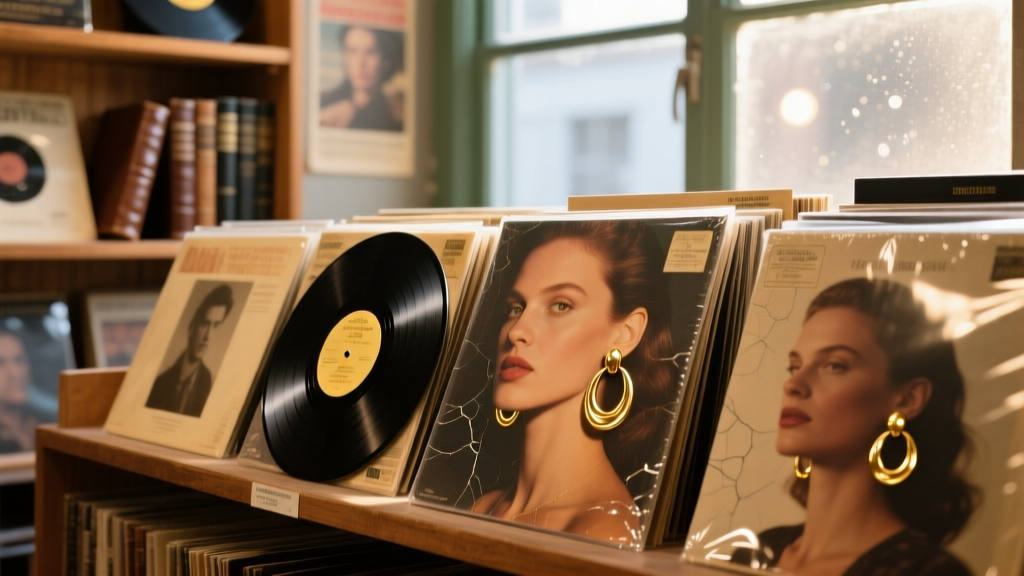
Music and jewelry have always shared a deeply intertwined history. When we look back at the visual culture of the 1970s and 1980s, few motifs are as enduring as the classic gold hoop. From the legendary Dutch rock band that literally coined the phrase to the iconic soul and hip-hop records that defined a generation, golden earring album covers have done more than just sell records—they have dictated global jewelry trends for decades. As we navigate the style landscape of 2026, the nostalgia for these vintage music aesthetics has brought the gold hoop back to the forefront of everyday fashion.
For beginners, stepping into the world of gold hoops can feel overwhelming. Between karat weights, gauge thicknesses, and clasp mechanisms, how do you choose the right pair? This guide decodes the history of music’s favorite accessory and provides a highly technical, beginner-friendly framework for buying your first pair of record-ready gold hoops.
The Cultural Impact of Golden Earring Album Covers
The phrase itself evokes a specific era of rock and roll. The band Golden Earring, famous for their 1973 album Moontan and the 1982 smash-hit album Cut (featuring the iconic AllMusic catalog hits like 'Twilight Zone'), often incorporated heavy, rebellious gold jewelry into their visual identity. But the influence extends far beyond one band.
Think of Sade’s Diamond Life (1984), where large, polished gold hoops framed her face, establishing a masterclass in understated, elegant soul. Or consider the golden era of 90s hip-hop, where album covers routinely featured artists adorned in thick, oversized gold hoops—a symbol of success, resilience, and cultural pride. These album covers served as global lookbooks. Fans didn't just buy the music; they bought the hardware. Today, replicating these iconic looks requires an understanding of modern jewelry manufacturing and material science.
Decoding the Hoop: Gauge, Diameter, and Profile
The biggest mistake beginners make when buying gold hoops is ignoring the gauge (the thickness of the wire) and the profile (the shape of the wire's cross-section). Album covers often featured hoops that looked substantial, but modern mass-market jewelry often cuts corners on thickness to save on gold weight.
Standard Sizing for Lobe vs. Cartilage
- Standard Lobe Piercings: Usually pierced at 20G (0.8mm) or 18G (1.0mm). However, for a hoop that mimics the substantial look of vintage album covers without bending out of shape, you should look for an 18G or 16G (1.2mm) wire thickness.
- Cartilage / Helix Piercings: Typically pierced at 16G or 14G (1.6mm). If you are wearing hoops in your upper cartilage, a 14G hoop provides the necessary structural integrity to prevent the 'cheese-cutter effect' (where thin wire slowly migrates through the tissue).
- Diameter Guide: 15mm-20mm (Huggies), 25mm-30mm (Medium/Classic), 40mm+ (Statement/Oversized).
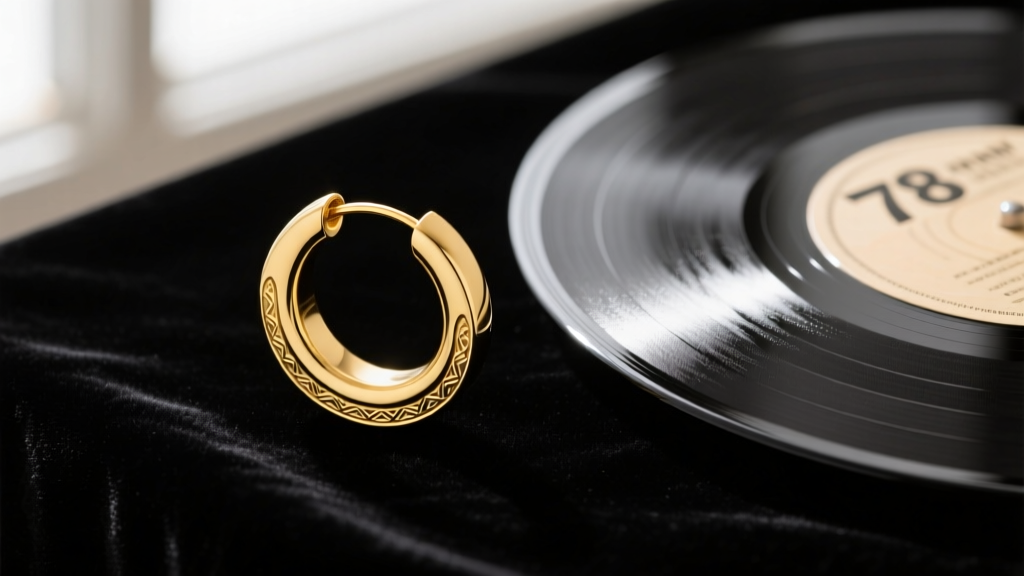
Solid vs. Hollow: A Buyer’s Comparison Chart
When browsing for gold hoops, you will encounter a massive price discrepancy between two hoops that look identical. The secret? One is solid, and the other is hollow (electroformed). According to the World Gold Council, the density and alloy composition of gold directly impact its longevity. Here is how they compare for everyday wear.
| Feature | Hollow Gold Hoops | Solid Gold Hoops | Gold-Filled / Vermeil |
|---|---|---|---|
| Weight | Very Light | Heavy / Substantial | Medium |
| Durability | Prone to denting & crushing | Extremely High | Moderate (plating can wear off) |
| Price Range | $150 - $400 | $600 - $2,000+ | $40 - $120 |
| Best For | Large 50mm+ statement sizes | Everyday wear & Cartilage | Trend-chasing & Budget buyers |
Expert Tip: Never sleep in hollow gold hoops. The pressure of your head against the pillow will crush the thin gold shell, and they cannot be easily repaired. Always invest in solid gold for 24/7 wear.
Picking Your Karat: 14K vs. 18K for Everyday Wear
Gold in its purest form (24K) is far too soft for jewelry; it would bend if you simply hugged someone. Therefore, it is alloyed with other metals. The karat system tells you exactly how much pure gold is in the mix.
14K Gold (58.5% Pure Gold)
This is the undisputed champion of everyday hoops. Alloyed with copper, silver, and zinc, 14K gold offers a beautiful warm yellow hue while providing the tensile strength needed to survive daily life. If you want a continuous hoop that you can wear in the shower, at the gym, and to bed without worrying about scratches or warping, 14K is your best choice.
18K Gold (75% Pure Gold)
18K gold boasts a richer, deeper, and more buttery yellow color that closely resembles the vintage hoops seen on those iconic 70s and 80s album covers. However, because it contains more pure gold, it is softer. It will develop a 'patina' (micro-scratches) much faster than 14K. It is ideal for special occasion huggies or latch-back hoops that you take out before sleeping.
Clasp Mechanisms: The Unsung Heroes of Hoop Security
Losing a gold hoop is a rite of passage, but it doesn't have to be. The clasp mechanism dictates both the security and the aesthetic of the earring.
- Continuous (Endless) Hoops: A single piece of wire where one tapered end slides into the hollow tube of the other. Pros: Sleek, invisible seam. Cons: High risk of loss if the wire is too thin (under 18G) or if you catch it on a sweater.
- Hinged Snap (Click) Hoops: Features a hidden hinge and a post that 'clicks' securely into a groove. Pros: Extremely secure, very easy to put on. Cons: The visible seam can slightly interrupt the perfect circle aesthetic.
- Latch-Back (Saddleback): The classic wire that flips up and locks into a saddle. Pros: Traditional look. Cons: The wire can easily bend out of alignment over time, requiring gentle adjustment with your fingers.
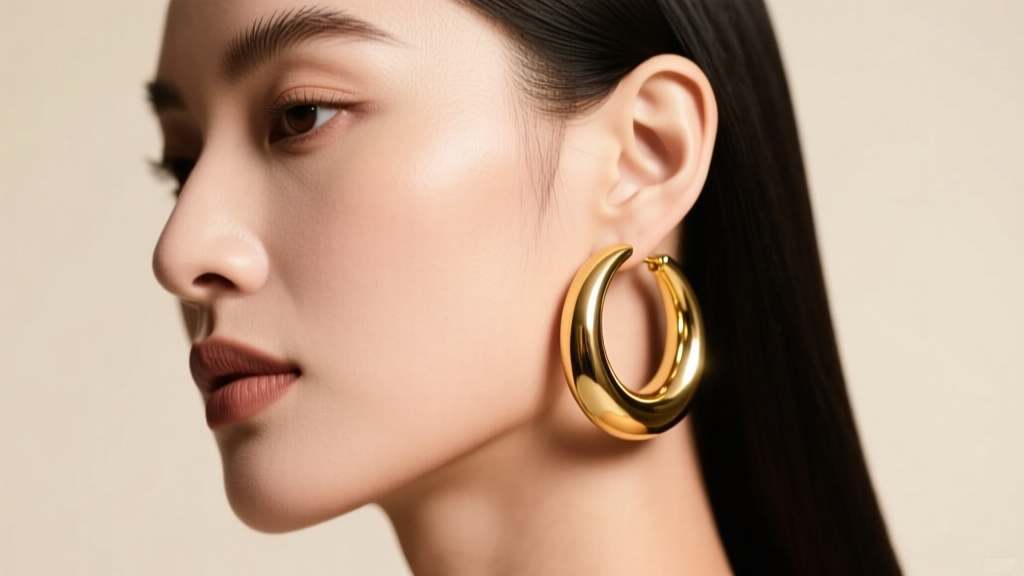
Maintenance: Keeping Your Gold Record-Ready
Gold does not tarnish, but the alloys mixed into it (especially copper and silver) can react to environmental factors, and body oils mixed with dead skin cells can create a dull film on the metal. To keep your hoops looking like they just stepped off a platinum album cover:
- The Weekly Soak: Mix a few drops of mild, phosphate-free dish soap (like Dawn) into a bowl of warm water. Let your hoops soak for 15 minutes.
- The Gentle Scrub: Use a brand-new, ultra-soft baby toothbrush to gently brush the inside of the hoop and the clasp mechanism, where debris accumulates.
- The Polish: Dry thoroughly with a lint-free microfiber cloth. Avoid paper towels, as the wood pulp fibers can cause micro-scratches on high-polish 18K gold.
- Chemical Avoidance: While solid gold can handle water, it cannot handle chlorine. Always remove your hoops before entering a hot tub or swimming pool; chlorine can permanently weaken the alloy joints and cause the gold to become brittle and snap.
Final Thoughts
The legacy of golden earring album covers lives on every time we slip on a pair of classic hoops. Whether you are channeling the rock-and-roll rebellion of the 1970s or the smooth soul of the 1980s, understanding the technical specifications of your jewelry—down to the exact gauge and alloy composition—ensures that your investment will last a lifetime. Start with a pair of 14K solid gold, 18G hinged hoops in a 25mm diameter, and you will have a versatile, indestructible foundation for your personal style.


