Ultimate Care Guide for Turquoise Concho Earrings
Learn how to safely clean, store, and maintain your turquoise concho earrings. Expert tips to protect porous stones and sterling silver from damage.

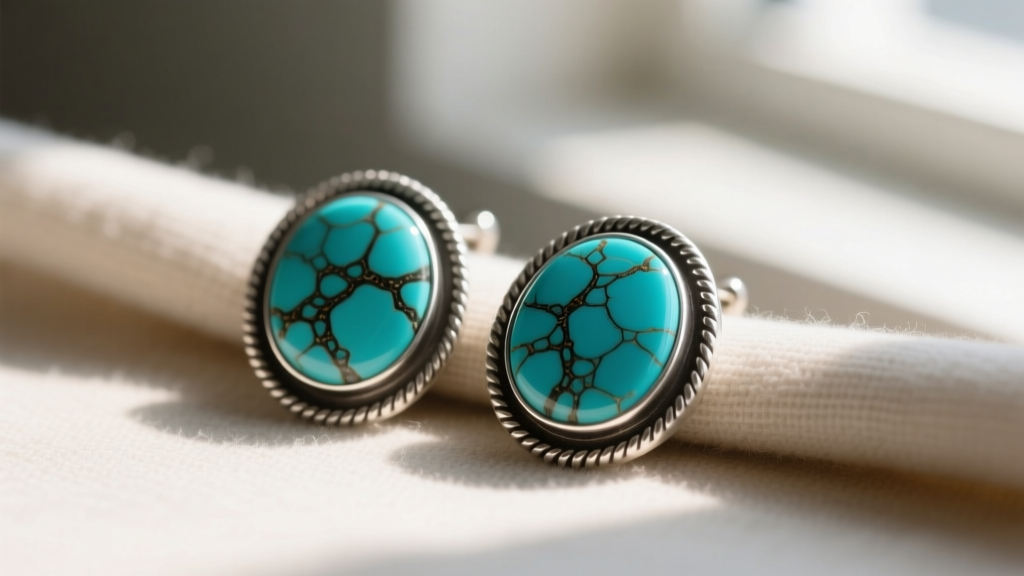
The Unique Anatomy of Turquoise Concho Earrings
Turquoise concho earrings represent a stunning intersection of Native American silversmithing heritage and striking Southwestern aesthetics. However, from a maintenance perspective, they present a unique paradox. The intricate, heavily stamped sterling silver concho backing requires regular polishing to combat oxidation, while the central turquoise cabochon is a highly porous, delicate gemstone that can be permanently ruined by the very chemicals used to clean the silver. Understanding the anatomy of your earrings is the first step toward preserving them for generations.
A traditional concho earring typically features a domed or flat silver base adorned with repoussé or hand-stamped motifs. The turquoise is usually held in place by a smooth silver bezel setting. According to the Gemological Institute of America (GIA), turquoise ranks between 5 and 6 on the Mohs hardness scale, making it significantly softer than quartz or diamonds. More importantly, natural turquoise is highly porous. This capillary action means the stone can easily absorb skin oils, lotions, perfumes, and household chemicals, leading to irreversible color shifts and structural degradation.
Natural vs. Stabilized Turquoise: Why It Matters
Before applying any cleaning method, you must identify whether your turquoise is natural or stabilized. Natural, untreated turquoise (often sourced from historic mines like Bisbee or Kingman) is extremely vulnerable to moisture and oils. Over time, exposure to human sebum can cause the stone to shift from a vibrant sky blue to a dull, muddy green. Stabilized turquoise, on the other hand, has been treated with a clear epoxy or resin (such as the Zachery method) to fill its microscopic pores. While stabilized stones are far more resistant to color change and chemical damage, they still require gentle care to prevent the resin from clouding or yellowing under harsh conditions.
The Golden Rules of Cleaning Porous Gemstones
When maintaining turquoise concho earrings, what you avoid is just as critical as what you do. The GIA Turquoise Care Guide explicitly warns against standard jewelry cleaning methods that are perfectly safe for diamonds but disastrous for porous gems.
- NO Ultrasonic Cleaners: The high-frequency vibrations can fracture the turquoise, especially if the stone has natural matrix webbing or internal fissures. The heat generated can also melt or cloud the resin in stabilized stones.
- NO Steam Cleaning: Sudden thermal shock will cause the cabochon to crack, and steam forces moisture deep into the stone's pores.
- NO Commercial Silver Dips: Liquid tarnish removers (like Tarn-X) contain harsh acids and thiourea. If even a single drop touches your turquoise, it will strip the stone's natural polish and leave a permanent, chalky white burn mark.
- NO Baking Soda or Toothpaste: These are abrasive. While they might polish silver, they will micro-scratch the surface of the turquoise, dulling its luster permanently.
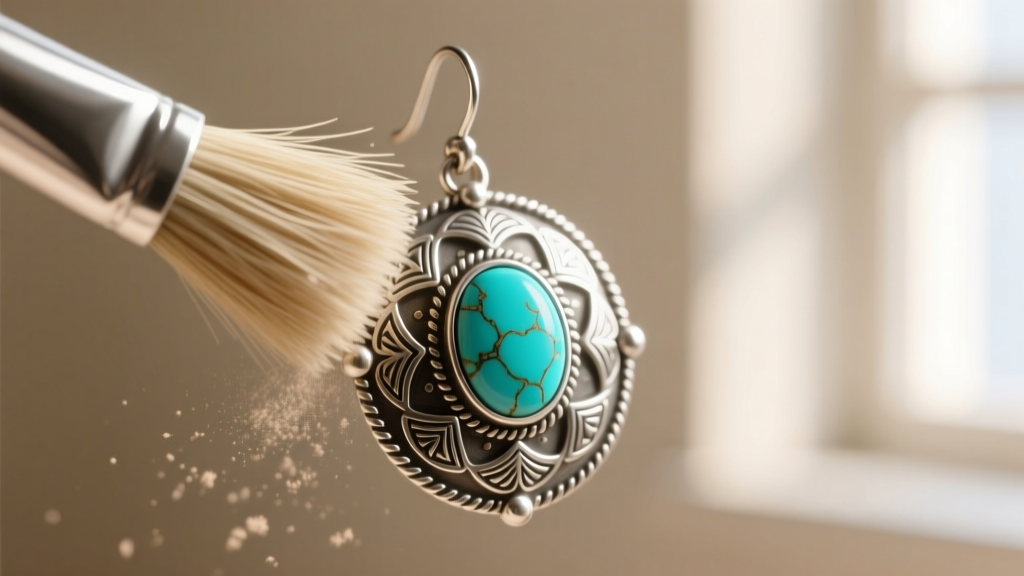
Step-by-Step Cleaning Routine for Silver Conchos
To safely restore the brilliance of your concho earrings without endangering the center stone, follow this meticulous, dry-to-damp cleaning protocol. This method is endorsed by professional lapidaries and silversmiths for handling mixed-media Southwestern jewelry.
- Dry Dusting: Begin by using a clean, dry microfiber cloth to gently wipe away surface dust and loose debris. Dust particles often contain microscopic quartz (hardness 7), which can scratch the turquoise (hardness 5-6) if rubbed aggressively.
- Debris Removal from Stamping: Concho earrings feature deep, intricate stamping that traps dead skin cells, lotion, and dirt. Take a clean, dry horsehair detailing brush or a soft-bristled baby toothbrush and gently sweep out the crevices. Never use metal needles or pins, as they will leave permanent gouges in the sterling silver.
- Bezel Edge Cleaning: The silver lip (bezel) holding the turquoise often accumulates a dark line of grime. Use the tip of a wooden toothpick to carefully scrape along the inside edge of the bezel. Wood is softer than both silver and turquoise, ensuring no scratches occur.
- Targeted Silver Polishing: Use a high-quality treated polishing cloth (such as a Sunshine cloth). Fold the cloth to a fine point and carefully rub the stamped silver areas. Critical: Do not let the treated cloth rub against the turquoise. The micro-abrasives and tarnish-removing chemicals embedded in the cloth will dull the gemstone's polish.
- Stone Refreshing: If the turquoise itself needs cleaning, use a barely damp (not wet) lint-free cloth to gently wipe the surface of the stone. Immediately dry it with a separate soft cloth. Never let water pool around the bezel setting, as moisture trapped beneath the stone can cause the adhesive to fail or the silver backplate to oxidize from the inside out.
Storage and Environmental Threats
Proper storage is the cornerstone of jewelry conservation. Sterling silver tarnishes when it reacts with hydrogen sulfide in the air, forming silver sulfide. Turquoise, meanwhile, dehydrates and absorbs ambient contaminants. Storing your concho earrings correctly mitigates both risks simultaneously. According to Jewelers of America, controlling the micro-climate of your jewelry box is essential for porous gemstones.
| Environmental Threat | Impact on Concho Earrings | Prevention Strategy |
|---|---|---|
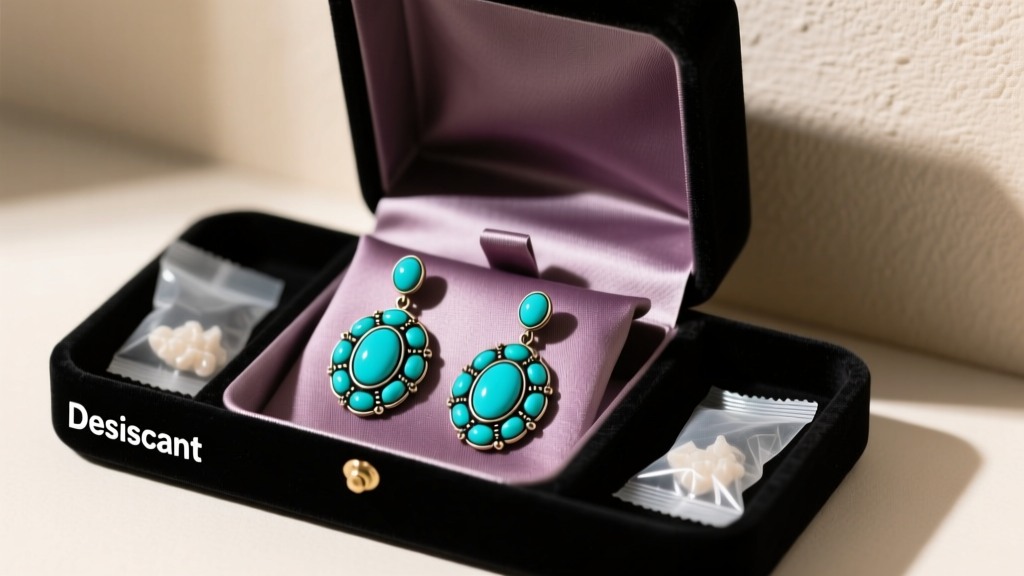
| High Humidity | Accelerates silver tarnish; promotes moisture absorption in natural turquoise. | Store with silica gel desiccant packets in an airtight container. |
| Chlorine & Salt Water | Pits sterling silver; causes immediate, irreversible color bleaching in turquoise. | Always remove earrings before swimming in pools or the ocean. |
| Hairspray & Perfume | Alcohol and aerosols dry out the stone and leave a sticky, dulling film on the silver. | Adopt a 'jewelry last' policy: put earrings on only after cosmetics have dried. |
| Direct UV / Sunlight | Prolonged UV exposure can fade certain varieties of turquoise and dry out the matrix. | Store in a closed, opaque jewelry box away from windowsills. |
When storing, place your turquoise concho earrings in individual soft flannel or anti-tarnish pouches. Do not toss them into a communal jewelry box where harder gemstones (like diamonds or sapphires) can bounce against them and cause severe surface scratching. Including a 3M anti-tarnish strip inside the storage pouch will absorb airborne sulfur compounds, keeping the silver concho bright for months without the need for polishing.
Troubleshooting Common Turquoise Issues
Even with meticulous care, vintage and frequently worn turquoise concho earrings may develop specific issues over time. Here is how to diagnose and address the most common problems without causing further harm.
Can I Re-polish Scratched Turquoise?
If your turquoise cabochon has accumulated fine surface scratches, it will lose its glassy luster and appear matte or chalky. Do not attempt to sand or buff the stone yourself. Turquoise requires specialized lapidary equipment, including progressive diamond pastes and specific buffing wheels, to restore a factory polish. Furthermore, if the stone is stabilized, aggressive buffing can generate enough friction heat to melt the resin. Take the earrings to a professional jeweler who specializes in Native American or Southwestern jewelry for a professional re-polish and bezel tightening.
The Turquoise is Turning Green
If your natural blue turquoise is slowly shifting to a greenish hue, it is absorbing oils from your skin, combined with the oxidation of the copper or brass backplate often used to reinforce large concho earrings. While some collectors appreciate this 'patina' as a sign of a well-loved vintage piece, those who wish to halt the process must wipe the stones with a dry microfiber cloth after every wear to remove sebum before it penetrates the pores. If the color change has already occurred, it is permanent; no chemical bath can extract the oils without destroying the stone.
Loose Bezel Settings
Concho earrings are often subjected to minor impacts that can push the silver bezel away from the turquoise cabochon. If you notice the stone rattling or catching on fabrics, stop wearing the earrings immediately. A loose bezel allows sweat and dirt to slip underneath the stone, leading to hidden corrosion. A jeweler can easily use a bezel pusher or burnisher to gently fold the silver lip back over the edge of the stone, securing it safely without the use of liquid adhesives that could stain the turquoise.
Conclusion
Maintaining turquoise concho earrings requires a departure from standard jewelry cleaning habits. By respecting the porosity of the gemstone and utilizing targeted, dry-polishing techniques for the intricate silver concho backing, you can preserve the striking contrast and historical craftsmanship of your pieces. Avoid ultrasonic machines, embrace the gentle precision of wooden tools and horsehair brushes, and control your storage environment. With these expert protocols, your turquoise conchos will remain vibrant, structurally sound, and ready to be passed down as heirlooms.


