Gold Earring Ball Materials: Solid, Vermeil, and PVD Compared
Compare solid, vermeil, and PVD titanium gold earring ball options. Discover material properties, threading types, and hypoallergenic grades.

The Hidden Engineering of the Gold Earring Ball
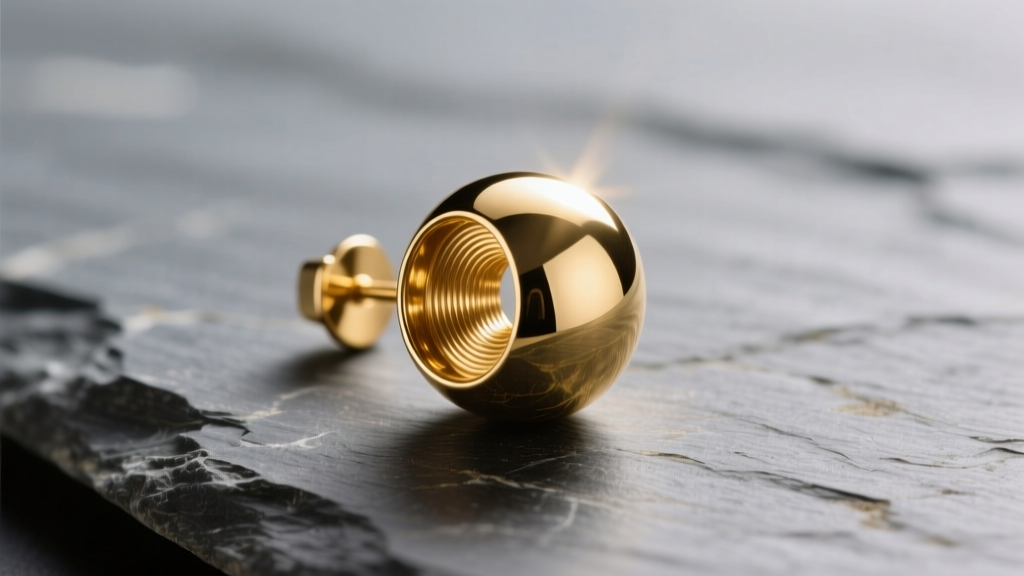
When curating a fine jewelry collection, the spotlight usually falls on gemstones, intricate metalwork, or the overall silhouette of a piece. Yet, the structural anchor of countless stud, labret, and threadless earring designs is the humble gold earring ball. Far from being a mere decorative afterthought, the material composition and manufacturing precision of this tiny sphere dictate the longevity, comfort, and biocompatibility of your piercing. As we navigate the jewelry market in 2026, consumers are faced with a dizzying array of 'gold' options. Understanding the metallurgical reality behind solid gold, gold vermeil, and PVD-coated titanium is essential for making informed purchasing decisions that protect both your investment and your skin.
Metallurgical Breakdown: What is Your Gold Earring Ball Made Of?
The term 'gold' is frequently used as a catch-all descriptor, but the atomic reality varies wildly. The physical properties of the metal determine how well the earring ball will hold its shape, retain its threading, and resist corrosion from daily wear.
Solid 14k and 18k Gold: The Benchmark for Permanence
Solid gold remains the gold standard for fine body jewelry. However, pure 24k gold is far too soft (measuring roughly 25 on the Vickers Hardness scale) to hold the precise micro-threads required for secure earring backs. Therefore, alloying is mandatory.
- 14k Gold (58.3% Pure Gold): Alloyed with copper, silver, and zinc, 14k gold achieves a Vickers Hardness (HV) of approximately 120-140. This makes it exceptionally durable for internal threading. A 14k gold earring ball will withstand years of screwing and unscrewing without the threads stripping. It is the preferred choice for permanent piercings and daily wear.
- 18k Gold (75% Pure Gold): With an HV of 90-110, 18k gold offers a richer, deeper yellow hue and higher biocompatibility due to the lower percentage of alloy metals. However, its softer nature means that external threads on an 18k ball can degrade over time. High-end manufacturers mitigate this by using CNC-machined internal threading rather than cast molds.
According to the Gemological Institute of America (GIA), the specific ratio of copper to silver in these alloys also dictates whether the final product is yellow, rose, or white gold. For a gold earring ball, yellow and rose variants are generally more scratch-resistant than white gold, which requires rhodium plating that eventually wears away.
Gold Vermeil and Gold Plated Brass: The Aesthetic Compromise
Vermeil and plated jewelry dominate the fast-fashion and mid-tier markets, but they present distinct structural vulnerabilities when applied to a high-friction component like an earring ball.
Gold Vermeil consists of a sterling silver base coated with a minimum of 2.5 microns of gold. While the silver core provides decent structural integrity, the gold layer is still susceptible to friction wear. When a vermeil gold earring ball is threaded onto a steel or titanium post, the harder post acts like a file, slowly stripping the gold from the inside of the ball's threading.
Gold Plated Brass or Copper features a base metal dipped in a microscopic flash layer of gold (often less than 0.5 microns). These balls are prone to rapid oxidation. Once the sweat and sebum from your earlobe breaches the porous plating, the underlying brass reacts, turning the skin green and causing severe contact dermatitis.
PVD Gold-Coated Implant-Grade Titanium: The 2026 Hypoallergenic Standard
For those with severe metal allergies who desire the look of gold without the exorbitant price tag of solid 18k, Physical Vapor Deposition (PVD) has revolutionized the industry. A PVD gold earring ball starts as a perfectly machined sphere of ASTM F136 implant-grade titanium. In a vacuum chamber, titanium nitride and gold are vaporized and bonded to the surface at an atomic level.
The Association of Professional Piercers (APP) recognizes implant-grade titanium as one of the safest materials for initial and healed piercings. Modern PVD coatings are 2 to 3 microns thick and possess a surface hardness that vastly exceeds solid gold. A PVD gold earring ball will not tarnish, will not trigger nickel allergies, and its internal threads will outlast solid 18k gold in sheer mechanical endurance.
Threading and Precision: Why the Ball's Core Matters
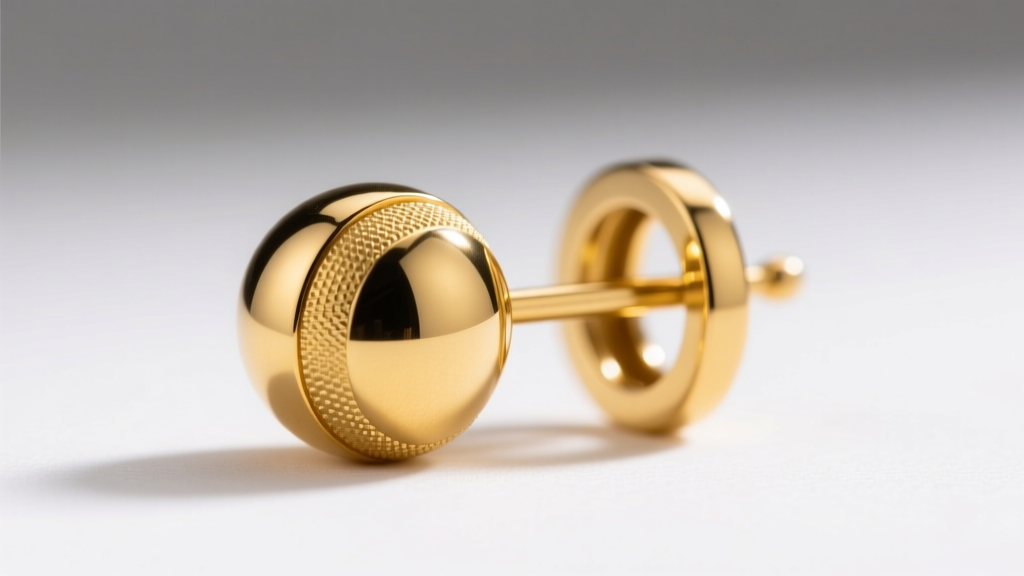
The material of a gold earring ball is only half the equation; how that material is machined to connect to the earring post dictates the health of your fistula (the piercing channel). Cheap manufacturing leads to micro-tears in the tissue every time you change your jewelry.
| Connection Type | Typical Material | Mechanism | Tissue Impact & Durability |
|---|---|---|---|
| Internal Threading | Solid 14k/18k Gold | The ball has a smooth hole with internal threads; the post has external threads. | Excellent. The smooth post glides through the piercing without snagging. Highly durable in hard metals. |
| External Threading | Plated Brass / Steel | The ball has a protruding threaded screw; the post is a smooth tube. | Poor. The sharp external threads scrape and micro-tear the fistula upon insertion. Threads on soft gold strip easily. |
| Threadless (Press-Fit) | PVD Titanium / Solid Gold | The ball features a smooth hole; the post has a slightly bent pin that creates tension. | Superior. Zero threads to cross or strip. The tension hold is incredibly secure and entirely smooth on insertion. |
Real-World Wear, Tear, and Failure Modes
Even the most exquisite gold earring ball is subject to the harsh realities of daily wear. Understanding failure modes helps you identify when it is time to replace your jewelry ends.
"The most common point of failure in stud earrings is not the post bending, but the degradation of the earring ball's connection point due to cosmetic buildup and friction."
- Cosmetic Ingress: Foundation, setting powders, and hairspray easily pack into the threading of a gold earring ball. Over time, this creates an abrasive paste that accelerates thread wear, particularly in softer 18k gold and vermeil pieces.
- Galvanic Corrosion: If you pair a solid 14k gold earring ball with a surgical steel post, the introduction of saltwater (sweat) creates a galvanic cell. This micro-electric current will rapidly corrode the less noble metal, often resulting in a fused ball that cannot be unscrewed without pliers.
- Porosity in Cast Metals: Mass-market solid gold balls are often cast rather than CNC-machined. Cast gold contains microscopic air pockets. When subjected to the pressure of a tight screw-back, these porous balls can warp or crack along invisible fault lines.
Pricing and Value: What Should You Pay?
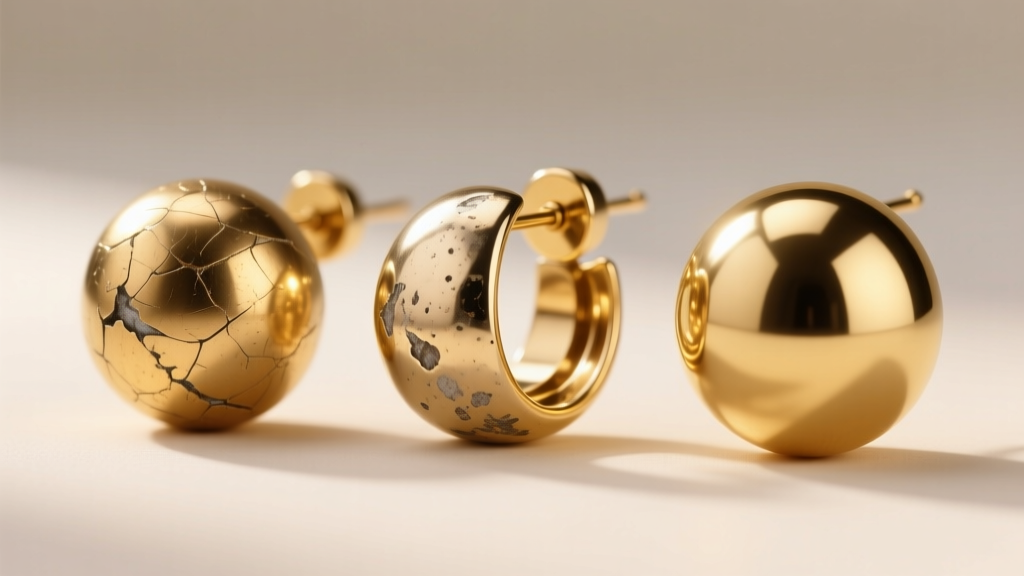
The market is saturated with misleading pricing. Use this framework to evaluate the true cost of a gold earring ball based on its material grade and manufacturing origin. Prices below reflect standard 3mm to 5mm sphere ends for 16-gauge and 14-gauge posts.
- Gold Plated Brass ($5 - $15): High margin for retailers, near-zero longevity. Expect the gold to wear off the threading within 3 to 6 months of daily use.
- Gold Vermeil ($20 - $45): A step up in base metal quality, but still suffers from friction wear. Best reserved for occasional wear or friction-push backs rather than threaded ends.
- PVD Gold Titanium ($30 - $65): The sweet spot for value, biocompatibility, and mechanical strength. You are paying for advanced vacuum-chamber technology and ASTM F136 certified base metals.
- Solid 14k Gold ($60 - $140): The standard for fine jewelry. Pricing fluctuates with the spot price of gold. Ensure you are paying for CNC-machined internal threading, not cast molds.
- Solid 18k Gold ($120 - $250+): A premium luxury item. The high cost reflects both the raw gold content and the meticulous hand-finishing required to polish a softer metal without compromising its structural tolerances.
Final Verdict: Choosing the Right Gold Earring Ball
Selecting the ideal gold earring ball requires balancing your budget, your skin's biocompatibility needs, and your desired maintenance routine. If you suffer from contact dermatitis or are healing a new piercing, bypass traditional gold alloys entirely and opt for a PVD gold-coated implant-grade titanium ball. The atomic bonding ensures a flawless, hypoallergenic surface that mimics the warmth of high-karat gold without the biological risks.
For heirloom-quality pieces and permanent jewelry collections, a CNC-machined, internally threaded solid 14k gold earring ball remains an unbeatable investment. Its Vickers hardness ensures that the threading will outlive the post it attaches to, securing your jewelry safely against the ear. Ultimately, by looking past the superficial shine and examining the metallurgical properties and connection mechanics, you ensure that your jewelry remains as functional and comfortable as it is beautiful.


