North Star Earrings Trend 2026: Asymmetric Celestial Ear Curation
Discover the 2026 north star earrings trend. Learn how to style asymmetric celestial ear curations with exact gauge sizes, metals, and pricing tiers.

The Evolution of Celestial Jewelry: Why North Star Earrings Dominate 2026
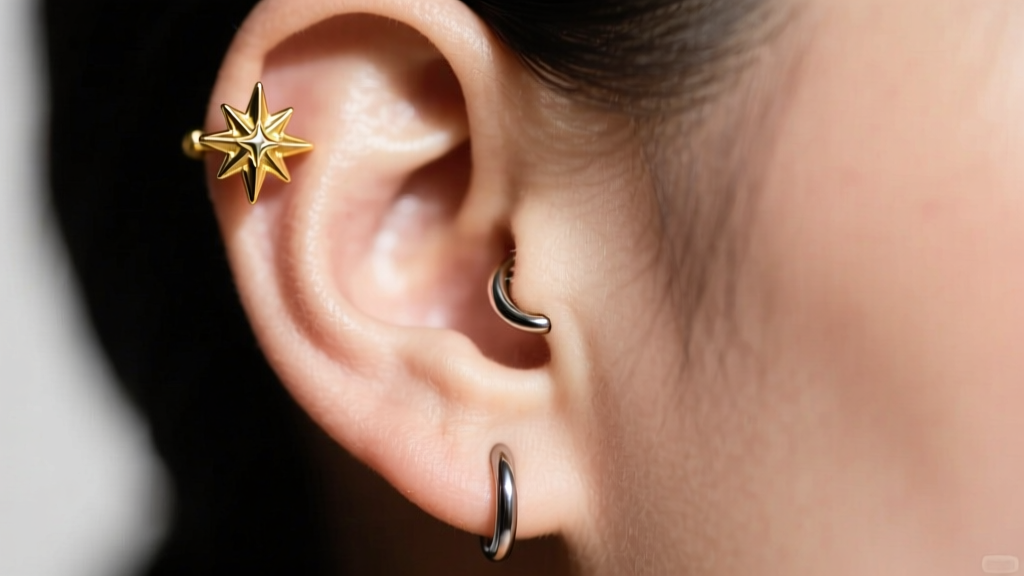
The celestial jewelry movement has undergone a radical transformation as we move through 2026. While the early 2020s favored delicate, symmetrical moon and star motifs, today’s aesthetic is defined by asymmetric storytelling and bold, navigational symbolism. At the forefront of this shift are north star earrings, which have evolved from simple diamond studs into complex, multi-pointed ear curations that map the auricle like a personal constellation.
According to industry forecasters at JCK Online, the modern consumer views ear curation as a form of micro-identity. The north star, historically representing guidance, constancy, and individual direction, perfectly aligns with the 2026 desire for jewelry that holds deeply personal meaning. However, executing this trend requires more than just buying a pair of matching studs. It demands a strategic understanding of ear anatomy, precise gauge sizing, and intentional asymmetry to avoid a dated, cookie-cutter look.
Anatomy of the Perfect North Star Motif
Not all star earrings are created equal. The quintessential north star design relies on the interplay of specific diamond cuts to create an optical illusion of depth and directional light. In 2026, the most sought-after designs utilize a 4-point or 6-point compass rose structure.
The Role of the Marquise Cut
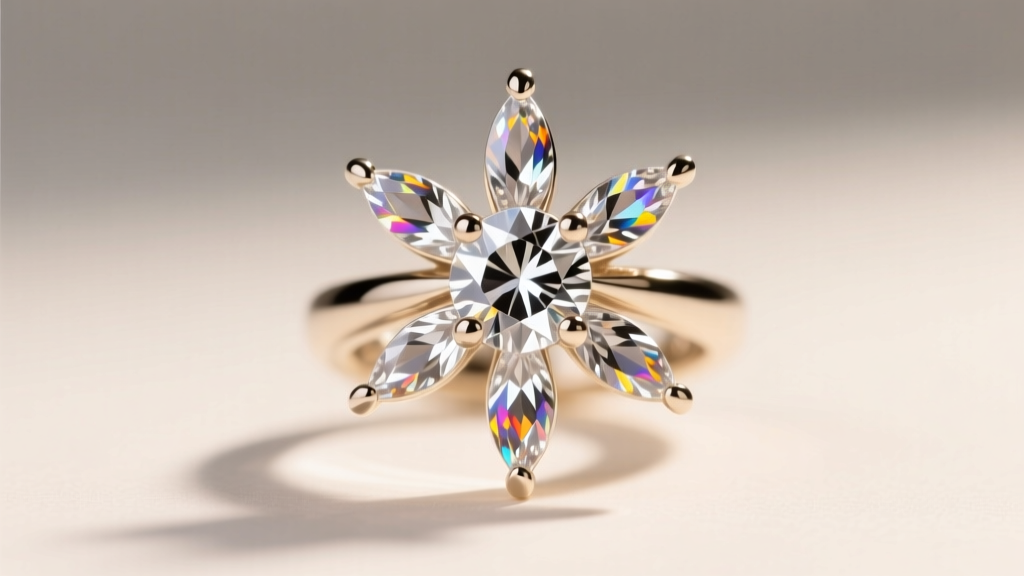
To achieve the elongated, sharp points of a true north star, expert jewelers rely heavily on the marquise cut. A standard 4-point north star earring typically features four marquise-cut diamonds (usually ranging from 0.03ct to 0.08ct each) radiating from a central round brilliant stone (0.10ct to 0.25ct). The Gemological Institute of America (GIA) notes that the marquise cut's elongated shape maximizes carat weight visibility, making the star points appear significantly larger and more luminous than they would with round melee diamonds.
Bezel vs. Prong Settings
While traditional prong settings allow maximum light entry, the 2026 trend heavily favors micro-bezel or V-prong settings for the delicate tips of the marquise stones. V-prongs protect the fragile points of the diamonds from chipping, while micro-bezels offer a sleek, modern profile that drastically reduces hair snagging—a common failure mode in celestial jewelry.
Ear Curation Framework: Lobe vs. Cartilage Placement
Styling north star earrings in 2026 is all about the 'Constellation Method.' This involves anchoring the ear with one statement north star piece and scattering smaller, complementary celestial elements across the remaining piercings. However, placing these pieces requires strict adherence to gauge and post-length standards to ensure tissue health and aesthetic harmony.
| Piercing Placement | Standard Gauge | Post Length (Flat Back) | Ideal North Star Style | Threading Type |
|---|---|---|---|---|
| Standard Lobe | 20g or 18g | N/A (Butterfly/Secure Back) | Large 6-point compass rose (8mm-10mm) | Friction or Screw |
| Upper Lobe | 18g or 16g | 6mm - 8mm | Medium 4-point star (5mm-7mm) | Internally Threaded |
| Helix | 16g | 6mm - 8mm | Small minimalist star (4mm) | Threadless (Push-Pin) |
| Conch | 14g or 16g | 8mm - 10mm | Large bezel-set star cluster | Internally Threaded |
A critical error made by amateurs is the 'cheese-cutter effect.' This occurs when a heavy, large-diameter north star earring is mounted on a thin 20-gauge post and placed in an upper lobe or helix piercing. The weight of the gold and diamonds pulls the thin wire downward, slowly slicing through the fistula. For any cartilage placement, always ensure your jeweler has fitted the piece with a 16-gauge or 14-gauge post, as recommended by the Association of Professional Piercers (APP).
Material Grades & Pricing Tiers for 2026
The market for north star earrings has stratified into distinct tiers, driven by the mainstream acceptance of lab-grown diamonds and the resurgence of colored gold alloys. When investing in celestial ear curation, understanding these tiers ensures you pay for actual material value rather than just brand markup.
- Tier 1: The Accessible Sparkle ($120 - $350)
Typically crafted in 10k or 14k solid gold featuring high-grade cubic zirconia or moissanite. Moissanite offers a higher refractive index than diamonds, giving these budget-friendly stars an intense, fiery sparkle that reads exceptionally well in dim lighting. Beware of gold vermeil or plated options in this tier, as the friction of daily ear curation will wear the plating away within months. - Tier 2: The Modern Standard ($400 - $1,200)
The sweet spot for 2026. These pieces feature 14k or 18k solid yellow or rose gold paired with lab-grown marquise and round brilliant diamonds. Yellow gold has overtaken white gold in popularity this year, largely because it does not require the annual rhodium re-plating that white gold demands. A 14k yellow gold, 0.50ctw lab-grown diamond north star stud typically retails around $650. - Tier 3: The Heirloom Investment ($1,800 - $4,500+)
Reserved for platinum or 18k gold settings featuring natural, earth-mined diamonds with VS clarity and F-G color grades. At this tier, you are paying for the precision of the custom lapidary work—ensuring every marquise point is perfectly symmetrical and aligned to the exact millimeter.
Styling the Asymmetric Constellation Look
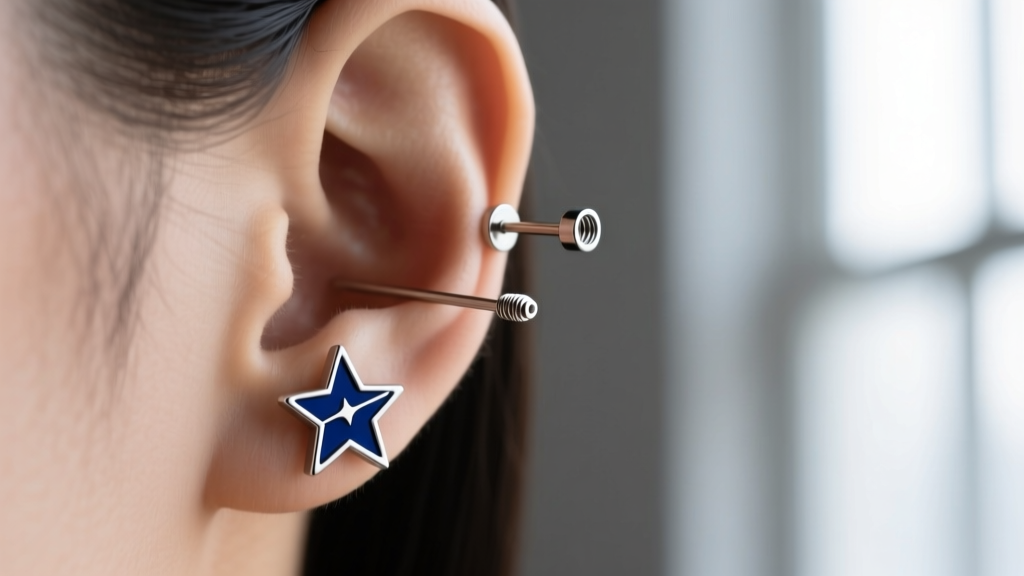
The golden rule of 2026 ear curation is intentional imbalance. Wearing identical, large north star earrings on both lobes creates a heavy, visually stagnant look that feels reminiscent of early-2010s mall jewelry. Instead, adopt the asymmetric constellation framework.
The Left-Right Strategy
Begin by placing your largest, most intricate north star earring (e.g., an 8mm 6-point compass rose in 18k yellow gold) in the primary lobe piercing of your dominant side. On the opposite ear, skip the large lobe stud entirely. Instead, opt for a smaller, 4mm bezel-set north star in the upper lobe, paired with a tiny diamond starburst in the helix. This forces the eye to travel across the face, creating a dynamic, sweeping visual line that mimics the movement of the night sky.
Mixing Metals with Purpose
While mixed metals are highly relevant, they must be anchored. If your primary north star earring is 18k yellow gold, introduce a single 14k white gold element (like a small hoop or a threadless end) in the mid-helix to provide contrast. The north star should always remain the undisputed focal point of the ear.
Expert Troubleshooting: Snagging, Healing, and Maintenance
Celestial jewelry, by its very geometry, is prone to environmental hazards. The sharp points of the star motif are notorious for catching on knit sweaters, silk pillowcases, and hair extensions. Here is how to troubleshoot the most common failure modes associated with north star earrings.
'The biggest mistake I see with celestial cartilage curations is the use of externally threaded jewelry. The screw threads on the post act like a cheese grater on the delicate fistula tissue during insertion. Always demand internally threaded or threadless push-pin ends for your north star helix pieces.' — Senior APP-Certified Piercer
Solving the Snagging Issue
If your north star earrings constantly snag your hair, the issue lies in the setting profile. Transition away from high-set prongs. Seek out 'low-profile' or 'flush-set' north star designs where the marquise diamonds are set deeper into the gold bezel. For cartilage piercings, ensure the decorative end has a smooth, domed back rather than exposed prong culets that can trap hair.
Sleeping and Embedding Risks
Never sleep in north star earrings secured with traditional butterfly backs, especially in upper lobe piercings. The sharp metal posts can press into the neck or behind the ear, causing tissue necrosis or embedding. For any piercing above the standard lobe, exclusively use flat-back labret posts. A 6mm or 8mm titanium flat back provides a smooth surface that rests flush against the back of the ear, allowing for safe, comfortable sleep while maintaining your celestial aesthetic.
By respecting the geometry of the north star, adhering to strict gauge standards, and embracing the beauty of asymmetry, you can master the defining ear curation trend of 2026. Your ear becomes more than just a canvas for jewelry; it becomes a personalized map of your own navigating star.


