Golden Stud Earrings: A 2026 Budget & Value Guide
Discover how to evaluate golden stud earrings in 2026. Compare 10k, 14k, and 18k pricing, durability, and value to make smart jewelry investments.

The True Cost of Gold: Karat Weight vs. Price
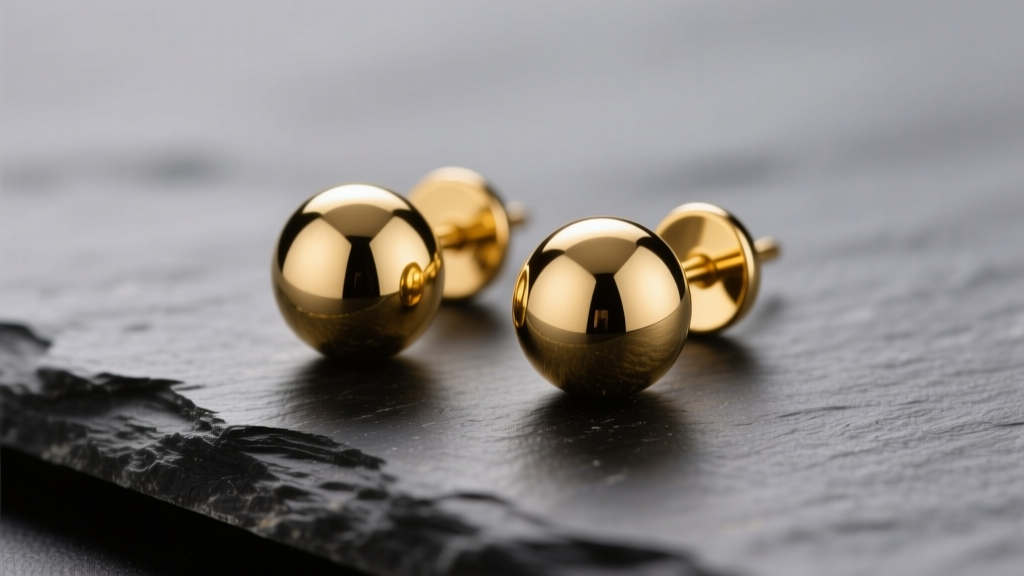
When shopping for golden stud earrings, the price tag can vary wildly from $50 to over $1,500 for seemingly identical designs. As a savvy buyer in 2026, understanding the intersection of raw material costs and retail markups is essential. Gold is priced globally by the troy ounce, and with spot prices fluctuating around the $2,400 to $2,500 per ounce mark this year, the baseline melt value of your jewelry is higher than ever. However, pure 24k gold is far too soft for daily wear earrings; a 24k post would bend under the slight pressure of putting on a sweater. Therefore, gold must be alloyed with other metals like copper, silver, and zinc to create a durable piece of jewelry.
To assess true value, you must look past the aesthetic and calculate the intrinsic metal weight against the craftsmanship premium. A standard pair of 5mm ball studs typically weighs between 0.8 and 1.5 grams. If a retailer is charging $400 for a 1-gram pair of 14k studs, you are paying a massive premium for the brand name rather than the material. Below is a breakdown of standard karat weights, their purity, and their ideal use cases for stud earrings.
| Karat | Purity % | Common Alloy Mix | Durability | Best Use Case |
|---|---|---|---|---|
| 10k | 41.7% | High copper/zinc | Very High | Strict budgets, active lifestyles |
| 14k | 58.5% | Balanced silver/copper | High | Everyday wear, standard lobe piercings |
| 18k | 75.0% | Higher silver/palladium | Medium | Heirloom pieces, sensitive skin |
| 22k | 91.6% | Minimal copper/silver | Low | Investment pieces, occasional wear |
Decoding Hallmarks and Purity Stamps
Authenticating golden stud earrings begins with the hallmark. In the US, the Federal Trade Commission (FTC) strictly regulates how gold purity is stamped. A legitimate piece will bear a fineness mark, often accompanied by a manufacturer's trademark. For 14k gold, you should look for '14k', '14kt', or the metric equivalent '585'. For 18k gold, the stamps are '18k', '18kt', or '750'. If you are buying vintage or second-hand studs, invest in a cheap jeweler's loupe to inspect the post or the back of the setting. A missing hallmark doesn't automatically mean the piece is fake, but it significantly increases the risk, especially when purchasing from unverified online marketplaces.
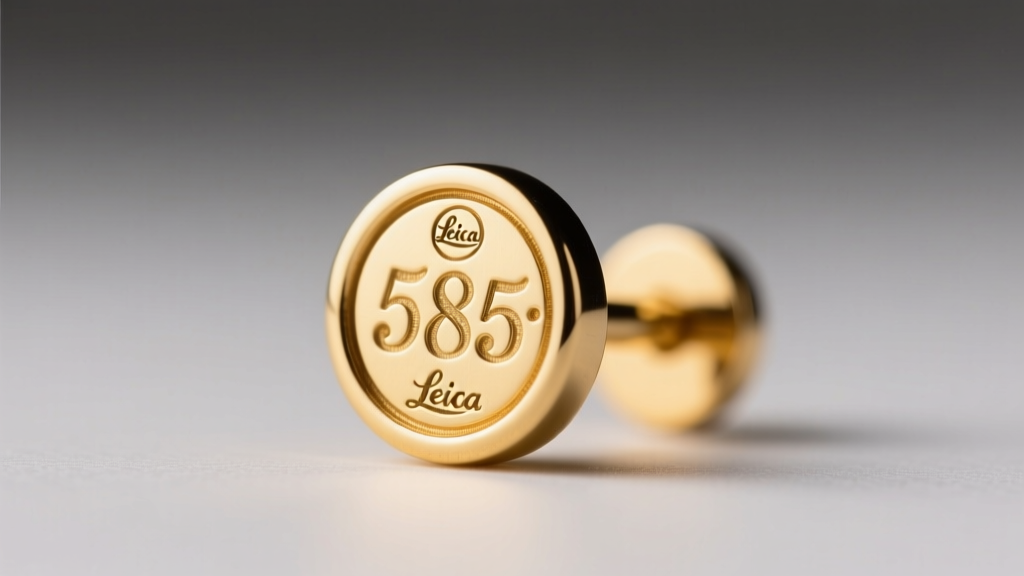
Be highly skeptical of stamps like '14k HGE' (Heavy Gold Electroplate) or '14k GF' (Gold Filled). While these contain a layer of 14k gold, they are not solid gold and will eventually wear down to the base metal beneath, rendering them poor long-term investments. According to the Gemological Institute of America (GIA), only solid gold alloys offer the lifelong tarnish resistance and hypoallergenic properties that justify a premium investment.
Solid Gold vs. Gold Vermeil vs. Gold Plated: A Value Breakdown
When evaluating budget options, you will frequently encounter terms like 'vermeil' and 'gold plated'. Understanding the legal and structural differences between these finishes is critical for assessing value.
Gold Plated and Gold Filled
Standard gold plating involves flashing a microscopic layer of gold (usually less than 0.5 microns thick) over a cheap base metal like brass or copper. These are the least expensive options but offer the worst value over time. The plating will rub off within months of daily wear, exposing the base metal which can cause severe contact dermatitis. Gold filled jewelry is a step up, featuring a thicker layer of gold mechanically bonded to a base metal core, but it still cannot be polished or deeply cleaned without risking the integrity of the gold layer.
Gold Vermeil
Vermeil (pronounced ver-may) is a highly regulated term. To legally be sold as vermeil in the United States, the item must have a sterling silver base and be plated with at least 2.5 microns of 10k gold or higher. Golden stud earrings made from vermeil are an excellent mid-tier budget choice. The sterling silver core ensures that if the gold eventually wears thin, you won't experience the green skin or allergic reactions associated with brass or nickel base metals. However, vermeil still requires careful maintenance; avoid wearing them in the shower or swimming pools, as chlorine will rapidly degrade the gold layer.
Solid Gold
Solid 14k or 18k gold is the only true 'buy it for life' option. It will never flake, peel, or tarnish. While the upfront cost is higher, the cost-per-wear over a decade makes solid gold the superior financial choice for everyday studs.
Sizing, Gauge, and the Hidden Costs of Manufacturing
Budget assessments often ignore the physical dimensions of the earring post, which directly impacts both comfort and manufacturing cost. The thickness of the earring post is measured in gauge. The standard for lobe piercings is 20-gauge (0.81mm) or 18-gauge (1.02mm). If you are buying heavier gold ball studs or diamond-set studs, an 18-gauge post is highly recommended. A 20-gauge post on a heavy earring will cause the stud to droop forward, putting uneven pressure on your piercing and potentially stretching the lobe over time.
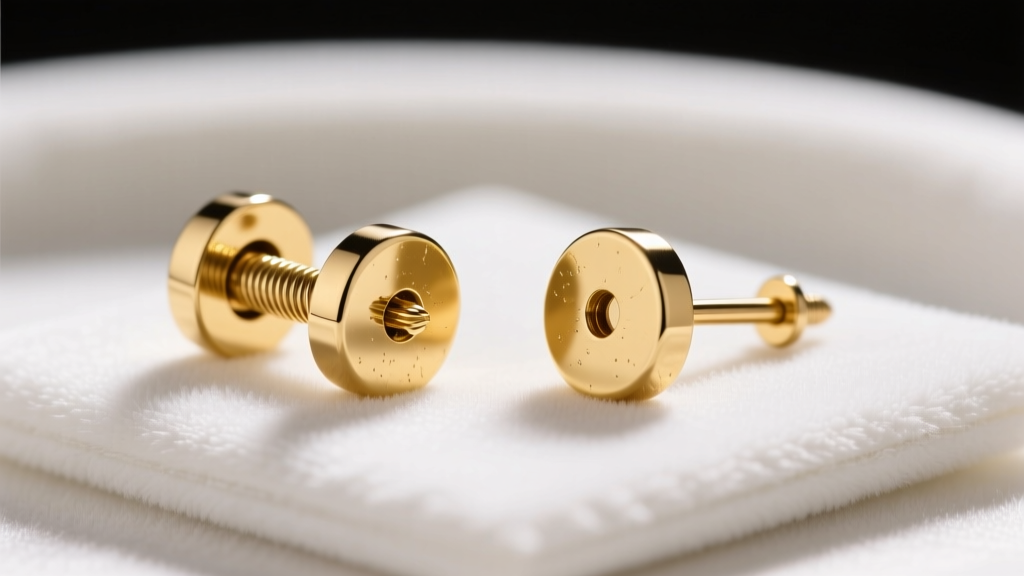
Furthermore, the type of backing mechanism drastically alters the price and security of your golden stud earrings:
- Friction Backs (Butterfly Clutches): The most common and cheapest to produce. They rely on tension to stay on the post. Over time, the metal loops loosen, making them a high risk for losing expensive studs.
- Screw Backs: The post is threaded, and the backing screws on securely. These cost roughly 15-20% more to manufacture but offer superior security for high-value studs.
- La Pousette (Locking) Backs: Featuring a spring-loaded silicone or metal sleeve that clicks into a groove on the post. These are the gold standard for security and are usually found on premium 18k or diamond studs.
Calculating the Melt Value vs. Retail Markup
To truly master the budget assessment of golden stud earrings, you must learn to calculate the melt value. Let's use a real-world 2026 scenario. Assume the raw gold spot price is $2,450 per troy ounce, which translates to roughly $78.75 per gram. A pair of 14k studs weighing 1.5 grams contains 0.877 grams of pure gold (1.5g x 0.585). The raw melt value of the gold alone is approximately $69.00. If a mid-tier mall jeweler sells these for $220, you are paying a 218% markup to cover their retail rent, marketing, and labor. If a direct-to-consumer online brand sells the exact same weight for $115, you are paying a much fairer 66% markup for craftsmanship and overhead. Always check the 'total metal weight' in the product specifications before purchasing.
Where to Buy: Assessing Retailer Value
Big-box jewelers often rely on high-pressure sales tactics and inflated MSRPs to create the illusion of a discount. You are generally better off purchasing from specialized online jewelers who provide transparent pricing based on daily gold spot prices, or from local, independent bench jewelers who can cast custom studs to your exact gram-weight specifications. When buying online, ensure the retailer offers a clear return policy and provides a certificate of authenticity that explicitly states the karat weight and total gram weight of the earrings.
"The true value of gold jewelry isn't just in its resale potential, but in its permanence. A well-made pair of 14k studs will outlive the trends of 2026 and become a foundational piece of your personal style for decades."
Final Verdict: Maximizing Your Investment
Evaluating golden stud earrings requires looking past the sparkle and focusing on the metallurgy, the structural integrity of the post, and the transparency of the pricing model. For the best balance of budget, durability, and rich color, 14k solid gold remains the undisputed champion for daily wear. By understanding hallmark stamps, verifying gauge thickness, and calculating the melt value against the retail price, you can confidently navigate the market and secure a pair of studs that offer genuine, lasting value.


