How to Safely Clean and Care for Claire's Diamond Earrings
Learn how to safely clean and maintain your Claire's diamond earrings. Expert tips on washing CZ, simulated stones, and plated metals without damage.

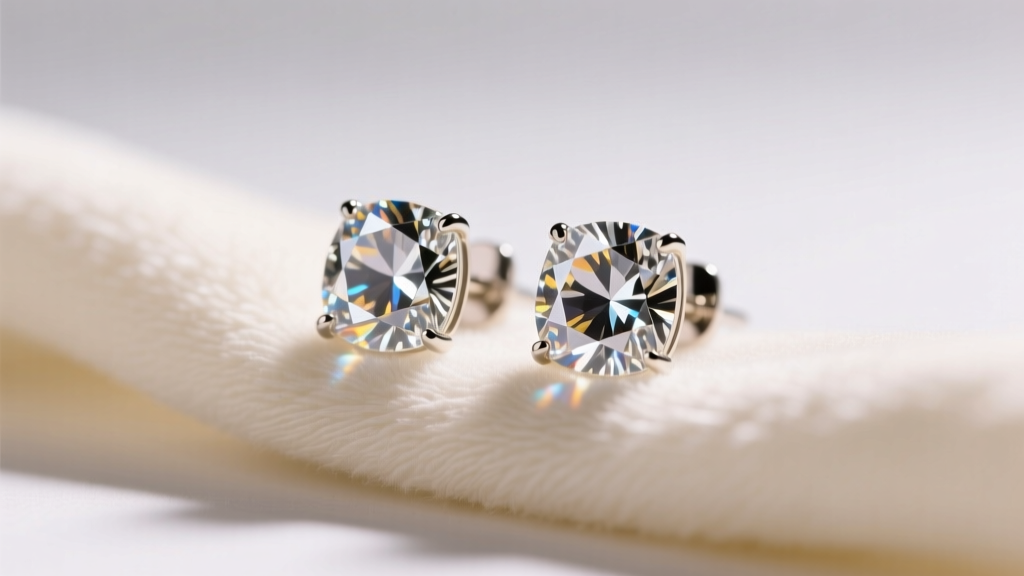
The Material Reality: What Are Claire's Diamond Earrings?
When you purchase diamond earrings from a popular mall retailer like Claire's, you are investing in accessible, trendy, and highly wearable fashion jewelry. However, to properly care for these pieces, we must first address the material science behind them. In the context of mall retail, the term 'diamond' almost exclusively refers to Cubic Zirconia (CZ), simulated diamond crystals, or occasionally very low-carat genuine diamond accents set in base metals.
Unlike fine jewelry, which utilizes solid 14k/18k gold or platinum, Claire's earrings typically feature a brass, stainless steel, or sterling silver base that has been flash-plated with a microscopic layer of rhodium or gold. According to the Gemological Institute of America (GIA), while Cubic Zirconia is relatively hard (8.5 on the Mohs scale), the metallic settings and plating holding them are incredibly delicate. Furthermore, many simulated stones in fashion jewelry are secured with specialized jeweler's epoxy rather than traditional metal prongs, and some feature delicate foil backings to enhance sparkle. Understanding these structural vulnerabilities is the first step in preventing irreversible damage during your cleaning routine.
The Danger Zone: Cleaning Methods That Will Ruin Your Earrings
Because Claire's earrings are often marketed with the word 'diamond,' many consumers mistakenly apply fine-jewelry cleaning protocols to them. This is a critical error that will destroy fashion jewelry. Here are the specific failure modes you must avoid:
- Ultrasonic Cleaners: These machines use high-frequency sound waves (typically 40kHz) to create microscopic cavitation bubbles in a liquid solution. While excellent for solid platinum and genuine diamonds, the intense vibrations will instantly shatter the foil backing of simulated crystals and vibrate glued-in CZ stones right out of their settings.
- Commercial Diamond Dips: Liquid jewelry cleaners designed for real diamonds often contain harsh ammonia or thiourea-based chemicals. Ammonia will aggressively strip the thin rhodium flash-plating off brass or silver bases, leaving you with a dull, oxidized, and potentially skin-irritating base metal.
- Boiling Water: Some old-school jewelry hacks suggest boiling water to loosen grime. Heat above 140°F (60°C) will melt the industrial adhesives used to secure simulated stones, causing them to fall out entirely.
- Toothpaste and Baking Soda: Both are highly abrasive. Baking soda has a Mohs hardness of 2.5, which might not scratch a diamond, but it will easily micro-scratch the rhodium plating and the polished surface of CZ, causing permanent cloudiness.
The Safe Step-by-Step Cleaning Protocol
To restore the brilliance of your Claire's diamond earrings without compromising the plating or the adhesive, you need a gentle, chemistry-safe approach. This method relies on mild surfactants rather than harsh solvents.
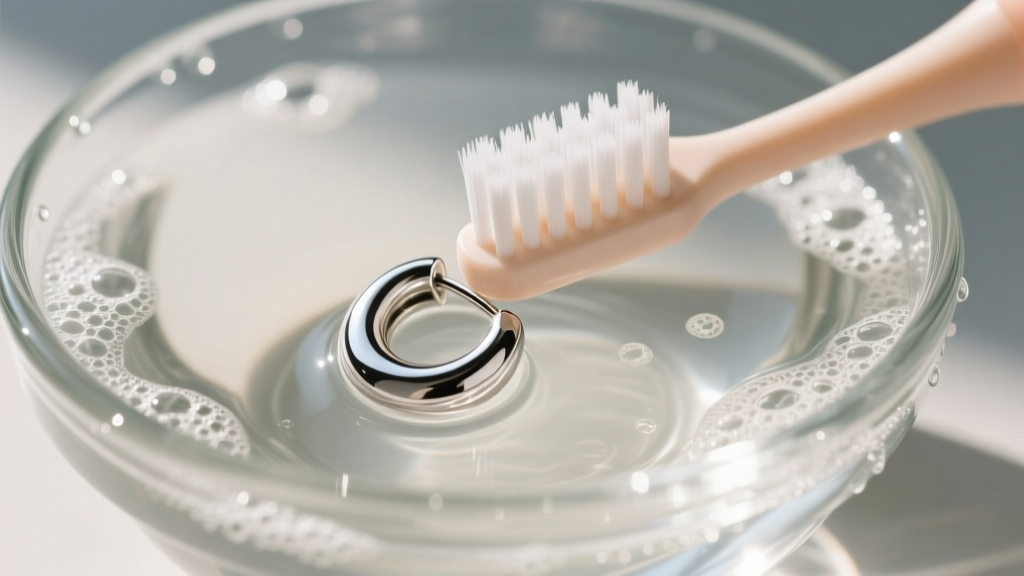
Step 1: The Lukewarm Surfactant Soak
Fill a small glass bowl with lukewarm distilled water. Avoid tap water, as the dissolved minerals (calcium and magnesium) can leave hard water spots on the facets of the CZ. Add exactly two drops of a mild, clear dishwashing liquid (like Dawn). Do not use hand soap or body wash. Hand soaps contain lipid-based moisturizers, glycerin, and heavy fragrances that will leave a cloudy, smeared film on the underside of the gemstones, blocking light refraction and killing the sparkle.
Step 2: Gentle Agitation
Let the earrings soak for no more than 3 to 5 minutes. This is just enough time for the surfactant to break down the sebum (skin oils) and cosmetic residue trapped in the setting. Take a brand-new, extra-soft baby toothbrush and gently brush the underside of the earrings. The pavilion (bottom) of the stone is where 90% of oil and dead skin accumulates. Use light, circular motions. Do not press hard against the prongs or the bezel edge.
Step 3: The Distilled Rinse and Dry
Rinse the earrings under a slow stream of distilled water. Immediately pat them dry with a clean, lint-free microfiber cloth. Do not use paper towels or tissues; wood pulp fibers can cause microscopic scratches on the rhodium plating over time. Allow the earrings to air-dry completely on a towel for 15 minutes before storing them to ensure no moisture is trapped in the post clutch.
Maintenance Matrix: Daily Wear vs. Deep Cleaning
Consistent maintenance prevents the need for aggressive deep cleaning. Use this schedule to keep your earrings in pristine condition:
| Frequency | Action Required | Products to Use | Time Required |
|---|---|---|---|
| Daily (Post-Wear) | Wipe down to remove skin oils and sweat | Dry microfiber cloth | 10 seconds |
| Weekly | Light surface cleaning of the gemstone facets | Damp microfiber cloth with distilled water | 1 minute |
| Monthly | Full soak and agitation to remove trapped sebum | Dish soap, distilled water, baby toothbrush | 10 minutes |
Managing Tarnish, Oxidation, and Skin Reactions
One of the most common issues with mall-retail fashion jewelry is the dreaded 'green ear' phenomenon or contact dermatitis. This is not an infection; it is a chemical reaction. When the thin rhodium or gold plating wears away from friction, the underlying brass (an alloy of copper and zinc) or nickel-containing base metal is exposed to the acidic pH of your skin and sweat. The copper oxidizes, creating copper chloride, which transfers to your skin as a green stain.
If you have sensitive skin or a known nickel allergy, the American Academy of Dermatology recommends avoiding direct skin contact with base metals entirely. To manage this with your Claire's earrings:
- The Barrier Method: Paint the earring post and the back of the setting with a thin layer of clear, hypoallergenic nail polish. This creates a physical barrier between the base metal and your skin. Reapply every few weeks as it wears off.
- Post Swaps: If the earring design is glued to a standard friction post, a local jeweler can often snip off the base metal post and laser-weld or solder an implant-grade titanium post in its place for a minimal fee, making the earring 100% hypoallergenic.
- Removing Tarnish: If the metal setting has already darkened or tarnished, do not use silver dip. Instead, use a specialized polishing cloth impregnated with mild jeweler's rouge. Gently buff the metal setting, carefully avoiding the gemstone to prevent scratching the CZ.
Storage Solutions to Prevent Scratches and Oxidation
How you store your Claire's diamond earrings is just as important as how you clean them. Cubic Zirconia is hard enough to scratch softer metals, meaning if you toss multiple pairs into a single jewelry box, the CZ from one pair will scratch the gold plating of another.
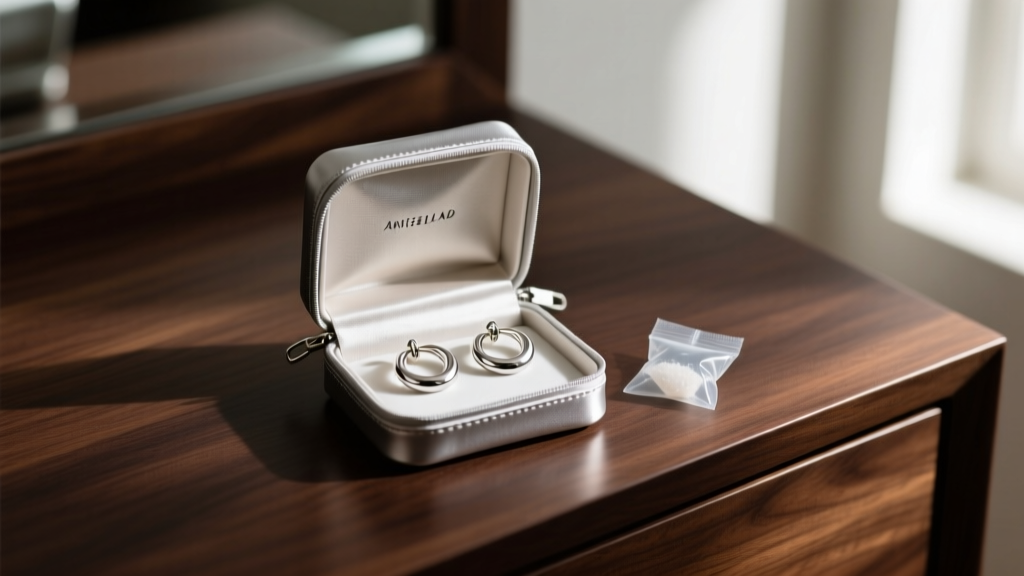
Store each pair individually in a soft flannel pouch or a compartmentalized jewelry box lined with anti-tarnish fabric. To actively fight oxidation and humidity-induced tarnishing, place a small silica gel desiccant packet and a 3M anti-tarnish strip inside your jewelry drawer or storage box. These strips absorb sulfur compounds and hydrogen sulfide from the ambient air—the exact gases responsible for turning silver and brass black. By combining gentle, chemistry-aware cleaning with proactive storage, your Claire's diamond earrings will maintain their brilliant sparkle and structural integrity for years of daily wear.


