Star Huggie Earrings: The 2026 Celestial Ear Trend Guide
Discover the 2026 star huggie earrings trend. Explore celestial styling, 16g vs 18g fits, titanium grades, and how to curate the perfect ear stack.

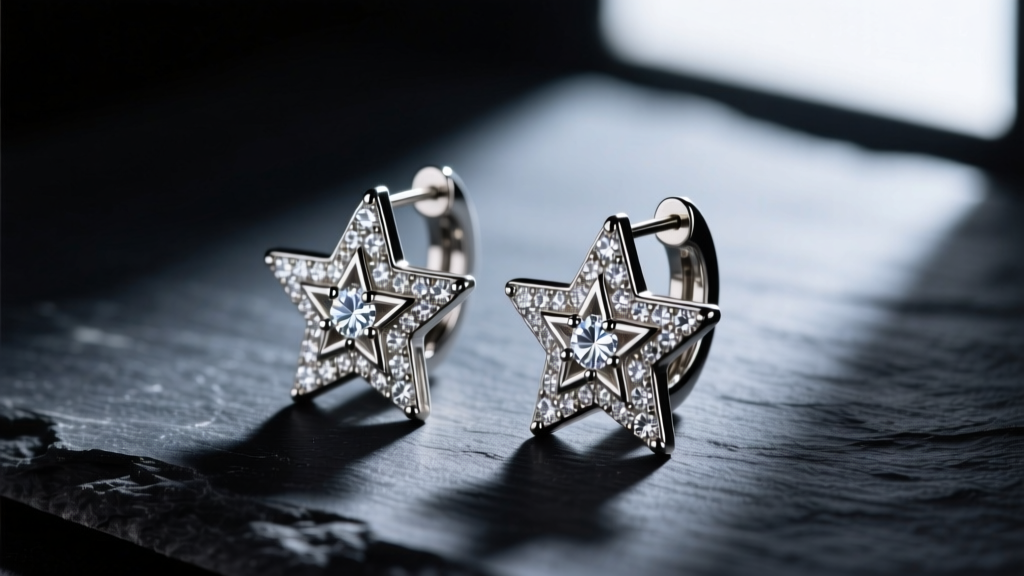
The Celestial Shift: Why Star Huggies Dominate 2026
The evolution of the curated ear has entered a new phase in 2026. Moving away from the ultra-minimalist, barely-there hoops of the early 2020s, today's ear styling embraces sculptural, narrative-driven hardware. At the forefront of this movement are star huggie earrings. Combining the secure, comfortable fit of a traditional huggie with the nostalgic yet sophisticated motif of celestial bodies, these pieces have become the anchor for modern ear stacks. According to trend forecasting by Vogue, celestial jewelry has matured from a fleeting Y2K revival into a permanent staple of fine jewelry wardrobes, with star-shaped huggies leading the charge due to their versatility across both lobe and cartilage placements.
However, styling star huggies requires more than just picking a pretty design. The structural integrity of the hinge, the precise inner diameter (ID), and the metallurgical composition dictate whether the earring will sit flush against your anatomy or cause long-term irritation. This guide breaks down the technical specifications, material science, and curation frameworks necessary to master the star huggie trend.
Anatomy of a Star Huggie: Gauges, Hinges, and Hardware
Unlike standard continuous hoops, huggies are designed to 'hug' the earlobe or cartilage closely. When a 3D element like a star is added to the exterior of the hoop, the weight distribution changes drastically. Understanding the hardware is critical to avoiding the dreaded 'cheese-cutter effect,' where a heavy earring slowly migrates through the piercing channel.
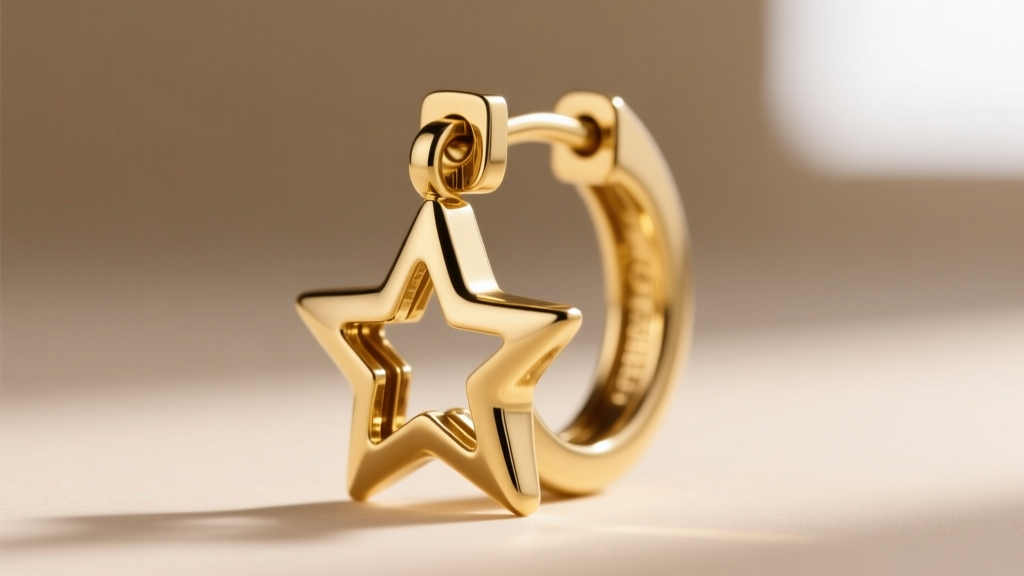
Gauge and Inner Diameter (ID) Matrix
Selecting the correct gauge (thickness of the wire) and ID (the empty space inside the hoop) is the most common point of failure for consumers buying online. Below is the technical matrix for standard placements:
| Piercing Placement | Recommended Gauge | Ideal Inner Diameter (ID) | Star Size Constraint |
|---|---|---|---|
| Standard Lobe | 18g (1.0mm) or 20g (0.8mm) | 8mm - 10mm | Up to 6mm wide stars |
| Helix / Upper Cartilage | 16g (1.2mm) | 8mm - 10mm | Up to 4mm wide stars |
| Tragus | 16g (1.2mm) | 6mm - 8mm | Micro stars (2mm - 3mm) |
| Conch | 14g (1.6mm) | 12mm - 14mm | Large sculptural stars |
Expert Warning: Never force a 16g huggie into an 18g piercing hole, as this can cause micro-tears in the fistula. Conversely, placing a heavy 18g star huggie in a 16g helix piercing can lead to migration due to the wire being too thin to support the star's weight.
Hinge Mechanics: Click vs. Snap
The hinge is the weakest point of any huggie. In 2026, premium jewelers have largely abandoned the traditional 'snap' hinge (which relies on simple friction) in favor of the 'click' hinge. Click hinges feature a micro-machined interlocking groove that produces an audible click when closed, ensuring the star motif doesn't catch on hair or clothing and pull the hoop open. For cartilage piercings, a click-hinge or a seamless continuous hoop is mandatory for security.
Material Science: Titanium vs. Gold in Celestial Designs
The intricate crevices of a star design can trap moisture and bacteria, making material biocompatibility paramount. The Association of Professional Piercers (APP) strictly recommends specific materials for long-term wear, especially in cartilage where blood flow is limited and healing is slow.
- ASTM F136 Implant-Grade Titanium: The gold standard for sensitive ears and fresh piercings. Titanium is lightweight, which is crucial when adding the extra weight of a star charm to a huggie. It is also nickel-free and highly resistant to corrosion from shower water and sweat.
- 14k and 18k Solid Gold: Ideal for fully healed lobes. 14k gold offers better durability and scratch resistance for the hinge mechanism, while 18k gold provides a richer, warmer yellow hue that complements pavé diamond stars beautifully.
- Gold Vermeil: If opting for vermeil, ensure the base metal is sterling silver and the gold plating is at least 2.5 microns thick. Anything thinner will wear off the high-friction areas (like the clasp and the back of the star) within months.
According to the Gemological Institute of America (GIA), when star huggies feature gemstone accents, bezel settings are vastly superior to prong settings. Prongs on micro-pavé stars frequently catch on knitwear and sweaters, leading to lost stones and damaged fabrics.
Ear Mapping: Lobe, Helix, and Tragus Placements

Star huggies are uniquely suited for multi-piercing ear mapping because their compact profile allows them to sit flush without overlapping adjacent jewelry. Here is how to approach specific placements:
The Tragus Anchor
The tragus is a dense piece of cartilage that requires a small ID (usually 6mm or 7mm). A micro star huggie in 16g titanium acts as a brilliant 'anchor' piece. Because the tragus is close to the ear canal, avoid huggies with long, dangling star charms that could interfere with headphones or phone calls.
The Helix Cluster
For a double or triple helix setup, use star huggies of varying sizes to create a gradient effect. For example, pair a 10mm ID huggie with a 5mm star in the lower helix, and an 8mm ID huggie with a 3mm star in the upper helix. This mimics the natural tapering of the ear's anatomy.
Curation Framework: Building a Star-Centric Ear Stack
A successful ear stack relies on the balance of visual weight. Because star huggies are inherently busy and sculptural, they must be balanced with negative space and simpler geometries.
The 2026 Rule of Thirds for Ear Stacking: Dedicate one-third of your piercings to statement pieces (like a chunky star huggie or a celestial threadless stud), one-third to structural connectors (like seamless plain hoops or chains), and leave one-third entirely empty to allow the ear's natural architecture to breathe.
If your primary lobe piercing features a heavy, diamond-encrusted star huggie, your second and third lobe piercings should feature simple, flush-set bezel studs or plain titanium balls. Mixing multiple star motifs across the same ear often results in a cluttered, costume-jewelry aesthetic rather than a high-end curated look.
Maintenance and Hardware Troubleshooting
The intricate angles of star-shaped jewelry require specific maintenance routines to prevent dullness and hardware failure.
- Hinge Lubrication: If your click-hinge begins to feel stiff, do not use oil-based lubricants, which will attract dust and create a grinding paste. Instead, use a tiny drop of sterile saline solution to flush the hinge mechanism.
- Cleaning the Crevices: The inner corners of the star motif trap sebum and dead skin cells. Use a soft-bristled baby toothbrush with a mild, fragrance-free liquid soap to gently agitate the crevices. Avoid harsh chemical dips, which can strip the rhodium plating from white gold stars.
- Ultrasonic Cleaner Warnings: While ultrasonic cleaners are excellent for plain metal huggies, they can vibrate micro-pavé diamonds loose from their settings. If your star huggie features gemstones, stick to manual cleaning with a lint-free cloth and a jewelry polishing stick.
By understanding the precise gauge requirements, prioritizing biocompatible materials like ASTM F136 titanium, and applying a disciplined approach to visual weight, you can seamlessly integrate star huggie earrings into a sophisticated, trend-forward 2026 ear stack that is as structurally sound as it is visually striking.


