25 mm Hoop Earrings: An Expert Guide to Fit and Gauge
Master the mechanics of 25 mm hoop earrings. Our expert guide covers gauge thickness, clasp types, metal grades, and precise fit for lobe and cartilage.

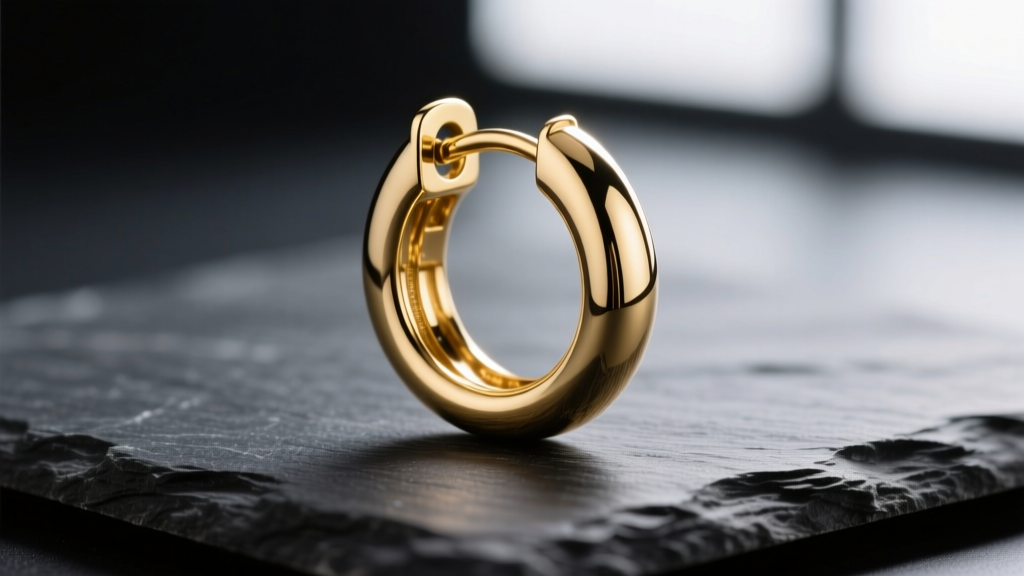
The 25 mm hoop earring occupies a unique space in jewelry design. Often described as the ‘Goldilocks’ size, it is large enough to make a definitive style statement yet compact enough to avoid snagging on clothing or hair. However, from a technical and metallurgical standpoint, not all 25 mm hoops are created equal. As of 2026, advancements in CNC machining and laser welding have drastically improved the precision of body jewelry, yet consumers frequently overlook the critical mechanics of wire gauge, inner diameter, and clasp tensile strength. This expert deep dive dissects the engineering behind the 25 mm hoop, providing a rigorous framework for selecting the perfect pair based on anatomical fit and material science.
The Geometry of Fit: Outer vs. Inner Diameter
The most common point of confusion when purchasing hoop earrings is the distinction between Outer Diameter (OD) and Inner Diameter (ID). In commercial jewelry, a ‘25 mm hoop’ almost always refers to the Outer Diameter. However, the space available for your earlobe or cartilage is dictated by the Inner Diameter.
The mathematical relationship is straightforward: ID = OD - (2 × wire thickness). If you purchase a 25 mm OD hoop crafted from a thick 14-gauge (1.63 mm) wire, the actual inner diameter is only 21.74 mm. Conversely, a delicate 20-gauge (0.81 mm) wire yields an ID of 23.38 mm. This 1.64 mm delta is the difference between a hoop that comfortably grazes the jawline and one that tightly hugs the earlobe, potentially causing pressure necrosis or migration in fresh piercings. Always verify whether a manufacturer lists OD or ID, and calculate the true clearance based on the wire gauge.
Wire Thickness and Gauge Mechanics
Wire thickness, measured in gauges, dictates the structural integrity, weight, and fistula compatibility of the earring. Thinner wires are lighter and more delicate, but they are highly susceptible to lateral warping and tensile failure. Thicker wires provide robust structural memory but require a sufficiently stretched piercing channel.
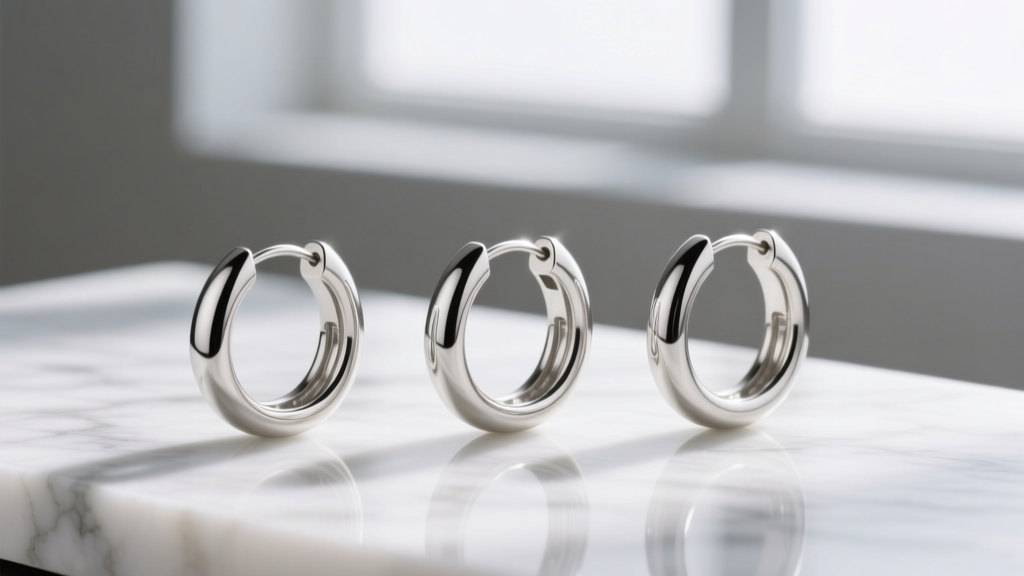
Standard Gauge Sizing Chart for 25mm Hoops
| Gauge (G) | Thickness (mm) | Structural Profile | Best Use Case |
|---|---|---|---|
| 20G | 0.81 mm | Low tensile strength; prone to bending | Standard lobe piercings; lightweight fashion wear |
| 18G | 1.02 mm | Moderate strength; good balance of weight | Standard lobes and healed upper cartilage |
| 16G | 1.29 mm | High strength; excellent structural memory | Daily wear, cartilage, and snug lobe fits |
| 14G | 1.63 mm | Maximum durability; heavy; rigid | Stretched lobes, industrial-style aesthetics |
For a 25 mm hoop intended for daily, continuous wear, 16-gauge (1.29 mm) is the optimal engineering sweet spot. It provides enough rigidity to maintain its circular geometry when subjected to the friction of sleeping or wearing over-ear headphones, while remaining light enough to prevent gravity-induced stretching of the fistula over time.
Clasp Mechanisms and Failure Modes
The clasp is the primary point of mechanical failure in hoop earrings. Understanding the physics of different closure types is essential for preventing loss and ensuring long-term durability.
Latch-Back (Saddleback) Closures
The traditional latch-back features a hinged post that snaps into a V-shaped catch. While aesthetically classic, the hinge pin is a critical vulnerability. Repeated opening and closing can cause metal fatigue at the hinge joint, leading to shear failure. Furthermore, the V-catch relies on friction and slight metal deformation to stay closed; over time, the catch widens, resulting in accidental unclasping.
Clicker (Segment Ring) Closures
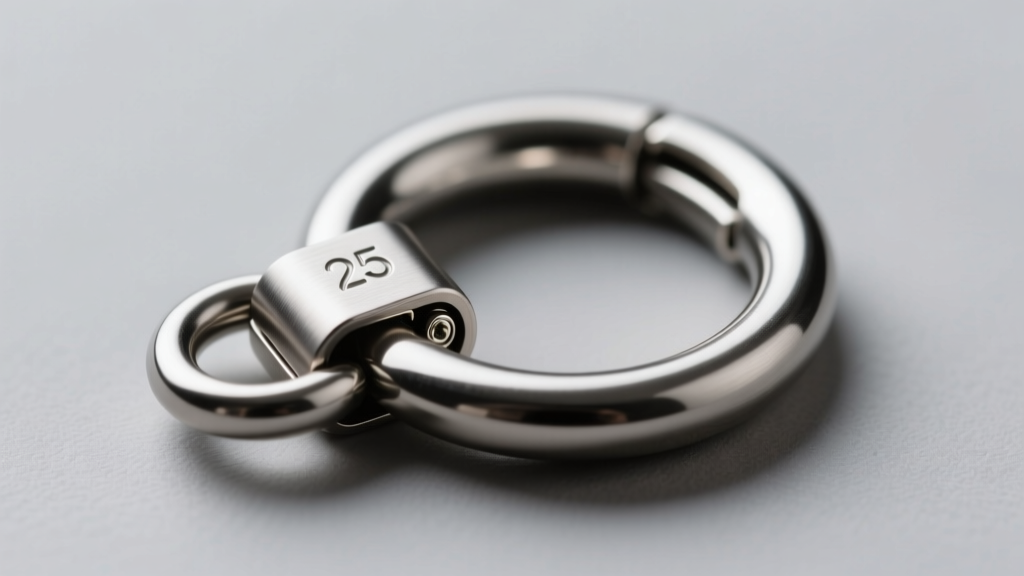
Modern clicker hoops utilize a precision-machined segment that locks into a recessed groove with an audible ‘click.’ This mechanism relies on the tensile spring-back of the metal rather than friction. High-quality clickers machined from implant-grade titanium or 14k gold offer superior security and are highly resistant to accidental opening, making them the preferred choice for active lifestyles and cartilage placements.
Continuous (Endless) Hoops
Continuous hoops feature a hollow tube that the opposite tapered end slides into. While they offer a flawless, seamless aesthetic, they possess the highest failure and loss rate. The hollow tubing is easily crushed or ovalized if squeezed, which ruins the friction fit. Additionally, the thin post wire is prone to bending, making insertion frustrating and increasing the risk of dropping the earring.
Material Science: Density, Allergies, and Hardness
The metallurgical composition of a 25 mm hoop dictates its biocompatibility, weight, and resistance to surface scratching. According to the Association of Professional Piercers (APP), material purity is non-negotiable for jewelry worn in direct, prolonged contact with the skin.
- Implant-Grade Titanium (ASTM F136): The undisputed champion for biocompatibility. It contains zero nickel, is 45% lighter than steel, and possesses exceptional corrosion resistance. A 16G 25mm titanium hoop weighs approximately 1.2 grams, making it virtually imperceptible in the ear.
- 14k and 18k Gold Alloys: Pure 24k gold is too soft for functional clasps. 14k gold (58.5% gold) offers a higher Vickers hardness (HV) than 18k gold, making it more resistant to the micro-scratches and clasp wear inherent in daily use. However, buyers must ensure the alloy is nickel-free, as many commercial white gold alloys rely on nickel for bleaching, violating the EU Nickel Directive standards for prolonged skin contact.
- Surgical Steel (316L): While economical and highly polished, 316L steel contains up to 14% nickel. Even with a mirror polish, microscopic nickel ions can leach into the fistula, triggering contact dermatitis in sensitized individuals.
Expert Fitting Framework: Lobe vs. Cartilage Placement
Achieving the perfect visual drape with a 25 mm hoop requires mapping the specific anatomy of the ear. The critical metric is the piercing height—the distance from the center of the fistula to the lowest edge of the earlobe or cartilage shelf.
‘A 25 mm outer diameter hoop is not a one-size-fits-all solution. If your lobe piercing sits 10 mm from the edge of your ear, a 25 mm hoop will dangle beautifully with a 5 mm drop. If your piercing is only 5 mm from the edge, that same hoop will hug the lobe tightly, behaving more like a huggie. Always measure your anatomy before buying.’ — Master Bench Jeweler
For earlobe placements, a 25 mm hoop is ideal for standard piercings located in the lower third of the lobe, providing a elegant, medium-sized drop that frames the jawline without interfering with the neck. For cartilage placements (such as the helix or forward helix), a 25 mm hoop is generally too large unless the piercing is situated very low on the helix ridge. In upper cartilage, a 25 mm hoop will extend past the anatomical boundaries of the ear, creating an awkward visual gap and increasing the leverage applied to the piercing channel, which can lead to migration.
By prioritizing inner diameter calculations, selecting the correct gauge for structural memory, and matching the clasp mechanism to your lifestyle, you can elevate the 25 mm hoop from a basic accessory to a precision-engineered staple of your jewelry collection.


