Earring Back Material Guide: Titanium, Gold, and Silicone Compared
Discover the best earring back materials for sensitive ears and security. We compare titanium, gold, and silicone properties for optimal healing.

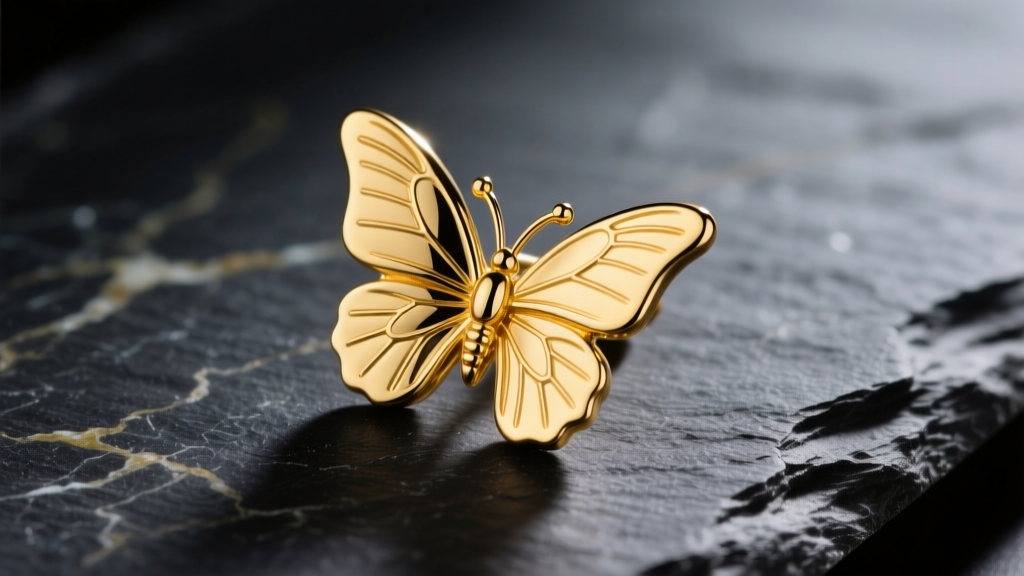
When curating a fine jewelry collection, the vast majority of attention is paid to the decorative front of the earring. However, the true mechanical anchor and primary point of prolonged skin contact is the earring back. The material composition of your earring back dictates not only the security of your jewelry but also the biological response of your tissue. In 2026, with heightened awareness of contact dermatitis and metal hypersensitivities, understanding the metallurgical and polymer properties of earring backs is essential for both jewelry designers and collectors.
A poorly chosen earring back can lead to localized inflammation, biofilm accumulation, and mechanical failure. This guide provides a deep-dive material comparison of the three most common earring back categories: solid gold, implant-grade titanium, and medical-grade silicone, analyzing their biocompatibility, tension retention, and failure modes.
The Metallurgy of Security: Solid Gold vs. Plated Backs
Gold is the traditional standard for fine jewelry, but its use in earring backs requires strict attention to alloy composition. Pure 24k gold is too malleable to maintain the spring tension required for a friction clutch (butterfly) earring back. Therefore, gold must be alloyed. The industry standard for earring backs is 14k (58.5% pure gold) or 18k (75% pure gold).
The Nickel Leaching Problem
The critical vulnerability of gold earring backs lies in the remaining alloy percentages. Historically, nickel was used to bleach gold and increase its hardness, particularly in white gold. However, nickel is a leading cause of allergic contact dermatitis. According to the American Academy of Dermatology, prolonged skin contact with nickel-releasing alloys triggers severe localized immune responses. Even if a white gold earring back is rhodium-plated, the friction of insertion and removal will eventually wear through the plating, exposing the nickel-rich alloy beneath to the earlobe.
Expert Specification: Always verify that gold earring backs are alloyed with copper, silver, or zinc, and are explicitly certified as nickel-free. For white gold, palladium-alloyed variations are vastly superior for earring backs, as they maintain a white color without requiring rhodium plating or introducing nickel.
Implant-Grade Titanium: The Hypoallergenic Standard
For fresh piercings, highly reactive tissue, or individuals with documented metal allergies, titanium is the undisputed champion. However, the term "titanium" is frequently abused in the jewelry market. It is vital to distinguish between commercially pure titanium and implant-grade titanium alloys.
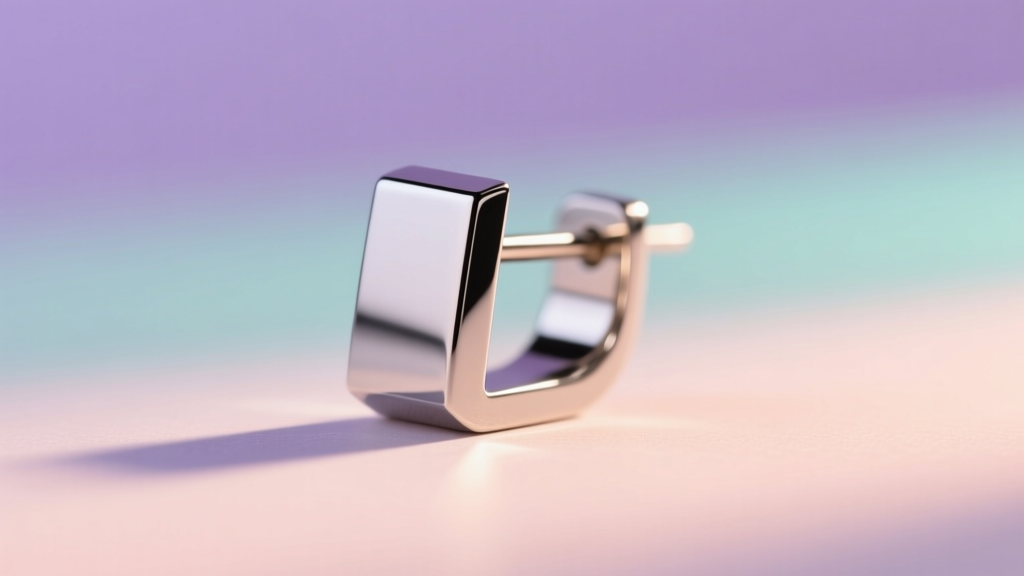
ASTM F-136 vs. ASTM F-67
The Association of Professional Piercers (APP) strictly recommends ASTM F-136 (Ti6Al4V ELI) for initial piercings and sensitive ears. This specific alloy contains extra-low interstitial elements, meaning impurities like oxygen and nitrogen are minimized, resulting in superior corrosion resistance in the saline environment of a healing fistula. Conversely, ASTM F-67 (commercially pure titanium) is softer and more prone to micro-scratches, which can harbor bacteria and disrupt the healing process.
Surface Finish and Biofilm Prevention
The material property that makes a titanium flat back or friction earring back truly effective is its ability to achieve a mirror polish. A mirror finish (measuring below 0.2 micrometers in surface roughness) prevents the adherence of sebum, dead skin cells, and biofilm. Unlike porous metals, a highly polished ASTM F-136 titanium earring back remains inert and frictionless, allowing the tissue to heal without micro-abrasions from the post or backing.
Silicone and O-Rings: Friction, Grip, and Degradation
Silicone earring backs, often shaped like small O-rings or bell clutches, are marketed for their exceptional grip and comfort. They are particularly popular for securing heavy statement earrings or diamond studs where the loss of the piece would be financially devastating. However, silicone is a polymer, and its material properties degrade in ways that metals do not.
Shore A Hardness and Lipid Absorption
Medical-grade silicone used for earring backs typically features a Shore A durometer (hardness) rating between 40 and 50. This provides the necessary elasticity to grip a standard 20-gauge (0.81mm) or 18-gauge (1.02mm) post. The primary failure mode of silicone is its interaction with human sebum. Silicone is lipophilic; over months of continuous wear, it absorbs skin oils. This causes the material to swell, soften, and eventually lose its elastic memory. A silicone back that once provided a secure, snapping grip will eventually become mushy and slide off the post with minimal resistance.
Maintenance Protocol: Silicone earring backs should be treated as consumable components. They must be removed nightly, washed with a mild surfactant to strip lipids, and replaced entirely every 3 to 6 months to prevent catastrophic tension loss.
Material Properties Comparison Matrix
To make an informed purchasing decision, it is necessary to weigh the physical and biological properties of each material against your specific needs. The following matrix outlines the core characteristics of the three primary earring back materials.
| Material | Biocompatibility | Tension Retention | Best Use Case | Avg. Price Range |
|---|---|---|---|---|
| 14k/18k Solid Gold (Nickel-Free) | High (if properly alloyed) | Excellent (Spring temper) | Healed lobes, fine jewelry | $40 - $120+ |
| ASTM F-136 Titanium | Exceptional (Inert) | Moderate (Relies on threading or O-rings) | Fresh piercings, cartilage, allergies | $15 - $45 |
| Medical-Grade Silicone | Moderate (Lipid absorption) | High initially, degrades over time | Heavy earrings, sports, sleepers | $5 - $15 (Multipacks) |
Mechanical Failure Modes: Why Earring Backs Fall Off
Understanding how earring backs fail mechanically is just as important as understanding their biological compatibility. The interface between the earring post and the back is a high-stress micro-environment subject to friction, torsion, and moisture.
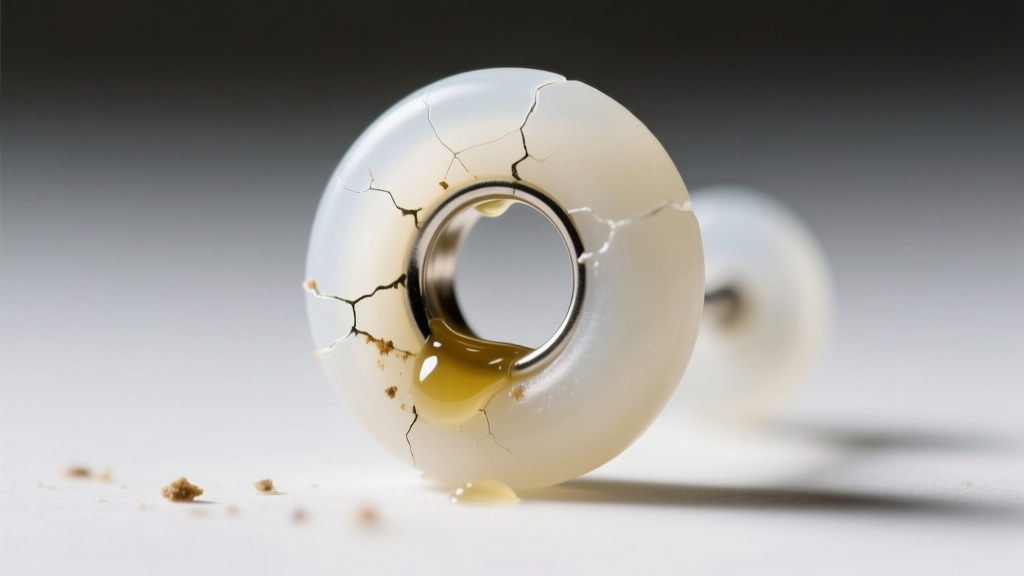
Friction Clutch Fatigue
The traditional butterfly clutch relies on the spring tension of two folded metal wings. Over time, the repeated compression of these wings against the post causes work hardening and eventual metal fatigue. The metal loses its "spring temper," resulting in a clutch that slides on and off the post with zero resistance. Gold, being a softer metal, experiences this fatigue much faster than stainless steel or titanium. If you notice your gold butterfly backs sliding off easily, the metal has fatigued and they must be replaced.
Thread Stripping on Screw Backs
Screw earring backs offer superior security for high-value diamond studs. However, the threads on a standard 18-gauge post are incredibly fine. If the user forces the back at an incorrect angle (cross-threading), the threads will strip. Once stripped, the mechanical lock is destroyed. To prevent this, always start threading a screw back by turning it counter-clockwise until you feel a subtle "click" indicating the threads have aligned, then turn clockwise to tighten.
Expert Recommendations by Piercing Stage
Selecting the correct earring back requires matching the material properties to the physiological state of the piercing.
- Fresh Piercings (0-6 Months): Avoid butterfly clutches entirely. The tight space between the clutch and the earlobe traps moisture and bacteria, leading to infection. Use ASTM F-136 titanium flat back (labret) posts. The flat disc rests flush against the tissue, eliminating pressure points and debris traps.
- Healed Standard Lobes: 14k or 18k solid gold friction clutches are ideal for daily wear, provided they are nickel-free. For heavy drops or chandeliers, supplement the gold clutch with a clear silicone O-ring behind it for redundant security.
- Cartilage and Helix Piercings: Cartilage is highly prone to pressure necrosis and irritation bumps. Never use standard butterfly backs on cartilage. Stick exclusively to internally threaded or threadless titanium flat backs, which distribute pressure evenly and allow for precise post-length customization.
Conclusion
The earring back is not merely an afterthought; it is a critical piece of functional engineering that interfaces directly with human biology. By prioritizing ASTM F-136 titanium for healing and sensitive ears, demanding nickel-free alloy certifications for gold, and treating silicone as a replaceable consumable, you can ensure both the security of your fine jewelry and the long-term health of your piercings. In the realm of body modification and fine jewelry, the hidden mechanics matter just as much as the visible aesthetics.


