How to Clean and Care for Christmas Earrings Beads
Learn expert care, cleaning, and storage tips for Christmas earrings beads. Protect glass, crystal, and wire-wrapped holiday jewelry from damage.

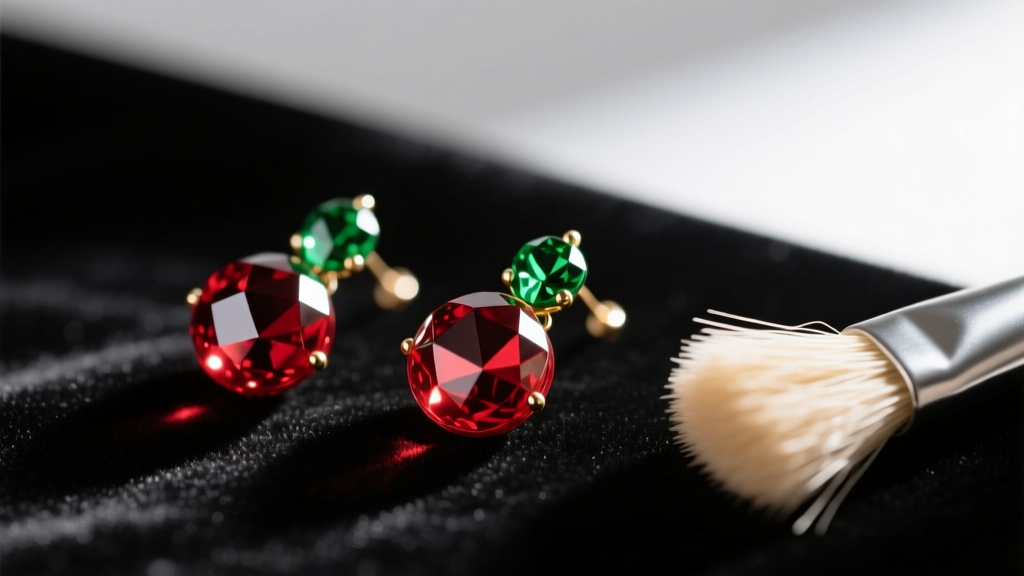
The magic of the holiday season is often captured in the intricate details of festive jewelry. Among the most popular and nostalgic seasonal accessories are those featuring Christmas earrings beads—ranging from hand-blown Czech glass and sparkling Aurora Borealis crystals to delicate seed beads and painted acrylics. However, because these holiday pieces are often constructed using mixed media, wire-wrapping, and specialized adhesives, they require a highly specific approach to maintenance. Improper cleaning can strip iridescent coatings, tarnish delicate wire wraps, or degrade the adhesives holding stud posts in place.
As we navigate the jewelry landscape in 2026, the industry's shift toward lead-free and cadmium-free crystal beads means the glass compositions are slightly softer and more susceptible to micro-scratching than vintage leaded crystals. This makes understanding the material science behind your holiday jewelry more critical than ever. Below is a comprehensive, expert-level guide to cleaning, maintaining, and storing your beaded holiday earrings to ensure they remain pristine for decades.
The Material Science of Holiday Beads
Before applying any cleaning solution, you must correctly identify the materials used in your Christmas earrings beads. Different beads react drastically differently to moisture, chemicals, and friction.
- Czech & Lampwork Glass: Highly durable but susceptible to thermal shock. Safe for gentle aqueous cleaning but should never be placed in an ultrasonic cleaner, as high-frequency cavitation can cause internal fractures.
- Coated Crystals (Aurora Borealis / AB): The AB effect is achieved through a microscopically thin layer of vaporized metal. According to the Gemological Institute of America (GIA), harsh chemicals, alcohol, and ammonia will permanently strip this coating, leaving the bead dull and cloudy.
- Acrylic & Polymer Clay: Extremely sensitive to solvents. Alcohol-based cleaners will cause acrylic to cloud and polymer clay to break down and become sticky.
- Wood & Porous Stone: Materials like turquoise, howlite, and wooden beads are highly porous. They will absorb soapy water, leading to internal staining and structural weakening.
Step-by-Step Cleaning Protocols
Ditch the commercial jewelry dips. For mixed-media beaded earrings, a targeted, multi-step approach is required to preserve both the bead and the hardware.
Method 1: The Gentle Distilled Bath (For Glass & Uncoated Crystal)
- Prepare the Solution: Mix 8 ounces of distilled water (never tap water, as chlorine and hard water minerals leave micro-deposits) with a single drop of pH-neutral dish soap, such as Dawn Free & Clear.
- Agitate Gently: Dip a soft-bristled baby toothbrush or a specialized jewelry cleaning brush into the solution. Gently sweep the bristles around the bead holes and wire wraps where skin oils and dead skin cells accumulate.
- Rinse & Dry: Rinse briefly under a slow stream of distilled water. Immediately pat dry with a lint-free microfiber cloth, then use a hair dryer on the 'cool' setting to blow water out of the bead crevices and crimp bead covers.
Method 2: The Dry Polish (For Acrylic, Wood, & AB Coated Beads)
For beads that cannot tolerate moisture, use a dry, untreated microfiber polishing cloth. Gently buff the surface of the bead using circular motions. For stubborn oils on AB-coated crystals, breathe lightly on the bead to create a microscopic layer of condensation, then immediately buff it away. Never apply liquid pressure to coated surfaces.
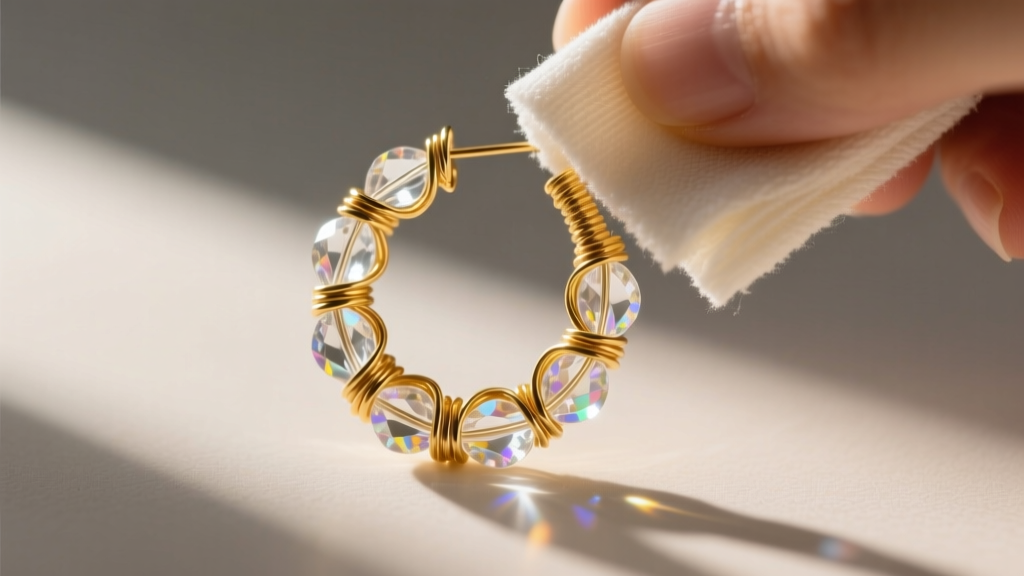
Wire-Wrapping and Hardware Maintenance
The beads are only half the equation; the wire and hardware used to assemble Christmas earrings beads dictate the structural integrity of the piece. Most artisan holiday earrings utilize 24-gauge or 26-gauge dead-soft wire for wrapping. Because these gauges are incredibly thin, aggressive polishing can bend the wire or snap it at stress points.
| Metal Type | Tarnish Rate | Recommended Cleaning Agent | Polishing Method |
|---|---|---|---|
| 14/20 Gold-Filled | Very Low | Mild Soap & Distilled Water | Microfiber Cloth |
| Sterling Silver (.925) | Moderate to High | Silver Polish (Liquid) | Treated Silver Cloth (Avoid Beads) |
| Raw Brass / Copper | High (Oxidizes) | Lemon Juice & Salt Dip | Brasso or Cape Cod Cloth |
| Niobium / Titanium | None | Isopropyl Alcohol (99%) | Cotton Swab |
Note: When polishing sterling silver or brass wires, use a Q-tip dipped in polish to carefully trace the wire without touching the adjacent beads. The Rio Grande Jewelry Knowledge Base warns that silver dip solutions can permanently discolor porous beads and strip patinas from oxidized wire details.
Troubleshooting Common Bead Earring Failures
Even with meticulous care, the mechanical stress of wearing heavy beaded dangles can lead to hardware fatigue. Here is how to troubleshoot and repair common issues specific to holiday beaded designs.
1. Loose Crimp Beads and Slipping Wires
If you notice a bead dangling lower than its partner, the crimp bead securing the wire loop has likely failed due to metal fatigue. Do not attempt to re-crimp the flattened bead; it will shatter. Instead, use a pair of flush cutters to snip the wire just below the failed crimp, thread on a new sterling silver or gold-filled crimp tube (2x2mm is standard for 24g wire), and use a crimping plier to secure it. Finish with a 3mm crimp cover for a seamless look.
2. Adhesive Degradation on Stud Posts
Many Christmas earrings beads are glued directly to flat-pad stud posts. Over time, exposure to skin acidity and temperature fluctuations causes standard cyanoacrylate (Super Glue) to become brittle and fail. If a bead pops off, clean both the bead base and the metal pad with 99% isopropyl alcohol. Re-adhere the bead using a flexible jewelry adhesive like E6000, or for a faster, more durable bond in 2026, use a high-viscosity UV-curing resin cured under a 36W LED lamp for 60 seconds.
3. Bent Ear Wires
French hook ear wires made from 20-gauge or 22-gauge wire easily bend when caught on winter scarves or sweaters. To reshape them, do not use your fingers, which will leave oils and create uneven kinks. Use a pair of nylon-jaw pliers to gently bend the wire back to its original curvature. Nylon jaws prevent marring the soft metal.
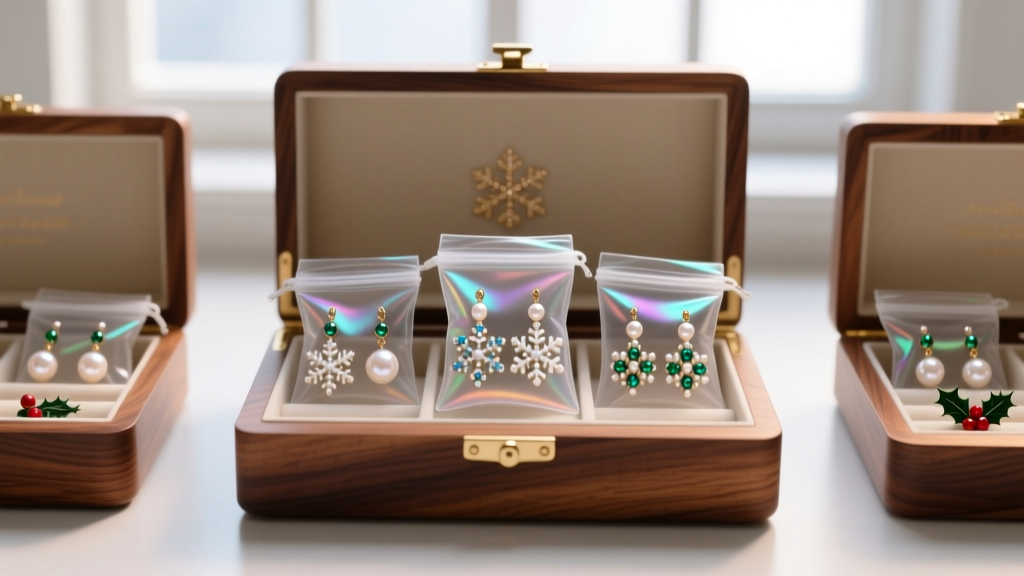
Off-Season Storage: Preserving Your Holiday Collection
How you store your Christmas earrings beads for the remaining 10 months of the year dictates their condition when December rolls around again. The primary enemy of mixed-media jewelry is hydrogen sulfide in the atmosphere, which causes rapid silver and brass tarnishing, alongside ambient humidity, which degrades adhesives and rusts base-metal findings.
To build a professional-grade storage system, follow these parameters:
- Micro-Climates: Store each pair of earrings in an individual, zip-sealed polyethylene bag (2x3 inches is ideal for studs and small dangles). Polyethylene is chemically inert and will not off-gas plasticizers that damage acrylics.
- Anti-Tarnish Technology: Drop a 3M Anti-Tarnish Strip or an activated charcoal sachet into the storage bag. These strips absorb airborne sulfur compounds, effectively halting the oxidation process for up to 12 months.
- Humidity Control: Include a small silica gel desiccant packet in the main wooden or acrylic jewelry box where the bags are kept. Aim to maintain a relative humidity (RH) below 40% to protect wood beads and prevent adhesive hydrolysis.
- Physical Separation: Never store beaded earrings loose in a communal box. The Mohs hardness scale dictates that harder crystals (Mohs 7) will easily scratch softer glass (Mohs 5.5) and acrylic (Mohs 3) when jumbled together. For further reading on material hardness and storage, consult the Fire Mountain Gems Encyclopedia.
Conclusion
Caring for Christmas earrings beads requires a departure from generic jewelry cleaning habits. By understanding the specific vulnerabilities of coated crystals, porous materials, and delicate wire wraps, you can preserve the structural integrity and visual brilliance of your holiday collection. Whether you are maintaining a pair of heirloom Czech glass dangles or modern, wire-wrapped acrylic studs, utilizing distilled water, pH-neutral cleaners, and anti-tarnish storage environments will ensure your festive jewelry remains as vibrant as the day it was crafted.


