Which Earring Side Is Gay? Single-Ear Piercing Care Guide
Discover the truth behind which earring side is gay, plus expert care, cleaning, and material tips for asymmetrical and single-ear piercings.

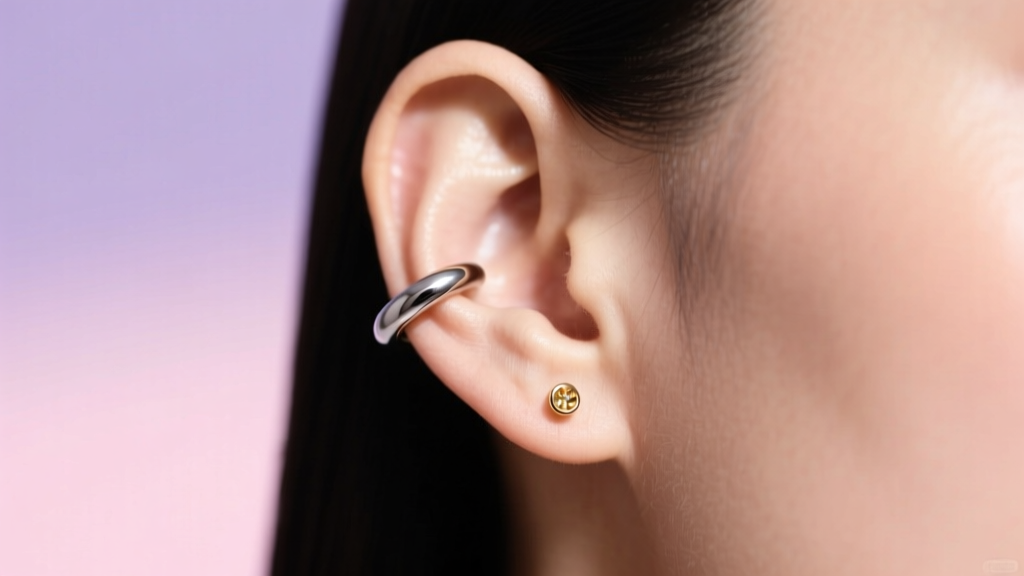
If you have ever found yourself typing which earring side is gay into a search engine, you are likely recalling a very specific piece of 1980s and 1990s Western pop culture coding. During that era, the 'right ear' was widely considered the 'gay ear' among men, serving as a subtle, underground signaling mechanism before mainstream LGBTQ+ acceptance. Today, that cultural artifact is largely a nostalgic internet meme. In the modern jewelry landscape, ear curation is entirely about facial asymmetry, hair parting, and personal aesthetics, completely divorced from sexual orientation.
However, while the cultural coding of the past dictated which ear you pierced, modern styling focuses heavily on how you maintain a heavily curated single ear. When you commit to an asymmetrical ear project—whether it is your right or left ear—that single side bears the entire brunt of your daily mechanical stress, phone friction, and sleeping habits. Here is the definitive maintenance and care guide for the modern asymmetrical ear.
The Biomechanics of Single-Ear Curation
When you curate only one ear, you introduce a localized biomechanical imbalance. A fully curated ear featuring a lobe, helix, tragus, and conch piercing can carry upwards of 15 to 20 grams of titanium and gold jewelry. While this weight is negligible for the cartilage itself, the way you interact with that specific side of your head changes dramatically.
- Smartphone Friction: If you hold your phone against your curated ear, the screen introduces heat, sebum, and environmental bacteria directly against your fistulas (the healed piercing tunnels).
- Hair Parting Interference: If your hair parts over the curated ear, hair products, dry shampoo, and natural oils will accumulate around the jewelry settings, particularly in prong-set gemstones and intricate clicker hinges.
- Asymmetrical Sleeping Pressure: Most people have a dominant sleeping side. If your curated ear is your 'pillow side,' you are subjecting multiple cartilage piercings to sustained pressure, which can lead to migration or hypertrophic scarring.
Targeted Cleaning Protocols for High-Friction Ears
The Association of Professional Piercers (APP) strictly advises against using harsh chemicals, alcohol, or hydrogen peroxide on healing or healed piercings. For a heavily curated single ear, cross-contamination is a major risk during cleaning routines.
The 0.9% Sterile Saline Standard
Your primary cleaning agent must be a sterile, preservative-free 0.9% sodium chloride solution. Avoid 'wound wash' sprays that contain additional additives. For a multi-piercing setup on one ear, follow this exact protocol to prevent spreading bacteria from the lobe to the upper cartilage:
- Top-Down Application: Always spray or apply saline from the highest piercing (e.g., the helix or flat) down to the lowest (the lobe). Gravity will carry the runoff downward, preventing dirty saline from the lobe dripping into a fresh cartilage piercing.
- Non-Woven Gauze Only: Never use cotton swabs (Q-tips) or cotton balls. Cotton fibers easily wrap around the prongs of small gemstones or the hinges of huggies, causing micro-tears in the fistula. Use 2x2 non-woven sterile gauze to gently wipe away softened lymph and sebum.
- The Hinge Flush: If your curated ear features segment rings or clickers in the helix or daith, use a gentle stream of saline to flush the hinge mechanism. Sebum buildup in hinges is the primary cause of that distinct 'earring odor' and mechanical stiffening.
Material Upgrades: ASTM F-136 Titanium vs. Surgical Steel
When an entire ear is curated, the localized nickel exposure increases exponentially if you are wearing cheap or low-grade metals. The American Academy of Dermatology notes that prolonged exposure to nickel is the leading cause of allergic contact dermatitis, which presents as itching, flaking, and weeping around the piercing site.
For asymmetrical ear projects, upgrade all base metals to ASTM F-136 Implant-Grade Titanium. Unlike 316L 'surgical steel,' which contains up to 14% nickel bound within the alloy, F-136 titanium is virtually nickel-free and highly biocompatible, drastically reducing the risk of localized rejection and irritation bumps.
If you prefer the look of yellow or rose gold, ensure the jewelry is at least 14k or 18k solid gold, specifically alloyed for body jewelry (often palladium-based rather than nickel-based). Avoid gold-plated or gold-filled jewelry entirely for cartilage piercings, as the friction from daily wear will eventually expose the reactive base metal underneath.
Hardware Integrity: Threadless vs. Internally Threaded
The hardware mechanism you choose for your single-ear curation dictates your long-term maintenance schedule. Externally threaded jewelry (where the screw is on the post) acts like a microscopic file, tearing the delicate tissue of the fistula every time it is inserted or removed.
The Threadless Push-Pin Advantage
For a curated ear, threadless (push-pin) jewelry is the gold standard for maintenance. The post is smooth, and the decorative end features a slightly bent pin that creates tension inside the hollow post. This tension holds the jewelry securely in place without the need for screwing, making it incredibly easy to swap out tops for cleaning or styling without irritating the ear. Check the tension on your threadless ends every three months; if they pull out too easily, gently bend the pin slightly more with clean pliers.
Sleep Protection and Pressure Necrosis Prevention
Sleeping on a curated ear is the fastest way to ruin the angles of your piercings. Sustained pressure can cause 'pressure necrosis,' where the tissue is deprived of blood flow, or force a flat-back labret post to embed into the swelling tissue. Furthermore, friction against standard cotton pillowcases can catch on delicate chains and ear cuffs.
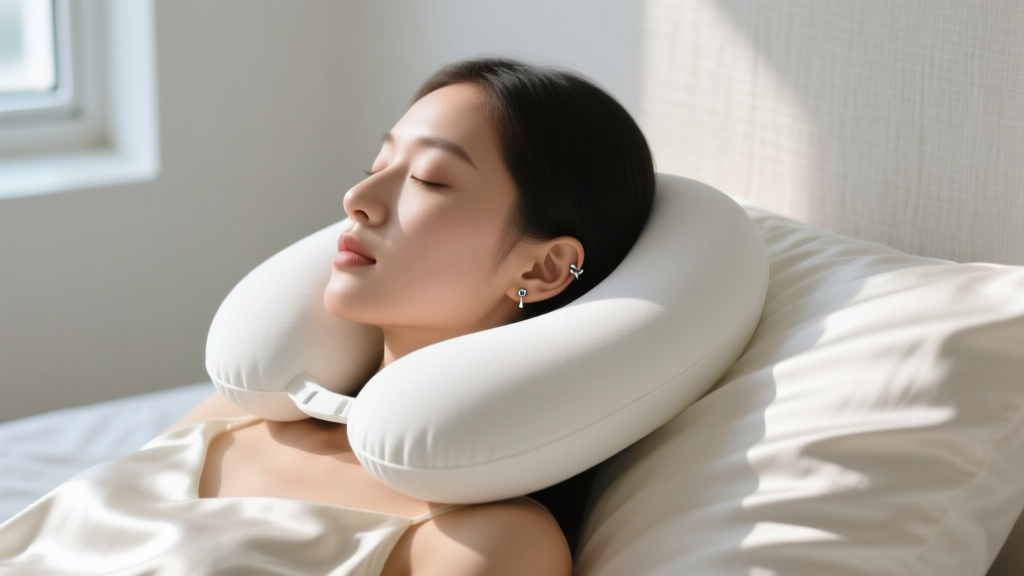
To protect your asymmetrical investment, adopt the following sleep hygiene practices:
- The Travel Pillow Hack: Sleep with your curated ear positioned inside the hollow center of a U-shaped neck travel pillow. This completely eliminates direct contact pressure on the cartilage while keeping your spine aligned.
- Silk or Satin Pillowcases: If you cannot use a travel pillow, switch to a 22-momme mulberry silk pillowcase. Silk creates significantly less friction than cotton, allowing your ear to glide rather than snag on the fabric when you toss and turn.
Asymmetrical Ear Maintenance Schedule
To keep a single, heavily curated ear looking pristine and functioning perfectly, adhere to this structured maintenance timeline:
| Frequency | Maintenance Task | Tools Required |
|---|---|---|
| Daily | Rinse in the shower to remove shampoo/hair product residue. | Warm water only |
| Weekly | Spot-clean around gemstone prongs and clicker hinges. | 0.9% Saline, non-woven gauze |
| Monthly | Check threadless pin tension and internally threaded screw tightness. | Clean hands, rubber gloves for grip |
| Bi-Annually | Professional ultrasonic cleaning for intricate gold or diamond pieces. | Jeweler or ultrasonic cleaner |
| As Needed | Sanitize smartphone screen and wireless earbuds (e.g., AirPods). | 70% Isopropyl alcohol wipes |
Ultimately, the historical debate over which earring side is gay has been entirely replaced by the modern pursuit of anatomical harmony and personal expression. By treating your curated ear with the targeted biomechanical care, precise material standards, and rigorous cleaning protocols outlined above, your asymmetrical styling will remain healthy, vibrant, and flawlessly maintained for decades to come.


