Kays Hoop Earrings Buying Guide: What to Look For in 2026
Discover our 2026 buying guide for Kays hoop earrings. Learn what to look for regarding gold purity, diamond clarity, clasp types, and true value.

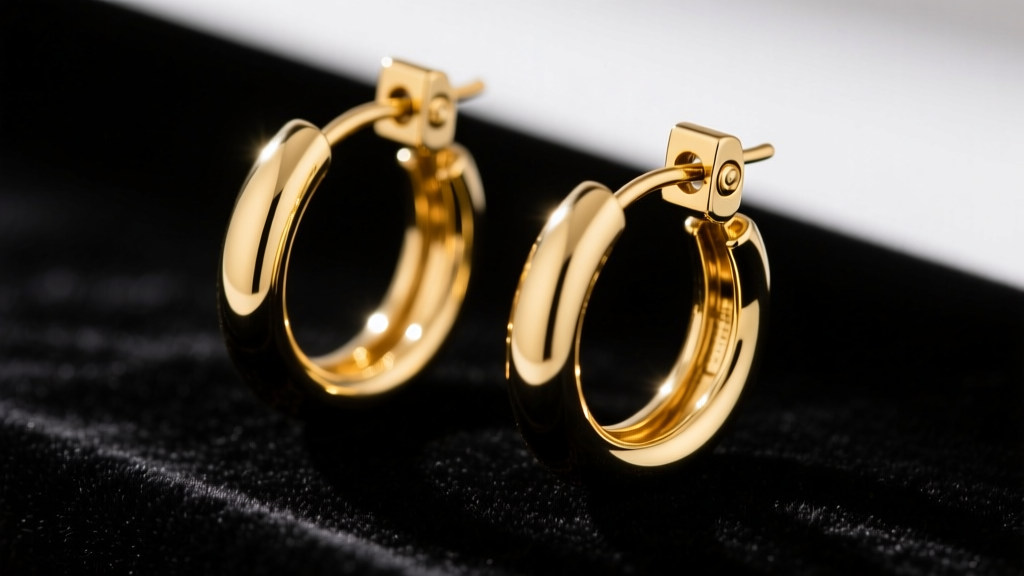
The Reality of Mall Jeweler Hoops: Setting Expectations
When shopping for Kays hoop earrings, understanding the intersection of retail pricing, metallurgical reality, and long-term wearability is crucial. Kay Jewelers, a dominant force in the US retail jewelry market, offers a massive selection of hoops ranging from $50 sterling silver huggies to $3,000+ 14k gold diamond-encrusted statement pieces. However, navigating their inventory requires a discerning eye. Unlike bespoke bench jewelers who prioritize heavy gram weights and premium stone matching, large-scale retailers optimize for visual impact at specific price points. This 2026 buying guide will deconstruct exactly what to look for when evaluating Kays hoop earrings, ensuring you invest in pieces that offer genuine longevity and style.
Decoding Metal Purity: 10K vs. 14K Gold
One of the most common decisions you will face when browsing Kays hoop earrings is choosing between 10-karat and 14-karat gold. While 14k gold (58.3% pure gold) is the traditional standard for fine jewelry in the United States, 10k gold (41.7% pure gold) plays a highly specific and advantageous role in hoop earring manufacturing.
The Durability Factor
Because pure gold is inherently soft, alloys are added to increase hardness. 10k gold contains a higher percentage of strengthening alloys like zinc, copper, and silver. For thin wire hoops (typically 1.5mm to 2.0mm in thickness) or large, lightweight hollow hoops, 10k gold is actually the superior functional choice for daily wear. It is significantly more resistant to warping, bending, and losing its circular tension than 14k gold. According to the FTC Jewelry Guides, any gold alloy below 10k cannot be legally marked or sold as solid gold in the US, making 10k the absolute baseline for durability-focused budget hoops. If you are buying a thin, continuous wire hoop that you plan to sleep in or wear to the gym, 10k will hold its shape far better over a decade of use.
| Metal Type | Gold Purity | Durability | Best Use Case | Average Price Range |
|---|---|---|---|---|
| Sterling Silver (925) | 0% (92.5% Silver) | Low (Tarnishes, bends easily) | Occasional wear, trendy styles | $40 - $150 |
| 10K Yellow/White Gold | 41.7% | High (Very rigid) | Thin wire hoops, active daily wear | $120 - $350 |
| 14K Yellow/White Gold | 58.3% | Medium (Rich color, softer) | Huggies, diamond-encrusted hoops | $250 - $1,200+ |
Diamond Clarity Expectations: Navigating I1-I3 Grades
Kay Jewelers frequently utilizes I1 to I2 (Included) clarity diamonds in their mid-tier diamond hoop collections. In the context of a solitaire engagement ring, I1 clarity means inclusions are obvious under 10x magnification and often visible to the naked eye. However, applying center-stone grading standards to hoop earrings is a fundamental mistake.
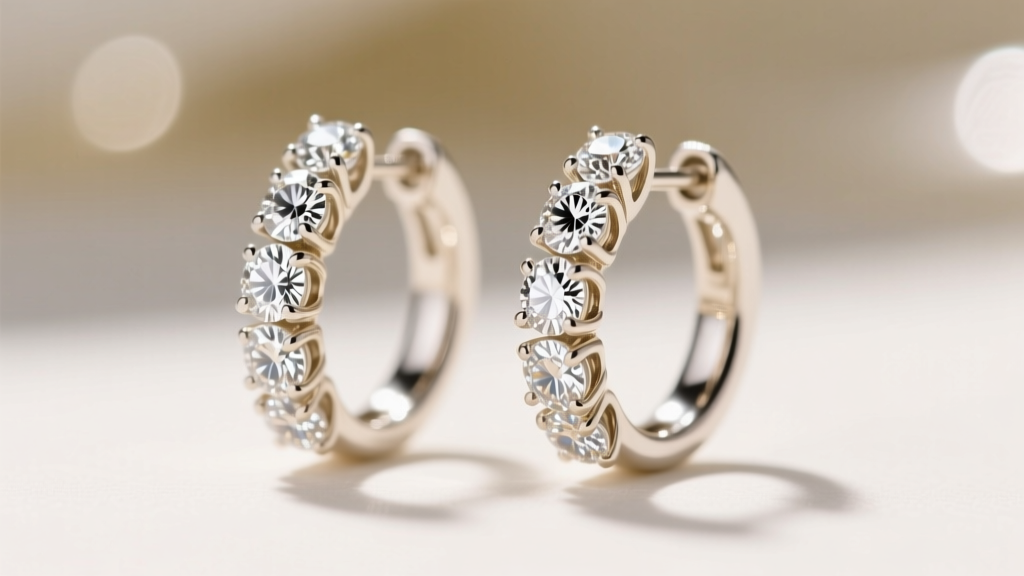
The "Hoop Distance" Rule
For melee diamonds (stones under 0.10 carats each) set in a moving hoop earring, the GIA Diamond Clarity Scale becomes far less critical to the naked eye. The "Hoop Distance Rule" dictates that because earrings are viewed from a conversational distance of 2 to 3 feet away, and are constantly in motion, the light return (sparkle) effectively masks I1 inclusions. When evaluating Kays diamond hoops, prioritize total carat weight (TW) and the quality of the shared-prong setting over flawless clarity. Ensure the prongs are flush against the girdle of the diamond so they do not catch on hair or clothing, which is a common failure mode in mass-produced diamond hoops.
Clasp Mechanics: What to Test In-Store
The clasp is the single most frequent point of failure on any hoop earring. When trying on Kays hoop earrings in a brick-and-mortar location, you must physically test the tension and alignment of the closure mechanism. Do not rely solely on visual inspection.
- Hinged Snap (Omega Back): Common on huggies and small-to-medium hoops (10mm - 25mm). The post should click into the groove with a firm, audible snap. If you have to forcefully squeeze the hoop to make it close, the post is misaligned and will eventually bend or snap off.
- Latch-Back (Saddle): Used on larger, heavier hoops (30mm+). The thin wire post passes through the ear and hooks into a saddle-shaped latch. Check the thickness of the wire; if it is thinner than 18-gauge (1.0mm), the weight of a large gold hoop will cause the wire to pull downward, stretching the earlobe piercing over time.
- Continuous Wire: A seamless loop where the thin wire feeds directly into the hollow tubing of the hoop. These offer the cleanest aesthetic but are prone to bending if handled roughly during insertion.
Sizing and Face Shape Geometry
Selecting the correct millimeter diameter is just as important as the metal quality. Kay typically categorizes hoops into huggies (10mm-15mm), small (16mm-25mm), medium (26mm-40mm), and large (41mm+).

For round or square face shapes, elongated drop hoops or medium-sized hoops (30mm) help create vertical symmetry. Conversely, those with oblong or rectangular face shapes should opt for wider, shorter huggies or small hoops (15mm-20mm) to add horizontal balance without dragging the facial features downward. Always measure the clearance behind the earlobe; a thick 20mm huggie with a tight inner diameter will pinch the ear and cause discomfort within hours.
Maintenance and Ultrasonic Cleaning Warnings
A critical aspect of owning diamond or gemstone hoop earrings from large retailers is understanding proper maintenance. Many Kay diamond hoops feature fracture-filled diamonds or tension-set stones. Placing these earrings into a home ultrasonic cleaner can cause the high-frequency vibrations to shatter treated stones or loosen the adhesive used in lower-tier settings. Always clean your hoops using a soft-bristled baby toothbrush, warm water, and a mild, ammonia-free dish soap. Dry them thoroughly with a microfiber cloth to prevent water spots on white gold alloys, which can dull the rhodium plating over time.
Expert Tip: If you purchase 14k white gold hoops from Kay, be aware that the bright white color is achieved through rhodium plating. Depending on your skin's pH and friction from daily wear, the plating will wear off in 6 to 18 months, revealing the naturally yellowish undertone of white gold. Budget for a $30-$50 professional re-plating service every year to maintain that brilliant white finish.
Final Verdict: Are Kays Hoop Earrings Worth It?
Kays hoop earrings offer undeniable convenience, accessible financing options, and a vast array of styles that cater to immediate gifting needs. To get the best value in 2026, focus your budget on structural integrity: opt for 10k gold if you prioritize thin, bend-resistant daily hoops, and accept I1-I2 diamond clarity in melee settings where it is visually imperceptible. By rigorously testing the clasp tension in-store and understanding the maintenance requirements of white gold and diamond settings, you can confidently select a pair of hoops that will remain a staple in your jewelry rotation for years to come.


