Goldfish Earrings: A Beginner's Guide to Whimsical Jewelry
Discover how to choose, style, and care for whimsical goldfish earrings. Our beginner guide covers materials, weights, and styling tips for all face shapes.

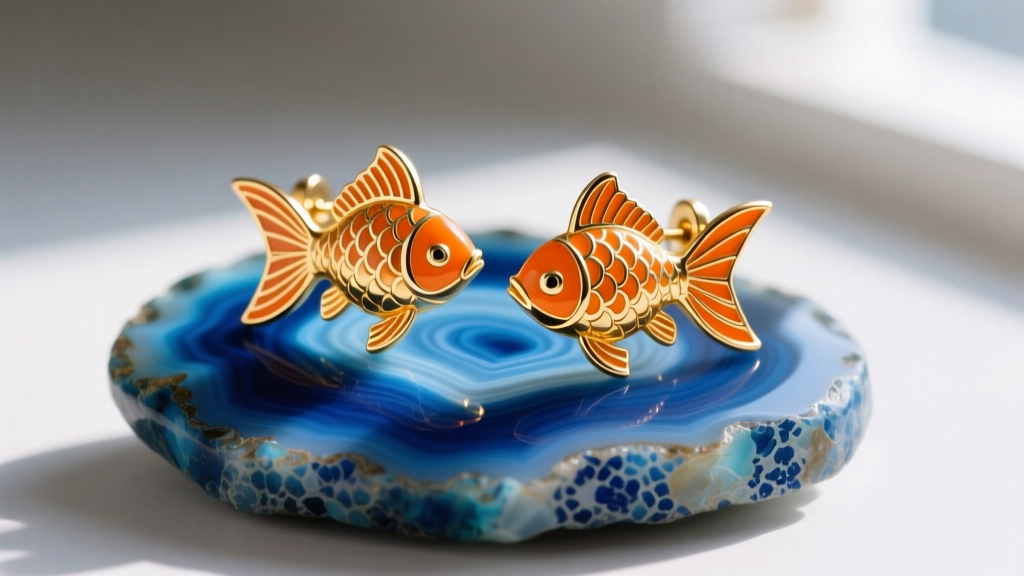
The Appeal of the Goldfish Motif in Modern Jewelry
In the evolving landscape of 2026 jewelry trends, hyper-specific, nature-inspired motifs have firmly taken root, and the goldfish is a standout favorite. Bridging the gap between playful novelty and elegant artistry, goldfish earrings offer a unique way to express personality. Historically, the goldfish (and its close relative, the koi) symbolizes prosperity, perseverance, and harmony in various Eastern cultures. When translated into jewelry, these motifs range from delicate, minimalist gold outlines to vibrant, gem-encrusted statement pieces. For beginners stepping into the world of motif jewelry, understanding the nuances of materials, weight distribution, and styling is essential to ensure your earrings are both beautiful and comfortable.
"The goldfish motif in jewelry is more than a whimsical choice; it is a nod to historical symbols of luck and fluidity, allowing the wearer to carry a talisman of perseverance in a distinctly modern, wearable format."
Decoding Materials: Enamel, Resin, and Metal Alloys
The visual impact of goldfish earrings relies heavily on the materials used to capture their vibrant scales and flowing fins. As a beginner, you will primarily encounter three material categories, each with distinct pros, cons, and price points.
Vitreous Enamel vs. Cold Enamel
Vitreous Enamel: This is the traditional, high-end method where powdered glass is fused to a metal base at extreme temperatures (around 1,400°F). The result is a brilliant, scratch-resistant, and permanent color that will never fade. Vitreous enamel goldfish earrings are typically set in 14k or 18k gold and command premium prices ($150–$400+).
Cold Enamel (Epoxy Resin): Often found in accessible, fashion-forward jewelry, cold enamel is essentially a pigmented resin poured into metal recesses and cured at room temperature. While it allows for intricate, translucent fin details and vibrant gradients, it is susceptible to UV yellowing over time and can chip if dropped on hard surfaces. These pieces usually range from $25 to $80.
Base Metals and Hypoallergenic Requirements
The post and backing of your earrings are just as critical as the decorative front. According to the American Academy of Dermatology (AAD), nickel allergy is one of the most common causes of contact dermatitis. Always verify the metal grade of the earring post:
- Surgical Stainless Steel (316L): A budget-friendly option, though it contains trace amounts of nickel. Best for fully healed, non-sensitive lobes.
- 925 Sterling Silver: A reliable, hypoallergenic standard for standard lobe piercings, though it requires regular polishing to prevent oxidation (tarnish).
- Implant-Grade Titanium (ASTM F-136): The gold standard for sensitive ears and fresh piercings. If you are buying goldfish dangles for a newly healed cartilage piercing, ensure the post is solid titanium.
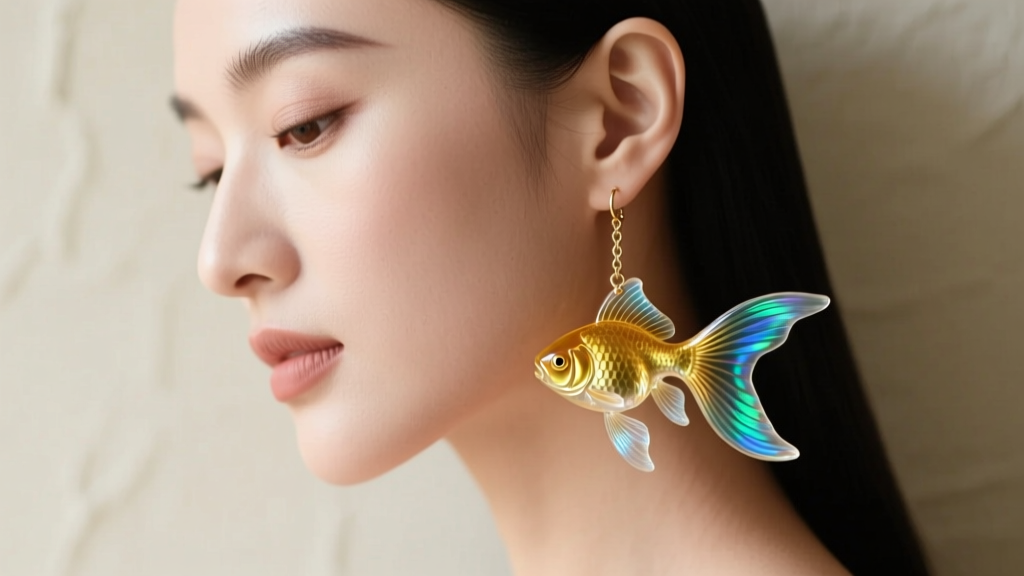
The Physics of Dangle Earrings: Weight, Gauge, and Piercing Health
One of the most common mistakes beginners make with novelty dangle earrings is ignoring the physics of weight distribution. Goldfish motifs, especially those featuring wide, flared tails or gemstone accents, can become front-heavy. This leads to the dreaded "cheese-cutter effect," where the thin wire of the earring slowly slices downward through the earlobe tissue.
Understanding Gauge Sizes
The Association of Professional Piercers (APP) emphasizes that matching your jewelry gauge to your piercing is vital for tissue health. Standard earlobe piercings are typically done at 20-gauge (0.81mm) or 18-gauge (1.02mm). Cartilage piercings (like the helix or conch) are usually 16-gauge (1.29mm). If you are wearing a heavy goldfish dangle, opt for an 18-gauge or 16-gauge hook or post. The slightly thicker metal provides a broader surface area inside the fistula (the piercing channel), distributing the weight more evenly and preventing tissue migration.
Material & Price Comparison Matrix
Use this quick-reference table to determine which type of goldfish earring aligns with your budget, lifestyle, and sensitivity needs.
| Material / Style | Estimated Weight | Durability & Risks | Price Range | Best For |
|---|---|---|---|---|
| Translucent Resin Dangles | Very Light (1-3g) | Prone to UV yellowing; lightweight | $15 - $45 | Daily wear, sensitive/heavy lobes |
| Sterling Silver + Cold Enamel | Medium (3-6g) | Enamel may chip; silver may tarnish | $40 - $90 | Occasional wear, office styling |
| 14k Gold Vermeil Studs | Light (2-4g) | Gold plating wears off over time | $60 - $120 | Everyday minimalists |
| Solid 14k Gold + Vitreous Enamel | Medium-Heavy (5-10g) | Highly durable; heirloom quality | $250 - $600+ | Fine jewelry collectors, gifts |
Styling Whimsical Motifs for Your Face Shape
Because goldfish earrings often feature organic, asymmetrical shapes (like a sweeping tail or an arched body), they can be strategically used to balance your facial proportions.
- Round Faces: Opt for elongated, vertical goldfish dangles where the fish is positioned swimming downward. The vertical line draws the eye down, creating an illusion of length and contouring the jawline.
- Square Faces: Look for goldfish huggies or curved drop earrings where the fish forms a circular or teardrop shape. The soft, curved lines of the jewelry will contrast beautifully with a strong, angular jaw.
- Heart-Shaped Faces: Choose goldfish studs or small, wide-set dangles. Avoid excessively long, heavy drops that might over-emphasize a narrow chin.
- Oval Faces: You have the versatility to pull off almost any style, from oversized, avant-garde goldfish ear cuffs that wrap around the helix to delicate, minimalist gold wire outlines.
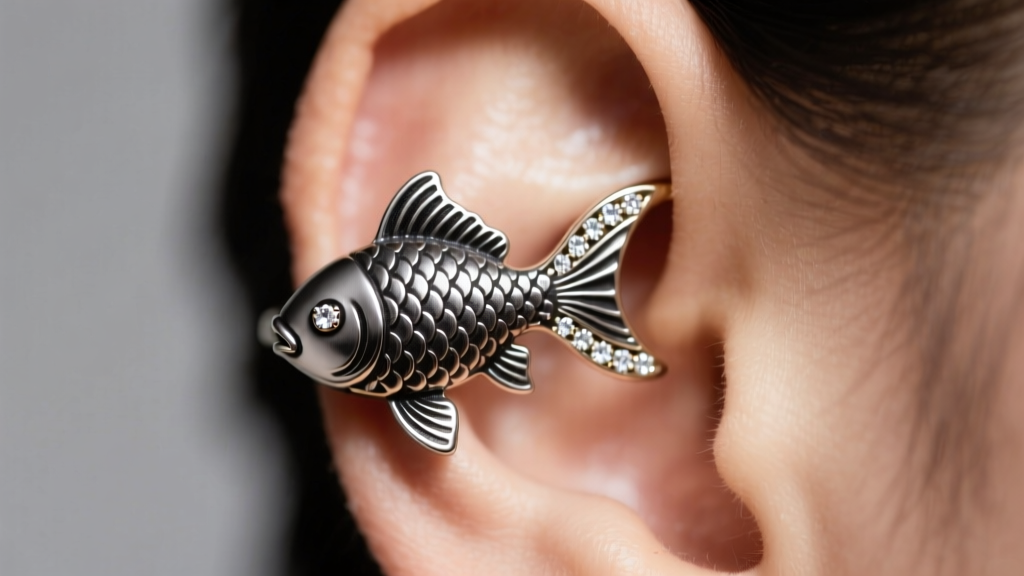
Pro-Troubleshooting: Preventing Earlobe Droop
If you have fallen in love with a pair of heavy, solid-metal goldfish dangles but find that they pull your earlobes forward awkwardly, you do not have to sacrifice style for comfort. Here are three professional troubleshooting methods:
- Silicone O-Rings and Stoppers: Replace standard butterfly backs with flat, wide silicone stoppers. These provide a wider base of support against the back of the earlobe, acting as a shock absorber for heavy fronts.
- Earring Support Patches: These are discreet, invisible adhesive patches (often made of medical-grade hydrocolloid) that stick to the back of your earlobe. You push the earring post through the patch, which reinforces the tissue and prevents the "droop" caused by gravity.
- The Ear-Wire Conversion: If a heavy stud is pulling your lobe, take it to a local bench jeweler. For a small fee ($20–$40), they can solder a French wire or lever-back hook onto the motif, converting it to a dangle. This shifts the center of gravity and allows the earring to swing freely rather than pulling statically on a single point.
Long-Term Care and Maintenance
Proper care ensures your whimsical jewelry remains vibrant. According to jewelry care guidelines outlined by the Gemological Institute of America (GIA), ultrasonic cleaners are fantastic for bare metals and diamonds but are strictly prohibited for enamel and resin. The high-frequency vibrations can shatter vitreous enamel or cause microscopic fractures in cold resin.
Instead, clean your goldfish earrings using a few drops of mild, phosphate-free dish soap and lukewarm water. Gently agitate the water, use a baby-hair toothbrush to lightly sweep the crevices around the fins, and pat dry with a microfiber cloth. Store resin pieces in a dark jewelry box away from direct sunlight to prevent UV degradation, and keep enamel pieces separated in soft pouches to prevent the metal hardware from scratching the glass-like enamel surface.
By understanding the materials, respecting the physics of your piercings, and styling intentionally, goldfish earrings become more than just a passing trend—they become a cherished, meaningful staple in your jewelry wardrobe.


