Green Cluster Earrings: A Complete Beginner's Guide
Discover how to choose, style, and care for green cluster earrings. Our beginner-friendly guide covers gemstones, metals, and face-shape matching.

The Rise of Green Cluster Earrings
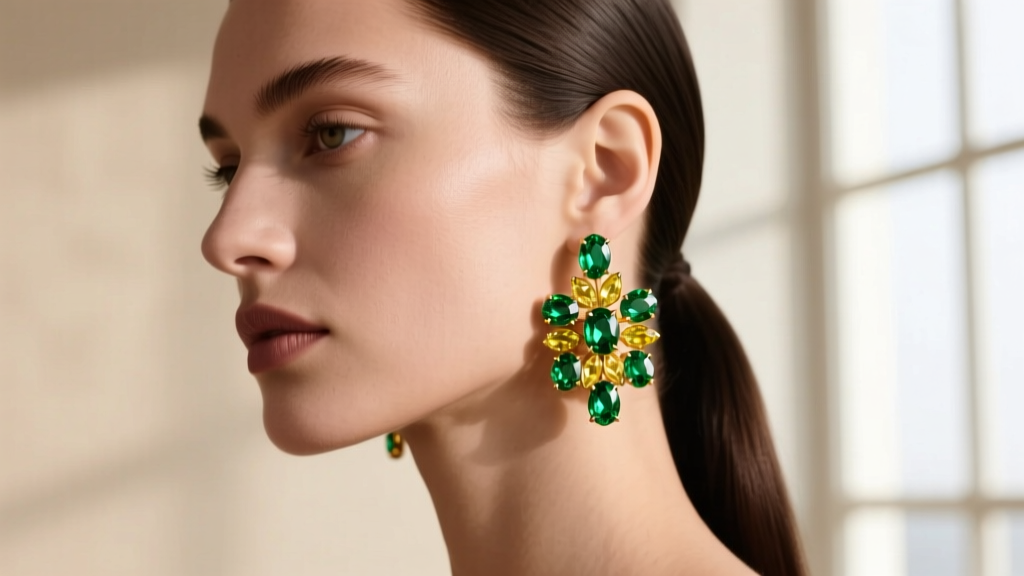
If you are looking to add a vibrant splash of color to your jewelry wardrobe without committing to a single, massive gemstone, green cluster earrings are the perfect entry point. Unlike solitaire studs that rely on one large stone, cluster earrings group multiple smaller gemstones tightly together. This technique creates the illusion of a larger, more intricate piece while offering superior light reflection and a lower overall price point. As we navigate the jewelry trends of 2026, botanical and geometric cluster designs in various shades of green have become a staple for both everyday wear and special occasions.
For beginners, the sheer variety of green gemstones, metal pairings, and setting styles can be overwhelming. This comprehensive guide breaks down everything you need to know about selecting, styling, and maintaining your green cluster earrings, ensuring you make an informed and confident purchase.
Decoding the Gemstones: Which Green is Right for You?
Not all green gemstones are created equal. The durability, color saturation, and price of your cluster earrings will depend heavily on the specific stones used. According to the GIA Gem Encyclopedia, understanding the Mohs hardness scale is critical when choosing earrings for daily wear.
| Gemstone | Mohs Hardness | Color Profile | Avg. Price Range (per pair) | Daily Wear Suitability |
|---|---|---|---|---|
| Emerald | 7.5 - 8.0 | Deep, vivid bluish-green | $800 - $5,000+ | Moderate (brittle, requires care) |
| Tsavorite Garnet | 7.0 - 7.5 | Bright, electric green | $400 - $2,500 | High (excellent durability) |
| Green Tourmaline | 7.0 - 7.5 | Forest to olive green | $200 - $1,200 | High (resists chipping) |
| Peridot | 6.5 - 7.0 | Yellowish, lime green | $80 - $400 | Moderate (prone to scratching) |
Expert Insight: In 2026, lab-grown emeralds have surged in popularity for cluster settings. They offer the exact same chemical and optical properties as mined emeralds but are free of the natural inclusions (known as 'jardin') that make natural emeralds prone to cracking in tight cluster prongs.
Metal Pairings: Enhancing the Green Spectrum
The base metal of your earrings acts as a frame for the gemstones. Choosing the right metal can dramatically alter the visual impact of the green stones.
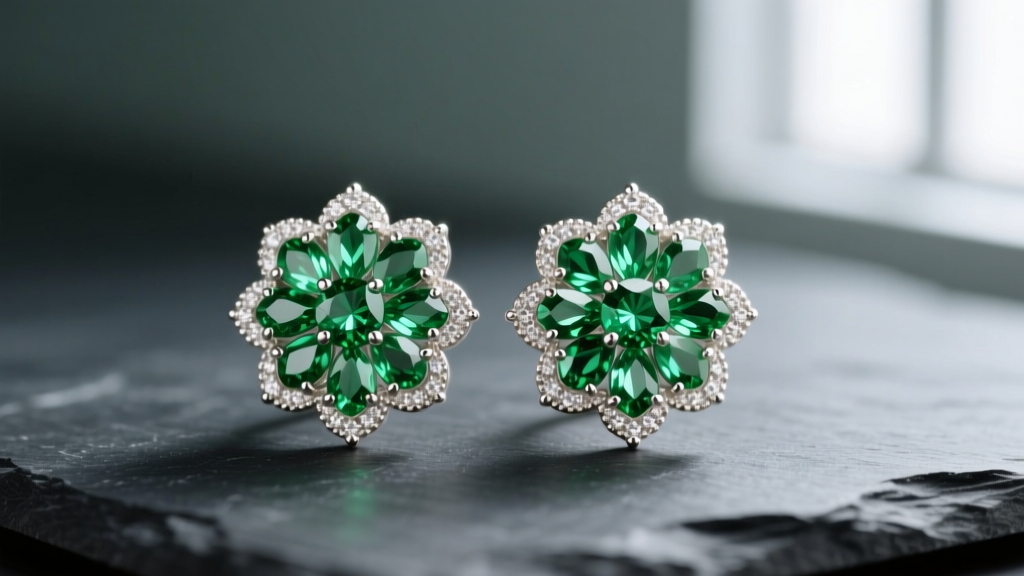
- Yellow Gold (14k or 18k): The warm undertones of yellow gold beautifully complement the yellowish-green hues of peridot and the deep forest tones of green tourmaline. It creates a vintage, romantic aesthetic.
- White Gold & Platinum: These cool-toned metals provide a stark, high-contrast backdrop that makes the electric, cool greens of tsavorite and emerald appear more vivid and icy. Note that white gold requires periodic rhodium plating to maintain its bright white finish.
- Rose Gold: An unconventional but striking choice. The pinkish-copper tones of rose gold create a complementary color contrast with green, making the gemstones visually 'pop' in a highly modern, fashion-forward way.
Face Shape and Styling Dynamics
Cluster earrings come in various silhouettes, from tight, round floral studs to elongated, cascading drop clusters. Matching the silhouette to your face shape ensures a flattering look.
Round and Oval Faces
If you have a round face, avoid perfectly circular, wide cluster studs, as they can emphasize facial width. Instead, opt for elongated drop cluster earrings or marquise-shaped clusters that draw the eye downward, creating a lengthening illusion.
Square and Heart-Shaped Faces
Angular faces benefit from softening elements. Rounded, floral-inspired green cluster earrings or halo-style clusters with curved edges help balance strong jawlines and wide foreheads, adding a touch of softness to your overall profile.
Piercing Anatomy: Lobe vs. Cartilage Considerations
When buying green cluster earrings, you must consider where they will be worn. The anatomy of your piercing dictates the acceptable weight and gauge (thickness) of the earring post.
The Weight Rule: A standard earlobe can comfortably support up to 4 to 5 grams of jewelry for extended periods. Cluster earrings, due to their multiple stones and metal frameworks, can easily exceed this. If a cluster earring weighs more than 6 grams, it will cause the lobe to droop over time, leading to permanent stretching.
For cartilage piercings (such as the helix or flat), weight limits are even stricter. According to guidelines from the Association of Professional Piercers (APP), heavy jewelry in cartilage can cause migration or rejection. If you want a cluster earring for a cartilage piercing, ensure it is specifically designed as a lightweight 'huggie' or a miniature stud weighing under 2.5 grams.
Gauge Sizing: Standard lobe piercings are typically 20G (0.8mm) or 18G (1.0mm). Cartilage piercings are usually 16G (1.2mm) or 18G. Always check the post thickness of the cluster earrings before purchasing to ensure they will fit your specific piercing without forcing or tearing the tissue.
Identifying Quality: Settings and Backings
Because cluster earrings feature numerous small stones, the quality of the setting is paramount. Look for shared prong settings, where one prong holds two adjacent stones. This minimizes the metal visible from the top, maximizing the gemstone surface area and light return. However, be aware that shared prongs can occasionally snag on fine hair or knitwear.
For the earring backing, avoid standard friction 'butterfly' backs for heavy cluster drops. The friction grip is often insufficient to hold the weight, causing the earring to slide down the post and droop. Instead, look for La Pousette (screw) backs or secure silicone stoppers that lock the heavy cluster firmly against the earlobe.
Care and Maintenance for Cluster Settings
The intricate nature of cluster settings makes them magnets for lotion, sebum, and dust, which can quickly dull the brilliance of green gemstones. Proper cleaning is essential.
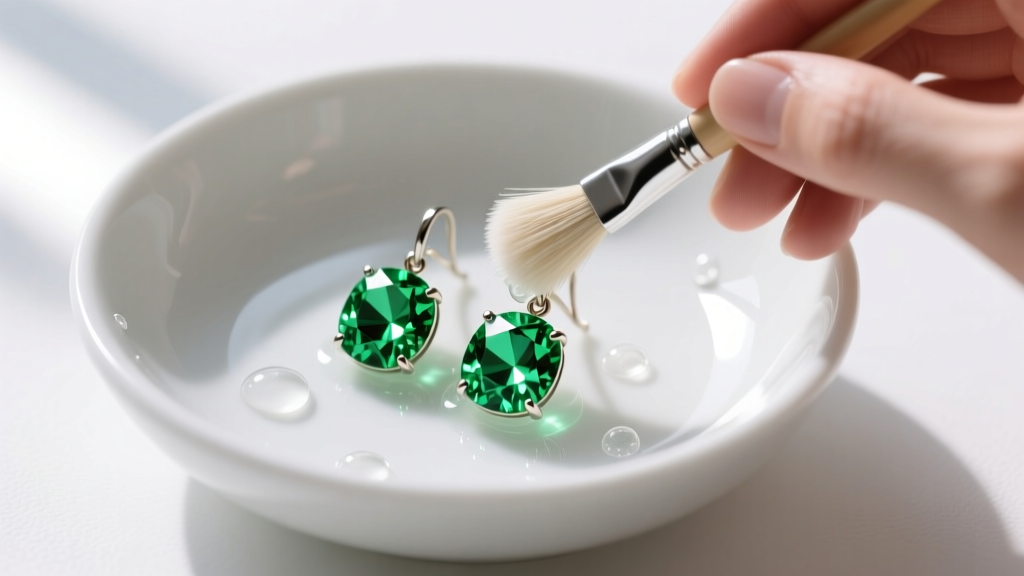
- The Soak: Mix a few drops of mild, phosphate-free dish soap in a bowl of lukewarm water. Let the earrings soak for 10 to 15 minutes to loosen debris trapped beneath the cluster.
- The Brush: Using a clean, ultra-soft baby toothbrush, gently brush around the prongs and the underside of the setting. Never use hard bristles, as they can scratch softer stones like peridot or the gold setting itself.
- The Rinse & Dry: Rinse thoroughly under lukewarm running water (ensure the drain is closed!). Pat dry with a lint-free microfiber cloth. Avoid paper towels, which can leave microscopic fibers caught in the prongs.
Critical Warning: Never use ultrasonic cleaners on emerald cluster earrings. Emeralds are almost universally treated with oils or resins to improve clarity, and the high-frequency vibrations of an ultrasonic cleaner will strip these treatments, leaving the stones cloudy and fractured. Stick to manual cleaning for all green cluster varieties to be safe.
Final Thoughts
Green cluster earrings offer a brilliant intersection of affordability, intricate design, and vibrant color. By understanding the specific durability of your chosen gemstone, matching the metal to the stone's undertone, and respecting the weight limits of your piercings, you can confidently select a pair that will remain a cherished staple in your collection for years to come. Whether you choose the electric sparkle of tsavorite or the vintage charm of peridot in yellow gold, the right cluster earring is a masterclass in wearable art.


