Sterling vs Argentium: Finding the Best Silver Earrings Stars
Discover the metallurgical differences between sterling, Argentium, and fine silver earrings stars. Learn which alloy prevents tarnish and bending.

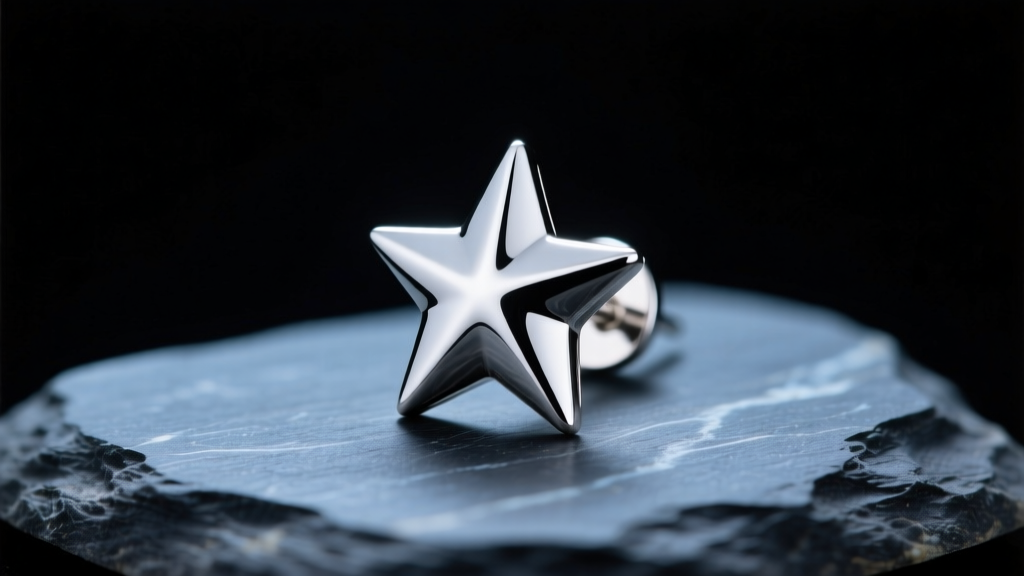
The Metallurgy of Star-Shaped Silver Jewelry
When shopping for celestial motifs, the structural demands of sharp points and geometric angles require specific metallurgical properties. Star-shaped earrings are a timeless staple, but not all "silver" is created equal. The sharp tips of a star design are highly susceptible to bending, snapping, or rapid tarnishing if the wrong alloy is used. In 2026, jewelry buyers are increasingly looking past the generic "925" stamp to understand the exact elemental composition of their accessories. Choosing the best silver earrings stars requires a deep dive into alloy hardness, tarnish resistance, and structural integrity.
The primary challenge with star-shaped jewelry is the concentration of physical stress at the vertices. Unlike smooth hoops or simple dome studs, a five-pointed star features acute angles that act as leverage points when caught on hair or clothing. If the metal lacks adequate tensile strength and work-hardening capabilities, the points will permanently deform. Furthermore, the electrochemical properties of the alloy dictate how quickly the earrings will develop silver sulfide (tarnish) when exposed to the sulfur compounds naturally present in human skin and the atmosphere.
Sterling Silver (925) vs. Argentium Silver: The Core Comparison
For decades, Sterling Silver has been the industry standard. Composed of 92.5% pure silver and 7.5% copper, it offers a reliable balance of malleability and strength. However, the copper content is precisely what makes sterling silver prone to rapid oxidation and blackening. Enter Argentium Silver, a modern metallurgical marvel that replaces a portion of the copper with germanium. According to data from the Silver Institute, the addition of germanium fundamentally alters the oxidation process, creating a transparent, protective layer of germanium dioxide that drastically slows tarnish formation.
| Property | Sterling Silver (925) | Argentium Silver (935/960) | Fine Silver (999) | Silver-Plated Brass |
|---|---|---|---|---|
| Composition | 92.5% Ag, 7.5% Cu | 93.5%+ Ag, Cu, Germanium | 99.9% Ag | Brass core, Ag flash |
| Tarnish Resistance | Low (requires polishing) | High (Germanium oxide layer) | High | Very Low (wears off) |
| Hardness (Vickers) | ~65-75 HV | ~70-85 HV | ~25 HV | Depends on base metal |
| Star Point Durability | Good (holds edge well) | Excellent (superior spring-back) | Poor (bends easily) | Poor (plating chips at edges) |
| Avg. Price Range | $30 - $80 | $60 - $150 | $40 - $100 | $10 - $25 |
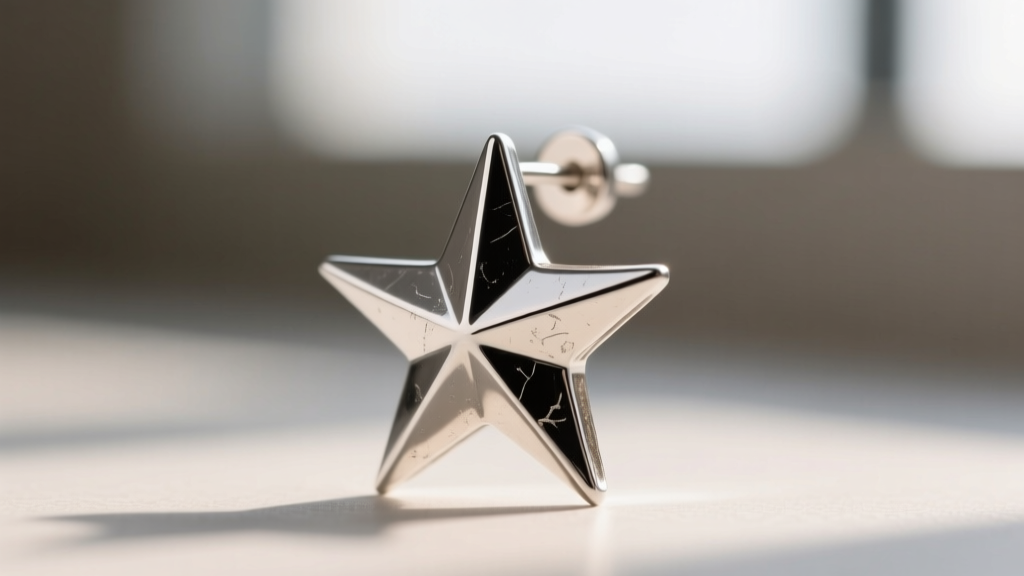
Why Fine Silver and Plated Alloys Fail the "Star Test"
While Fine Silver (99.9% pure) is highly prized for its brilliant white luster and hypoallergenic properties, it is a structural liability for geometric designs. With a Vickers hardness of roughly 25 HV, fine silver is exceptionally soft. If a jeweler crafts a star earring from fine silver, the delicate points will bend the very first time they are snagged on a sweater or brushed against during sleep. Fine silver is best reserved for bezel settings or smooth, domed shapes where structural rigidity is not required.
The Plating Peel-Off Phenomenon
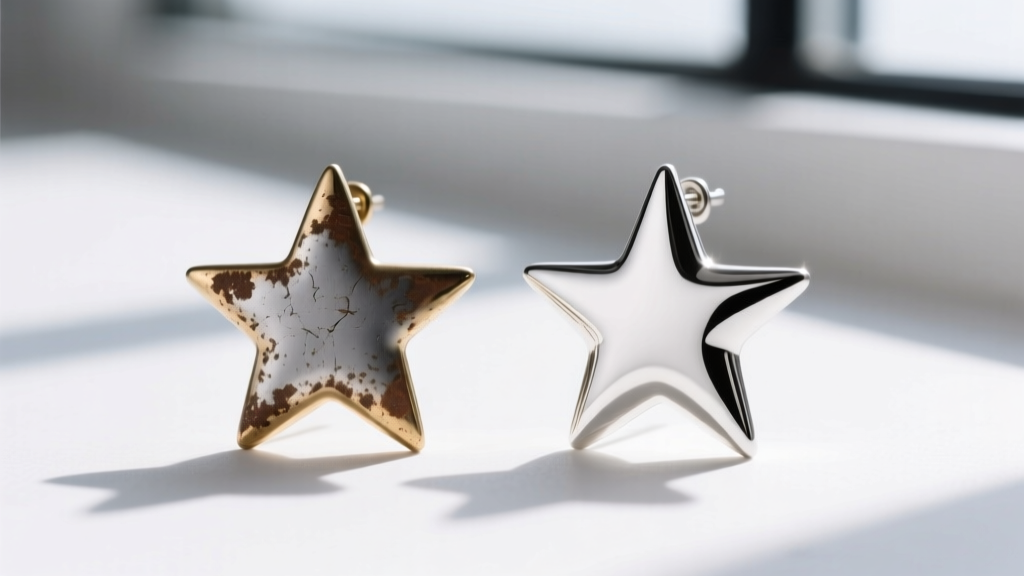
Silver-plated earrings present an even more severe failure mode, rooted in the physics of electroplating. According to Faraday's laws of electrolysis, electrical current density concentrates on the sharp edges and points of a cathode during the plating process. Paradoxically, while this might suggest a thicker buildup, the rapid deposition at acute angles often results in a brittle, porous, and poorly adhered micro-structure. Consequently, the silver flash on the tips of cheap star earrings wears away rapidly, exposing the underlying brass or copper core, which then turns the wearer's skin green and causes contact dermatitis.
Gauge, Thickness, and Structural Integrity
Beyond the alloy itself, the physical dimensions of the earring dictate its lifespan. For the post that pierces the ear, a 20-gauge (0.81mm) wire is the standard for lobe piercings, while 18-gauge (1.02mm) or 16-gauge (1.29mm) is preferred for cartilage to prevent the "cheese-cutter effect" where thin wire migrates through the tissue. However, the star face itself requires careful caliper measurements.
A high-quality silver star earring should feature a center thickness of at least 1.2mm, tapering to no less than 0.6mm at the extreme tips. Anything thinner than 0.6mm at the vertices, even in work-hardened Argentium silver, risks snapping under lateral torque. When evaluating pieces from artisans or commercial brands, always check the product specifications for metal weight and thickness. Lightweight, hollow-stamped star earrings (often made via electroforming) are incredibly fragile and will crush if accidentally stepped on or squeezed in a jewelry box.
Care and Maintenance for Intricate Silver Alloys
Maintaining the sharp, reflective facets of silver star earrings requires alloy-specific care routines. The Gemological Institute of America (GIA) notes that abrasive polishing compounds can actually round off the sharp geometric edges of star points over time, dulling the design's crisp silhouette.
- For Sterling Silver (925): Use a liquid silver dip (thiourea-based) for heavy tarnish, followed by a gentle rinse. For routine maintenance, use a treated microfiber polishing cloth. Avoid rubbing the sharp points aggressively to prevent altering their angle.
- For Argentium Silver: Because it resists tarnish, Argentium rarely needs chemical dips. Simply wash with warm water and a drop of mild, phosphate-free dish soap. Dry with a lint-free cloth. The germanium oxide layer is self-repairing, so avoid using harsh abrasive pastes that strip this protective barrier.
- Storage: Store star earrings in individual anti-tarnish flannel pouches. The sharp points of star earrings can easily scratch the surface of adjacent gemstones or softer metals like high-karat gold if thrown loosely into a communal jewelry box.
Final Verdict: Which Alloy Should You Buy?
If you are investing in a pair of everyday silver earrings stars, Argentium Silver is the undisputed champion for modern wearers. Its superior spring-back ensures that if a star point is slightly bent, it can be easily coaxed back into perfect alignment without suffering from metal fatigue or cracking. Its inherent tarnish resistance means the deep, polished facets of the star will remain brilliant for years with minimal upkeep. Sterling silver remains a highly respectable and more budget-friendly alternative, provided you are willing to commit to a regular polishing routine. Avoid fine silver and silver-plated options entirely for this specific geometric shape, as their metallurgical limitations guarantee structural and cosmetic failure.


