Earring With Chain Buying Guide: Styles, Fit & Care
Discover how to choose the perfect earring with chain. Our buying guide covers gauge sizes, chain link profiles, metal grades, and piercing placement.

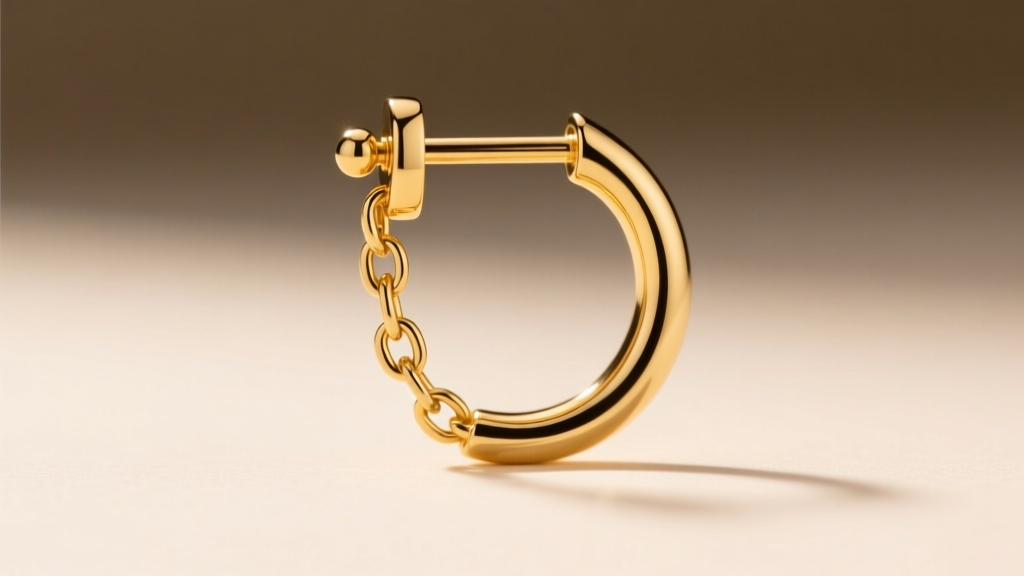
The earring with chain category represents one of the most dynamic intersections of fine jewelry and body modification. Whether you are looking at a delicate threader that pulls through a single lobe piercing, a structured connector bridging a lobe and a helix, or a draped ear cuff that requires no secondary piercing, the mechanics of chain earrings demand a highly specific approach to buying. Unlike standard studs or hoops, an earring with chain introduces variables like tensile strength, friction wear, and multi-point tension. This comprehensive buying guide breaks down the exact metallurgical standards, gauge requirements, and structural failure modes you need to evaluate before making a purchase.
Anatomy of the Earring With Chain
Before evaluating materials, you must identify which structural category of chain earring suits your piercing anatomy. The market is divided into three distinct types:
- Threader Earrings: These feature a rigid post on one end and a chain that feeds entirely through the piercing canal. They rely on friction and gravity, often utilizing a silicone stopper or a tension disc on the back to prevent the 'pendulum effect' where the chain slips out during movement.
- Piercing Connectors (Lobe-to-Cartilage): These require two distinct, fully healed piercings (typically a standard lobe and a helix or forward helix). They consist of two separate posts connected by a fixed or detachable micro-chain. The tension between the two piercings must be perfectly calculated to avoid migration or tearing.
- Draped Ear Cuffs: Ideal for those without multiple piercings, these use a tension-based cuff on the upper cartilage and a standard post on the lobe, with a chain draping across the ear's ridge.
Chain Link Profiles: Durability vs. Snag Risks
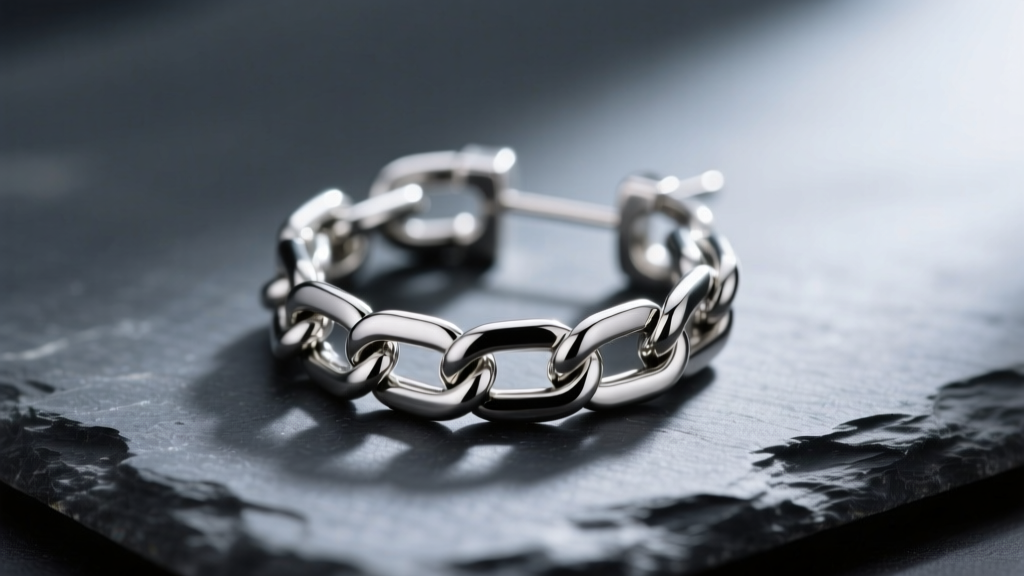
The link profile of your earring with chain dictates both its aesthetic and its survivability. Micro-chains (under 2mm wide) are highly susceptible to hair entanglement, which is the leading cause of chain snapping. Below is a comparative analysis of the most common link profiles used in ear chains.
| Link Profile | Snag Risk | Tensile Durability | Best Application |
|---|---|---|---|
| Cable | High | Low (if under 20G) | Threaders (low tension) |
| Box | Low | High | Lobe-to-helix connectors |
| Curb | Medium | High | Heavy drape cuffs |
| Snake | Zero | Medium (kinks easily) | Fluid, liquid-metal threaders |
Expert Insight: If you have long or textured hair, avoid cable chains thinner than 22-gauge. The gaps between the oval links act as microscopic combs, trapping hair strands that will eventually snap the chain when you turn your head.
Material Grades and Friction Wear
When buying an earring with chain, the metal grade is non-negotiable. Chains experience continuous micro-friction against the skin, hair, and themselves. According to the Association of Professional Piercers (APP), only specific implant-grade materials should be worn in healing or high-friction piercings.
Implant-Grade Titanium (ASTM F136)
Titanium is the gold standard for connector posts and threader wires. It is completely nickel-free, lightweight, and will not tarnish. However, titanium micro-chains are rare because the metal's hardness makes drawing it into tiny links difficult. If you find a titanium earring with chain, expect to pay a premium ($80-$150) for the specialized manufacturing.
Solid Gold (14k and 18k)
Solid gold is the most common material for high-end ear chains. 14k gold offers superior tensile strength compared to 18k due to its higher alloy content (like copper and zinc), making it the better choice for the chain portion. 18k is acceptable for the posts, but an 18k box chain will stretch and deform under the weight of heavy charms.
The Vermeil and Plating Trap
Avoid gold-plated brass or copper chains. The friction of the chain links rubbing together will strip the microscopic layer of gold plating within weeks, exposing the base metal. This not only ruins the aesthetic but can trigger contact dermatitis, a common issue detailed by the American Academy of Dermatology regarding nickel and copper allergies.
Gauge Sizing and Piercing Placement
Gauge refers to the thickness of the metal passing through your piercing. Misunderstanding gauge sizes leads to forced insertions that cause micro-tears in the fistula (the piercing channel).
- 22-Gauge (0.64mm): The standard for threader earrings. It is thin enough to pull through the earlobe smoothly but requires a delicate touch to prevent bending the wire.
- 20-Gauge (0.81mm): Common for lightweight connector chains and ear cuffs. Fits most standard lobe piercings without stretching.
- 18-Gauge (1.02mm) & 16-Gauge (1.29mm): Reserved exclusively for the posts of heavy-duty lobe-to-cartilage connectors. The chain itself may still be 20G to maintain flexibility, but the anchor points must be thicker to support the structural tension.
Measuring for Connectors: Never guess the chain length for a lobe-to-helix connector. Use a flexible tailor's measuring tape. Measure from the center of your lobe piercing to the center of your helix piercing while your ear is in a relaxed state. Standard lengths range from 2.0 inches (tragus connections) to 3.5 inches (upper helix connections). Always add 2mm to your measurement to allow for natural ear movement and swelling.

Fastening Mechanisms and Failure Modes
The clasp is the weakest point of any earring with chain. Manufacturers often cut costs by using inferior clasps on micro-jewelry.
Spring Ring Clasps (Avoid)
Spring rings rely on a tiny internal coil. On micro-chains, these coils are prone to snapping under the sudden tension of a snagged chain. Furthermore, they are incredibly difficult to operate with one hand behind the ear.
Lobster Clasps (Recommended)
Lobster clasps feature a solid internal spring mechanism and a wider opening. A 5mm or 7mm micro-lobster clasp is the most secure option for detachable piercing connectors.
Tension Discs and Silicone O-Rings
For threader earrings, the chain simply pulls through the ear. To secure it, look for designs that include a removable silicone O-ring or a fixed metallic tension disc at the back of the chain. This prevents the earring from sliding out while you sleep or change clothes.
2026 Pricing Tiers and Market Expectations
Understanding the pricing landscape helps you identify counterfeit materials and overpriced fashion jewelry. Here is what you should expect to pay for a quality earring with chain in the current market:
- $25 - $60 (Sterling Silver / Vermeil): Acceptable for occasional wear threaders. Expect tarnishing on silver chains within 6 months if not stored in anti-tarnish pouches.
- $120 - $250 (Solid 14k Gold, No Gems): The sweet spot for everyday wear. You are paying for the labor of laser-welding micro-links and the raw gold weight.
- $300 - $800+ (Designer / Diamond-Set Connectors): Includes brand premiums, hand-set pavé diamonds on the chain links, and custom-fitted lengths.
Maintenance and Entanglement Prevention
To maximize the lifespan of your chain earrings, implement a strict maintenance routine. Never sleep in a connector chain; the lateral pressure of a pillow against the ear will bend the links and stress the piercings. When washing your hair, gather it in a loose clip to prevent shampoo residue from building up in the chain links, which can dull the metal and attract debris. Clean your chains bi-weekly using a soft-bristled baby toothbrush and a mild, phosphate-free dish soap, avoiding harsh ultrasonic cleaners which can shake loose the micro-welds on delicate box and curb links.


