Why Do Guys Wear Earrings? A Value & Material Investment Guide
Discover why guys wear earrings and how to evaluate their true value. Compare material ROI, gauge sizes, and cost-per-wear for men's jewelry.

The Cultural Shift: Why Do Guys Wear Earrings Today?
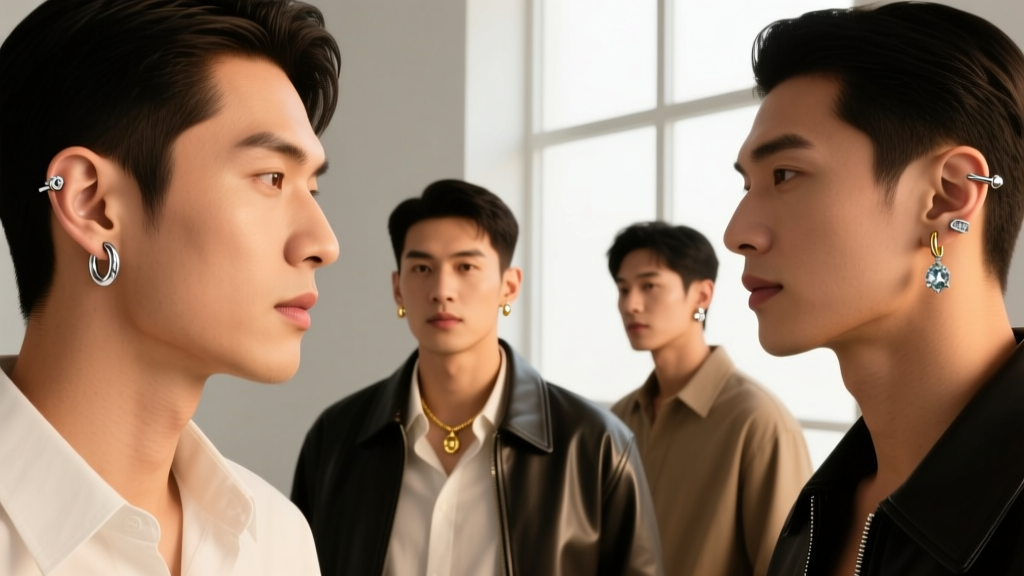
When asking why do guys wear earrings in the modern style landscape, the answer extends far beyond mere aesthetics or historical subculture signifiers. Today, men's ear adornment is an exercise in personal branding, professional image curation, and increasingly, smart asset allocation. The modern man views his jewelry not as disposable fast-fashion accessories, but as permanent fixtures of his daily uniform. This shift from novelty to staple means that evaluating the budget and long-term value of men's earrings is more critical than ever.
In 2026, the 'curated ear' is no longer exclusive to women. Men are actively investing in high-quality cartilage hoops, lobe studs, and threadless ends. However, this surge in popularity has also flooded the market with cheap, mass-produced alternatives that degrade quickly and cause medical complications. Understanding the true return on investment (ROI) of men's earrings requires a deep dive into metallurgy, anatomical gauge sizing, and cost-per-wear metrics.
Material ROI: Assessing the True Cost of Men's Earrings
The single biggest mistake men make when budgeting for earrings is prioritizing the initial price tag over material longevity and biocompatibility. The skin on the earlobe and cartilage is highly reactive, and the wrong metal will result in allergic contact dermatitis, forcing you to discard the jewelry and spend money on medical treatments.
316L Surgical Steel: The False Economy
Often marketed as 'hypoallergenic,' 316L surgical steel contains up to 10% nickel. While the nickel is bound in the alloy, prolonged exposure to sweat and skin oils causes ion release. According to dermatological studies, repeated exposure to nickel-heavy alloys is the leading cause of acquired metal allergies. A pair of steel hoops might cost $15, but if they trigger an infection that ruins your piercing, the actual cost is exponentially higher.
ASTM F136 Implant-Grade Titanium: The Baseline Standard
The Association of Professional Piercers (APP) strictly recommends ASTM F136 implant-grade titanium for all fresh and healing piercings. Titanium is completely nickel-free, highly corrosion-resistant, and lightweight. High-end brands like Anatometal or Industrial Strength offer titanium threaded or threadless ends ranging from $25 to $60. This is the undisputed sweet spot for budget-conscious buyers who refuse to compromise on health and longevity.
Solid 14k and 18k Gold: The Heirloom Investment
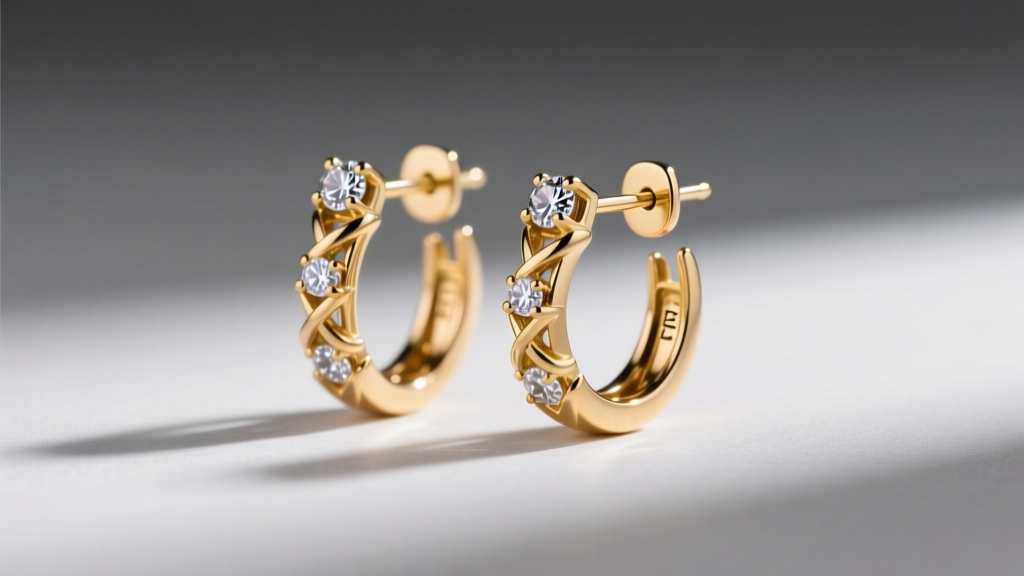
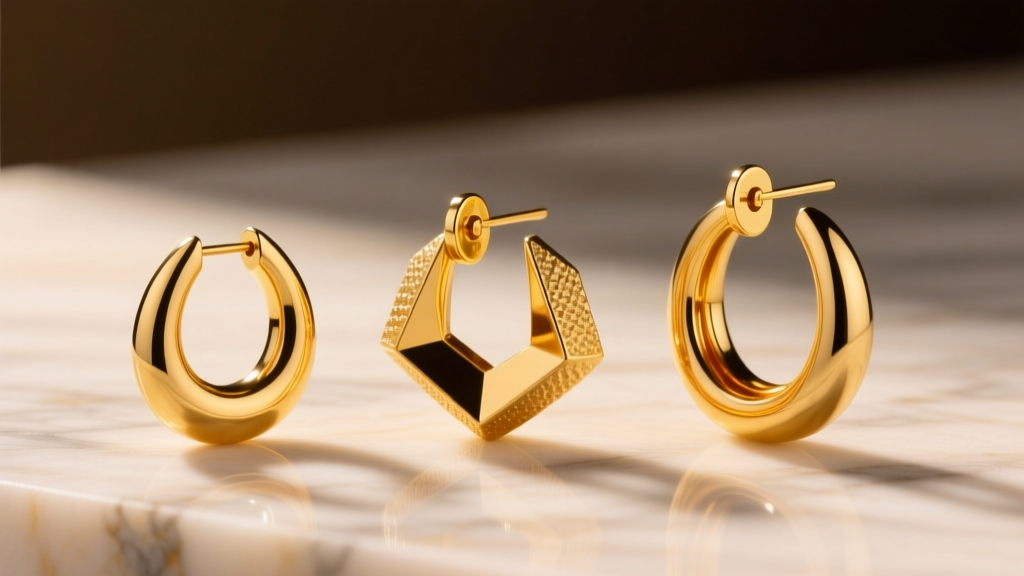
For men seeking luxury and permanence, solid gold is the ultimate value play. Unlike gold-plated or gold-vermeil options—which will inevitably wear down to the base brass or silver core within months—solid gold maintains its structural integrity for decades. According to the Gemological Institute of America (GIA), 14k gold offers the best balance of purity and durability for daily-wear body jewelry. A high-quality 14k gold men's huggie hoop from a brand like BVLA or Maria Tash will cost between $150 and $350, but its lifespan is effectively infinite, driving the cost-per-wear down to pennies over a decade.
The Cost-Per-Wear Matrix: Studs, Hoops, and Tunnels
To truly understand value, we must apply the Cost-Per-Wear (CPW) formula: Initial Cost ÷ Number of Wears = CPW. Men tend to wear their earrings daily, often never taking them out, which drastically lowers the CPW of high-quality pieces compared to occasion-wear jewelry.
| Earring Style | Average Cost (Quality) | Expected Lifespan | Maintenance Needs | Estimated CPW (Daily) |
|---|---|---|---|---|
| 16g Titanium Threadless Stud | $35 - $55 | Decades | Low (routine saline clean) | $0.004 |
| 14k Solid Gold Huggie Hoop | $180 - $300 | Lifetime | Low (polish occasionally) | $0.008 |
| Plated Brass 'Fashion' Hoop | $20 - $40 | 2 - 4 Months | High (tarnish removal) | $0.330 (High Failure) |
| Single Flare Glass Tunnel | $25 - $45 | Years | Medium (oil treatments) | $0.006 |
Pro Tip: Avoid 'gold-plated' or 'stainless steel' clickers for cartilage piercings. The mechanical hinges on cheap clickers harbor bacteria and degrade rapidly when exposed to shower steam. Invest in solid, internally threaded or threadless captive bead rings (CBRs) or seamless segment rings instead.
Gauge Sizing and the Hidden Costs of Improper Fits
A frequently overlooked aspect of budgeting for men's earrings is gauge sizing. The standard jewelry store earring is usually 20-gauge (0.8mm) or 18-gauge (1.0mm). However, professional piercers typically pierce men's lobes at 16-gauge (1.2mm) or 14-gauge (1.6mm). Why does this matter for your wallet?
The 'Cheese-Cutter' Effect
Wearing a thin 20-gauge earring in a 14-gauge piercing creates a high-pressure point. If the earring gets snagged on a towel or a shirt collar, the thin wire acts like a cheese cutter, potentially slicing through the earlobe. Repairing a blown-out or torn earlobe requires minor cosmetic surgery, which can cost anywhere from $500 to $1,500 out-of-pocket. Always verify your piercing gauge and buy jewelry that matches it exactly. 16-gauge is widely considered the optimal standard for men's lobes, providing a masculine, substantial look while ensuring structural safety.
Threadless vs. Internally Threaded
Budgeting also involves considering how the jewelry stays in your ear. Externally threaded jewelry (where the screw is on the post) damages the piercing channel every time it is inserted. Internally threaded and threadless (press-fit) systems are slightly more expensive upfront but protect the fistula (the skin tube of the piercing), saving you from the cost and pain of treating irritation bumps.
Building a Budget-Friendly Curated Ear Project
If you are planning a multi-piercing setup, strategic budgeting is essential. Do not buy all your jewelry at once from a mall kiosk. Instead, adopt a phased investment approach:
- Phase 1: The Foundation (Months 1-6). Focus on the lobes. Purchase two high-quality ASTM F136 titanium threadless ends with a subtle gemstone or matte finish (e.g., black onyx or matte grey titanium). Budget: $80 - $120.
- Phase 2: The Cartilage Anchor (Months 6-12). Add a helix or flat piercing. Opt for a 14k solid gold small hoop or a minimalist gold stud. Because cartilage heals notoriously slowly and is prone to irritation, spending top dollar on biocompatible gold here is non-negotiable. Budget: $150 - $250.
- Phase 3: The Statement Piece (Year 2+). Once your ear is fully healed and settled, introduce a larger, more expensive statement piece, such as an ornate daith clicker or a custom-machined industrial barbell. Budget: $200+.
Final Verdict on Men's Earring Value
Ultimately, the reason men wear earrings today is to project confidence, attention to detail, and individuality. You cannot achieve this if your jewelry is tarnished, causing allergic reactions, or poorly fitted. By shifting your mindset from buying 'accessories' to investing in 'wearable assets,' you ensure that your style remains sharp and your piercings remain healthy. Stick to implant-grade titanium and solid gold, respect your anatomy's gauge requirements, and your earrings will pay dividends in style and longevity for the rest of your life.