How to Choose, Authenticate, and Style Drop Jade Earrings
Learn how to authenticate, choose the right gauge, and style drop jade earrings for your face shape with our step-by-step expert guide.

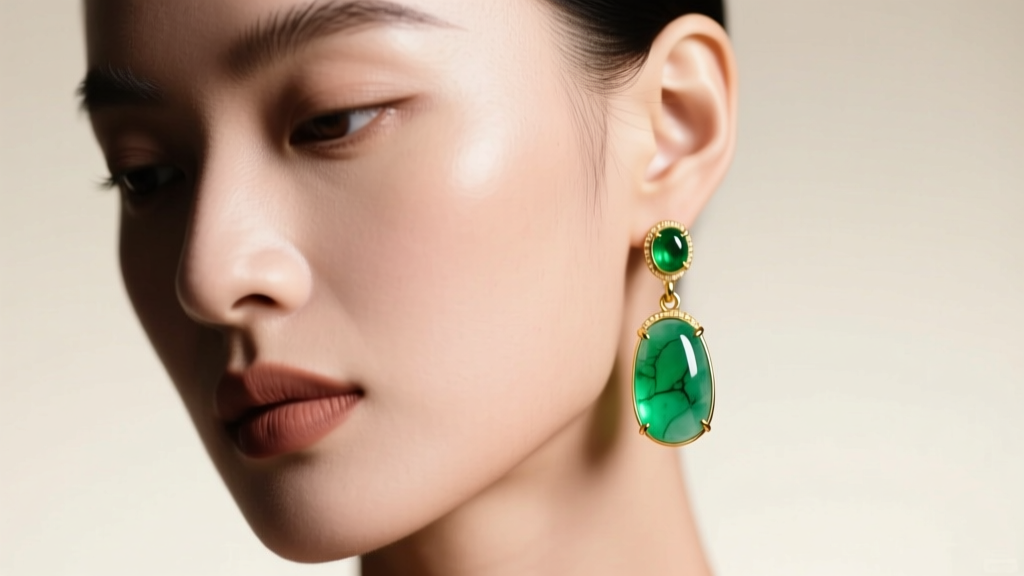
Drop jade earrings represent a perfect intersection of ancient lapidary tradition and modern fine jewelry design. Whether you are drawn to the glassy translucence of high-grade jadeite or the deep, spinach-green opacity of nephrite, styling and maintaining these pieces requires specialized knowledge. As of 2026, the market has seen an influx of sophisticated glass and quartzite simulants, making authentication and proper hardware selection more critical than ever. This step-by-step guide will walk you through evaluating, setting, and styling drop jade earrings with expert precision.
Step 1: Authenticating Your Jade (Jadeite vs. Nephrite)
The term 'jade' is an umbrella term for two distinct metamorphic rocks: jadeite and nephrite. Understanding the difference is the first step in evaluating your drop earrings.
- Jadeite: Harder (6.5–7 on the Mohs scale), more translucent, and capable of achieving the highly prized 'Imperial Green' hue. It has a specific gravity of 3.30–3.38.
- Nephrite: Slightly softer (6–6.5 Mohs), highly fibrous and interlocking (making it extremely tough), and typically found in muted greens, whites, and blacks. Specific gravity ranges from 2.90–3.03.
When shopping, you must also understand jade treatments. According to the Gemological Institute of America (GIA), jadeite is categorized into three types:
- Type A: Completely natural, untreated jadeite (only polished with wax). This is the only grade worth investing in for fine drop earrings.
- Type B: Acid-bleached to remove impurities and polymer-impregnated to improve transparency. Over time, the polymer yellows and degrades.
- Type C: Dyed to enhance color. The dye fades with exposure to UV light and heat.
Step 2: Evaluating Color, Tone, and Transparency
In the 2026 fine jewelry market, transparency (often referred to as 'water' in traditional grading) commands the highest premium. When inspecting drop jade earrings, hold the stones up to a direct LED light source. High-quality jadeite briolettes should exhibit a soft, glowing internal luminescence rather than a flat, painted-on surface color. The color should be evenly distributed, though natural 'veins' or color banding are acceptable and prove the stone's natural origin. Avoid stones with dark, opaque inclusions or visible surface fractures, as these compromise both the aesthetic value and the structural integrity of the drop.
Step 3: Selecting the Right Hardware and Wire Gauge
Jade is remarkably dense. A pair of carved nephrite teardrops or thick jadeite briolettes can easily weigh 4 to 8 grams each. Standard earring hardware often fails under this weight.
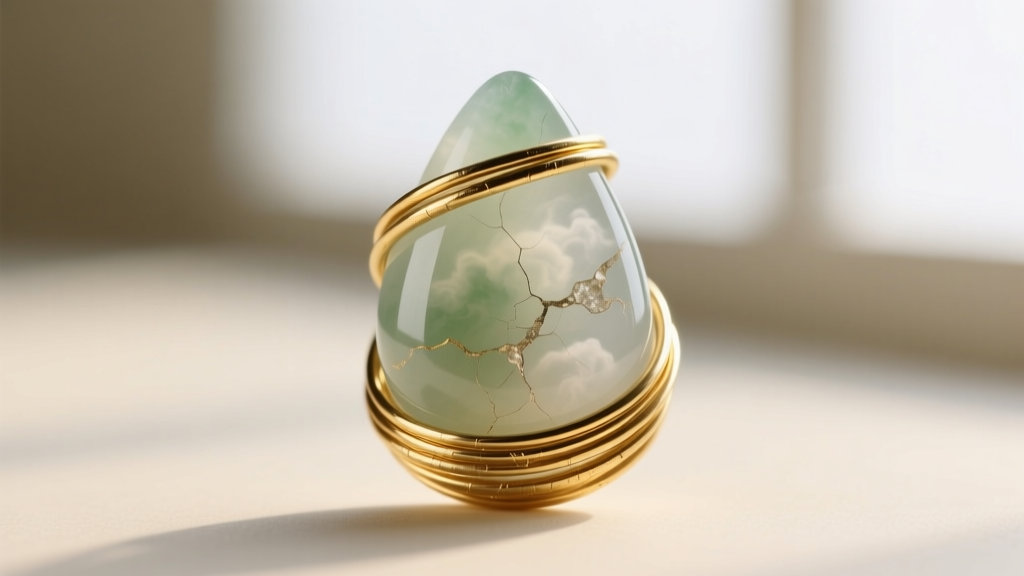
The Gauge Rule: Never use 22-gauge or thinner wire for heavy jade drops. The weight will cause the wire to bend forward, pulling the earlobe uncomfortably and distorting the silhouette. Always opt for 20-gauge or 18-gauge half-hard wire for the ear hook and the structural wrap.
Metallurgy Pairings: Jade's subtle undertones pair best with specific metals. Yellow gold (14k or 18k) enhances the warm, grassy tones of green jade, while platinum or 18k white gold provides a striking, high-contrast backdrop for icy, translucent lavender or white jadeite. Ensure all ear wires are stamped with their metal purity hallmark to avoid nickel allergies, which are common with cheap base-metal casts.
Step 4: Matching Drop Lengths to Face Shapes
The elongated nature of drop jade earrings makes them an incredible tool for balancing facial proportions. Use the following framework to select the ideal drop length and stone cut for your specific face shape.
| Face Shape | Ideal Drop Length | Recommended Jade Cut & Setting | Styling Objective |
|---|---|---|---|
| Round | 2.0 to 3.0 inches | Long, slender briolettes; minimal metal capping | Elongate the jawline and draw the eye vertically |
| Square | 1.5 to 2.5 inches | Teardrops or oval cabochons with curved bezels | Soften strong angular jawlines with rounded stone edges |
| Heart | 1.0 to 1.5 inches | Chandelier drops or wider, bottom-heavy carved pears | Add visual weight to the lower half of the face to balance a narrow chin |
| Oval | Any length (1.0 to 3.0 inches) | Geometric slices, thick barrels, or classic teardrops | Maintain natural facial symmetry; experiment with bold proportions |
Step 5: Step-by-Step Styling for Modern Wardrobes
Styling drop jade earrings requires balancing their inherent visual weight. Because jade is a statement material, let the earrings be the focal point of your ensemble.
Neckline Pairings
- The V-Neck & Plunge: Pair long, 2.5-inch jade drops with a deep V-neck silk blouse. The parallel lines of the neckline and the earrings create a cohesive, elongating effect.
- The Boatneck & Mandarin Collar: Opt for shorter, 1-inch jade drops or huggie-drops. High necklines compete with long dangling stones, causing visual clutter and physical tangling.
Hair Placement
To showcase the translucency of Type A jadeite, wear your hair in a sleek low chignon or a swept-over updo. This allows light to pass through the stone from behind, activating its internal glow. If wearing hair down, tuck one side behind the ear to reveal the drop and break up the visual mass.
Step 6: Cleaning and Maintenance Protocols
Jade requires specific care protocols to maintain its polish and structural integrity. The most common failure mode for jade earrings is improper cleaning.
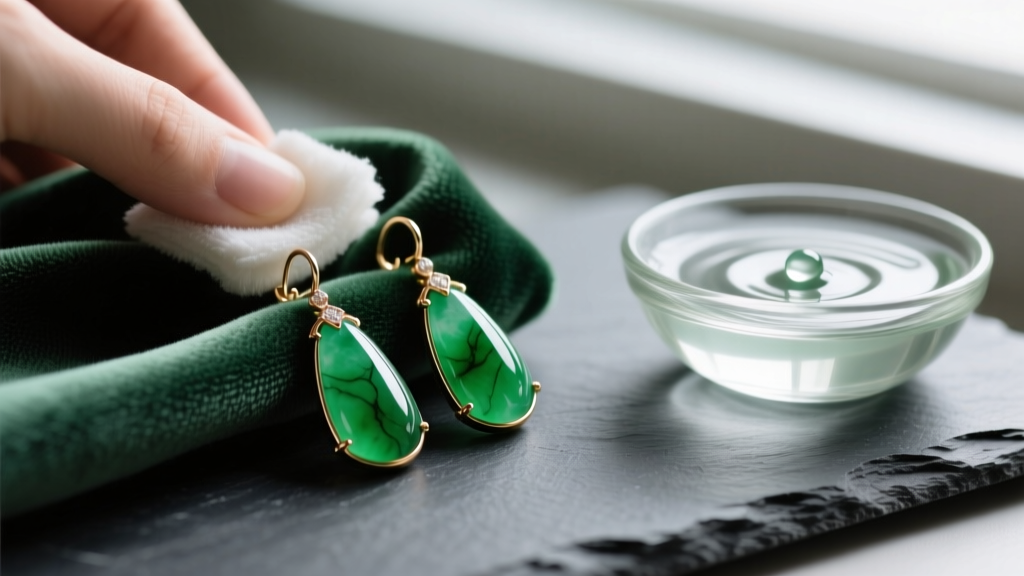
Expert Warning: Never place drop jade earrings in an ultrasonic cleaner. The high-frequency vibrations can propagate microscopic internal stress fractures in Type A jade, causing the stone to split. Furthermore, if your jade is secretly Type B (polymer-treated), the ultrasonic heat and chemicals will melt the resin, turning the stone cloudy and brittle.
According to the GIA's jade care guidelines, the safest and most effective cleaning method is manual:
- Mix lukewarm distilled water with a single drop of pH-neutral dish soap.
- Submerge the jade drops for no more than 3 minutes.
- Gently agitate the water; use a baby-soft bristle brush to lightly sweep the back of the stone where skin oils and cosmetics accumulate.
- Rinse under a gentle stream of cool water.
- Pat dry with a lint-free microfiber cloth. Never use paper towels, as their wood fibers can leave micro-scratches on highly polished nephrite.
Store your drop jade earrings in a fabric-lined compartment separate from diamonds or sapphires. While jade is tough, it is softer than corundum and diamond, and prolonged friction will dull its mirror polish over time.


