Halloween Earrings: Material Guide for Sensitive Ears
Discover the best hypoallergenic materials for Halloween earrings. Compare titanium, niobium, and PVD coatings for safe, spooky styles.

The Metallurgical Reality of Costume Jewelry
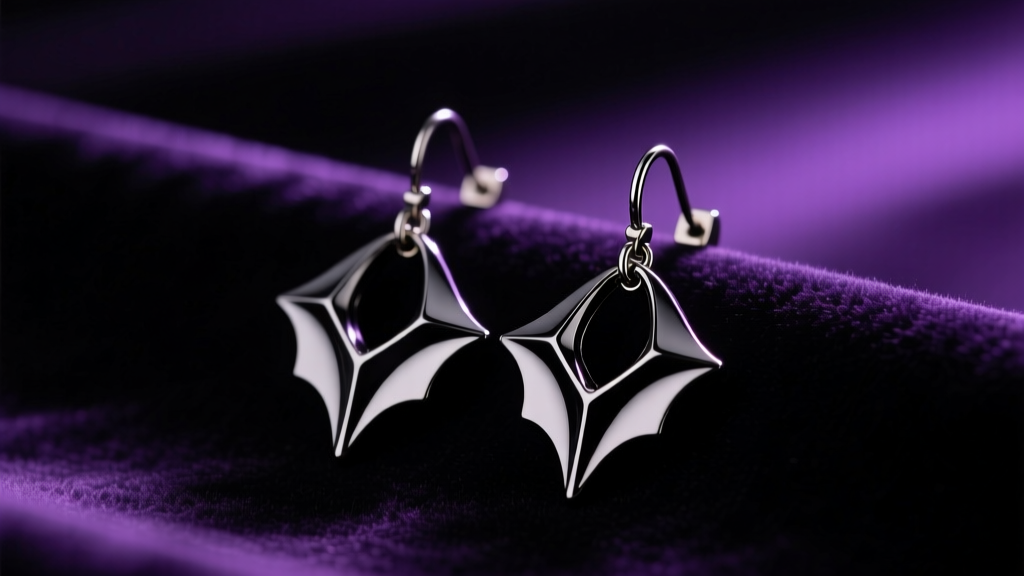
As Halloween 2026 approaches, the market is flooded with novelty earwear featuring intricate bats, spiders, skulls, and gothic motifs. However, the vast majority of these seasonal accessories are manufactured from cheap base metals that pose significant risks to your skin and piercings. For individuals with sensitive ears or metal allergies, wearing standard costume Halloween earrings for an extended evening can result in severe contact dermatitis, localized swelling, and even secondary infections.
The primary culprit in novelty jewelry is Zamak, a zinc-based alloy containing aluminum, magnesium, and copper. Zamak is highly porous, meaning it traps sweat, dead skin cells, and bacteria. Furthermore, to achieve shiny or colored finishes, manufacturers often electroplate these porous bases with nickel or low-grade rhodium. According to the American Contact Dermatitis Society, nickel is the most common contact allergen worldwide, affecting roughly 15% to 20% of the population. When your skin's natural acidity breaks down the thin electroplated layer, the underlying nickel and copper react with your sweat, creating copper carbonate (verdigris)—that notorious green stain that is both unsightly and highly irritating to open or healing piercings.
Material Breakdown: Costume vs. Hypoallergenic Metals
To enjoy spooky styles without the morning-after itch, you must upgrade from base metals to biocompatible alternatives. Below is a comparative analysis of common materials found in themed earwear, ranked by their safety profile and structural integrity.
| Material | Nickel Content | Porosity & Bacteria Risk | Best For |
|---|---|---|---|
| Zinc Alloy (Zamak) | High (in plating) | High (traps bacteria) | Display only, not for sensitive skin |
| 316L Surgical Steel | 8% - 10.5% | Low | Healed lobes, short-term wear |
| ASTM F136 Titanium | 0% (Nickel-Free) | None (Mirror polish) | Fresh piercings, severe allergies, heavy dangles |
| Niobium | 0% (Nickel-Free) | None | Color-anodized Halloween themes, ear cuffs |
| 14k/18k Solid Gold | Varies by alloy | None | Luxury gothic aesthetics, heirloom pieces |
For the ultimate combination of safety and lightweight comfort, ASTM F136 Implant-Grade Titanium is the gold standard. Recognized by global health authorities for surgical implants, this specific grade of titanium contains zero nickel and is significantly lighter than steel, making it the perfect foundation for oversized Halloween dangles that might otherwise drag on the earlobe.
Achieving Spooky Aesthetics Safely
A common misconception is that hypoallergenic metals only come in boring silver or gold tones. In reality, advanced metallurgical techniques allow for vibrant, spooky colors and dark, witchy finishes without relying on toxic paints or allergenic plating.
Niobium Anodizing for Vibrant Halloween Hues
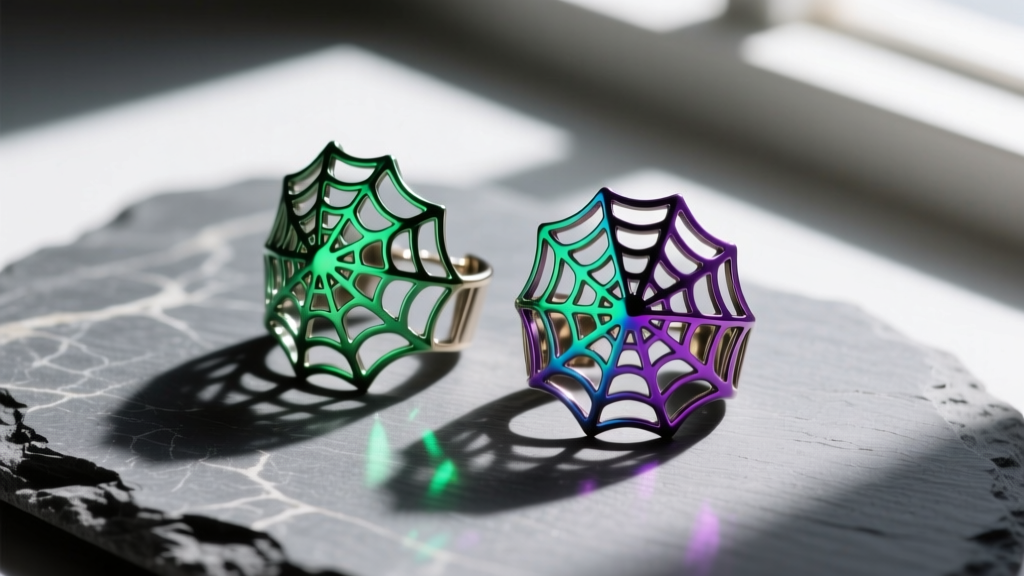
If you are looking for toxic greens, blood reds, or deep purples, Niobium is your best material. Niobium is a highly reactive, hypoallergenic transition metal that changes color through a process called anodizing. By submerging the niobium jewelry in an electrolytic bath and applying specific voltages, a transparent oxide layer forms on the surface. This layer refracts light to create vivid colors. For example, applying 15 volts yields a rich purple, while 90 volts creates a striking, eerie green. Because the color is an optical illusion created by the oxide layer rather than a surface dye, it will never flake, peel, or cause an allergic reaction.
PVD Coating for Gothic and Witchy Black Metals
For those seeking matte black, gunmetal, or dark oxidized looks typical of gothic and witchy Halloween aesthetics, avoid jewelry plated with black rhodium or black nickel. Instead, look for PVD (Physical Vapor Deposition) coatings. PVD involves vaporizing titanium nitride (TiN) or titanium aluminum nitride (TiAlN) in a vacuum chamber, bonding it to a titanium or steel base at a molecular level. PVD coatings are incredibly durable (typically 0.5 to 2 microns thick), highly resistant to scratching, and completely seal the base metal, preventing any nickel leaching. This makes PVD-coated black titanium skull studs or raven hoops entirely safe for sensitive ears.
Gauge Sizes and Weight Distribution for Heavy Dangles
Halloween earrings often feature elaborate, heavy designs—think large brass spiderwebs, crystal-encrusted bats, or solid metal skulls. When wearing heavy dangles, the thickness of the ear wire (the gauge) is just as critical as the material itself.
- 22-Gauge to 20-Gauge (0.64mm - 0.81mm): Standard for lightweight studs and small hoops. If used for heavy Halloween dangles, these thin wires will cause the 'cheese cutter effect,' where the wire slowly slices through the bottom of the earlobe piercing due to concentrated downward pressure.
- 18-Gauge (1.02mm): The minimum acceptable thickness for medium-weight novelty dangles. Provides adequate support for most standard costume pieces.
- 16-Gauge (1.29mm) and 14-Gauge (1.63mm): Essential for oversized, heavy gothic dangles or large gemstone drops. The thicker wire distributes the weight across a wider surface area of the piercing fistula, preventing tissue tearing and migration.
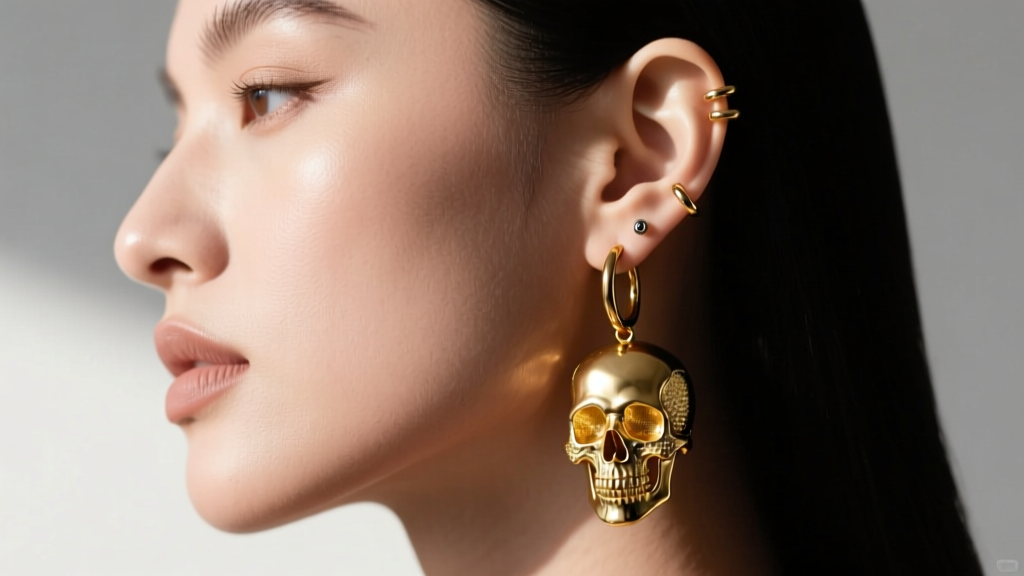
Additionally, pay attention to the style of the ear wire. For heavy Halloween pieces, avoid standard French wires (fishhooks) that can easily slip out and get lost in costumes or wigs. Opt for leverback closures or locking clutch backs on straight posts, which secure the earring firmly in place while providing a structural base that rests flush against the earlobe, offering superior weight distribution.
Sourcing Safe Themed Earwear and Proper Maintenance
When shopping for high-quality Halloween earrings, bypass the seasonal pop-up stores and fast-fashion novelty bins. Instead, seek out independent jewelry artisans on platforms like Etsy or specialized body jewelry retailers who explicitly state their use of ASTM F136 titanium, pure niobium, or solid 14k gold. Look for sellers who provide material certificates or clearly outline their PVD coating processes.
Even with hypoallergenic metals, proper maintenance is crucial, especially after a long night of wear. Sweat, makeup, and hairspray can accumulate on the jewelry. Clean your titanium and niobium Halloween pieces using a mild, fragrance-free antibacterial soap and warm water. Use a soft-bristled toothbrush to gently clean intricate crevices—like the eyes of a skull or the joints of a spider—where debris tends to hide. Avoid harsh chemicals, alcohol, or ultrasonic cleaners if your jewelry features porous gemstones like opal or turquoise, which are popular in mystical and witchy designs. By prioritizing biocompatible materials and proper structural mechanics, you can ensure your Halloween earwear is as safe and comfortable as it is terrifyingly stylish.


