Best Materials for Mother of the Bride Earrings (2026)
Discover the best metals for mother of the bride earrings. We compare weight, hypoallergenic properties, and lighting reflectivity for 2026 weddings.


When selecting the perfect mother of the bride earrings, most buyers focus exclusively on gemstone color and silhouette. However, as any seasoned jeweler will tell you, the underlying material dictates not only the piece's longevity but also the wearer's comfort throughout a grueling 12-hour wedding day. In 2026, the shift toward sustainable luxury and hyper-comfort has revolutionized how we evaluate fine jewelry metals. For mothers of the bride, who are often navigating high-stress environments, fluctuating body temperatures, and hours of professional photography, understanding material properties is no longer optional—it is essential.
This comprehensive guide bypasses generic style advice to explore the metallurgical, physical, and optical properties of the top materials used in luxury earrings. From specific gravity and contact dermatitis thresholds to flash-photography reflectivity, here is your definitive material comparison matrix.
The Physics of Drape: Why Specific Gravity Dictates Comfort
The most common complaint regarding formal drop or chandelier earrings is lobe fatigue. Over the course of a wedding day, the weight of an earring can cause the piercing to stretch, leading to discomfort and an unflattering downward tilt. This is governed by a metal's specific gravity (SG)—its density relative to water.
Platinum, the traditional hallmark of luxury, has an SG of approximately 21.45 g/cm³. While incredibly durable and hypoallergenic, a voluminous platinum chandelier earring can easily exceed 12 grams per ear. By contrast, 18k yellow gold sits at an SG of roughly 15.5 g/cm³, offering a 25% reduction in weight for the exact same physical volume. For mothers of the bride opting for dramatic, shoulder-dusting silhouettes, 18k gold or even high-grade titanium (SG 4.5 g/cm³) provides the necessary structural integrity without the gravitational drag that necessitates mid-reception earlobe support patches.
Hypoallergenic Imperatives: Navigating Metal Sensitivities
Wedding day stress elevates cortisol levels, which can unexpectedly trigger or exacerbate contact dermatitis. Even women who have worn standard sterling silver or white gold for decades may find their lobes weeping or itching under the physical and emotional strain of hosting a wedding.
The Nickel Threshold and Alloy Composition
White gold is rarely pure gold; it is an alloy typically mixed with nickel, palladium, or silver to achieve its color. Nickel is a notorious sensitizer. According to the American Academy of Dermatology, prolonged exposure to nickel-alloyed jewelry is the leading cause of allergic contact dermatitis. For guaranteed safety, mothers of the bride should seek out earrings crafted from ASTM F136 implant-grade titanium, pure palladium, or nickel-free 18k gold alloyed with silver and copper.
- Implant-Grade Titanium (ASTM F136): The gold standard for hyper-sensitive skin. Often used for the posts of high-end earrings, even if the decorative face is another metal.
- Palladium: A platinum-group metal that is naturally white, hypoallergenic, and significantly lighter than platinum.
- Sterling Silver (925): Generally safe, but often plated with rhodium. Once the plating wears thin, the copper content can cause green oxidation on acidic skin.
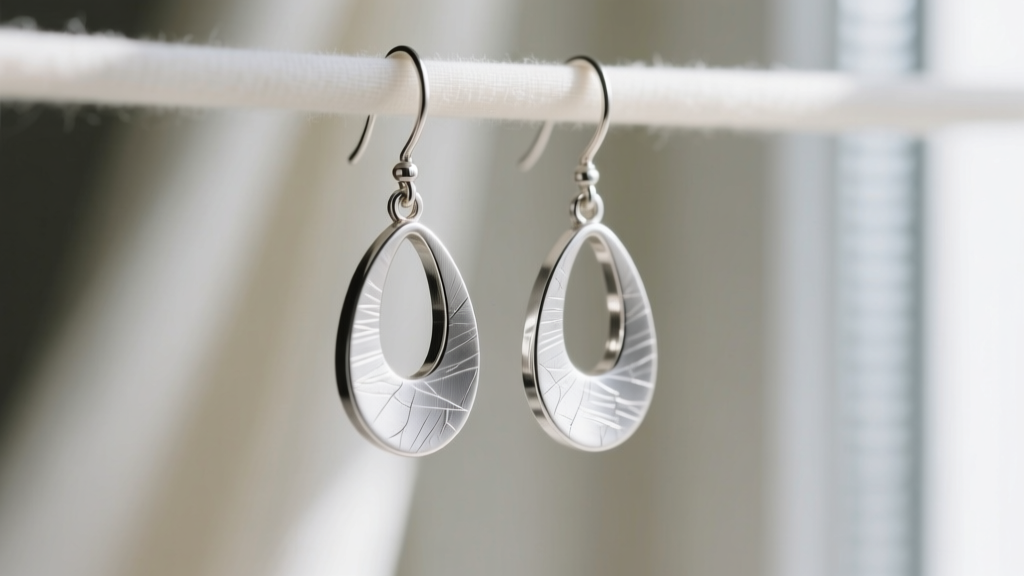
Photographic Reflectivity: How Metals React to Venue Lighting
Wedding photography involves a chaotic mix of dim, warm ambient lighting and blinding, high-intensity strobe flashes. The surface finish and base color of your earrings will drastically alter how they translate on camera.
Highly polished white gold and platinum possess high specular reflectivity. When hit by a direct camera flash, they can create "blown-out" highlights—pure white pixels that erase the intricate milgrain or pavé details of the earring. Conversely, yellow gold absorbs and warms up light, rendering beautifully in candlelit receptions but sometimes appearing muddy in cool, overcast outdoor ceremonies. In 2026, master jewelers are increasingly recommending brushed, hammered, or satin finishes for mother of the bride earrings. These micro-textured surfaces scatter light diffusely, ensuring the metal glows elegantly without blinding the camera lens or competing with the wearer's facial features.
Comprehensive Material Comparison Matrix
| Material | Specific Gravity | Allergy Risk | Flash Reflectivity | Price Tier |
|---|---|---|---|---|
| Platinum (950) | 21.45 | None | High (Mirror) | $$$$ |
| 18k Yellow Gold | 15.50 | Very Low | Medium (Warm) | $$$ |
| Palladium (950) | 12.02 | None | Medium (Cool) | $$$ |
| 14k White Gold | 13.50 | Moderate/High | High (Mirror) | $$ |
| Titanium (Grade 5) | 4.43 | None | Low (Matte) | $ |
Gemstone and Material Synergies
The structural properties of a metal must complement the gemstones it holds. The Gemological Institute of America (GIA) notes that organic gems require specific environmental considerations that interact directly with metal settings.
Pearls, a perennial favorite for mothers of the bride, are porous and sensitive to acids. Setting pearls in copper-heavy alloys (like some 14k rose golds) risks chemical transfer that can degrade the pearl's nacre over time. Platinum or palladium prongs are vastly superior for pearl earrings, as they are chemically inert. For diamond or sapphire drops, 18k white gold provides a secure, rigid setting that maximizes the stone's light return, though the prongs should be checked annually for wear.
Expert Insight: Never use ultrasonic cleaners on mother of pearl or emerald earrings, regardless of the metal setting. The high-frequency vibrations can shatter the gemstone or loosen the adhesive used in half-drilled pearl posts.
Structural Mechanics: Backings and Load Distribution
The finest 18k gold drop earring is useless if it falls out during the first dance. The mechanical backing must be matched to both the material's weight and the ear's anatomy.
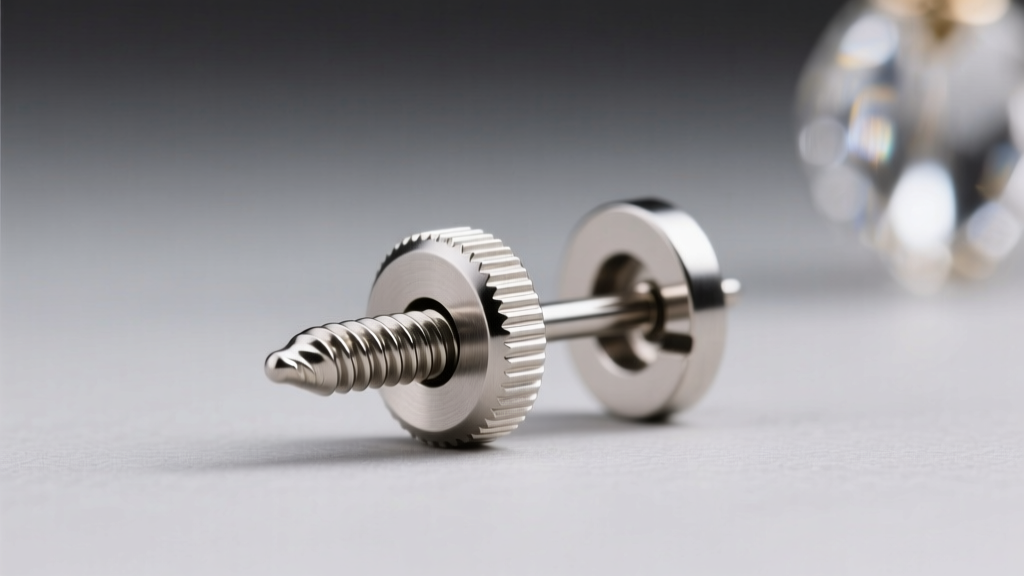
For lightweight studs (under 3 grams), standard friction posts (butterfly backs) are sufficient. However, for medium-to-heavy dangles, the friction backing fails to distribute the weight, causing the post to slice into the back of the earlobe. For these pieces, you must insist on omega backs or leverbacks. Omega backs feature a hinged, curved wire that snaps into a catch, distributing the earring's weight across a wider surface area of the ear's cartilage and lobe. If the earrings are crafted from titanium or palladium, ensure the post is threaded for a screw-back mechanism, providing a fail-safe lock that is virtually impossible to dislodge accidentally while hugging guests.
Ultimately, selecting the ideal mother of the bride earrings requires looking past the display case and examining the metallurgical reality of the piece. By prioritizing low specific gravity, nickel-free alloys, and diffuse surface finishes, you guarantee a piece of jewelry that remains as comfortable at the midnight send-off as it was during the morning preparations.


