Halloween Umbrella Cat Earrings: 2026 Fit & Material Guide
Discover the technical specs, safe material grades, and weight limits for Halloween umbrella cat earrings to ensure comfortable, allergy-free wear.

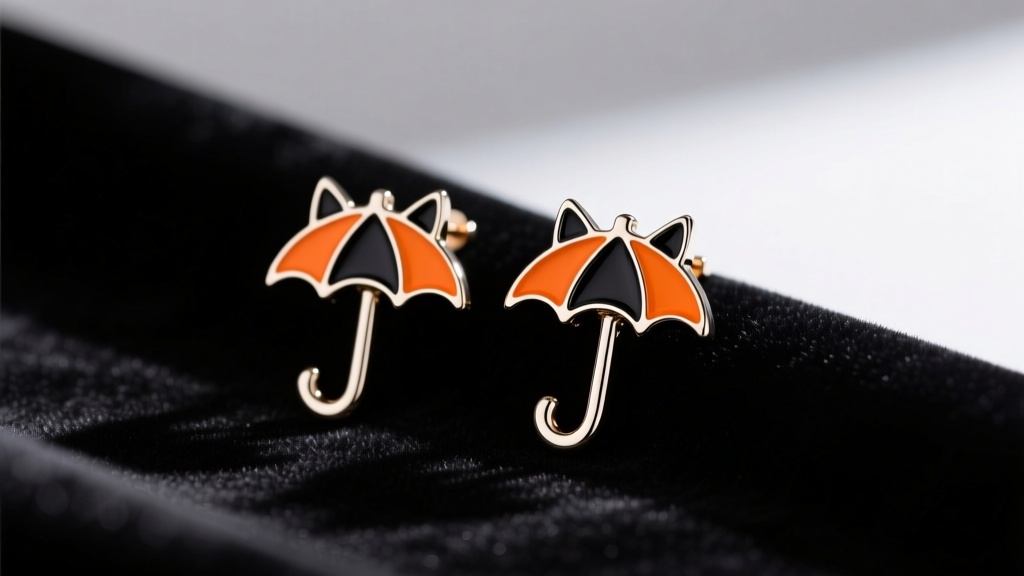
The Anatomy of Novelty Dangle Earrings
Novelty jewelry often sacrifices structural integrity and biocompatibility for immediate aesthetic appeal. The specific design profile of halloween umbrella cat earrings combines a complex silhouette—the wide canopy of an umbrella, the suspended feline figure, and the connecting dangle chain—with seasonal manufacturing urgency. This intersection frequently results in a market flooded with poorly engineered pieces that fail basic metallurgical and ergonomic standards. As a domain expert evaluating seasonal jewelry trends for 2026, I have deconstructed the mechanical and material realities of these specific earrings to help you identify pieces that are safe, durable, and comfortable for extended wear.
The primary challenge with the umbrella-and-cat motif is the asymmetric distribution of mass. The umbrella canopy, typically stamped from thin sheet metal or cast in high-relief, creates a top-heavy profile. If the cat pendant is not properly counterweighted, the earring will continuously rotate on the ear wire, causing friction against the fistula (the piercing hole) and leading to localized irritation or contact dermatitis.
Weight Distribution and Lobe Stress
Human earlobes are composed of adipose tissue and loose connective tissue, lacking the structural cartilage found in the upper ear. According to guidelines referenced by the Association of Professional Piercers, standard earlobes can comfortably support between 7 to 10 grams per earring for an 8-hour duration without suffering micro-tears or accelerated stretching.
A standard cast alloy cat silhouette weighs approximately 3.5 grams. When you add a stamped brass umbrella canopy (approx. 4.2 grams) and a steel dangle chain (1.5 grams), the total weight per earring easily exceeds 9 grams. While this is within the safe limit, cheap manufacturing often uses thicker, unrefined Zamak (zinc alloy) casts, pushing the weight to 14+ grams. Wearing 14-gram novelty dangles for a full Halloween night will cause visible lobe elongation and post-wear tenderness.
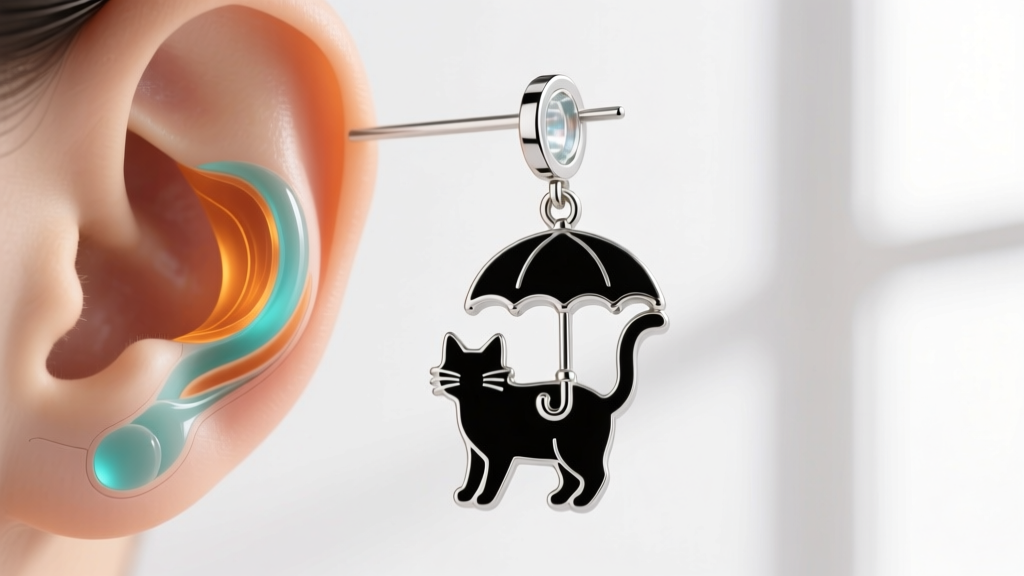
Material Grading: Avoiding the Halloween Allergy Trap
The most critical failure point in seasonal novelty jewelry is the base metal. Manufacturers targeting the Halloween demographic frequently utilize 'Tibetan Silver' or generic 'Zinc Alloy.' These are not pure metals; they are pot-metal amalgams that frequently contain high levels of nickel, cadmium, and lead. Nickel is a potent sensitizer, and prolonged exposure can trigger severe allergic contact dermatitis. The National Library of Medicine notes that nickel allergy is the most common contact allergy worldwide, affecting up to 10% of the population.
To ensure biocompatibility, you must verify the specific ASTM (American Society for Testing and Materials) grade of the metal. Below is a technical comparison of materials commonly used in halloween umbrella cat earrings:
| Material Grade | Composition & Standards | Allergy Risk | Typical Price Range |
|---|---|---|---|
| Zamak 3 (Zinc Alloy) | Zinc, Aluminum, Copper. Unregulated. | High (Nickel/Lead) | $12 - $18 |
| 316L Surgical Steel | ASTM F138. Iron, Chromium, Nickel (bound). | Low-Medium | $45 - $85 |
| Ti6Al4V ELI Titanium | ASTM F136. Titanium, Aluminum, Vanadium. | None (Hypoallergenic) | $90 - $140 |
| Niobium | Unalloyed elemental metal. Highly inert. | None (Hypoallergenic) | $75 - $110 |
While 316L (ASTM F138) surgical steel is generally safe for healed piercings, the nickel content is chemically bound but can still leach if the surface polish degrades or if exposed to acidic sweat. For individuals with known nickel sensitivities, ASTM F136 titanium is the mandatory baseline for the ear wire, even if the decorative dangle is made of a heavier, less expensive metal (provided the dangle does not touch the skin directly).
Enamel and Paint Safety Standards
The intricate details of the cat's face and the umbrella's ribs are typically filled with enamel. High-end pieces use vitreous enamel (fused glass powder), which is inert, non-toxic, and highly resistant to chipping. However, 95% of seasonal novelty earrings use 'cold enamel,' which is essentially a pigmented epoxy resin or acrylic paint.
Identifying Lead and Cadmium in Cheap Novelty Jewelry
The Consumer Product Safety Commission (CPSC) strictly regulates lead in surface coatings, capping it at 90 parts per million (ppm). Unregulated overseas manufacturers frequently use lead-based pigments to achieve vibrant Halloween oranges and deep blacks, and cadmium to stabilize yellow hues. When this cheap cold enamel chips or degrades from skin oils, these heavy metals can be ingested or absorbed.
To test the integrity of the enamel on your umbrella cat earrings, perform a thermal shock test: run the earring under warm (not boiling) water for 30 seconds, then immediately under cold water. High-quality, properly cured epoxy resin will remain intact. Low-grade, lead-cut paints will develop micro-fractures or begin to peel at the metal-enamel boundary.
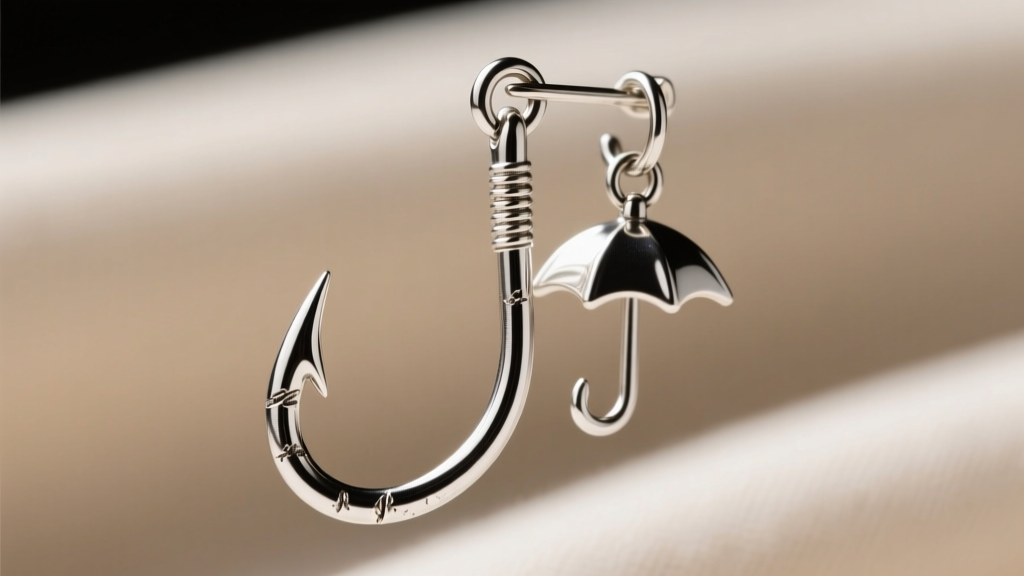
Wire Gauge and Jump Ring Integrity
The hardware connecting the decorative elements is where mechanical failure most commonly occurs. The ear wire (fish hook) should ideally be 20-gauge (0.81mm) or 18-gauge (1.02mm). Anything thinner than 22-gauge (0.64mm) will deform under the pendulum-like swinging motion of the umbrella and cat dangle, eventually snapping at the apex of the hook curve.
Equally important is the jump ring—the small circular wire linking the ear hook to the umbrella canopy. In cheap manufacturing, jump rings are simply cut and bent into a circle, leaving a microscopic gap. Under the dynamic load of a 10-gram dangle swinging while walking or dancing, this gap will pull apart, resulting in the loss of the earring. High-quality halloween umbrella cat earrings will feature soldered jump rings, where the gap is fused shut with silver or laser solder, increasing the tensile strength of the connection by over 400%.
Troubleshooting Common Failure Modes
Even when purchasing from reputable jewelers, the complex geometry of novelty dangles introduces specific points of failure. Here is how to troubleshoot and maintain your pieces:
- Lateral Torque Bending: If the umbrella canopy catches on clothing or hair, the lateral force will bend a 20G steel hook. To fix this, use smooth-jawed nylon pliers to gently bend the wire back to its original radius. Never use bare metal pliers, as they will mar the mirror polish and create microscopic grooves where bacteria can harbor.
- Enamel Micro-Chipping: If the cat pendant strikes a hard surface, cold enamel may chip. You can seal the exposed metal and prevent further delamination by applying a micro-drop of UV-curing jewelry resin over the chip and curing it with a 365nm UV flashlight.
- Fistula Irritation: If the ear wire feels rough or causes itching after two hours of wear, the issue is likely microscopic burrs left from the wire-cutting process at the factory. Lightly buff the insertion tip with a 3000-grit micromesh pad to restore a smooth, atraumatic entry point.
By scrutinizing the ASTM material grades, verifying the solder points on jump rings, and respecting the 10-gram weight limit for lobe health, you can confidently wear halloween umbrella cat earrings that are as structurally sound as they are visually striking.


