Why a Hanging Earring Holder is Essential for Dangle Jewelry Care
Discover how a hanging earring holder prevents tangles, tarnish, and post bending for dangle and drop earrings. Expert storage and care tips inside.


The Hidden Dangers of Drawer Storage for Dangle Earrings
Dangle and drop earrings are striking statement pieces, but their elongated posts, intricate cable chains, and dangling gemstones make them notoriously difficult to store. Tossing them into a traditional lined jewelry drawer almost guarantees a tangled, scratched mess. When heavy chandelier earrings are piled atop delicate 14k or 18k gold drops, the friction causes micro-scratches on high-polish finishes and can easily strip the 0.1 to 0.5-micron rhodium plating off white gold settings.
Furthermore, the mechanical stress of drawer storage is catastrophic for thin earring posts. Many lightweight dangle earrings utilize 22-gauge (0.64mm) or 20-gauge (0.81mm) wire for their posts or jump rings. When a heavy hoop or bangle shifts in a drawer and presses against a delicate dangle, the lateral force easily warps the jump ring. This creates a microscopic gap where the earring can slip off its backing, leading to lost pieces. A dedicated hanging earring holder eliminates this compression entirely, allowing gravity to keep chains straight and posts unbent.
Anatomy of the Perfect Hanging Earring Holder
Not all hanging storage solutions are created equal. The market is flooded with cheap acrylic stands and untreated wooden racks that can actually accelerate jewelry degradation. To properly care for your collection, you must evaluate the holder's materials and structural integrity.
Material Matters: Anti-Tarnish Linings vs. Bare Wire
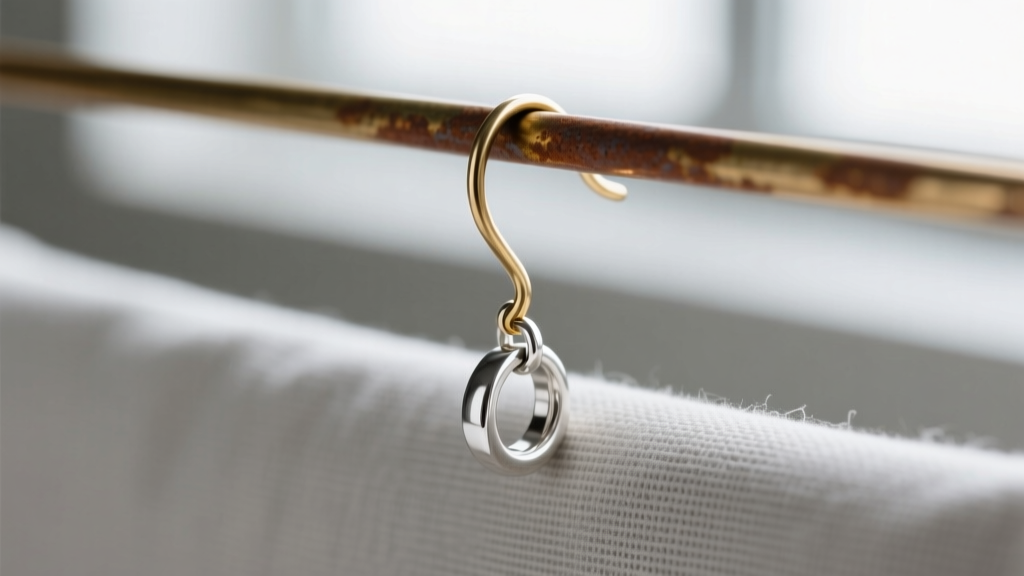
Sterling silver (.925) contains 7.5% copper, which reacts with hydrogen sulfide (H2S) in the air to form silver sulfide—the black tarnish that ruins vintage drops. According to the The London Assay Office, controlling the storage environment is the most effective way to halt this chemical reaction. A premium hanging earring holder should feature hooks wrapped in Pacific Silvercloth or treated anti-tarnish flannel. These fabrics are embedded with microscopic silver particles that act as a sacrificial anode, trapping H2S gas before it reaches your earrings. Avoid bare steel or uncoated iron wire hooks, as ambient humidity in a closet can cause the hook itself to rust, transferring iron oxide stains to your silver and gold pieces.
Weight Distribution for Heavy Chandelier Drops
Chandelier and elaborate drop earrings can weigh anywhere from 15 to 30 grams per piece. If your hanging earring holder relies on punched holes in thin fabric or felt, the sheer weight of the earrings will eventually tear the material, causing your jewelry to crash to the floor. Look for holders that utilize reinforced brass or stainless steel hooks anchored into a solid frame, such as sealed MDF or powder-coated steel. Avoid untreated pine or oak wood frames; raw wood emits acetic acid vapors over time, which can corrode metal alloys and degrade the porous surfaces of pearls or opals.
Step-by-Step Pre-Storage Cleaning Protocols
Never place a worn dangle earring directly onto your hanging holder without cleaning it first. Human sebum, dead skin cells, and cosmetic residues trap moisture against the metal, creating a localized humid microclimate that accelerates corrosion and tarnishing. The Gemological Institute of America (GIA) recommends a gentle, consistent cleaning routine before long-term storage.
- The Mild Surfactant Bath: Mix a few drops of pH-neutral dish soap (like Dawn) with distilled water in a 1:10 ratio. Dip a soft-bristled baby toothbrush into the solution and gently sweep the crevices of the dangle, paying special attention to the jump rings and post hinges where debris accumulates.
- The Ultrasonic Warning: While ultrasonic cleaners are excellent for diamond and sapphire drops, they will shatter emeralds, fracture opals, and strip the dye from treated pearls. Always verify your gemstone's Mohs hardness and porosity before using high-frequency vibrations.
- Avoid Thiourea Dips: Commercial liquid silver dips often contain thiourea, a chemical that strips tarnish instantly but leaves behind microscopic sulfur residues. If not rinsed thoroughly with distilled water, these residues will cause the silver to re-tarnish at an accelerated rate once hung in your closet.
- Thorough Drying: Use a lint-free microfiber cloth to dry the earrings completely. Any trapped moisture in the tiny hinges of a drop earring will lead to rust or oxidation.
Troubleshooting Common Dangle Earring Storage Failures
Even with a high-quality hanging earring holder, specific design flaws in the earrings themselves or the surrounding environment can cause issues. Use this diagnostic table to troubleshoot common storage failures.
| Failure Mode | Root Cause | Hanging Holder Solution |
|---|---|---|
| Tangled Cable Chains | Chains are hung too close together, allowing air currents to swing them into adjacent hooks. | Space hooks at least 3 inches apart, or use a tiered holder that staggers the vertical drop length. |
| Bent 22-Gauge Posts | The holder's hook wire is thicker than the earring's jump ring, forcing the user to pry the ring open. | Swap the holder's hooks for thin, 18-gauge brass wire loops that easily pass through delicate findings. |
| Accelerated Silver Tarnish | The closet environment has high humidity and poor air circulation, trapping H2S gas around the holder. | Hang 3M Anti-Tarnish strips directly on the frame of the holder and place silica gel desiccant packets on the closet shelf below. |
| Missing Friction Backs | Earrings are stored fully assembled, putting stress on the butterfly backs and loosening the tension grips. | Store the friction backs in a small, velvet-lined pouch attached to the bottom of the hanging holder, leaving the posts bare. |
Expert Maintenance Schedule for Stored Earrings
Proper care does not end once the earrings are hung. According to Jewelers of America, stored jewelry requires periodic maintenance to ensure long-term structural integrity. Implement a quarterly maintenance schedule for your hanging collection.
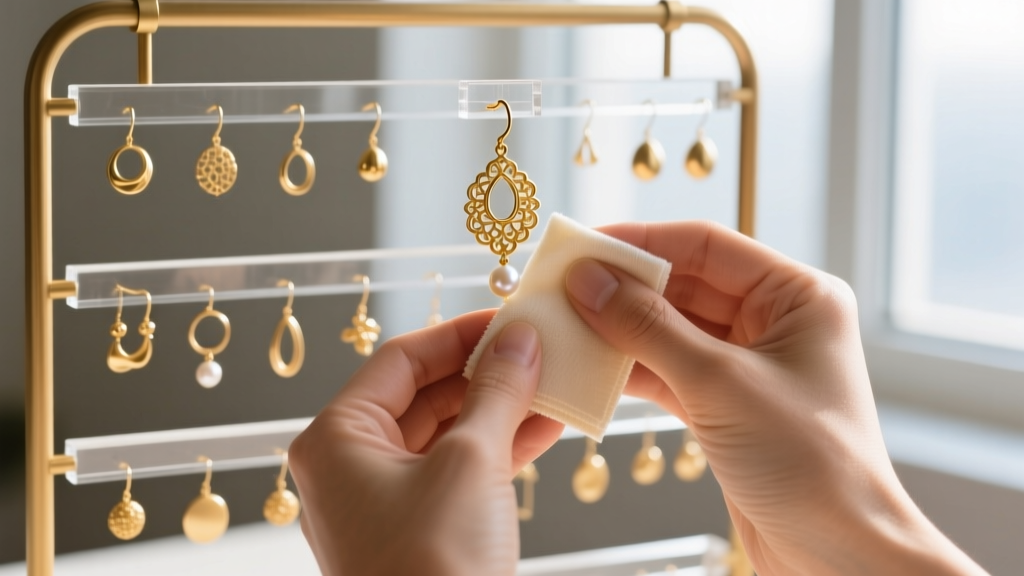
Every three months, remove your dangle earrings from the holder to inspect the jump rings. Use a jeweler's loupe (10x magnification) to check for gaps where the wire ends meet. If a gap is visible, gently squeeze it closed with nylon-jaw pliers to prevent the drop from detaching during wear. Additionally, wipe down the hooks of your hanging earring holder with a dry microfiber cloth to remove any accumulated dust or transferred oils. If you live in a high-humidity climate, replace the silica gel packets in your closet bi-annually to ensure the ambient moisture remains below 40%, the threshold where silver oxidation rapidly accelerates.
Expert Insight: "Always hang dangle earrings by their primary structural jump ring, never by the delicate decorative chains or gemstone settings. Hanging by a fragile chain link will eventually stretch the metal, causing irreversible distortion to the piece's silhouette."
By investing in a structurally sound, anti-tarnish hanging earring holder and adhering to strict pre-storage cleaning protocols, you will dramatically extend the lifespan, brilliance, and mechanical reliability of your most cherished drop and dangle earrings.


