Health Tracker Earrings: 2026 Troubleshooting & Fixes
Solve common issues with health tracker earrings in 2026. Expert fixes for sensor errors, skin allergies, lobe stretching, and charging failures.

The Rise of Biometric Earwear (and Why They Fail)
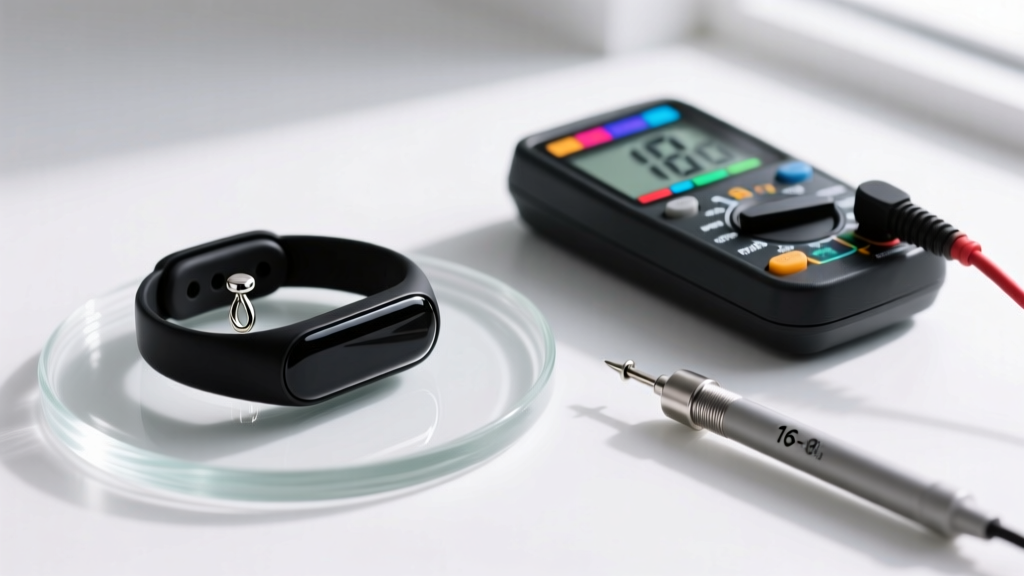
The integration of biometric sensors into fine jewelry has redefined wearable technology. By 2026, health tracker earrings have moved beyond clunky earbuds, utilizing the highly vascular earlobe to monitor core body temperature, heart rate variability (HRV), and blood oxygen levels via miniaturized PPG (photoplethysmography) sensors. However, merging delicate piercing anatomy with dense lithium-polymer batteries and stainless steel antenna housings creates a unique set of physical and technical failures. Whether you are wearing smart studs from emerging biotech jewelers or high-end fashion-tech collaborations, troubleshooting these devices requires a hybrid approach: part dermatologist, part jeweler, and part IT specialist.
Dermatological Troubleshooting: Contact Dermatitis & Sensor Burn
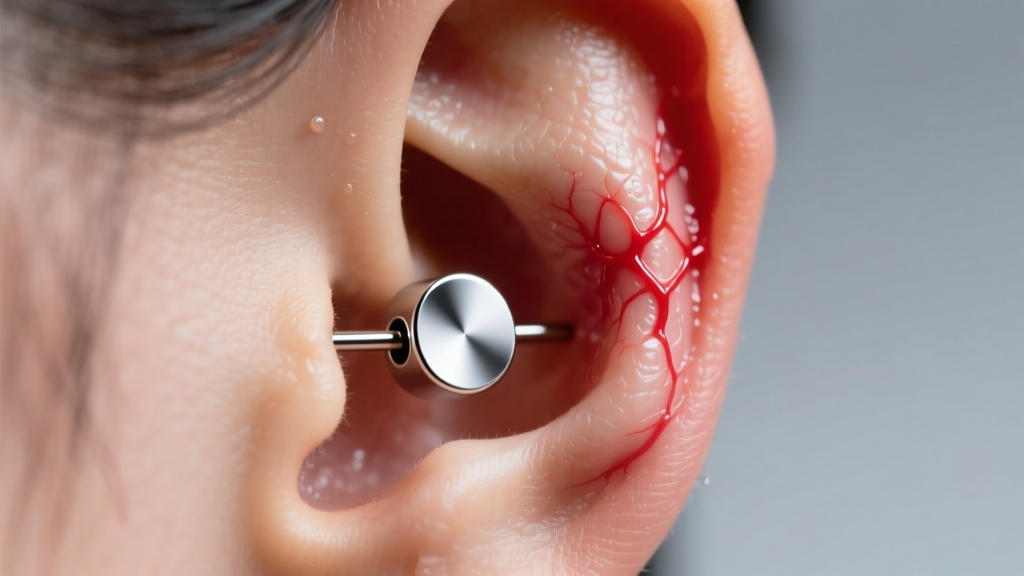
The most frequent complaint among early adopters of smart jewelry is the dreaded 'smart earring rash.' Unlike traditional fine jewelry crafted from solid 14k gold or platinum, the internal chassis of health tracker earrings often relies on 304 or 316L surgical stainless steel to shield the Bluetooth Low Energy (BLE) antenna and battery. While 316L is generally safe for standard piercings, the constant galvanic reaction caused by the device's micro-currents, combined with trapped sweat, can trigger severe nickel contact dermatitis.
Material Grades and Hypoallergenic Hacks
If you experience itching, weeping, or localized heat around the piercing site, immediately remove the device. According to the American Academy of Dermatology, prolonged exposure to nickel alloys in the presence of moisture is a primary catalyst for allergic contact dermatitis. To troubleshoot and prevent this without abandoning your health tracking:
- PVD Coating: Look for smart earrings that utilize Physical Vapor Deposition (PVD) titanium nitride coatings over the steel housing. This creates an inert, biocompatible barrier that prevents nickel leaching.
- ASTM F136 Titanium Sleeves: If your tracker uses a standard post-and-clutch mechanism, discard the factory steel post. Replace it with an implant-grade ASTM F136 titanium labret post (typically 16G or 14G) that can thread into the smart earring's decorative front.
- Barrier Films: In a pinch, apply a micro-thin layer of cyanoacrylate-based liquid bandage to the earring's back-plate to seal the metal from your skin. Reapply every 72 hours.
Hardware & Fit Issues: Lobe Stretching and Gauge Mismatches
A standard gold or diamond stud earring weighs between 1.5 and 3 grams. A fully integrated health tracker earring, complete by a ceramic sensor array and a micro-battery, typically weighs between 8 and 14 grams. When you hang 12 grams of tech from a standard 20-gauge (0.81mm) piercing, you invite the 'cheese-cutter effect'—a mechanical migration where the heavy post slowly slices through the earlobe tissue.
Weight Distribution and Gauge Upgrades
Troubleshooting lobe pain and forward-tilting smart earrings requires addressing the physics of the piercing channel. Below is a diagnostic matrix for matching your earring's weight to the correct structural support:
| Earring Weight | Minimum Safe Gauge | Post Diameter (mm) | Required Hardware Modification |
|---|---|---|---|
| Under 4g | 20G or 18G | 0.81mm - 1.02mm | Standard silicone friction backs |
| 4g - 8g | 16G | 1.29mm | Threaded titanium labret posts with flat backs |
| 8g - 12g | 14G | 1.63mm | 14G post + silicone O-ring earlobe support discs |
| Over 12g | 12G or 10G | 2.00mm+ | Requires professional lobe stretching; not recommended for standard piercings |
If your device is causing the piercing hole to elongate into a slit, you must upgrade the post thickness and utilize a silicone support disc (often called an 'earlobe saver') behind the clutch to distribute the downward torque across a wider surface area of the skin.
Sensor Accuracy & Connectivity Drops
The earlobe is an exceptional site for biometric tracking because the capillary beds are close to the skin surface, providing strong signal-to-noise ratios for optical heart rate sensors. However, users frequently report erratic HRV readings or sudden Bluetooth disconnects. Research published in NCBI regarding wearable sensor accuracy highlights that optical sensors are highly susceptible to motion artifacts and ambient light leaks.
Hair Interference and Calibration Fixes
Unlike a smartwatch strapped tightly to the wrist, an earring dangles and shifts. If your health tracker earrings are returning impossibly high resting heart rates or failing to sync with your phone:
- Eliminate Optical Blockages: Dry shampoo, heavy leave-in conditioners, and sebum buildup create a film over the PPG sensor window (usually made of sapphire crystal or hardened polycarbonate). Wipe the sensor daily with a microfiber cloth and a drop of 70% isopropyl alcohol.
- Check the Clutch Tension: If the earring is too loose, the sensor will not maintain flush contact with the back of the earlobe, allowing ambient light to 'blind' the optical receiver. Tighten the clutch so the earring sits snugly, but not so tight that it restricts blood flow (which will skew SpO2 readings).
- BLE Interference: If your connection drops when you turn your head, the water-rich tissue of your neck and jaw may be attenuating the 2.4GHz Bluetooth signal. Ensure your phone or smartwatch hub is within a direct line of sight, or update the device firmware to utilize adaptive frequency hopping.
Battery & Charging Failures
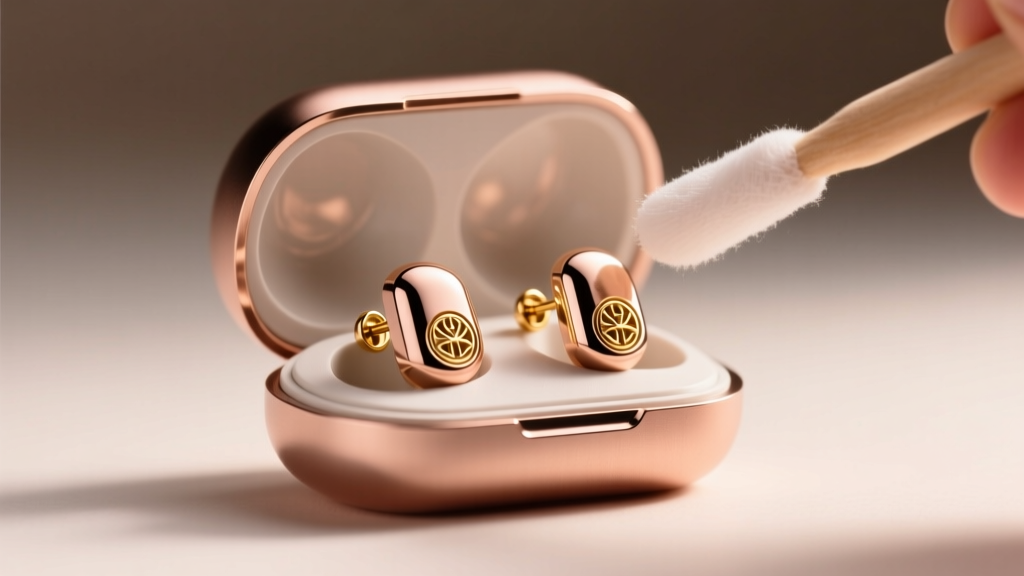
Health tracker earrings are typically charged via a magnetic puck case utilizing gold-plated pogo pins. Because these earrings sit on the head, they are constantly exposed to aerosolized hairspray, sweat, and natural skin oils. Over time, this creates an invisible dielectric layer on the charging contacts, leading to 'phantom charging' where the case indicates a full charge, but the earrings die within two hours.
Restoring the Charging Connection
Do not use metal needles or safety pins to scrape the contacts, as this will strip the microscopic gold plating and expose the underlying copper to rapid oxidation. Instead, follow this restoration protocol:
- Chemical Cleaning: Dip a cotton swab in 90% or higher isopropyl alcohol and vigorously scrub both the pogo pins on the case and the contact pads on the earrings.
- Mechanical Polishing: If alcohol fails to remove hardened sebum or hairspray resin, use a fiberglass scratch pen (commonly used by watchmakers). Gently brush the fiberglass bristles over the contact pads to remove corrosion without damaging the metal substrate.
- Magnet Realignment: If the earrings do not 'snap' firmly into the charging case, the neodymium magnets may have weakened or shifted. Ensure no metallic debris (like iron dust from makeup) is stuck to the magnets. Wipe them with a piece of adhesive tape to lift away microscopic particles.
'The intersection of fine jewelry and biometric hardware requires users to treat their accessories not just as adornments, but as delicate medical devices. Proper hygiene of the sensor window and the charging contacts is the single biggest factor in long-term reliability.' — Journal of Wearable Technology Standards, 2025
Quick-Reference Diagnostic Matrix
Keep this troubleshooting checklist handy when your smart earrings begin to malfunction:
- Symptom: Red, itchy, weeping earlobe. Fix: Switch to an ASTM F136 titanium post; apply cyanoacrylate barrier to the backplate.
- Symptom: Piercing hole stretching downward. Fix: Upgrade to a 16G or 14G post; add a silicone O-ring support disc.
- Symptom: Erratic heart rate / SpO2 data. Fix: Clean the sapphire sensor window with isopropyl alcohol; tighten the earring clutch to prevent light leaks.
- Symptom: Rapid battery drain / failure to charge. Fix: Clean pogo pins with 90% isopropyl alcohol and a fiberglass scratch pen; remove cosmetic residue.
Health tracker earrings represent a massive leap forward in passive, continuous health monitoring. By understanding the material science, anatomical limits, and electronic maintenance required to keep them running, you can enjoy cutting-edge biometric data without sacrificing the health of your piercings or the integrity of your jewelry.


