Lucite Hoop Earrings: Material Science & Styling Guide
Discover the technical differences in lucite hoop earrings, from cell-cast PMMA manufacturing to hardware integration and long-term care.

The Chemistry of Lucite: PMMA vs. Standard Acrylic
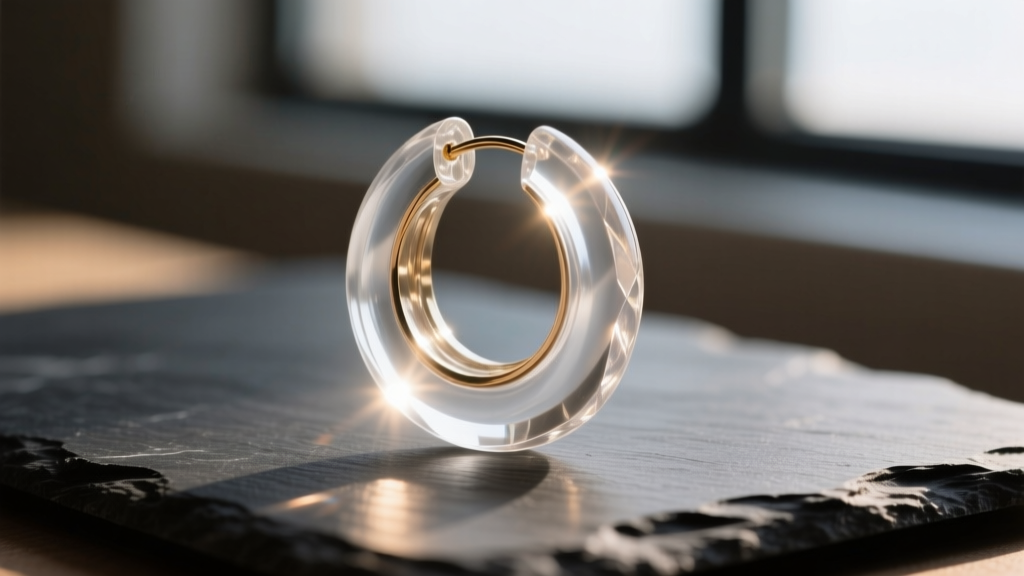
In the contemporary jewelry market of 2026, the term 'lucite hoop earrings' is frequently used as a catch-all for any clear plastic jewelry. However, from a materials science perspective, true Lucite is a premium, optical-grade polymethyl methacrylate (PMMA). Understanding the distinction between cell-cast PMMA and mass-produced extruded acrylic is critical for both jewelers and collectors.
Standard extruded acrylic is manufactured by continuously pushing molten plastic through rollers. This process introduces internal stress and lowers the molecular weight of the polymer, making it highly susceptible to 'crazing' (micro-cracking) when exposed to solvents or mechanical drilling. True cell-cast Lucite, conversely, is polymerized in a mold between two sheets of glass. According to the British Plastics Federation, this cell-cast process yields a PMMA sheet with a significantly higher molecular weight, superior thermal stability, and a refractive index of 1.49—nearly identical to crown glass (1.52).
When you purchase high-end lucite hoops, you are paying for this optical clarity and structural integrity. The light transmission rate of cell-cast PMMA is approximately 92%, meaning it lacks the milky, yellowish undertone characteristic of cheap, extruded acrylic alternatives.
Manufacturing Techniques: Cast, CNC, and Laser-Cut Hoops
The method used to shape the PMMA drastically dictates the final quality, edge polish, and structural durability of the hoop earring.
CNC Machining vs. Laser Cutting
Many mid-tier brands utilize CO2 laser cutters to slice hoops from acrylic sheets. While efficient, laser cutting melts the plastic, leaving a microscopically porous, heat-affected zone on the inner and outer edges. Over time, oils from the skin and cosmetics can penetrate these micro-pores, causing the edges to turn cloudy.
Premium artisan brands rely on 5-axis CNC (Computer Numerical Control) machining. CNC routers use specialized single-flute end mills designed specifically for plastics to carve the hoops at high RPMs with low feed rates. This prevents the material from melting and ensures a perfectly uniform curve. The edges are then flame-polished or vapor-polished using chloroform or dichloromethane in a highly controlled environment, sealing the surface and restoring the 92% light transmission rate.
Hardware Integration: How Metal Meets Acrylic
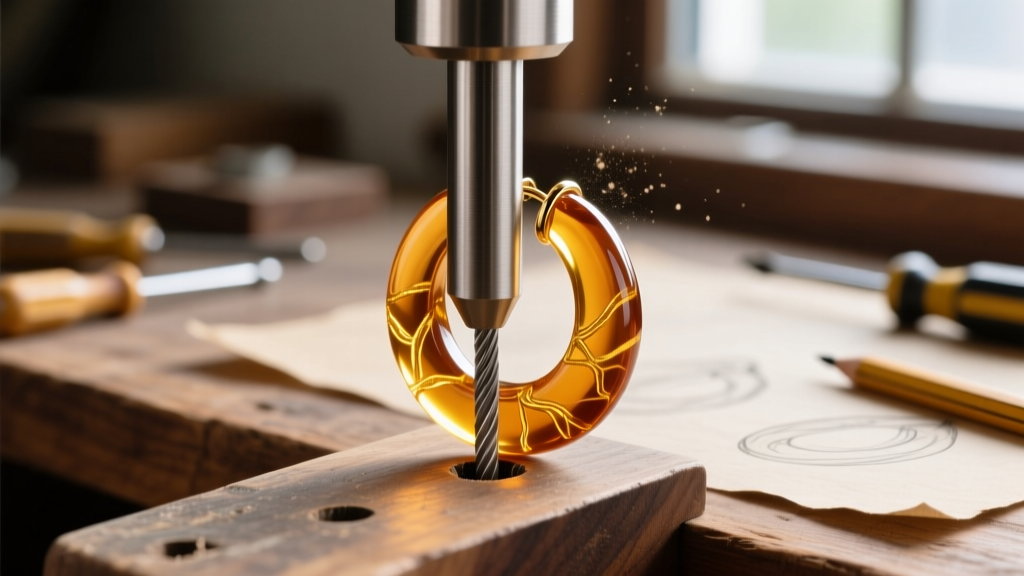
The most common failure point in any plastic earring is the junction where the metal post or wire meets the acrylic body. Because PMMA is non-porous, traditional jewelry adhesives struggle to form a lasting mechanical bond.
The Problem with Cyanoacrylate Adhesives
Mass-market lucite hoops often rely on cyanoacrylate (super glue) to attach the metal post. While cyanoacrylate bonds well to many surfaces, it has poor shear strength and degrades rapidly when exposed to acetone, alcohol, and the aerosolized solvents found in hairspray and perfume. If a post snaps off a glued lucite hoop, it is usually because the adhesive layer has become brittle and succumbed to shear stress from the weight of the hoop.
Mechanical Tapping and Friction-Fit Engineering
Expert fabricators bypass glue entirely by using mechanical fastening. For a standard 20-gauge (0.81mm) titanium or surgical steel post, the jeweler will drill a precise 0.7mm pilot hole using a brad-point bit to prevent 'spalling' (blowout) on the exit side of the acrylic. The hole is then tapped with a micro-threading tool. The metal post, which has been pre-threaded, is screwed directly into the PMMA. Because the acrylic has a high tensile strength, the threads bite securely into the plastic, creating a bond that can withstand the daily torque of putting on and taking off the earring.
Material Comparison: Lucite vs. Glass vs. Resin
To contextualize where lucite hoop earrings fit within the broader jewelry landscape, we must compare their physical properties against alternative transparent materials.
| Property | Cell-Cast Lucite (PMMA) | Borosilicate Glass | Epoxy Resin |
|---|---|---|---|
| Refractive Index | 1.49 | 1.47 - 1.52 | 1.50 - 1.55 |
| Weight (Density) | 1.18 g/cm³ (Lightweight) | 2.23 g/cm³ (Heavy) | 1.10 g/cm³ (Very Light) |
| Scratch Resistance | Moderate (Mohs 3) | High (Mohs 5.5-6) | Low (Mohs 2-3) |
| UV Degradation | Highly Resistant (with stabilizers) | Immune | Prone to Yellowing |
| Impact Strength | 15x stronger than glass | Brittle / Shatters | Flexible but dents |
As the data illustrates, Lucite occupies a 'Goldilocks' zone: it offers the optical brilliance of glass but at less than half the weight, making it ideal for large, statement-sized hoop earrings that would otherwise cause lobe fatigue.
Failure Modes, Maintenance, and Chemical Sensitivities
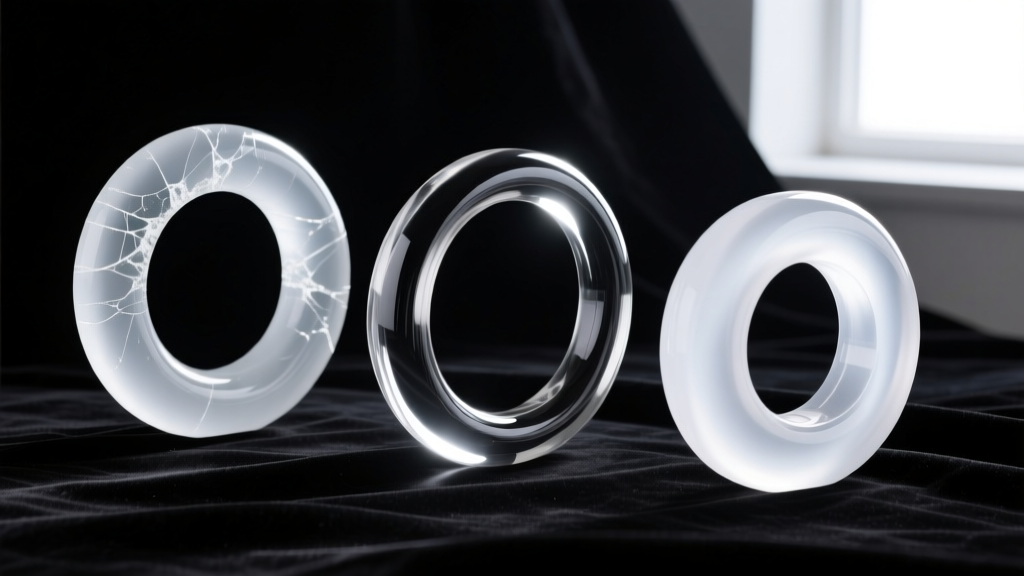
Despite its durability, PMMA requires specific maintenance protocols to preserve its optical clarity. The most frequent complaint among consumers is the development of micro-scratches and chemical clouding.
The Danger of Solvent Crazing
PMMA is highly sensitive to polar solvents. Contact dermatitis is a common issue in jewelry, prompting many to clean their pieces with isopropyl alcohol. However, wiping lucite hoop earrings with alcohol or ammonia-based glass cleaners will cause 'crazing'—a network of microscopic internal cracks that permanently ruins the transparency of the piece. For those with sensitive skin, it is vital to ensure the metal hardware is hypoallergenic (such as implant-grade titanium) rather than relying on harsh chemical sterilization of the plastic itself, as noted in clinical guidelines on contact dermatitis.
Proper Polishing and Care
To maintain the pristine surface of cell-cast Lucite, follow these strict care guidelines:
- Cleaning: Use only a mild, non-antibacterial liquid soap and lukewarm water. Dry with a clean, lint-free microfiber cloth.
- Scratch Removal: If micro-marring occurs, do not use abrasive toothpaste or baking soda. Use a dedicated plastic polish system (such as Novus Plastic Polish #2 for fine scratches, followed by #1 for a final gloss).
- Storage: Store hoops individually in soft flannel pouches. Tossing them into a shared jewelry box guarantees surface abrasion from harder metals and gemstones.
Sizing, Gauge, and Cartilage Considerations
When selecting lucite hoops for different piercings, the gauge of the wire and the diameter of the hoop must be matched to the anatomy of the ear.
For standard lobe piercings, 20-gauge (0.81mm) or 18-gauge (1.02mm) wires are standard. However, if you are sizing lucite hoops for cartilage piercings (such as the helix or tragus), you must opt for 16-gauge (1.29mm) or 14-gauge (1.63mm) hardware to prevent the 'cheese-cutter effect,' where a thin wire migrates through the denser cartilage tissue under the weight of the hoop.
Because Lucite is remarkably lightweight, a 50mm diameter hoop with a 10mm thickness weighs less than 8 grams. This allows wearers to enjoy dramatic, oversized proportions without the physical drag associated with solid brass or glass equivalents. When shopping for your next pair, look past the aesthetic and inquire about the manufacturing method and hardware integration. A true cell-cast, mechanically fastened Lucite hoop is not just an accessory; it is a feat of modern polymer engineering designed to last a lifetime.


