Wall Mounted Earring Holder Buying Guide for Collectors
Discover how to choose the best wall mounted earring holder. Learn about weight limits, materials, and mounting hardware to protect your jewelry and walls.

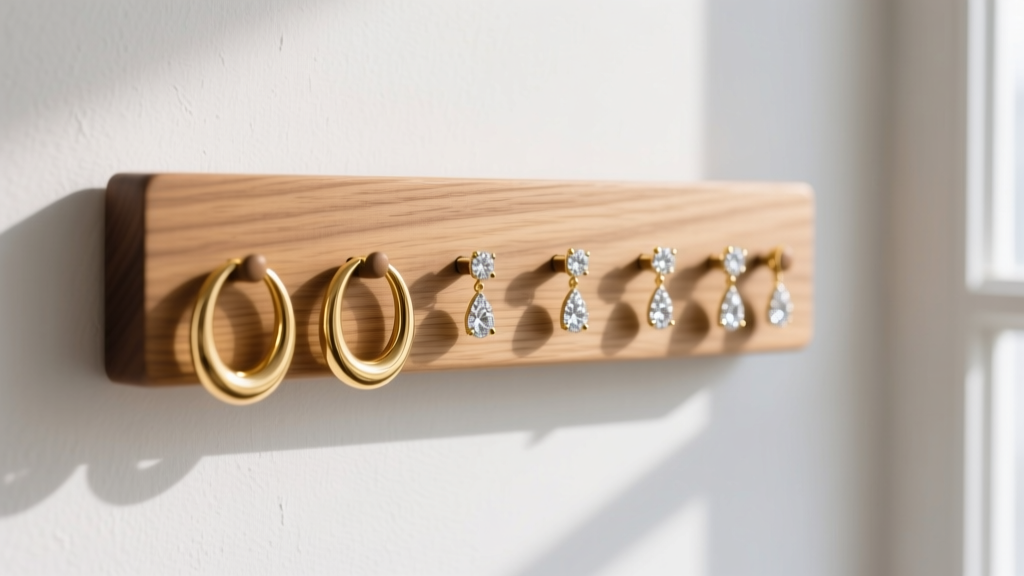
As jewelry collections evolve from a simple stud-and-hoop rotation into curated archives of heavy statement dangles, cartilage cuffs, and artisan ear weights, traditional freestanding organizers inevitably fail. The modern collector requires a permanent, secure display solution. A high-quality wall mounted earring holder not only reclaims valuable vanity space but also provides the structural integrity needed to support substantial precious metals and gemstones. This comprehensive buying guide breaks down the exact material grades, weight capacities, and mounting hardware specifications you need to evaluate before making a purchase in 2026.
Why Go Wall-Mounted? The Physics of Jewelry Storage
Freestanding acrylic towers and velvet-lined boxes suffer from two critical flaws: a high center of gravity and restricted vertical clearance. When you load a freestanding rack with heavy brass dangles or large-gauge ear weights, the center of mass shifts upward and outward, creating a tipping hazard. Furthermore, taking a pair of long drop earrings on and off a freestanding rack often knocks over adjacent pieces, leading to tangled chains and scratched gemstones.
By anchoring your storage directly to the wall, you eliminate the tipping risk entirely. Wall-mounted units leverage the sheer strength of your home’s framing or drywall, allowing for wider horizontal spans and greater vertical drop clearances. This ensures that a 4-inch chandelier earring can hang freely without its hook catching on the row below.
Critical Specs: Material Grades and Weight Capacities
Not all wall displays are engineered equally. The material dictates not only the aesthetic but the long-term structural viability of the holder. Below is a comparison of the three most common materials used in premium earring organizers.
| Material | Thickness Required | Max Load Capacity | Pros & Cons |
|---|---|---|---|
| Cast Acrylic (PMMA) | 6mm - 8mm | Up to 12 lbs | Scratch-resistant and clear, but prone to long-term ‘creep’ (sagging) under heavy point loads. |
| Solid Hardwood (Walnut/Oak) | 15mm - 20mm | Up to 35 lbs | Exceptional durability and classic aesthetics. Requires occasional oiling to prevent wood warping. |
| Powder-Coated Steel | 3mm - 5mm | Up to 50 lbs | Highest strength-to-weight ratio. Can scratch soft gold if hooks are dragged across the metal. |
According to the Gemological Institute of America (GIA), proper storage is essential to prevent gemstone abrasion. If you opt for a metal wall mounted earring holder, ensure the hanging rails feature a soft-touch silicone or felt sleeve to protect the polish of your 18k gold and platinum hooks from micro-scratches.
Mounting Hardware: Preventing Drywall Disasters
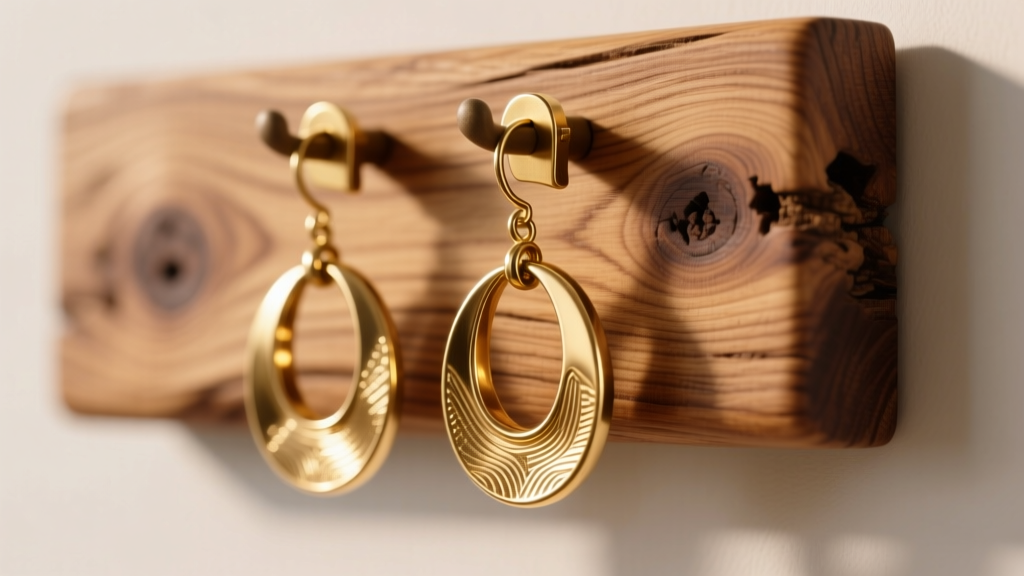
The most common failure mode of wall-mounted jewelry storage is not the holder breaking, but the hardware pulling out of the drywall. When you pull an earring off a hook, you are applying a dynamic outward force (torque) that multiplies the static weight of the unit.
Calculating Your Load
A 24-inch solid wood board weighs approximately 4 lbs. A robust collection of 60 pairs of mixed earrings (including heavy gemstone drops) can easily add another 2.5 lbs. While the static weight is only 6.5 lbs, the dynamic pull-out force when removing a stubborn hook can spike to 20+ lbs of localized pressure on the top anchor.
- Standard Plastic Ribbed Anchors: Rated for 10-15 lbs in 1/2-inch drywall. Verdict: Insufficient for anything but lightweight stud boards.
- Threaded Drywall Anchors (E-Z Ancors): Rated for 40-50 lbs. Verdict: Excellent for medium-sized acrylic or wood holders.
- Toggle Bolts (Snaptoggles): Rated for 250+ lbs. Verdict: Mandatory for heavy, oversized steel grids or dense hardwood displays.
For a detailed breakdown of anchor selection, This Old House provides an authoritative guide on matching drywall thickness to toggle bolt sizing, which is crucial when installing heavy organizational fixtures.
Slot Sizing: Accommodating Modern Ear Styles
A beautifully crafted holder is useless if your earrings do not fit the slots or pegs. You must audit your collection’s wire gauges before purchasing.
Standard Lobe and Cartilage Wires
Most standard French wires, fish hooks, and lever-backs are crafted from 20-gauge (0.81mm) or 22-gauge (0.64mm) wire. A standard 2mm to 3mm routed slit in a wooden board will accommodate these perfectly, allowing the wire to slide in while catching the decorative bead or soldered loop at the top.
Heavy Gauge and Ear Weights
If you stretch your lobes or wear heavy artisan ear weights, your jewelry may feature 6-gauge (4.11mm) or even 0-gauge (8.25mm) hanging loops. Standard slits will not work. Look for a wall mounted earring holder that features a continuous open-bottom rail, a thick dowel peg (at least 10mm in diameter), or specialized wide-gauge cutouts designed specifically for stretched lobes.
Layout and Visibility: Avoiding the Tangled Dangle
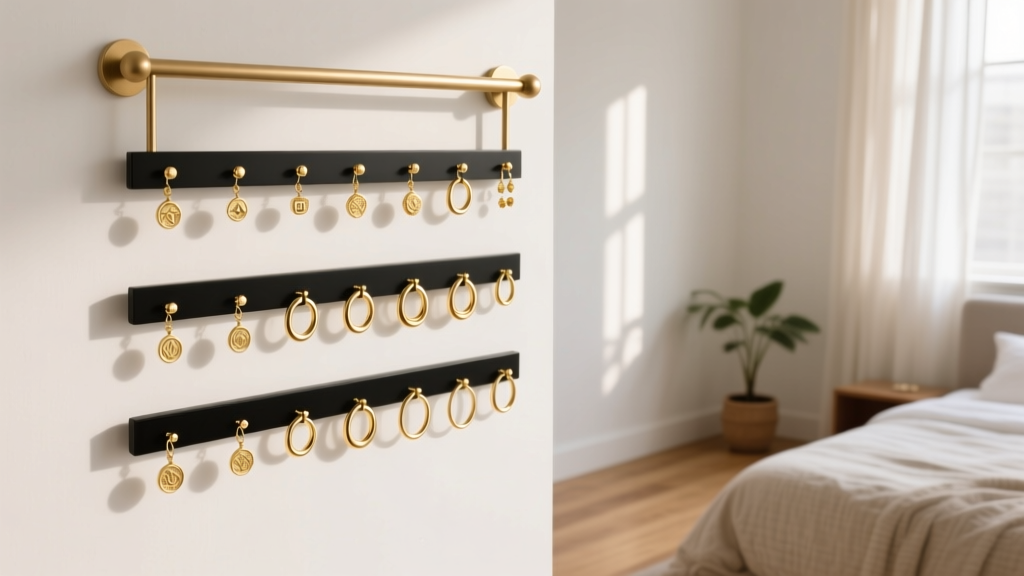
Vertical spacing is the most frequently overlooked specification in display design. If the rows are too close together, long dangles will rest on the earrings below them, causing hooks to tangle and delicate chains to knot.
Expert Sizing Rule: Measure the longest pair of drop earrings in your collection. Add a minimum of 2.5 inches to that length. This sum is the absolute minimum vertical distance required between your hanging rows to ensure safe, tangle-free removal.
For collections heavily skewed toward huggies, sleepers, and flat-back cartilage studs, a wall mounted earring holder with a peg-grid or a series of small, shallow acrylic pockets is vastly superior to traditional horizontal slits, which cannot support short, straight posts.
Expert Troubleshooting: Common Installation Failures
Even with the right materials, improper installation can lead to frustration. Here are three common issues and how to solve them:
- The ‘Sagging’ Acrylic Board: If you choose an extruded acrylic holder wider than 18 inches, it will likely sag in the middle over time due to material creep. Solution: Only buy cast acrylic, or ensure the design includes a rigid metal backing spine or a third center mounting bracket.
- Tarnish Transfer: Bare wood, especially acidic woods like oak, can accelerate the tarnishing of sterling silver earrings over time due to off-gassing. Solution: Ensure the wooden slots are sealed with a water-based polyurethane or lined with archival-grade felt.
- Crooked Alignment: Jewelry displays highlight imperfections. A holder that is off-level by even a fraction of an inch will make your hanging earrings look asymmetrical. Solution: Always use a laser level during installation, and utilize keyhole mounting brackets on the back of the wood rather than drilling directly through the front face, which ruins the aesthetic and risks splintering the display surface.
Investing in a premium wall mounted earring holder is an investment in the longevity and daily enjoyment of your jewelry. By prioritizing material thickness, dynamic weight ratings, and precise slot sizing, you will create a stunning, functional gallery wall that protects your most cherished pieces for decades to come.


