Heavy Earrings Gold Guide: Material Weights and Earlobe Health
Discover how to wear heavy earrings gold styles safely. Compare gold karats, hollow vs. solid, and lightweight alternatives to prevent earlobe damage.

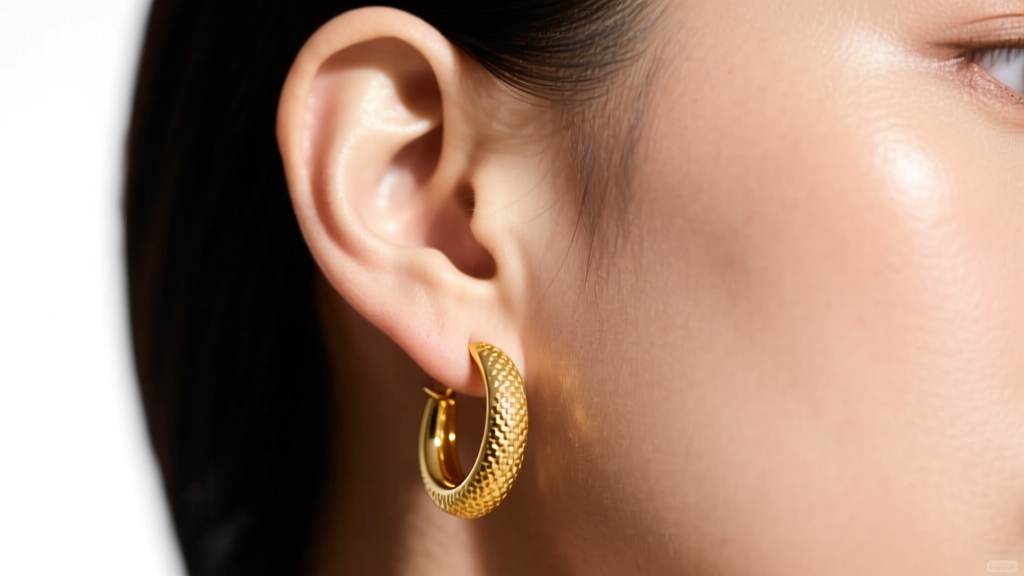
Statement jewelry is a cornerstone of personal style, but when you invest in heavy earrings gold designs, you are often met with a hidden physical cost: earlobe fatigue, piercing migration, and eventual tissue tearing. The human earlobe is a delicate structure composed of adipose tissue and skin, lacking the cartilage support found in the upper ear. When subjected to the relentless downward pull of dense precious metals, the fistula (the piercing hole) can stretch, leading to permanent deformation. As a jewelry metallurgist and style consultant, I see countless clients struggle with the balance between bold aesthetics and anatomical comfort. This comprehensive guide breaks down the material science behind gold jewelry, exploring how different alloys, manufacturing techniques, and alternative metals can help you wear oversized statement pieces without sacrificing your earlobe health.
The Physics of Heavy Gold: Why Karat Matters for Earlobe Strain
To understand why certain pieces cause more strain than others, we must look at the specific gravity and density of gold alloys. Pure gold (24k) is an incredibly dense metal, with a specific gravity of 19.32 g/cm³. This means it is nearly 19 times heavier than an equal volume of water. When designers craft heavy earrings gold purists love, they often utilize high-karat gold, which drastically exacerbates the weight issue. However, pure gold is also extremely malleable, meaning a heavy 24k earring will not only pull on the lobe but also bend and warp under its own weight over time.
To counteract this, jewelers alloy gold with metals like copper, silver, and zinc. This process, detailed extensively by the Gemological Institute of America (GIA), increases the tensile strength of the metal while simultaneously reducing its overall density. A 14k gold earring, which contains only 58.3% pure gold, is significantly lighter than an identically sized 22k piece. For statement earrings that exceed 15 grams per pair, dropping to 14k or even 10k gold is a structural necessity to reduce torque on the piercing.
Density and Weight Comparison of Gold Alloys
| Gold Karat | Pure Gold % | Density (g/cm³) | Relative Weight | Tensile Strength |
|---|---|---|---|---|
| 24k | 99.9% | 19.32 | Heaviest | Very Low (Highly malleable) |
| 22k | 91.6% | 17.70 | Very Heavy | Low |
| 18k | 75.0% | 15.60 | Heavy | Moderate |
| 14k | 58.3% | 13.00 | Moderate | High |
| 10k | 41.7% | 11.60 | Lightest Gold | Very High |
Solid vs. Hollow: Engineering Heavy Earrings Gold Statements
If you desire the rich, opaque look of high-karat gold without the debilitating weight, hollow gold construction is the industry's premier solution. According to manufacturing guides from Hoover & Strong, a leading precious metal refiner, hollow gold earrings are typically created through a process called electroforming. A jeweler first sculpts the desired earring shape in wax, coats it in a conductive paint, and submerges it in an electrolyte bath. Gold ions are electrically deposited onto the wax model layer by layer. Once the gold shell reaches the desired thickness (usually between 0.2mm and 0.5mm), the wax core is melted and drained out, leaving a perfectly hollow, lightweight gold shell.
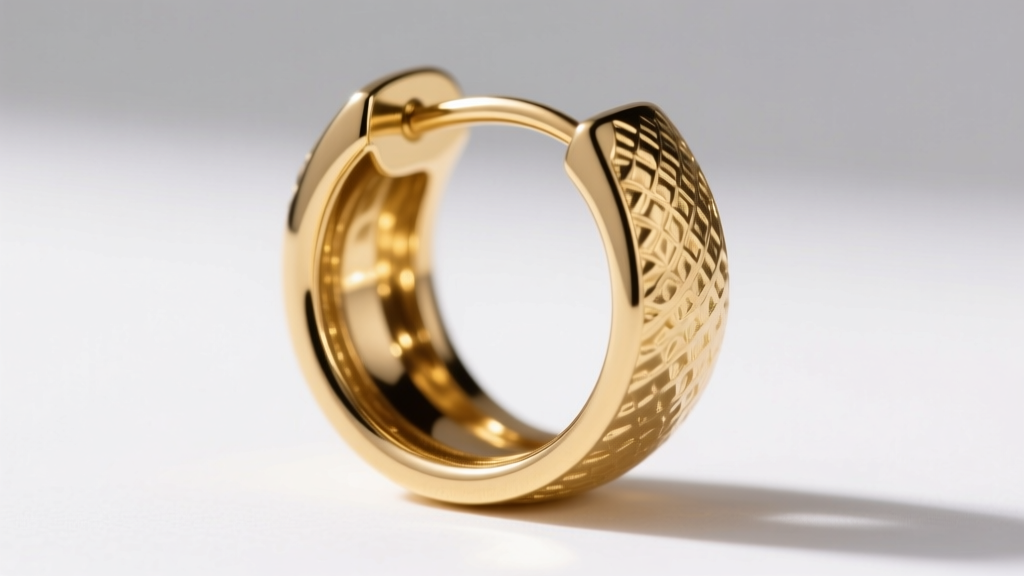
This technique can reduce the weight of a large statement earring by 60% to 80% compared to a solid cast piece. However, hollow gold comes with specific failure modes that consumers must understand. Because the gold shell is incredibly thin, it is highly susceptible to denting, crushing, and puncturing. If you drop a hollow gold hoop on a hard tile floor, or sleep in it, the metal can easily crumple. Furthermore, repairing crushed hollow gold is notoriously difficult and often cost-prohibitive, as traditional soldering can melt the thin walls.
'Electroformed hollow gold is a marvel for oversized statement jewelry, allowing designers to push volume limits without breaking the wearer's neck or earlobes. However, it demands a 'wear and remove' discipline; these pieces are not for sleeping, swimming, or gym sessions.' — Master Jeweler and CAD Designer
Lightweight Alternatives That Mimic Heavy Gold
For those who want massive, architectural silhouettes but suffer from severe earlobe sensitivity or metal allergies, stepping away from solid gold entirely is the most practical choice. Modern metallurgy and plating technologies offer exceptional alternatives that mimic the visual weight of gold while utilizing ultra-lightweight base metals.
- Titanium with PVD Gold Coating: Titanium (specifically Grade 5, Ti-6Al-4V) has a density of just 4.43 g/cm³—roughly a quarter of the weight of 14k gold. When treated with Physical Vapor Deposition (PVD), titanium receives a microscopic, highly durable layer of real gold. PVD coatings are vastly superior to traditional electroplating; they will not flake, tarnish, or wear off easily, making them ideal for heavy, high-friction statement pieces.
- Anodized Aluminum: Aluminum is astonishingly light (2.70 g/cm³). While it cannot be plated with gold as effectively as brass or copper, it can be anodized and dyed to achieve a rich, metallic brass or gold-like hue. Many avant-garde jewelry designers use laser-cut aluminum for massive, shoulder-dusting earrings that weigh less than a standard pair of solid gold studs.
- Jeweler's Brass with Heavy Vermeil: Brass (approx. 8.4 g/cm³) offers a middle ground. It is lighter than solid gold but heavier than titanium. When coated in a thick layer of 18k gold vermeil (minimum 2.5 microns), it provides a luxurious, heavy-handed look at a fraction of the cost and weight of solid gold. The primary drawback is the potential for the brass to oxidize and cause skin greening if the plating wears through.
Hardware and Earlobe Support Systems for Heavy Statement Pieces
The material of the earring body is only half the equation; the hardware that connects the piece to your anatomy is equally critical. The most common cause of earlobe tearing from heavy earrings gold styles is the 'cheese-cutter effect.' This occurs when a thin earring post or wire (typically 20-gauge or 0.81mm) bears too much weight, causing the metal to slowly slice through the bottom of the fistula tissue.
Upgrading Your Wire Gauge and Backings
For any earring weighing more than 12 grams, the post or wire should be no thinner than 18-gauge (1.02mm), and ideally 16-gauge (1.29mm). Thicker wire distributes the downward force across a wider surface area of the fistula, drastically reducing localized pressure. However, thicker wires can be difficult to push through older, tighter piercings, so gradual stretching or professional re-piercing at a thicker gauge may be required.
Standard friction backs (butterfly clutches) are entirely inadequate for heavy gold earrings. They easily slip off the post groove under the leverage of a heavy dangle, leading to lost jewelry. Instead, opt for the following support systems:
- La Pousette (Locking Clutch): Originally designed in France, this backing features a mechanical locking mechanism that clicks securely into a grooved post. It will not slip, providing absolute security for heavy, valuable gold pieces.
- Omega Backs: Commonly used on large gold hoops and button earrings, the omega back features a hinged, curved wire that snaps shut against the post, distributing the weight across the back of the earlobe rather than relying solely on the piercing hole.
- Silicone Earlobe Support Patches: Products like LobeWonder are adhesive polyurethane patches that stick to the back of the earlobe. The earring post passes through both the ear and the patch, effectively transferring the weight of the heavy gold earring from the delicate fistula to the broader, stronger surface of the lobe's skin.
- Earlaces and Chains: For truly massive statement pieces, a delicate gold earlace (a chain that loops over the top of the ear and connects to the earring back) can bypass the earlobe entirely, suspending the weight from the sturdy upper cartilage ridge.
Conclusion: Balancing Aesthetics and Anatomy
Wearing heavy earrings gold designs should be an expression of confidence, not an exercise in pain tolerance. By understanding the specific gravity of different gold karats, embracing the engineering of hollow electroformed gold, or pivoting to advanced lightweight alternatives like PVD titanium, you can achieve the bold, oversized look you desire. Pair your material choice with proper structural support—thicker gauge wires, locking clutches, and adhesive lobe patches—and you can preserve your earlobe health while making a massive sartorial impact.


