Red Flower Earrings: Enamel, Resin & Gemstone Materials Compared
Discover how vitreous enamel, epoxy resin, and natural gemstones compare in red flower earrings. Expert guide on durability, weight, and UV fading.

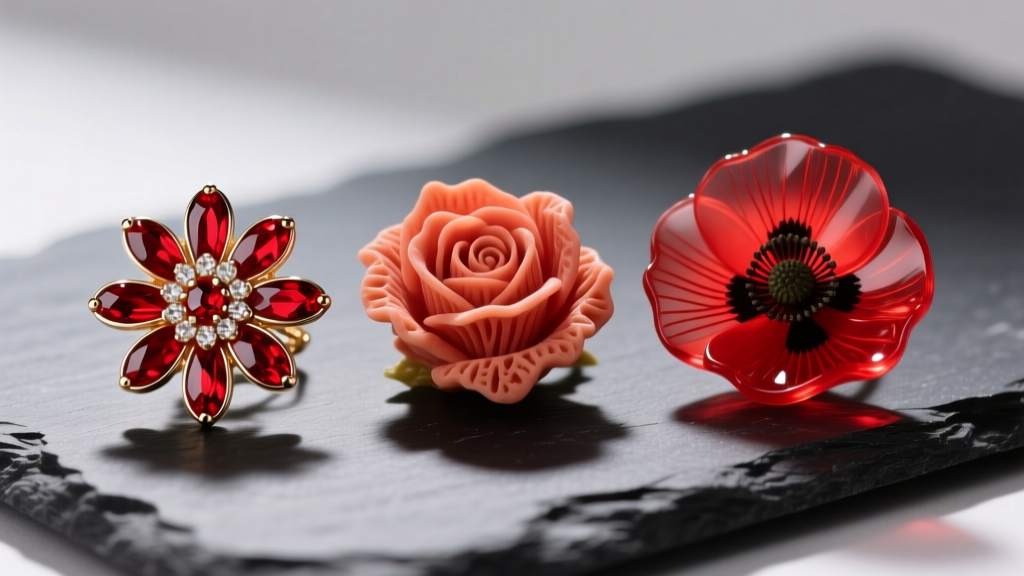
When selecting red flower earrings, most buyers focus entirely on the silhouette—whether it is a delicate daisy stud or a dramatic hibiscus drop. However, as we move through 2026, the jewelry market has seen a massive influx of floral designs crafted from wildly different materials. The base material and colorant used in your red floral earrings dictate not only their price point but their structural longevity, hypoallergenic safety, and resistance to environmental degradation.
Red is notoriously the most difficult color to maintain in jewelry manufacturing. Organic red dyes fade, porous red gemstones fracture, and heavy floral silhouettes can stretch the earlobe if the specific gravity of the material is ignored. In this comprehensive material comparison, we break down the exact properties of vitreous enamel, cold epoxy resin, natural gemstones, and polymer clays to help you make an informed, heirloom-grade purchase.
The Big Four: Materials Used in Red Floral Designs
Vitreous Enamel vs. Cold Enamel (Epoxy Resin)
Vitreous enamel is the gold standard for opaque, vibrant red floral jewelry. It involves fusing powdered glass to a metal substrate (usually copper, silver, or gold) at extreme temperatures, typically around 1400°F (760°C). The resulting red flower earrings are essentially glass-inlaid metal, offering a Mohs hardness of 5.5 to 6.0. The red color is derived from inorganic metal oxides (like copper or cadmium-free selenium compounds), which are entirely immune to UV fading.
Conversely, 'cold enamel' is a misnomer for two-part epoxy resin. While modern 2026 UV-stabilized resins have improved, they remain fundamentally plastic. Red pigments in resin are often organic or synthetic dyes that absorb UV light, leading to photodegradation. A pair of resin red poppy earrings worn daily in the sun will typically show noticeable pinkish-orange fading within 14 to 18 months.
Natural Gemstones: Coral, Garnet, and Ruby
For carved floral motifs, natural gemstones offer unmatched prestige, but their physical properties vary drastically. According to the Gemological Institute of America (GIA), Red Coral (Corallium rubrum) is highly prized for carved roses but sits at a mere 3.5 on the Mohs scale. It is also porous and reacts poorly to the lactic acid in human sweat and the alcohol in perfumes, which can strip its natural red polish. Garnet (specifically Pyrope or Almandine), sitting at a 7.5 on the Mohs scale, is vastly superior for daily-wear floral studs, offering deep red hues with excellent scratch resistance.
Polymer Clay and Acrylics
Polymer clay has dominated the indie jewelry market for oversized, lightweight red flower earrings. Baked at low temperatures (around 275°F), polymer clay is essentially PVC resin mixed with pigments and plasticizers. While it allows for massive, intricate floral dangles that would be impossibly heavy in metal or stone, it is highly susceptible to chemical degradation. Contact with DEET-based insect repellents or certain skincare acids can melt the surface of polymer clay, ruining the floral detail.
Material Properties & Failure Modes
Understanding the physical limitations of these materials is critical for both jewelry makers and collectors. Below is a comparative data table outlining the core metrics of red floral earring materials.
| Material | Mohs Hardness | Specific Gravity (Weight) | UV Resistance | Avg. Price Range (Studs/Drops) |
|---|---|---|---|---|
| Vitreous Enamel | 5.5 - 6.0 | High (Depends on metal base) | Excellent (Inorganic) | $85 - $350+ |
| Epoxy Resin | 2.0 - 3.0 | Low (1.1 - 1.2) | Poor to Fair | $25 - $90 |
| Red Coral | 3.5 | Medium (2.6 - 2.7) | Excellent | $150 - $800+ |
| Pyrope Garnet | 7.0 - 7.5 | High (3.6 - 4.3) | Excellent | $120 - $600+ |
| Polymer Clay | 1.5 - 2.0 | Very Low (1.2 - 1.4) | Fair (Fades over time) | $15 - $45 |
Expert Insight: The most common failure mode for enamel red flower earrings is 'crazing'—micro-fractures in the glass surface. This occurs when the metal base and the enamel have mismatched coefficients of thermal expansion. Always buy from artisans who use properly formulated lead-free enamels matched to their specific metal clay or fine silver bases.
The Physics of Floral Silhouettes: Specific Gravity and Earlobe Fatigue
A major oversight in purchasing large red flower earrings is ignoring specific gravity (the density of the material relative to water). Floral designs inherently require a wide surface area. A 30mm wide daisy crafted from solid brass and vitreous enamel can easily exceed 12 grams per earring.
When an earring exceeds 8-10 grams, the downward torque on the earlobe piercing increases exponentially, especially with movement. Over time, this causes the piercing channel to stretch, migrate, or tear. If you are purchasing heavy gemstone or enameled red floral drops, you must look for specific design interventions:
- Hollow-Back Construction: High-end enamelists will dome the metal and leave the back hollow to reduce weight without sacrificing the visual volume of the flower.
- Ear Jackets and Chains: Some 2026 designs incorporate delicate chains that hook around the upper ear cartilage, distributing the weight of the heavy floral drop away from the lower lobe.
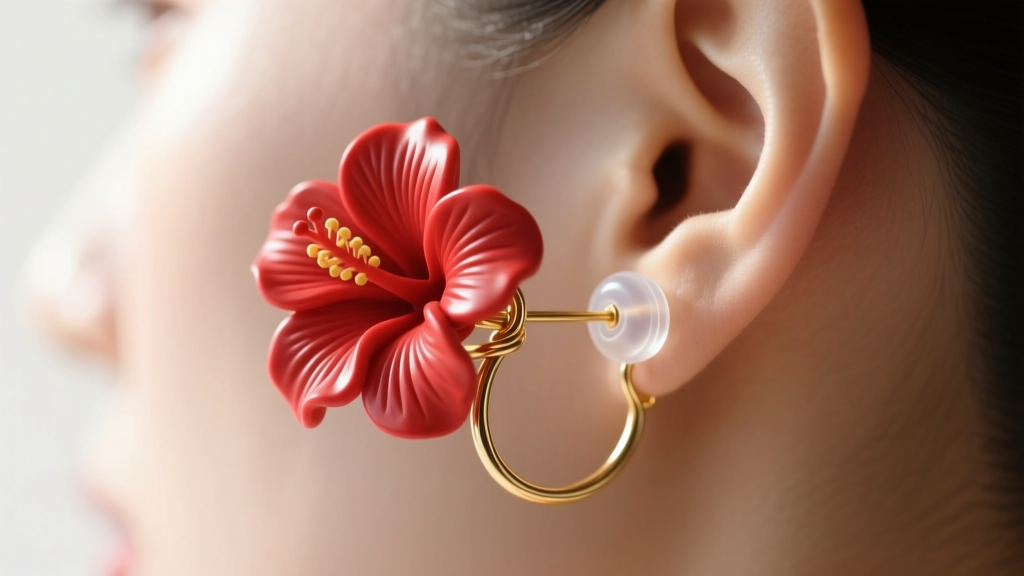
- Silicone O-Rings: For heavy drops, standard butterfly backs are insufficient. They slip down the post, causing the earring to droop forward. Upgrading to flat-back silicone stoppers provides a wider surface area against the earlobe, gripping the 18-gauge or 16-gauge post securely.
Hardware and Gauge Considerations for Floral Drops
The hardware holding your red flower earrings must be matched to the material's weight and the flower's catch-profile. Floral silhouettes with protruding petals act like nets, easily catching on hair, sweaters, and scarves. This snagging puts immense lateral stress on the earring post.
Standard 20-gauge (0.81mm) sterling silver posts are too soft for large floral drops. When snagged, a 20g post will bend at the solder joint, often tearing the enamel or cracking the resin petal. For any red flower earring exceeding 25mm in diameter, experts at Rio Grande and other jewelry supply authorities recommend stepping up to an 18-gauge (1.02mm) or even 16-gauge (1.29mm) post, ideally in a harder alloy like 14k gold or hardened sterling silver. For hook-style floral dangles, ensure the wire is work-hardened so the hook does not pull open under the weight of the flower.
Care, Maintenance, and Chemical Avoidance
To preserve the vibrant red hues and structural integrity of your floral earrings, maintenance must be tailored to the specific material:
Cleaning Enamel and Resin
Vitreous enamel can be cleaned with mild dish soap and a soft toothbrush. However, avoid ultrasonic cleaners. The high-frequency vibrations can shatter the glass enamel, especially if there are microscopic internal stresses from the firing process. Cold enamel (resin) should never be cleaned with alcohol-based solutions, as alcohol acts as a solvent and will cloud the glossy finish of the red petals.
Protecting Porous Gemstones
If your red flower earrings feature carved coral or turquoise dyed red, you must adhere to the 'Last On, First Off' rule. Coral is highly reactive to acids. Hairspray, perfume, and even natural skin oils can degrade the calcium carbonate structure of the coral, leading to a dull, chalky appearance. Wipe coral floral earrings gently with a damp, untreated microfiber cloth immediately after removal.
Final Verdict: Which Material is Right for You?
If you are seeking an heirloom piece that will retain its vibrant red pigment for generations, vitreous enamel and pyrope garnet are the undisputed champions. They require a higher initial investment but offer unparalleled UV stability and scratch resistance. For fashion-forward, oversized statements that prioritize comfort and low earlobe fatigue, high-quality polymer clay remains a viable option, provided it is stored away from direct sunlight and chemical solvents. By understanding the material science behind the jewelry, you ensure your red flower earrings remain as vivid as the day you first wore them.


